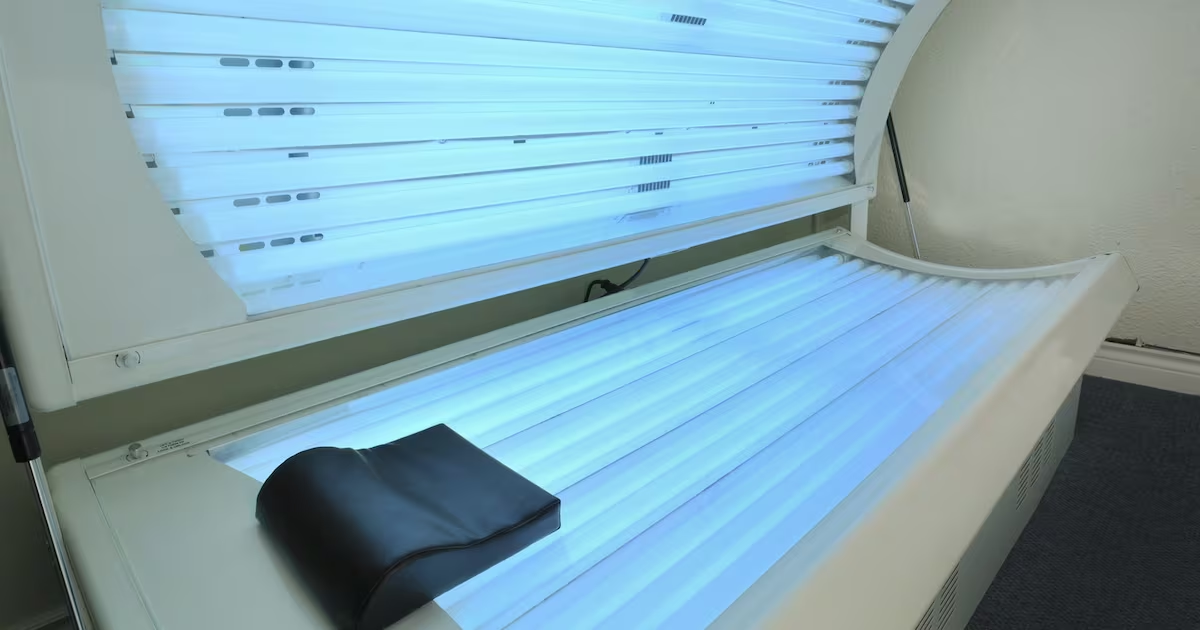
In March a Department of Health working group concluded that commercial sunbeds should be banned. The group –which was mandated by the Programme for Government – believed there was substantial evidence supporting the view that sunbed use increased the risk of developing skin cancer and that the existing ban on their use by under-18s was ineffective.The Department said the report would “inform future work on the Programme for Government commitment to explore ways to ban commercial sunbed use as part of Ireland’s cancer prevention framework”. It is now awaiting the outcome of a public consultation on a ban before deciding whether to go ahead and legislate for it. Various legal, technical and practical problems – such as how to enforce a ban – have been identified. The commercial sunbed sector makes the case that a ban would drive the business “underground” and be counterproductive. They point to some evidence of this happening elsewhere. The regulation of commercial sunbeds in Ireland is broadly similar to elsewhere in Europe. Many countries have bans for under-18s and a few – notably France – are considering an outright ban. The prospect of the idea being allowed wither on the vine – as often happens with manifesto commitments – cannot be discounted.A group of health organisations involved in the area – the Coalition Against Sunbeds -–appears determined to ensure this does not happen and has linked skin cancer incidence directly to sunbed usage. It has also upped the ante by calling for a complete ban on sunbeds.It is not disputed that melanoma rates are high in Ireland – up to 25 per 100,000 people. This is generally attributed to a preponderance of very fair skinned people and poor compliance with prevention measures. The new coalition – which includes cancer charities and medical organisations – says that 70 such diagnosis each year can be attributed to sunbed use, with particular risks for users under the age of 35. That should focus minds in Government.
The Irish Times view on sunbeds: a proven health hazard
A coalition calling for a ban says they are responsible for around 70 cancer cases per year
328 words~1 min read