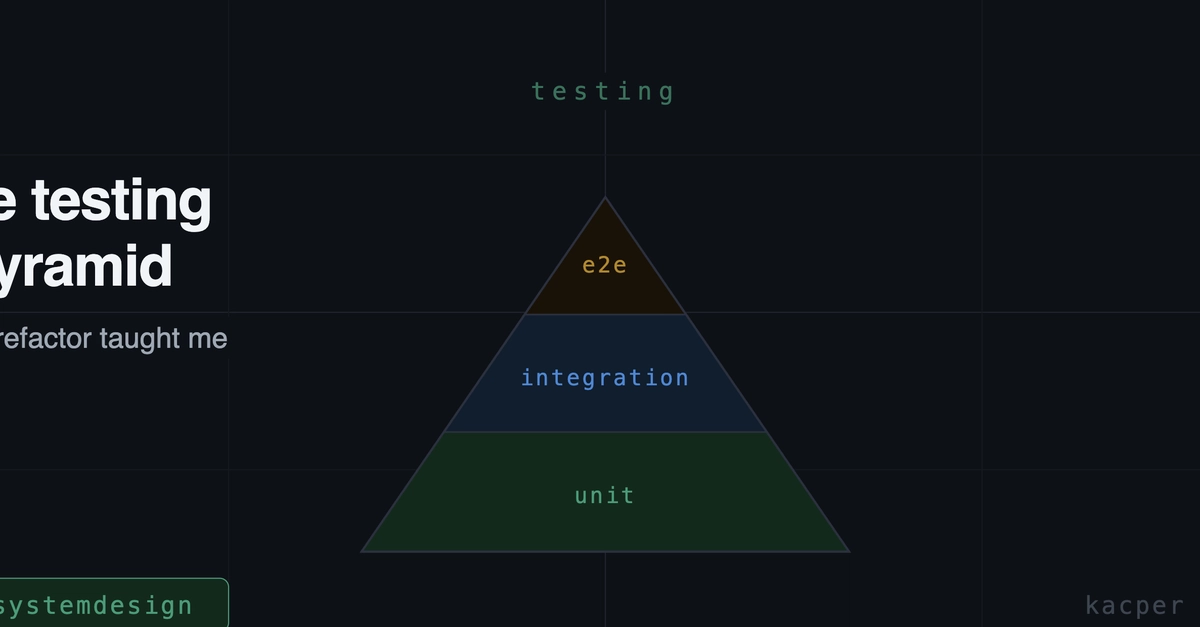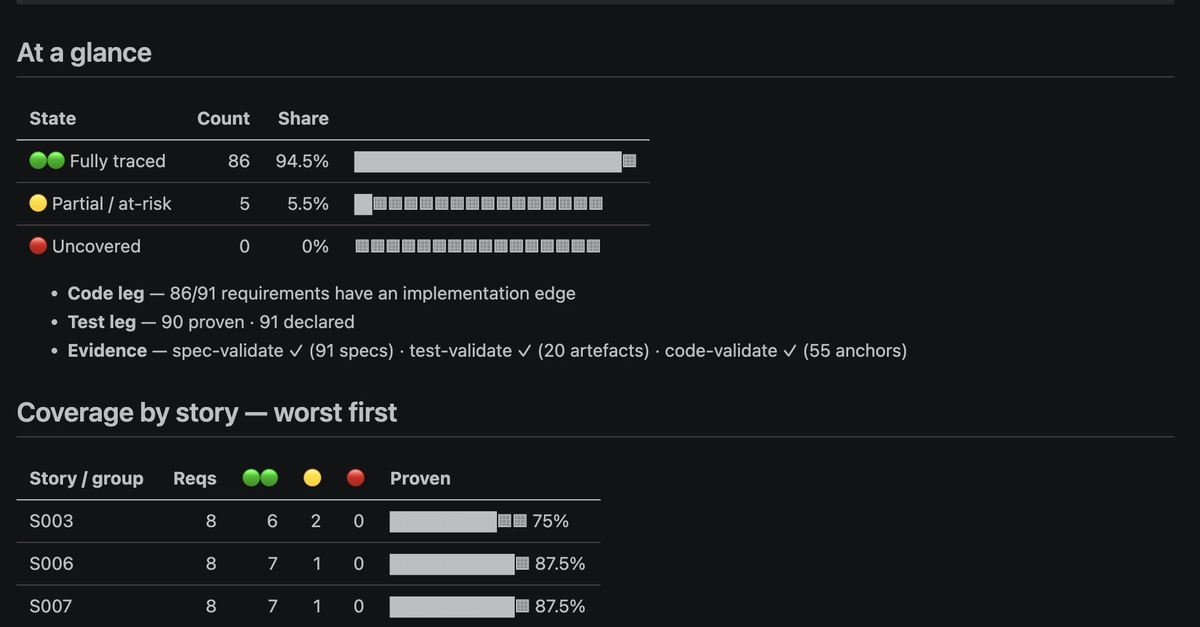
Most test pyramids are aspirational. People draw the triangle, point at "many unit tests, fewer integration tests, very few E2E tests," and then the actual suite turns out to be a pile of slow, overlapping tests that verify the same logic five different ways at five different layers. Push a branch, wait twenty minutes, come back to a flake.
The pyramid is a real concept. The way most teams implement it is not.
I want to talk about the shape of a pyramid that earns its confidence: what each layer is actually for, why duplication across layers is the failure mode, and how environment and data setup differ at each level so the tier stays in its lane.
The principle: nested layers, each validating its own concern
Think of the suite as an onion. The center is the smallest, fastest, most numerous tests. Each layer wraps the previous one, adding a new concern. The outermost layer is the slowest, fewest tests.