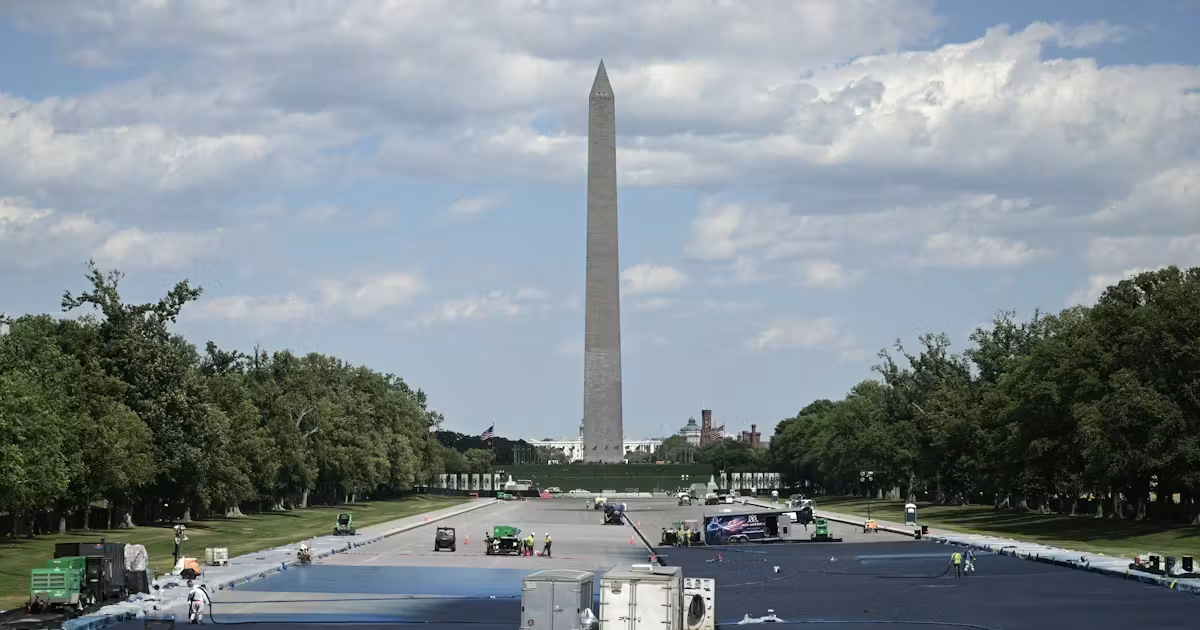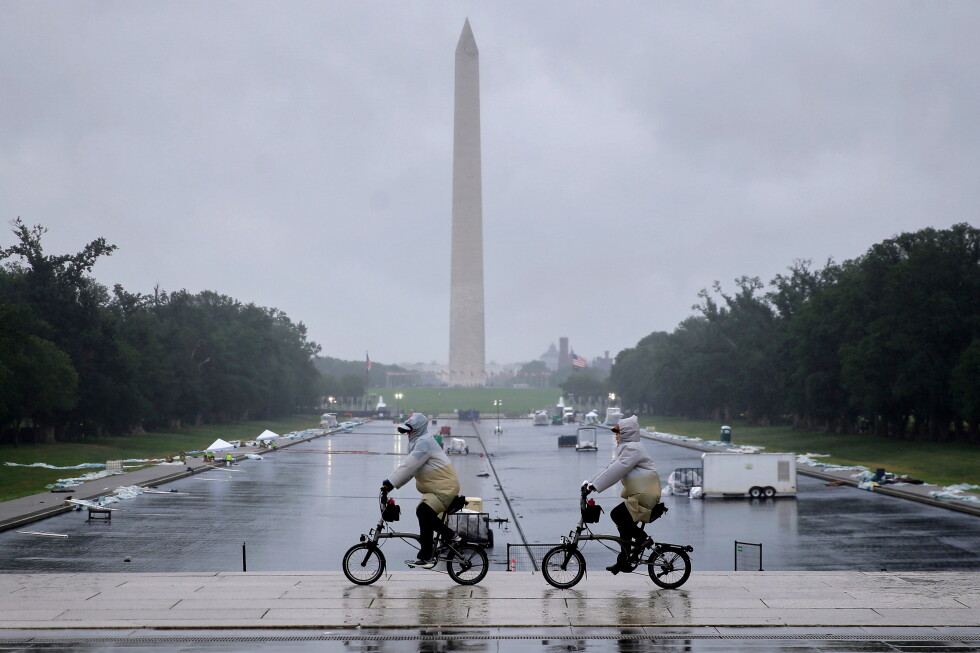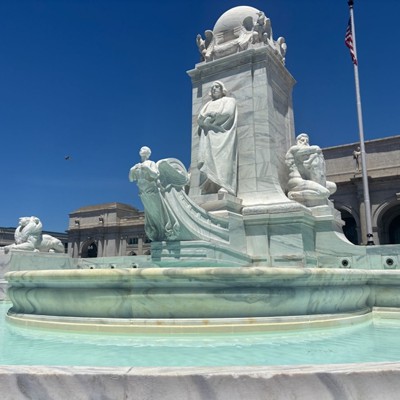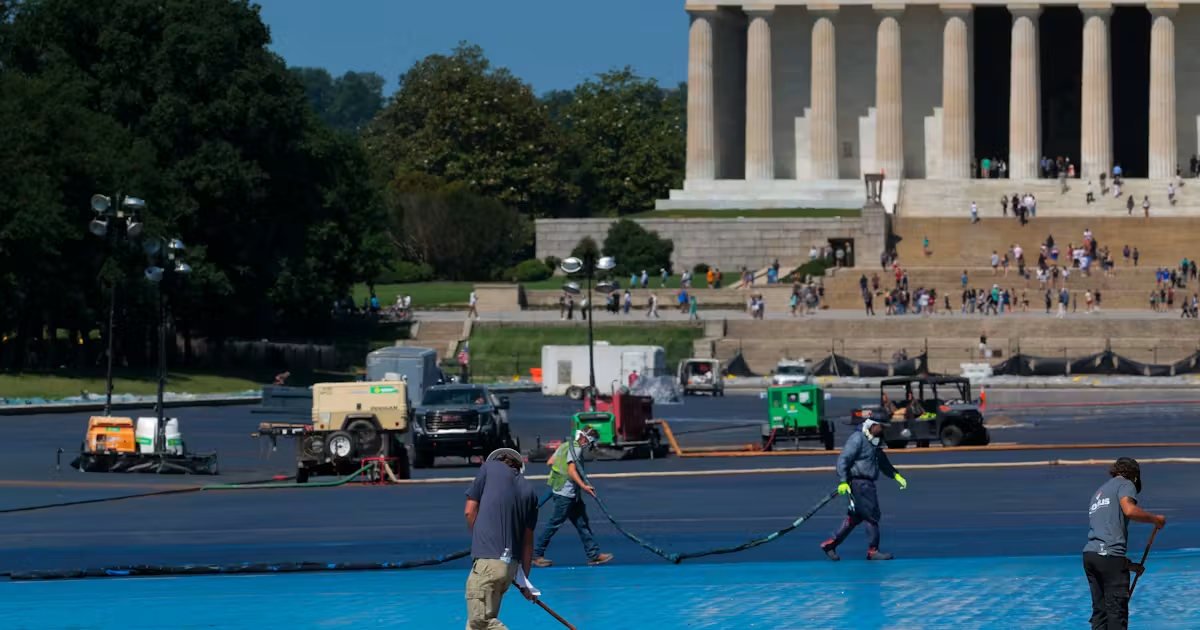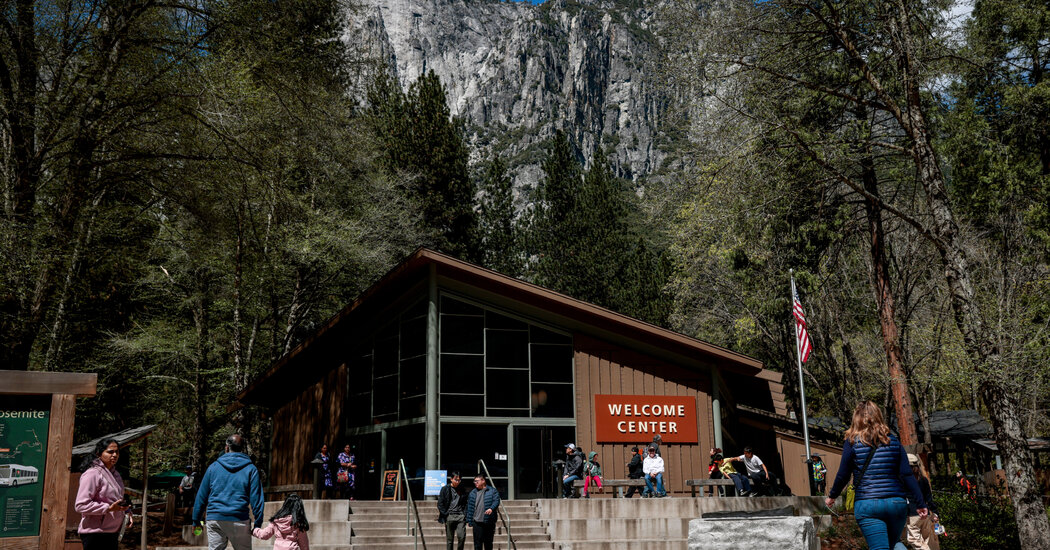
AdvertisementSKIP ADVERTISEMENTTimes ExclusiveThe administration is spending at least $67 million worth of fees paid by visitors to national parks on fixing D.C. fountains and the Reflecting Pool.Listen · 8:04 min The National Park Service is spending millions in fees paid by visitors to parks across the country, like Yosemite National Park in California, to pay for restoration of nine ornamental fountains in Washington, D.C.Credit...Brontë Wittpenn/San Francisco Chronicle, via Associated PressMay 27, 2026Updated 1:09 p.m. ETThe National Park Service is using at least $67 million worth of park entrance fees to help fund President Trump’s beautification projects in Washington, according to a New York Times analysis of federal records.Nearly $60 million in fees paid by visitors to national parks across the country is funding repairs to nine of the capital’s ornamental fountains, the analysis found. The government is putting another $7 million worth of entrance fees toward the renovation of the Lincoln Memorial Reflecting Pool, which costs $13.1 million overall, according to an internal Park Service document reviewed by The Times.The analysis was based on a federal contracting database. The $7 million for the Reflecting Pool has not previously been reported.Mr. Trump has proposed a host of initiatives to remake Washington in his own style and wants these projects completed by July 4, the 250th anniversary of American independence.Some conservationists criticized the Trump administration for steering so much money to projects in Washington that appeared to be cosmetic fixes rather than urgent upgrades. National parks outside the capital have long maintenance backlogs, including repairs to deteriorating roads and water systems that threaten visitor safety.“Our parks and public lands have been underfunded for decades, and there are many genuinely urgent projects in need of funding across the country,” said Aaron Weiss, the executive director of the Center for Western Priorities, a conservation group. “Instead, Interior Secretary Doug Burgum is determined to divert millions of dollars to projects that President Trump can see out his window.”The spending is legal. Under the Federal Lands Recreation Enhancement Act of 2004, at least 80 percent of revenue from entrance fees must stay in the park where the fees were collected. But the other 20 percent can be used to improve sites that do not collect fees, such as the National Mall and Memorial Parks in Washington.Katie Martin, a spokeswoman for the Interior Department, which includes the Park Service, did not respond to specific questions but defended the spending in general.“The National Park Service has not only been focused on beautifying the district but has also been working on many deferred maintenance projects throughout the country,” Ms. Martin said in an email, adding that “we should all be grateful” for Mr. Trump’s focus on projects in Washington.Other park proponents praised the administration for using entrance fees to fix fountains in Washington that have been neglected for years. They said they were especially pleased to see water flowing from the 13-basin fountain in Meridian Hill Park, also known locally as Malcolm X Park, for the first time since 2019.“This is a very fitting use of fee dollars,” said Steve Coleman, the executive director of Washington Parks & People, an advocacy group. “The entire country benefits from the fact that there is no charge to enter any D.C. national park, but hundreds of our inner-city park sites beyond the National Mall suffer from the fact that D.C. has no representation in Congress and thus has to beg for crumbs.”ImageThe 13-basin fountain in Meridian Hill Park, also known as Malcolm X Park, earlier this month.Credit...Louise Le Borgne/Agence France-Presse — Getty ImagesThe Park Service spent nearly $75 million from its recreation fee account on contracts signed between December 2025 and March 2026, the most recent months of comprehensive data available. More than three-quarters of that sum went to the Washington fountains, and more than 90 percent to D.C.-based projects more broadly, according to The Times’ analysis.That marks a major shift in how the Park Service historically has spent that fund. Washington-based projects accounted for just 2 percent of the fund’s spending on contracts signed earlier in Mr. Trump’s second term. That figure was 5 percent or less for the Biden and first Trump administrations.Among contracts signed under the Biden administration, the largest individual project backed by the fund was fixing a major Grand Canyon water pipeline.In addition to the publicly disclosed contracts, the administration secretly awarded a no-bid contract worth $17.4 million to fix two fountains in Lafayette Park, across Pennsylvania Avenue from the White House, to the same company that is building Mr. Trump’s White House ballroom. It is unclear where this money is coming from because this contract is not in the public database.In April, the administration awarded another no-bid contract to Virginia-based Atlantic Industrial Coatings to repair the Reflecting Pool and paint it blue. Federal records show that this contract is worth $13.1 million, more than seven times what Mr. Trump initially promised the work would cost.The price of fixing the fountains is in line with cost estimates that previous administrations had provided for similar work, which typically involves ripping out and replacing corroded pipes in century-old plumbing systems.For instance, the Obama administration projected in 2016 that it would cost between $8 million and $10 million to repair the Columbus Fountain outside Union Station, a popular bus and train hub. The current contract for the work is worth $11.8 million, a similar sum after accounting for inflation.The Park Service had a backlog of deferred maintenance projects around the country that came to an estimated $23 billion at the end of 2024, the latest year for which data is available. The projects included repairs to bathrooms, campgrounds, roads, visitor centers and other aging infrastructure.At Shenandoah National Park in Virginia, some walls along a scenic road called Skyline Drive are crumbling. Other walls are missing rocks, posing a safety hazard to drivers.“We should be putting more money toward these things that are in poor condition and need rehabilitation from a safety standpoint,” said Jim Schaberl, the former division chief for natural and cultural resources at Shenandoah.At Crater Lake National Park in Oregon, the main road is riddled with potholes, and two housing units for park employees are closed because of mold. Park rangers are also waiting for funding to replace a 30-year-old fire truck and a 17-year-old ambulance with newer, safer vehicles.And at Zion National Park in Utah, officials are seeking funding to repair a sewer system that failed in the early 2020s. The sewer system was connected to two “comfort stations” that provided flush toilets and potable drinking water.Now the comfort stations are closed, replaced with port-a-potties that disrupt the scenic desert landscape. The port-a-potties stink in the summer heat, and the slamming sound of their doors drowns out the chirping of birds and the burbling of the Virgin River, said Natalie Britt, the president and chief executive of Zion Forever Project, the official nonprofit partner of Zion National Park.“Zion has very significant infrastructure and operational needs, many of which have not gotten the federal funding they need to move forward,” Ms. Britt said.Still, Ms. Britt said she supported the repairs to the Reflecting Pool and other iconic sites in Washington ahead of America’s 250th anniversary celebrations.“The Lincoln Memorial is one of the most significant civic landscapes in the country, and it deserves care,” she said. “The question is whether Congress and the federal government are providing enough funding for the entire national park system.”David A. Fahrenthold contributed reporting.Maxine Joselow covers climate change and the environment for The Times from Washington.Andrea Fuller is a data journalist at The Times, using data analysis to make sense of complex topics.AdvertisementSKIP ADVERTISEMENT
National Park Entrance Fees Are Funding Trump’s D.C. Projects
The administration is spending at least $67 million worth of fees paid by visitors to national parks on fixing D.C. fountains and the Reflecting Pool.
1,270 words~6 min read