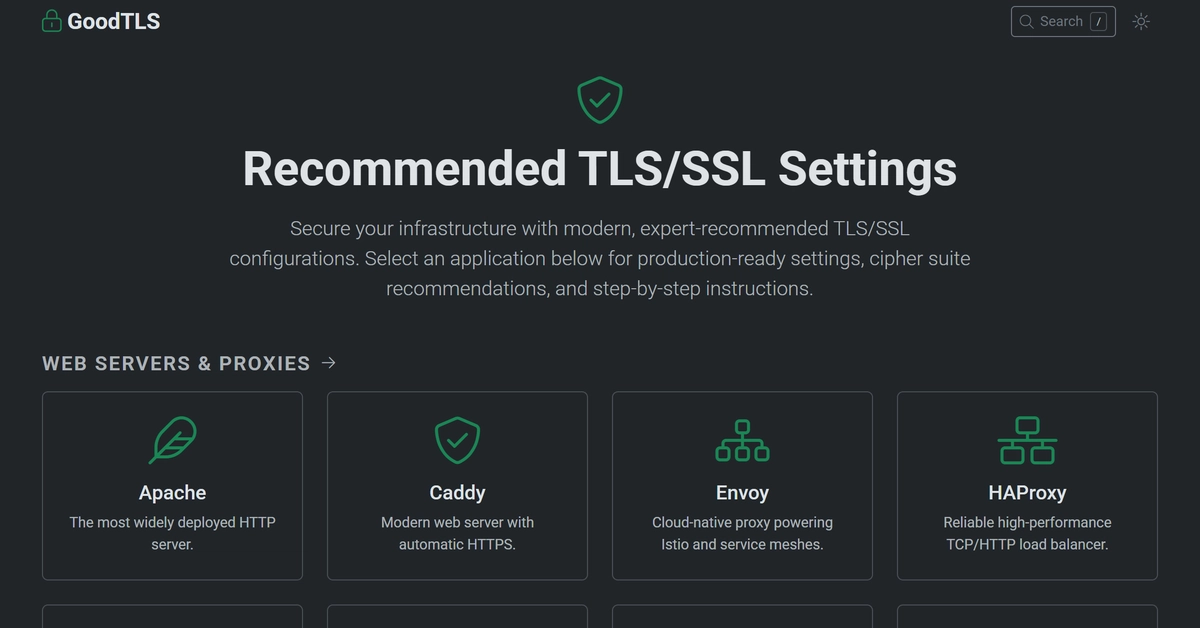
Enabling TLS is a solved problem. Get a certificate from Let's Encrypt, point your server at it, done. What's not solved is the configuration that comes after: cipher suites, protocol versions, session settings, OCSP stapling. The decisions that determine whether your TLS implementation is actually secure, or just technically present.
The problem is that a misconfigured TLS setup looks identical to a correct one. Both show the padlock. Both say HTTPS. The difference only surfaces when someone runs a scan, or when an auditor asks why you're still accepting TLS 1.1, or when a CVE lands and you're not sure if you're exposed.
Why it's hard
Every application handles TLS differently. The correct cipher string for Nginx is not the correct cipher string for Postfix. PostgreSQL's ssl_min_protocol_version setting doesn't exist in MySQL, which uses tls_version instead. RabbitMQ uses an Erlang term file. IIS uses registry keys. Kafka uses Java KeyStore files and properties that differ between brokers and clients.
The underlying security requirements are identical across all of them: TLS 1.2 minimum, ECDHE for key exchange, AEAD for encryption. But applying those requirements to a specific piece of software means learning its configuration model, finding documentation that reflects current best practices, and figuring out which version introduced the settings you need.