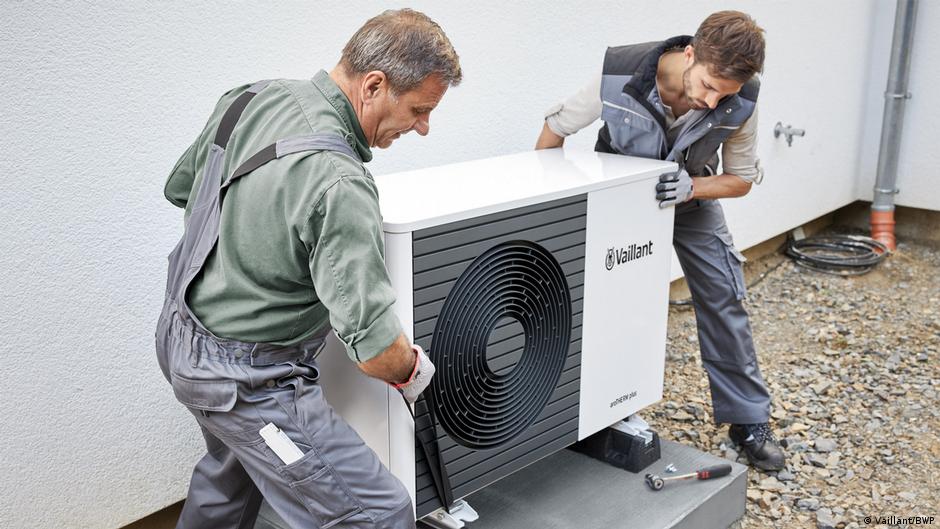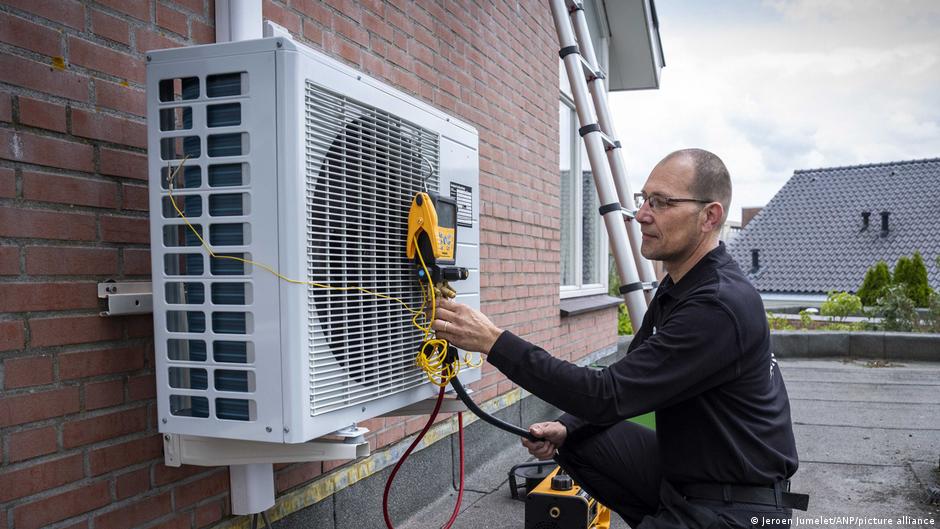
Regardless of what party happens to be in power, Germans have long seen their country as a pioneer in climate protection. Industry underwent modernization, and the state subsidized the expansion of wind and solar energy. Yet transportation and residential heating are two areas in which Germany lags, continuing to generate significant amounts of CO2 and toxic gases. As of 2024, 56% of homes were heated with gas, and 17% were heated with oil.
The previous government, made up of the center-left Social Democrats (SPD), environmentalist Greens and neoliberal Free Democrats (FDP), sought to tackle the issue of home heating. In their 2021 coalition agreement, they decided that new heating systems installed in houses and apartments should operate using 65% renewable energies instead of gas or oil. This was expected to help usher in a new era of renewable heat pumps.Europe's industry warns EU climate policy threatens jobsTo view this video please enable JavaScript, and consider upgrading to a web browser that supports HTML5 video
Germany wants to allow new gas and oil heating systems
Those rules are set to be scrapped. A draft for a Gebäudemodernisierungsgesetz (GMG) to be agreed by the government on March 25, allows for new heating systems using oil or natural gas to be installed, but also requires that climate-friendly fuels be mixed in with the gas and oil. The law is expected to be approved in parliament by July 1.