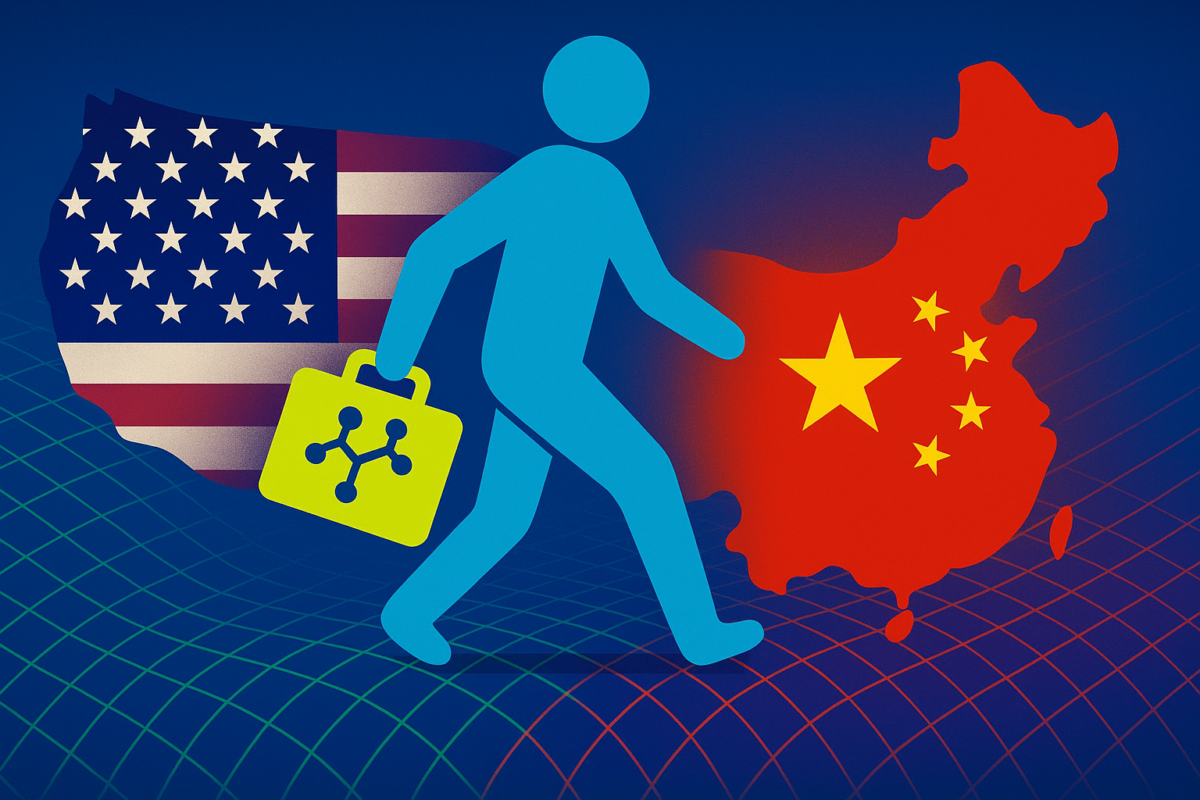
For China’s top AI researchers, the borders are quickly closing. Researchers, startup founders and executives at private firms are now reportedly subject to travel restrictions, with some of the industry’s most prominent figures required to seek government approval before heading abroad.
The restrictions reflect a wider shift in how Beijing manages the brain-drain in the AI sector, which has seen skyrocketing demand for talent to train and tweak AI models as the global tech industry taps into this new avenue to seek growth.
In March 2025, the Wall Street Journal reported that Chinese authorities had been advising top AI founders and researchers to avoid traveling to the U.S., an early signal of just how closely Beijing has come to guard AI as both an economic asset and a national security priority.
Restrictions appear to have intensified in the wake of Beijing narrowing its focus on the Manus-Meta deal. China has barred Manus’ two co-founders from leaving the country while its regulators investigate whether Meta’s $2 billion acquisition of the AI startup runs afoul of Beijing’s foreign investment rules, according to The Financial Times. The co-founders of Manus are now said to be exploring options to fulfill Beijing’s demand to unwind the deal, including raising about $1 billion from external investors to buy back the company from the social media giant.