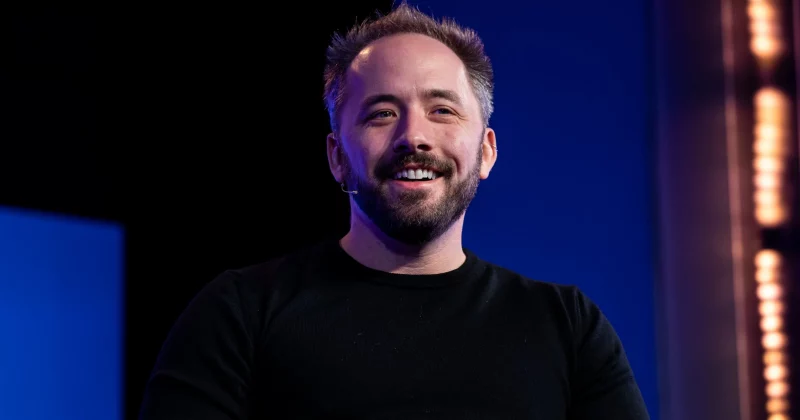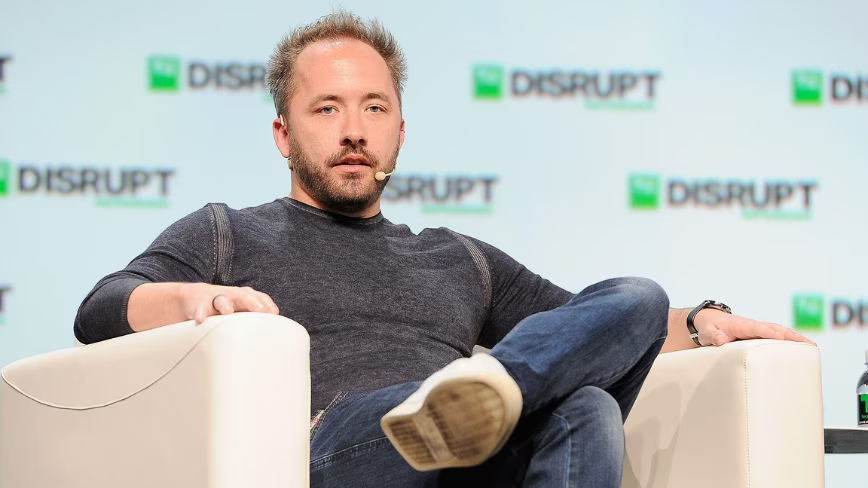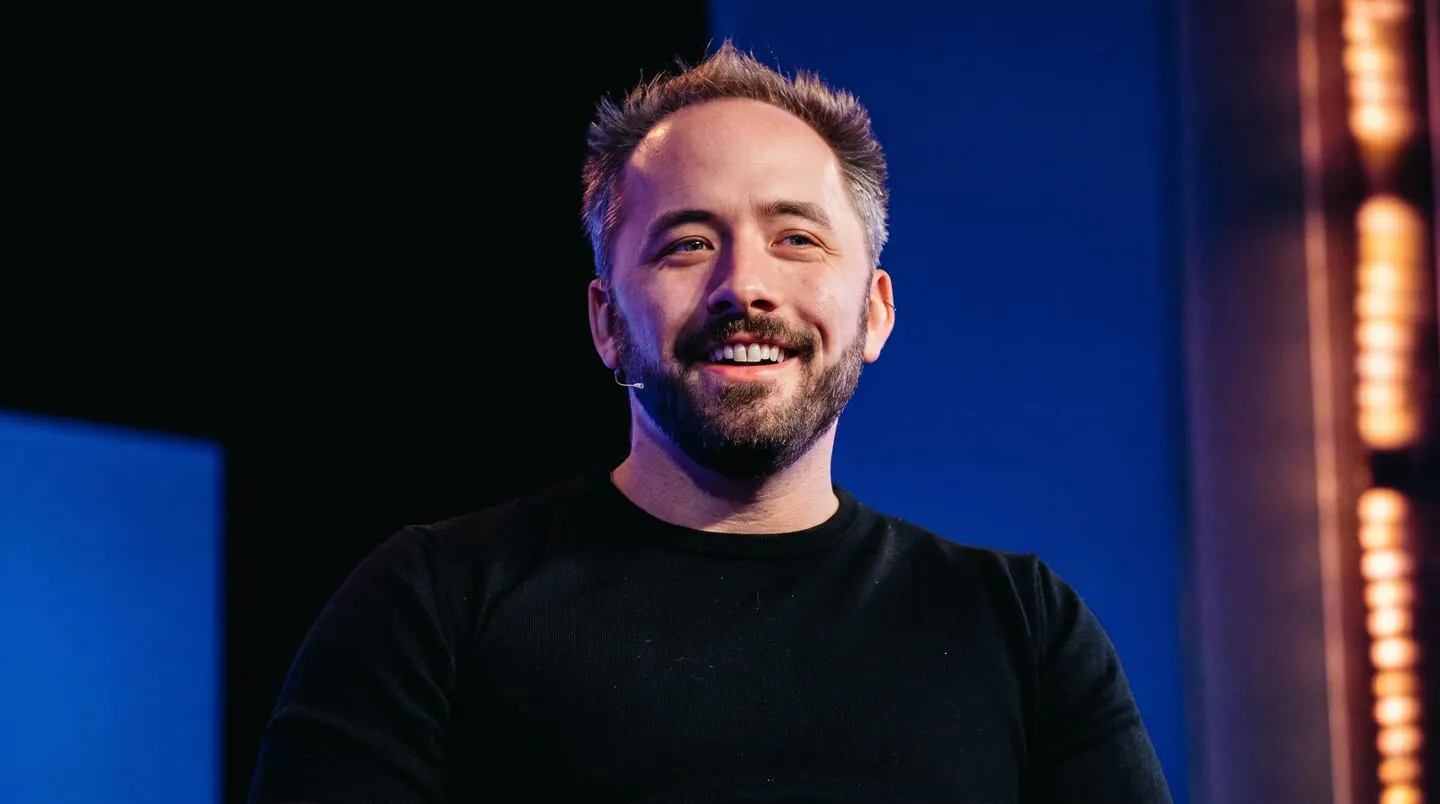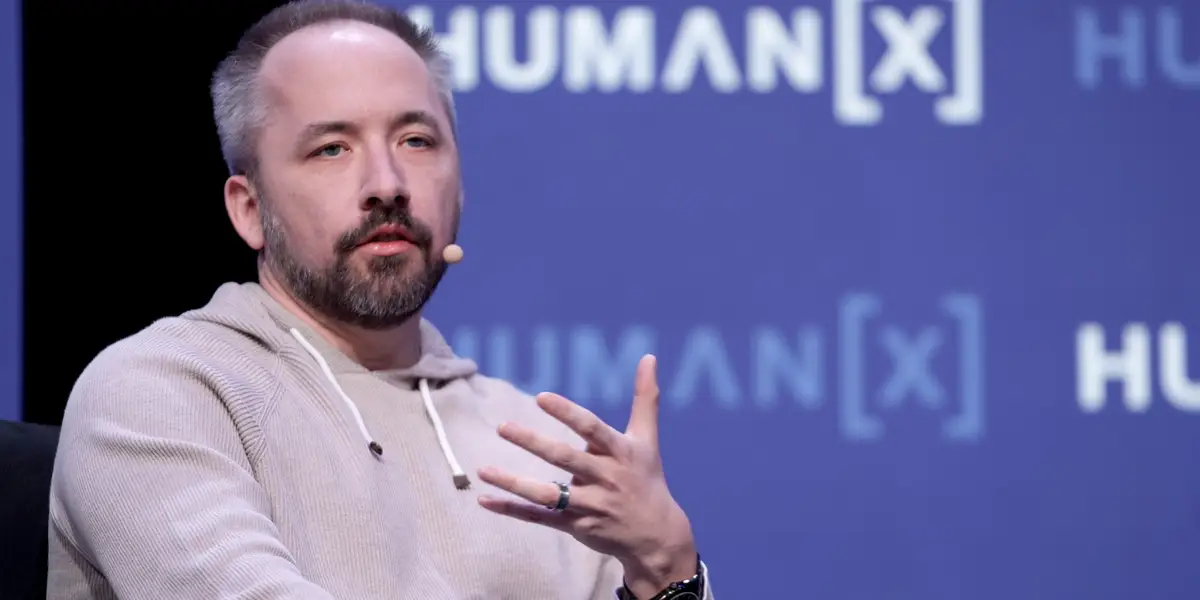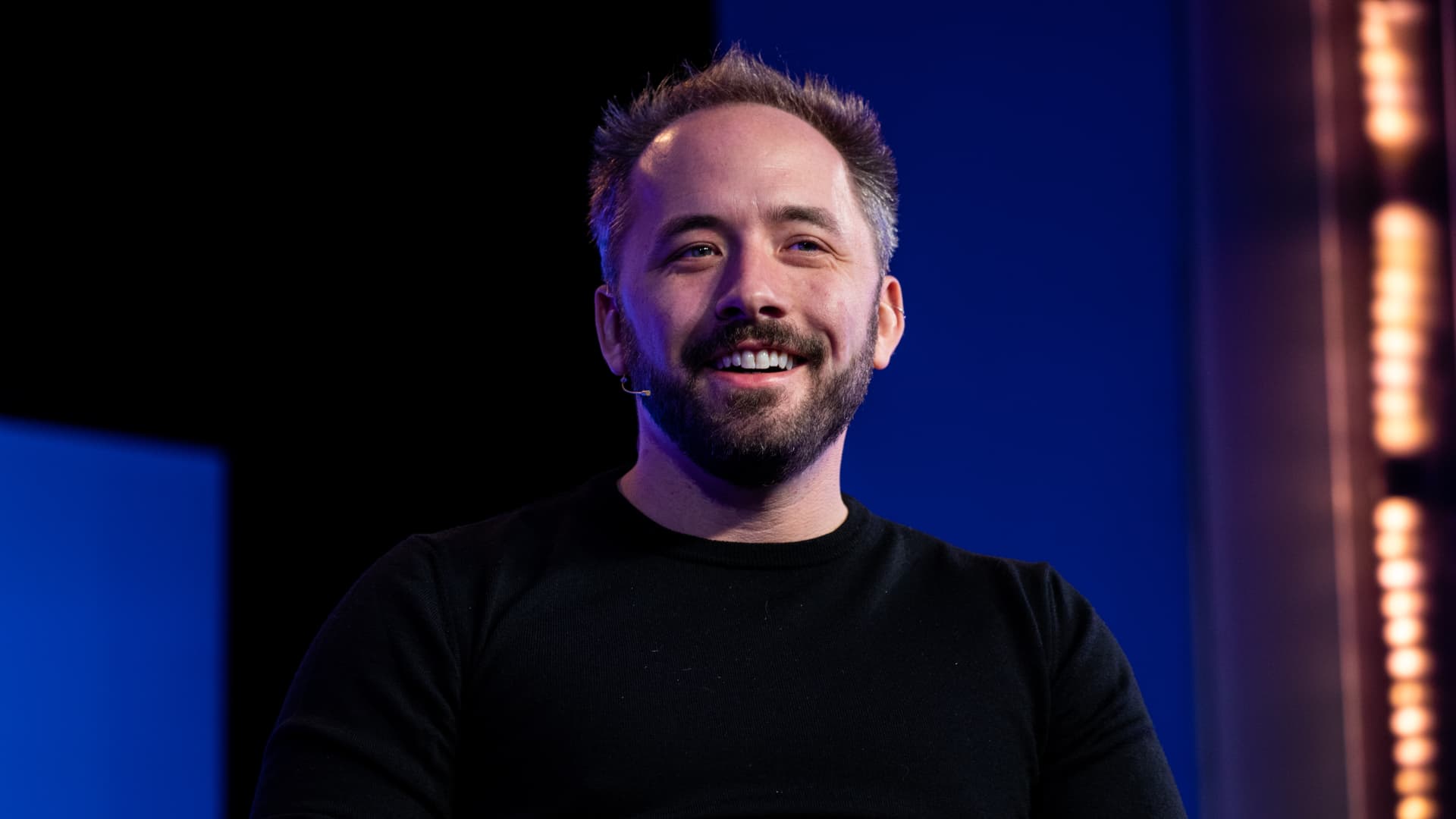
Photo credit: X/@BusinessInsiderDrew Houston is stepping down as Dropbox CEO after 19 years, handing the title to product chief Ashraf Alkarmi through a co-CEO transition before moving into the executive chairman role. The announcement landed on 26 May 2026 via an 8-K filing and a Tuesday-morning memo to staff, capping a sequence that included two rounds of layoffs (16 per cent in 2023, 20 per cent in October 2024), an activist push from Half Moon Capital to dismantle Houston's dual-class voting control, and Dropbox's struggle to grow revenue beyond its $629.5 million Q1 2026 quarterly run. Houston, now 43, characterised his departure to CNBC as a move into new building work rather than retirement — language that points at AI entrepreneurship. Alkarmi takes the operating reins; Houston keeps the voting stake.The Numbers Behind The MoveDropbox's growth math is the underlying story. The company posted $629.5 million in Q1 2026 revenue with year-over-year growth at under 1 per cent — flat against the same quarter in 2024 and 2025. The market cap sits at around $6 billion, half the level Dropbox hit at its 2018 IPO. Across 2023 and 2024, the company cut 36 per cent of its workforce in two rounds (16 per cent in 2023; 20 per cent in October 2024) and ended Q1 2026 with $1.3 billion in cash on the balance sheet.The 18 million paying users and the $2 billion-plus annual revenue run rate read as scale; the flat growth curve and the bundled-by-default competition read as structural decay. Google Drive ships with Workspace, Apple iCloud ships with every iPhone and Mac, Microsoft OneDrive ships with 365. The standalone-cloud-storage value proposition that Houston pioneered in 2007 has been absorbed into operating-system bundles for the past five years.Against that backdrop, the financial picture has been good enough to keep the lights on and the cash pile growing — but flat enough to make activist investors restless and to make Houston himself look for the next thing.Dropbox metricValueFounded2007 (Drew Houston + Arash Ferdowsi, MIT)IPOMarch 2018 (NASDAQ: DBX)Paying users18 million-plusQ1 2026 revenue$629.5 millionAnnual revenue run rateAbove $2 billion (crossed in 2021)Q1 2026 cash$1.3 billionMarket cap (May 2026)Just over $6 billionDrop from IPO peakRoughly 50 per centLayoffs 202316 per cent of workforceLayoffs October 202420 per cent of workforceHouston voting stakeAbout 77 per cent via Class B shares (10:1 voting rights)Why Alkarmi, Why NowThe choice of Alkarmi as successor is the strategic tell. Dropbox could have promoted a CFO or COO during a slow-growth phase — the conventional efficiency-first playbook. Instead, the board elevated the General Manager of the Core business, a product operator who joined the company from Vimeo in late 2024 after running senior product roles at Amazon (2018-2022), Meta, and his own audience-engagement startup PresAsk. Houston told staff Alkarmi has transformed the core business and called him the right leader for Dropbox's next chapter.Across his career, Alkarmi has been product-first. He was Vimeo's Chief Product Officer from 2022 to 2024, leading the platform's pivot away from competing with YouTube on consumer video and towards enterprise-grade B2B video tools. Before that, eight years across Amazon and Meta on product strategy work. Engineering by training — MS in electrical engineering from Southern Illinois University Carbondale, bachelor's from the University of Jordan — overlaid with a Harvard MA in management and operations. The package is what Dropbox needs at this moment: a product builder rather than a finance caretaker.His compensation package, disclosed in the 8-K, points the same direction. Annual base salary of $825,000 from 1 June, target bonus of 100 per cent of base, and roughly $12.65 million in restricted stock units vesting over several years. The RSU weighting tilts Alkarmi's incentive towards multi-year share-price appreciation — the structure boards use when they want a CEO building for the long arc rather than the next quarter.The Half Moon Pressure CookerThe activist pressure on Dropbox has been building for over a year. Half Moon Capital, a small hedge fund holding around 40,000 Dropbox shares worth roughly $1.1 million, surfaced in March 2025 via a Wall Street Journal scoop with a proposal aimed at the company's dual-class share structure — the one that gives Houston a 77 per cent voting stake via Class B shares carrying 10 times the voting rights of Class A. The proposal sought to collapse the structure into a single-class arrangement; the math required Houston's own approval to pass, which made the outcome a long shot from the start.That contradiction — an activist proposal that needed founder consent to dismantle founder control — is the structural irony Half Moon flagged. Slowing revenue growth, payment tier strategy choices, and the 36 per cent cumulative workforce cut formed the underlying critique. The proposal went to a vote at the annual meeting. Outcome aside, the public pressure mattered.Instead, what the proposal achieved was visibility. A small hedge fund with a $1.1 million stake — pocket change against a $6 billion market cap — drove a Wall Street Journal feature, a months-long governance conversation, and a board-level discussion that, by May 2026, had landed on a co-CEO transition. The dual-class structure stays in place. The CEO seat changed hands.What Houston Wants NextHouston's read on the move is the second tell. The 43-year-old co-founder told CNBC the timing is right and that builders sit at a peak moment in the AI cycle. His net worth, north of $2 billion, removes the financial pressure layer; the executive chairman role keeps him close to Dropbox while freeing his daily calendar from operational duty.What that translates to in practice is the open question. Houston founded Dropbox in 2007 at age 24 after he forgot a USB drive on a bus during his MIT days — the kind of personal-pain-point origin story that founders carry as a marketing asset for decades. The AI cycle in 2026 is producing similar individual-frustration moments at scale: agentic coding, file-system reasoning, document understanding, the gap between consumer LLMs and enterprise context. Houston's pattern recognition for the cloud-storage problem 19 years ago suggests he sees a similar gap somewhere in the AI stack now.Where Dropbox Now CompetesDropbox's actual competition has consolidated upward. Google Drive integrated into Workspace dominates SMB and education. Microsoft OneDrive integrated into 365 dominates enterprise. Apple iCloud integrated into every iPhone dominates consumer. Box has held on with enterprise-content-management positioning. The standalone-cloud-storage middle ground that Dropbox owns has shrunk to a niche of users who want cloud storage decoupled from a productivity suite.From Dropbox's side, the product response has been to layer on capabilities — Dropbox Sign for e-signature, DocSend for document sharing acquired in 2021, and Dropbox Dash for AI-powered search across files, apps, and platforms. Dash is the bet that matters: a search-and-organisation layer that spans a user's full content stack, whichever cloud the files live in. The pitch is universal-content-access; the question is whether Dash can earn standalone budget when the same use case can be approximated inside Microsoft 365 Copilot or Google Workspace's Gemini features.Michael Torres, joining as Chief Product Officer on 7 July from Google Chrome's product team, brings the platform-product instincts the Dash bet needs. Before Google, Torres ran the Kindle business at Amazon — building a content platform with its own pricing, acquisition story, and developer relationship. His brief at Dropbox will centre on turning Dash from a feature into a category.The India ReadFor Indian readers, the takeaway is more about pattern than about Dropbox itself. Dropbox is a marginal player in India's cloud storage market — the segment runs on Google Drive (mass), Microsoft OneDrive (enterprise), Apple iCloud (consumer), and homegrown sovereign-cloud workloads. The transition matters as a template: a 19-year founder, an activist investor poking at governance, a slowing core business, a co-CEO bridge, and a product chief inheriting the building.Indian SaaS founders watching this — Zoho, Freshworks, Postman, Razorpay, Atlan, and the cohort sitting on $50 million-plus ARR — face the same maturity question Dropbox faced in 2023. At what point does the founder optimise for the company's next stage by stepping aside? Houston's answer at 43, 19 years in, with $2 billion in personal wealth and an activist on the cap table, was now. The window for an Indian SaaS founder to think the same thing through opens around the IPO milestone — and a clean co-CEO bridge into a successor is the structural template worth borrowing.The Watch ListThree milestones will tell the Alkarmi era from the Houston era. The first is Q3 2026 earnings — the first quarter where Alkarmi's strategic choices show up in the revenue line and where the in-line-or-above guidance framing the company reaffirmed alongside the leadership announcement gets tested against actual numbers. The second is the Dash monetisation story — whether Alkarmi can convert Dash's user base into a paid SKU at sufficient ARPU to lift the file-sync revenue base. The third is the M&A signal — Dropbox sitting on $1.3 billion in cash with a $6 billion market cap and a flat revenue line has a clear option: buy a smaller AI-native productivity company that brings users and product velocity at once. Acquisitions on that scale would signal Alkarmi's bet — that the cloud-storage era has closed and the AI-productivity era has opened.Frequently Asked QuestionsWho is the new CEO of Dropbox?Ashraf Alkarmi was named co-CEO of Dropbox on 26 May 2026 alongside co-founder Drew Houston. After a transition period, Alkarmi will become sole CEO and Houston will move into the executive chairman role.Why is Drew Houston stepping down as Dropbox CEO?Houston, who founded Dropbox in 2007 at age 24, is moving into the executive chairman role after 19 years as CEO. He told CNBC the current moment is a peak time for builders, with the subtext pointing at AI entrepreneurship. The transition follows activist investor pressure from Half Moon Capital, two rounds of layoffs totalling 36 per cent of staff, and a flat revenue line at $629.5 million in Q1 2026.Who is Ashraf Alkarmi?Alkarmi was Dropbox's General Manager, Core before the co-CEO promotion. He joined Dropbox from Vimeo in late 2024, where he served as Chief Product Officer from 2022. Earlier roles include senior product positions at Amazon (2018-2022) and Meta, plus founder-CEO of audience-engagement startup PresAsk. He holds an MA in Management and Operations from Harvard, an MS in Electrical Engineering from Southern Illinois University Carbondale, and a BSc in Electrical Engineering from the University of Jordan.What is Ashraf Alkarmi's compensation package?Per the 8-K filing, Alkarmi's package effective 1 June 2026 includes an $825,000 annual base salary, a target bonus of 100 per cent of base, and around $12.65 million in restricted stock units vesting over several years.What is the activist investor pressure on Dropbox about?Half Moon Capital, a small hedge fund holding around 40,000 Dropbox shares worth roughly $1.1 million, surfaced in March 2025 with a proposal to dismantle Dropbox's dual-class share structure. Houston holds a 77 per cent voting stake via Class B shares carrying 10x voting rights. The proposal needed his approval to pass.What does Dropbox plan to do next?Alkarmi's mandate centres on turning Dash, the company's AI-powered cross-app search tool, from a feature into a category. Michael Torres, currently VP of Product for Google Chrome, joins as Chief Product Officer on 7 July to support the product agenda.What happened to Dropbox revenue under Drew Houston?Dropbox crossed $2 billion in annual revenue in 2021, four years after hitting $1 billion in 2017. Q1 2026 revenue was $629.5 million with year-over-year growth at under 1 per cent — flat against the same quarter in 2024 and 2025.end of articleTrending Topics
Can Ashraf Alkarmi Revive Dropbox After Drew Houston's 19-Year Founder Run
Find latest technology news, gadgets reviews & ratings. Popular & latest gadgets specifications, features, prices, photos & videos. Trending mobile phone comparisons, slideshows, how tos and videos for latest mobile phones, tablets, technology news updates.
1,920 words~9 min read