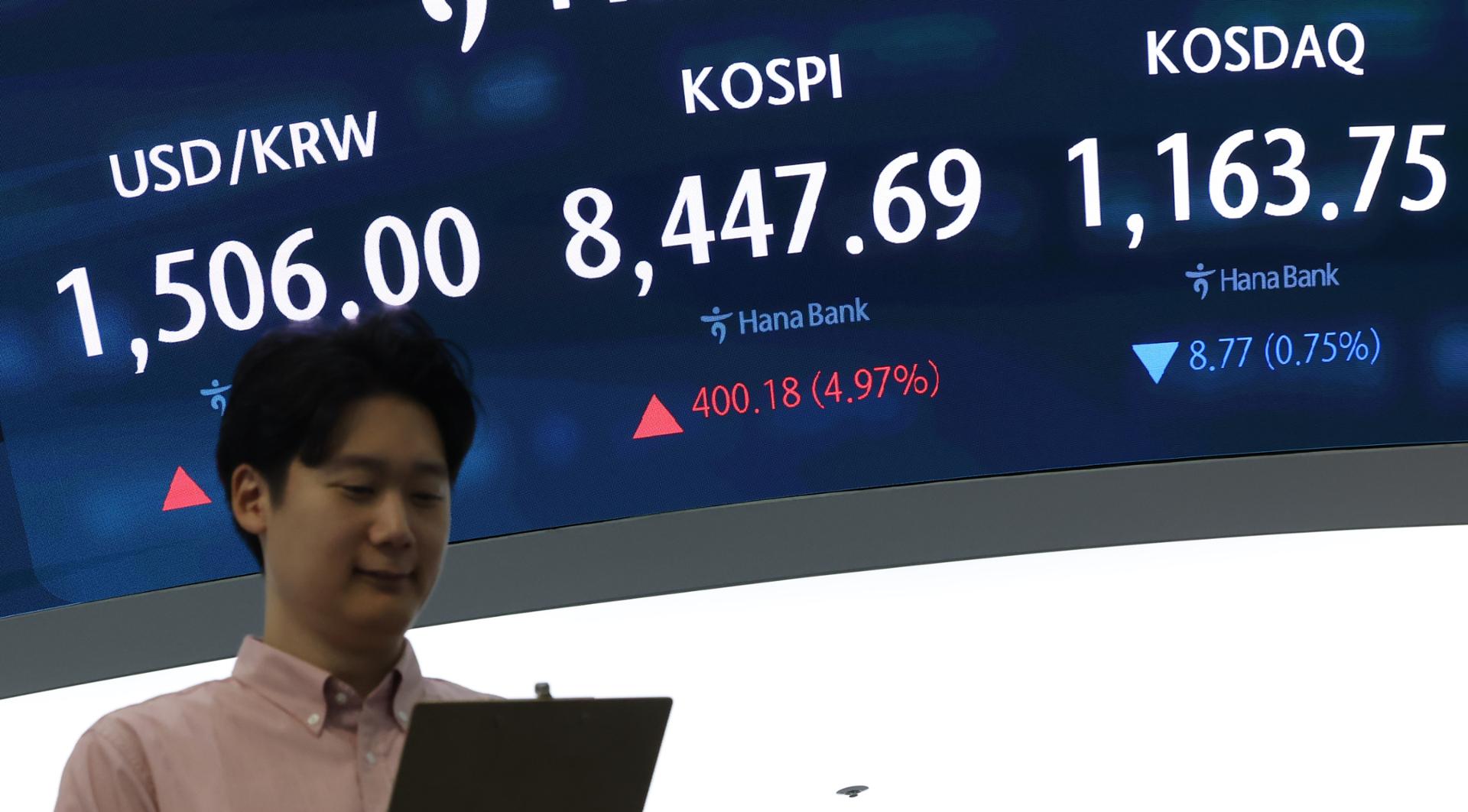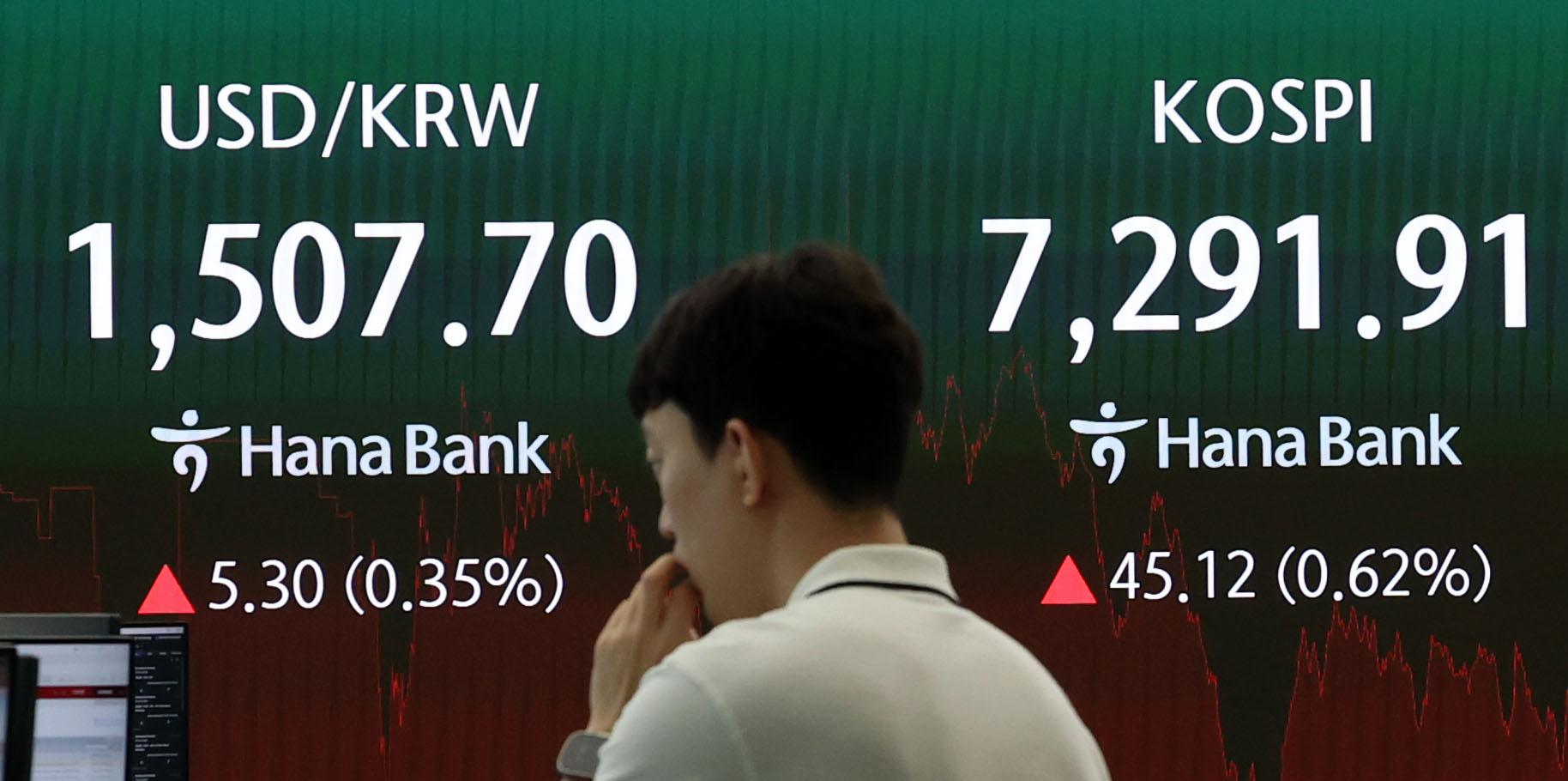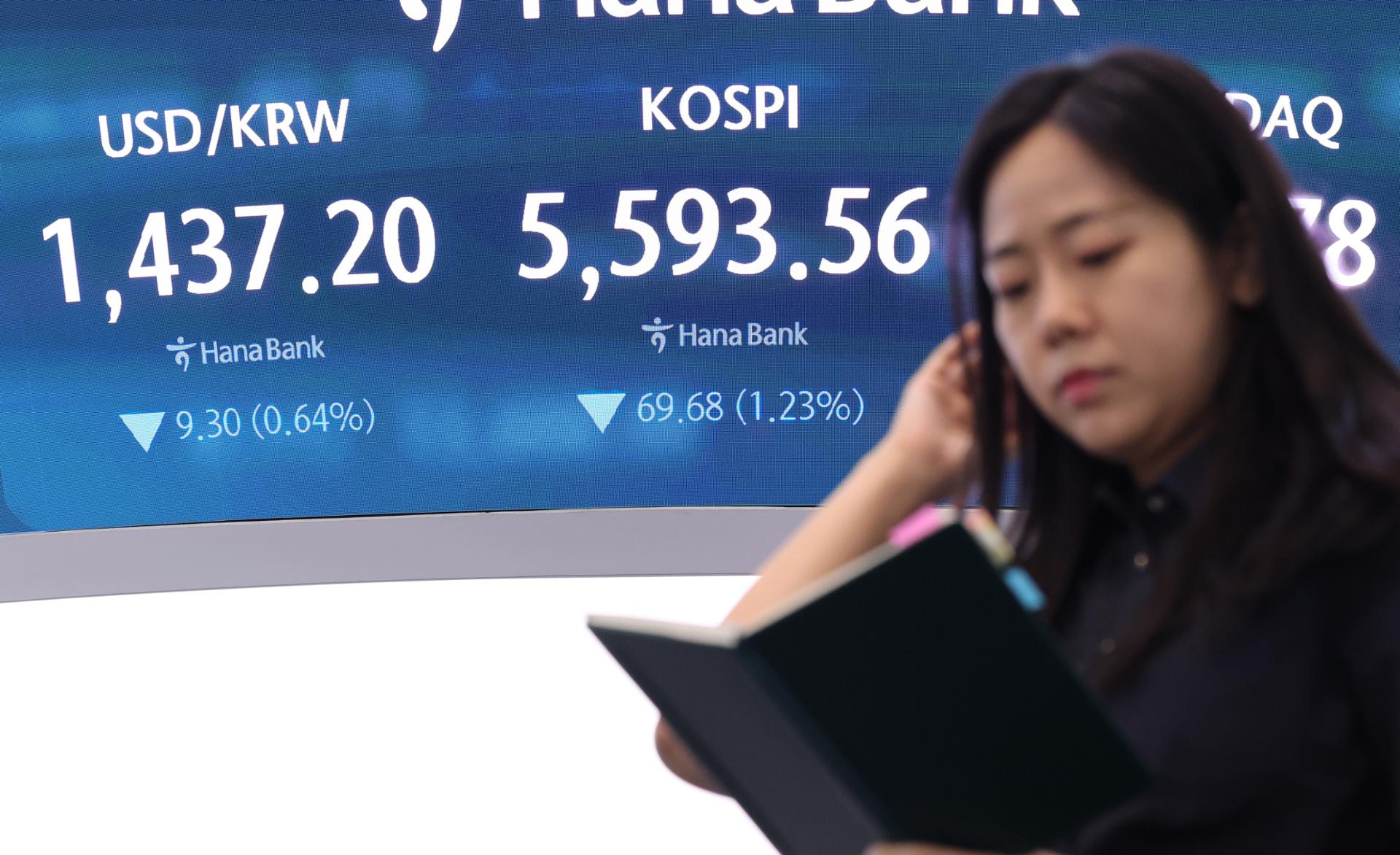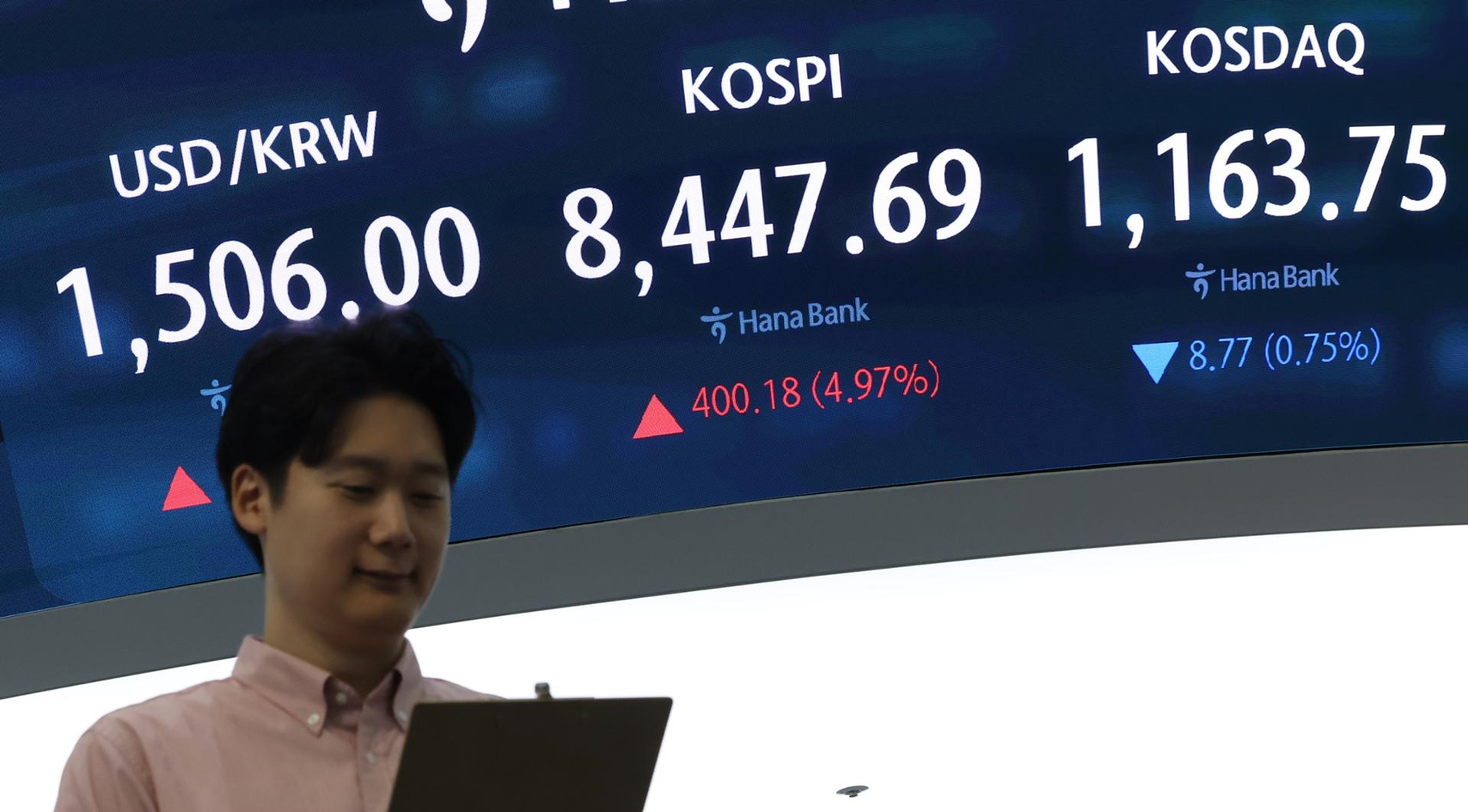
A stock ticker at Hana Bank headquarters in Seoul shows the Korean won trading at 1,506 won against the U.S. dollar during intraday trading, Wednesday. Yonhap
Even as Korea remained one of Asia’s top performers with its benchmark KOSPI smashing through the 8,000-point mark and a record current account surplus, the Korean won has remained stubbornly weak against the U.S. dollar — an unusual divergence that is puzzling investors and policymakers alike.
Ordinarily, strong exports, rising stock prices and robust external balances would support a stronger currency. Instead, the won has struggled. This year alone, the won-dollar exchange rate closed above the psychologically important 1,500-won threshold on 19 trading days, surpassing levels seen during the global financial crisis.
The won finished onshore trading at 1,501.2 won per U.S. dollar in Seoul trading on Wednesday, 3.1 won stronger than the previous session.
The won’s underlying value has weakened as well. According to the Bank for International Settlements, Korea’s real effective exchange rate index — a widely used measure of a currency’s global purchasing power — fell to 85.06 in April, the lowest level since March 2009.