Skip to content
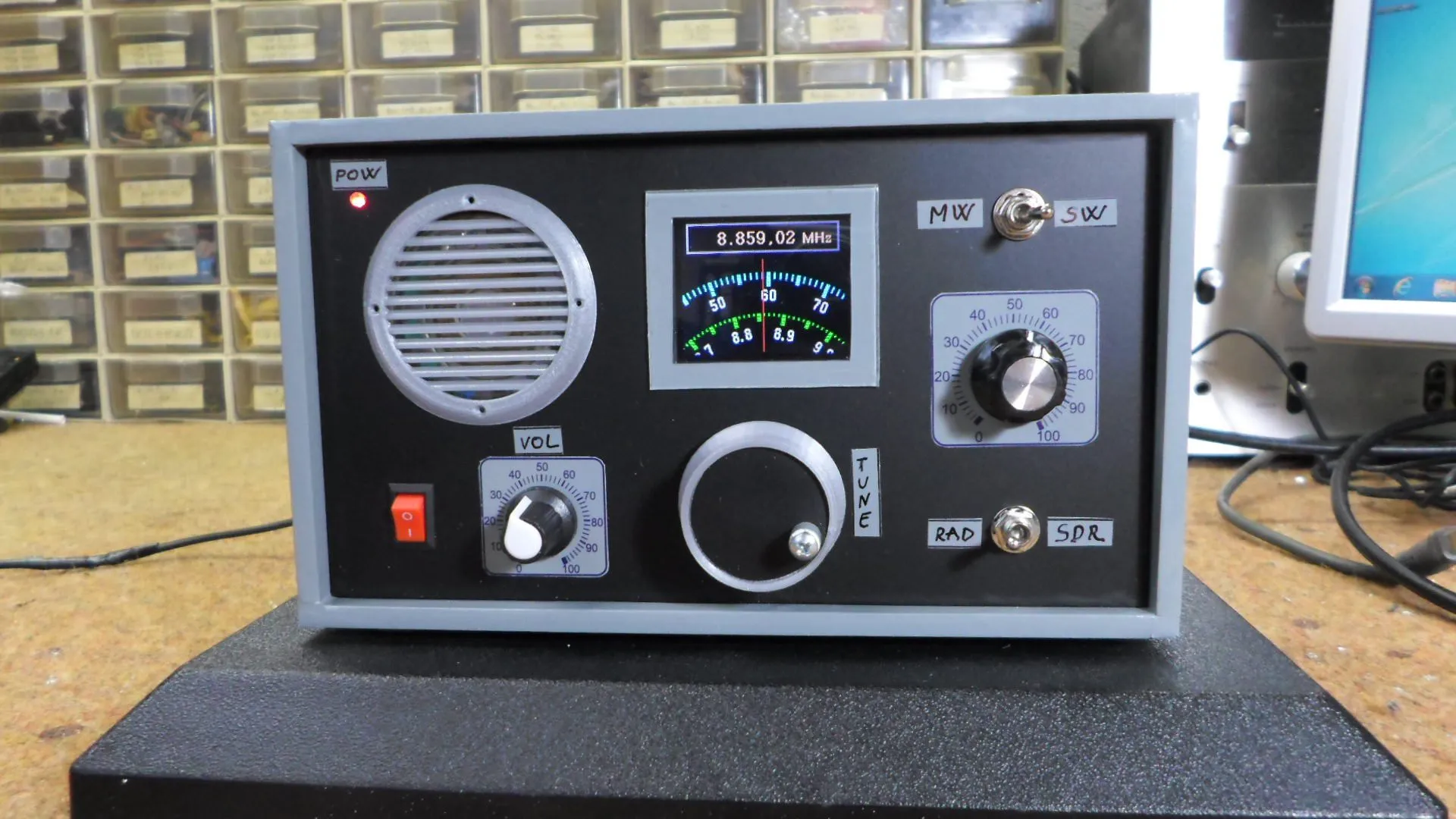
In the long ago, pre-internet days when your clock project wasn’t an ESP32 getting its timing via NTP over WiFi, it was still possible to build a wirelessly-updating clock. All you needed was a shortwave receiver tuned to a time signal — perhaps like the National Research Council of Canada’s CHU, found on the dial at 3330, 7850, and 14 670 kHz. At least, it can be found at those frequencies until June 22nd, 2026, when the station will finally go dark.
Depending where you were on Earth, it might have been easier to tune into CHU than the United States based WWVB, or one of the various European signals like DF44 or the UK’s MSF. If you’re not into radio, all these time signals have essentially the same job, if you hadn’t guessed: tell the time. This can be done in a variety of ways, and CHU has made use of more than one of them since its establishment in 1923.
Initially, the time was sent in Morse code, but later they added a speaking clock for easier human listening in both Canadian French and English. For synchronizing radio clocks, a series of pulses is given in DUT1 format using 0.3s pulses — which is what older clocks would have been listening to — and nowadays a digital FSK time code for more modern equipment. You can have a listen through the video by [Shortwave Listener] embedded below.