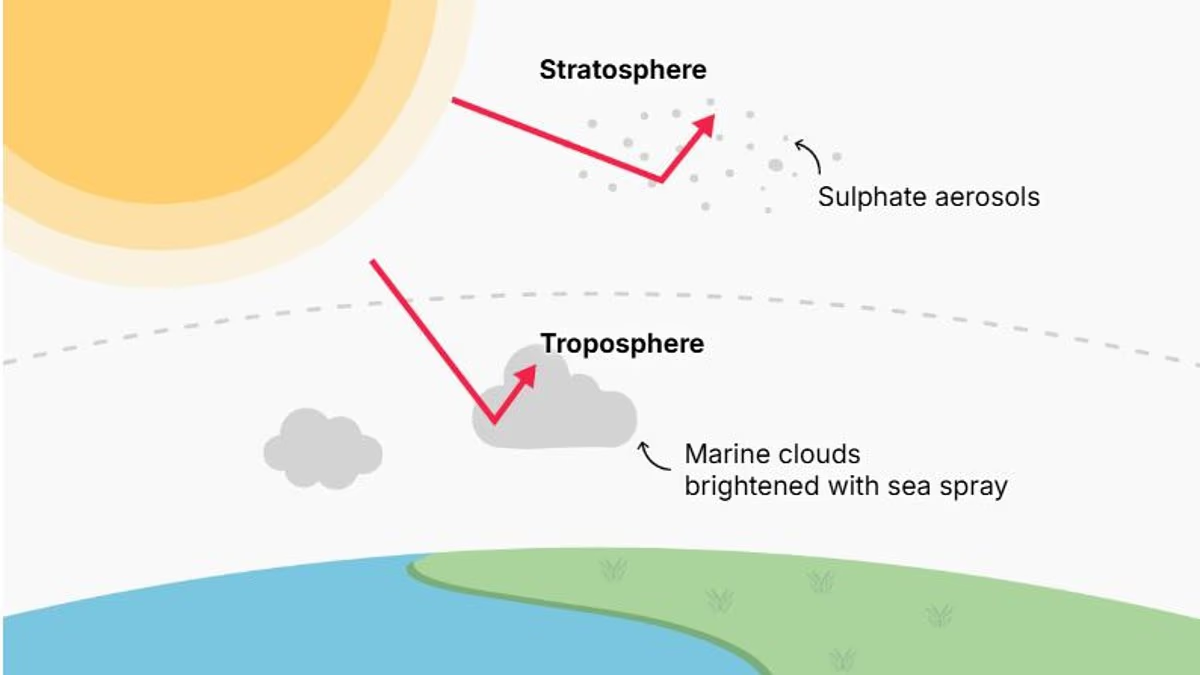
The planet is rapidly warming. Even if we manage to stop emitting fossil fuels, the carbon dioxide already in the atmosphere will continue to keep temperatures high.Scientists say there is something that could help: If we were to release sulfur dioxide into the stratosphere, the particles would reflect sunlight away from the earth — and cool the planet.This is a solar geoengineering intervention known as stratospheric aerosol injection, and it’s controversial. It would add more of a toxic pollutant into the atmosphere, but geoengineering experts like David Keith say that the lives we save from extreme heat could be worth it.“It might make sense to do this, understanding that the benefits would be pretty large and the risks appear to be pretty small,” Keith said.The idea of solar geoengineering has been mostly theoretical — until now. At an undisclosed location in Northern California, co-founders of the startup Make Sunsets are taking matters into their own hands by releasing balloons full of sulfur into the sky.“It sounds crazy, and I'll be the first to agree that this should not be a private company doing this. But the only thing worse than a private company doing this is no one doing this at all,” said Luke Iseman, one of the co-founders.Still, many scientists and climate activists remain concerned about this type of intervention. “I am a lot more cautious,” said Kate Marvel, a climate scientist at Project Drawdown, “and this is coming both from my position as a scientist who has studied how the physical earth system works, but also as from my position as a human being who knows what I know and what I don't know, and it's actually all of the things that I don't know that scare me the most about geoengineering.” Some of the potential side effects of stratospheric aerosol injection include damage to the ozone layer and unexpected consequences for weather patterns across the globe.Gary Hughes, a longtime environmental activist, echoed Marvel’s concerns, adding “a lot of the proponents of geoengineering, they really don't want scrutiny.” “They don't want there to be a full assessment of what it is that they are suggesting that we need to be dedicating huge amounts of resources to,” Hughes said," “because if you look at it closely, and you start to peel the onion, you find some really, really smelly, rotten sections underneath.”In this episode, the “How We Survive” team heads to Northern California to release sulfur-filled balloons and explore the controversial solution that could backfire, or be our last hope.
How to Dim the Sun
A controversial climate intervention could help prevent catastrophic tipping points. It could also backfire.
421 words~2 min read