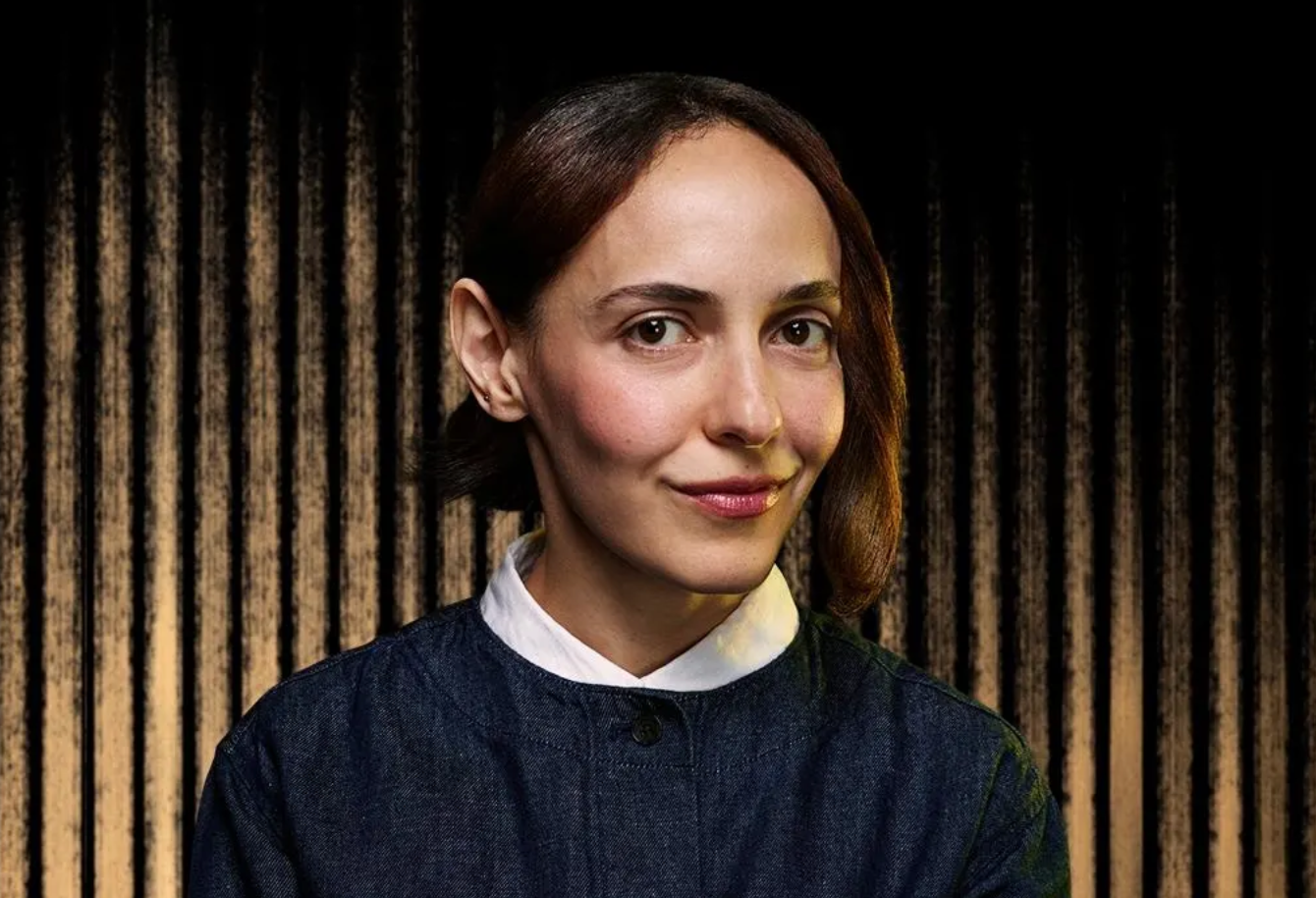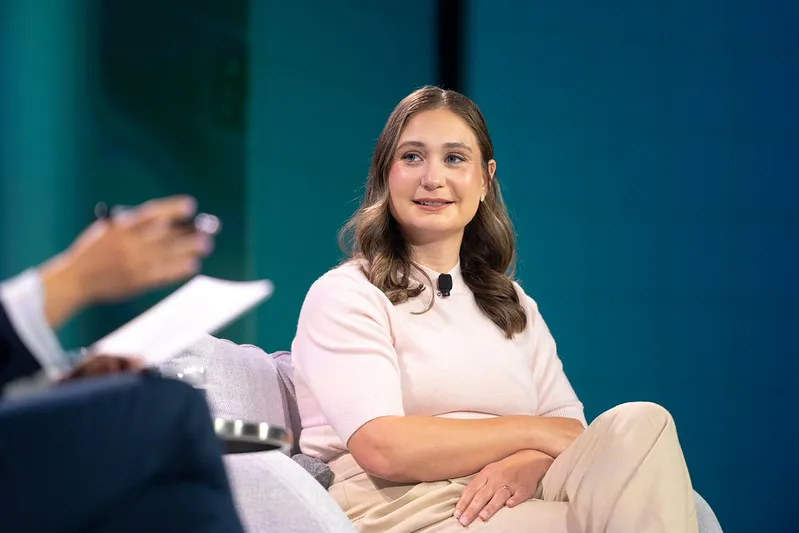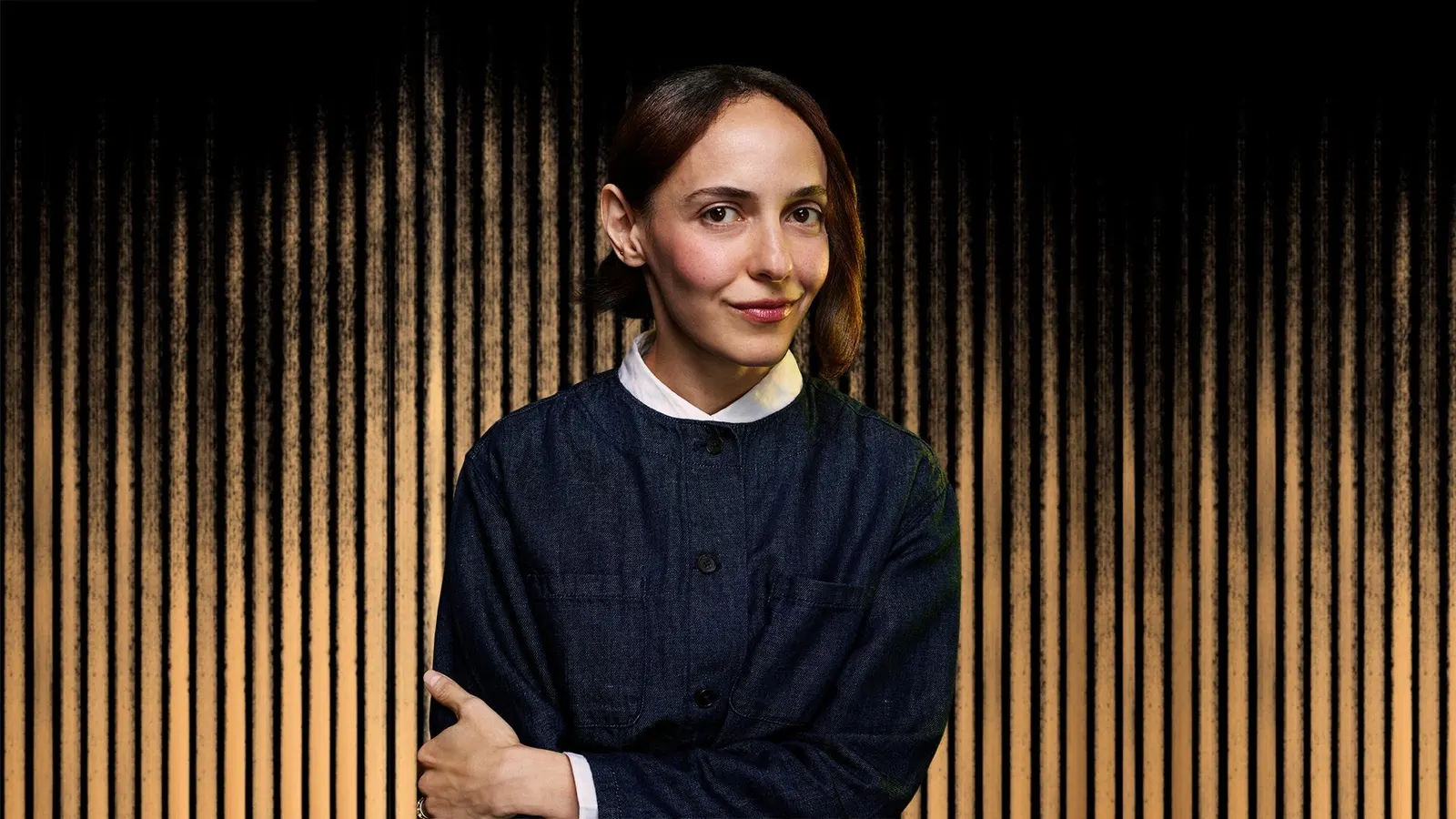
It’s hard to imagine now, but back in 2021 venture capitalists weren’t sold on Anthropic. The mega-AI startup is now valued at $380 billion, but at the time it had no public product, no revenue and was trying to raise hundreds of millions of dollars. “AI was not viewed as this supersexy, exciting thing that you would want to invest in,” says cofounder and president Daniela Amodei, who had been an early OpenAI employee before leaving with six of her colleagues to start Anthropic that year. Her brother, CEO Dario Amodei, quickly drummed up $1.1 billion in funding from a range of billionaire investors, including Facebook alum Dustin Moskovitz and soon-to-be-disgraced crypto bro Sam Bankman-Fried. It was enough to cobble together an early version of Claude, Anthropic’s AI chatbot, but not nearly enough to fully train it to compete against OpenAI’s ChatGPT, which exploded onto the scene in November 2022. Scared of spending billions backing what appeared to be an also-ran, most traditional VCs shied away—except Spark Capital partner Yasmin Razavi. Cody Pickens for ForbesIn May 2023, Razavi led a $450 million round for Anthropic that valued it at $5 billion. “It was the biggest check we had written in the history of our firm, so this wasn't one of these spray-and-pray moments where you get lucky,” says Razavi, speaking from her Soho apartment in New York City. She remembers writing two long investment memos, arguing her case to other Spark partners. “It was a big leap of faith, but this was the team that built GPT-3,” she says. Now, Anthropic is in talks to raise at a $900 billion valuation, a number that would eclipse even OpenAI — with whispers of an IPO later this year. Anthropic’s staggering success has for the first time catapulted Razavi, 37, onto our Midas List of the top 100 venture investors. The only Anthropic investor to have a board seat, she’s the highest-ranked newcomer on this year’s list at No. 13. Spark’s initial $75 million check (and follow on investments) to the Amodeis’ company is now worth at least $3 billion. “[This] will go down as one of the best investments of this generation,” wrote Altimeter Capital investor Pauline Yang, whose fund has also backed OpenAI and Anthropic. Now in its 25th year, the 2026 Midas List represents a snapshot of an industry on the cusp of its largest returns in decades. Investors in just three private companies—Anthropic, OpenAI and SpaceX—are heavily represented. If all three were to go public at current valuations, they would bring in an estimated $815 billion in profit, more than every other VC deal of the last decade combined. Anthropic in particular has been on a tear. The launch of a code-writing tool with near-human abilities just over a year ago has hit the tech industry like an atomic bomb. Daniela Amodei says behind the scenes, Razavi had encouraged the cofounders to focus on programming. “Yasmin pushed us a lot to think about coding as its own vertical,” Amodei says. “We had the outlines of [what] Claude Code would be one day but she was like: ‘This is gonna be a huge market and you can absolutely own.’” She was right: By April, Anthropic was reporting that Claude Code alone made $2.5 billion in run-rate revenue. It is so good that investors are scrambling to figure out which software companies are soon to be obsolete. Claude Code spawned Claude Cowork, an AI agent tool that can handle white collar work like making presentations, sifting data and creating spreadsheets, which in February caused a $285 billion software sell-off. And the company’s new model Mythos found scores of hackable backdoors scattered across the internet, which have now been patched. Dario Amodei now says that the business grew 80-fold in the first quarter alone. Forbes reported last year the company made $4.5 billion in hard revenue. Its run-rate revenue projections for the second quarter are set to eclipse that and will help it turn an operating profit, per WSJ. In April, Amodei claimed that the company’s annualized run rate is on pace for $30 billion this year. That growth has required masses of compute and capital. It’s already raised $62 billion and just inked a new deal to spend $1.25 billion monthly to tap chips in Elon Musk’s data centers. Comparatively, Spark’s checks are small fry compared to the $3 billion from Google and $13 billion from Amazon, respectively. But its return multiple will be far greater: more than doubling the $1.4 billion fund that Razavi wrote that first check from. Now based between San Francisco and New York, Razavi was born in Tehran, Iran, to a doctor mother and father who ran his own steel manufacturing company. On a high school trip to visit a brother studying in Canada, she made a snap decision. She wasn’t coming home. It was as much about escaping conservative Iran as it was ducking its notoriously tough college entrance exam, Razavi says. “I always knew I wanted to live in the West.” Instead she enrolled at the University of Toronto. But while in school her attention was drawn away from classes in industrial engineering and coding. There was a new boom in the Bay Area, driven by startups like Instagram, Uber, and local hero Shopify, and she wanted in. After a stint working on boring, back-office consulting projects for McKinsey, she interviewed for a gig at Index Ventures. The VC’s London office had been hunting for a gaming expert who had experience doing business in the Nordic region. Razavi had neither. They hired her anyway. “Yasmin was ruthlessly focused on big opportunities and working with the top entrepreneurs,” says her then-boss Ben Holmes, a former Index partner (and Midas List Europe alum). She bounced from Index to Harvard Business School (where she interned on the monetization team at Snap) and then landed at Spark Capital. She was drawn to the then 12-year-old fund for its track record backing Plaid and Palmer Luckey’s VR startup Oculus, and a “blank canvas” approach that didn’t try to box investors in. Early on in her time at Spark she dug into how fintechs were changing the flow of money. That led to backing payroll tech company Marqeta in 2019 at a $1.9 billion valuation. Just two years later it would go public at a $15 billion valuation (though its market cap has now slumped to $1.6 billion). Then she bet on remote work going global, leading to a 2020 investment in remote work hiring platform Deel when it was worth $200 million. It’s now valued at $17 billion.Now, her thesis around Anthropic has led her to make broader AI bets. Those range from datacenter builder Crusoe (valued at $10 billion), to AI chip maker MatX, and still to be announced silicon lithography startup. “Yasmin makes non-obvious, high conviction bets,” says Alex Bouaziz, cofounder of Deel. “She’s one of the next generation of best investors.”Since she joined Anthropic’s board in 2023, the AI lab has been on a wild ride. It’s feuded not just with its archrival OpenAI, but with Secretary of War Pete Hegseth and the Trump Administration over the Pentagon’s use of Claude for domestic mass surveillance. And while it may have the edge on the AI pack for now, its rivals are jonesing to claw back a lead. Elon Musk just made a $60 billion bet that buying coding tool Cursor could pump up his Grok model. OpenAI’s Codex is competitive, and Google shouldn’t be counted out either. That hasn’t put a damper on Razavi’s faith in Amodei to deliver. “Every year, he puts out outrageous numbers but somehow they magically become true,” says Razavi. “Dario never misses.”More from ForbesForbesInside The Murky Market Selling Pre-IPO SpaceX And OpenAI SharesBy Phoebe LiuForbesThis Top VC Wants To Use Main Street America As An AI LabBy Iain MartinForbesVCs' Payday From SpaceX, OpenAI And Anthropic Could Top All Profits Of The Last DecadeBy Iain Martin
Investing Superstar Yasmin Razavi Turned A $75 Million Check Into A $3 Billion AI Windfall
The Spark Capital partner bet early on Anthropic when most other VCs wouldn’t touch it. Now the hottest AI company on the planet has landed her on the Midas List of best investors for the first time.
1,325 words~6 min read