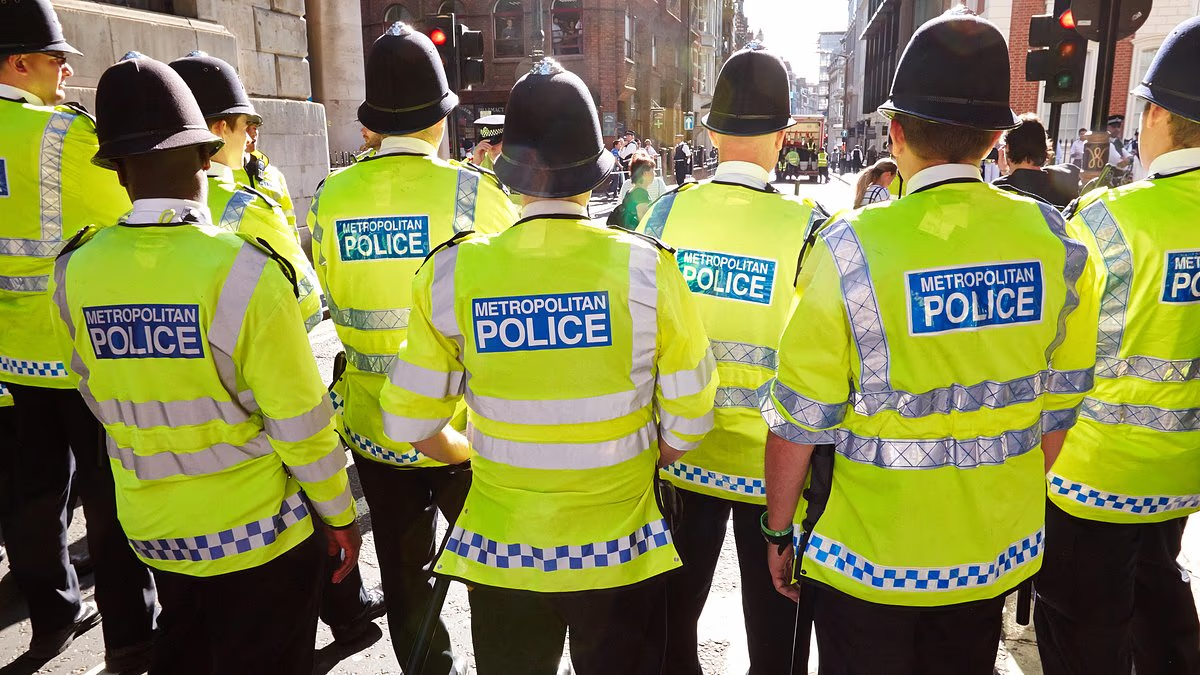
A Metropolitan Police officer moved three hours away from his base, then sued the force for discrimination after being denied the right to work from home. PC Paul Heard relocated from South London to Suffolk, leading to a six-hour daily round trip commute to his Met Police base in Croydon. He complained to an employment tribunal that the journey was "exhausting", claiming that it was "fatiguing" and impacted his physical and mental health.Despite his role requiring him to provide policing services within the Croydon community, PC Heard formally requested to work remotely from his new home in Suffolk. The Met, however, refused his demands, saying that as an officer, he could not effectively conduct his duties in the community if working from such a distance.PC Heard then brought a case against the force at the London South Employment Tribunal, alleging disability discrimination and indirect disability discrimination. The tribunal ruled against the officer, who remains a serving member of the force.PC Heard began working as a police officer with the Met and in 2017 started work in Duty in the Command stationed primarily in Croydon.His duties included liaising with local organisations, and required him to be in the area.PC Heard could not effectively conduct his duties in the community while working from Suffolk, the Met said (PA)PC Heard's work was "always of a high standard" and he had occasionally covered as acting sergeant.The tribunal heard: "In September 2018, [PC Heard] had moved to Suffolk."This required him to commute on public transport for approximately three hours each way to the Croydon building."There was no dispute that [he] was initially able to manage this commute and discharge his functions effectively."Some working from home was allowed in 2019, and while it was accepted that the majority of work would be completed in police buildings, it quickly became more common during the pandemic.A "blended" framework came into place in June 2021 which allowed officers to work from home but also said they "will typically spend time out in the community but also need to spend focused time within a Met Building".In mid 2021, PC Heard began experiencing health problems, particularly breathlessness.He began working "compressed" hours – four days of 10 hours each instead of five days of eight hours – and cited the long commute in his reasoning.In June 2022 he was diagnosed with hypothyroidism, with his doctor noting he had been "managing symptoms of high blood pressure, tiredness depression and memory problems for some months".PC Heard went on sick leave from then until November 2022, describing himself in a welfare meeting as "tired and spending a lot of time sleeping".A phased return to work was scheduled for the autumn, which would start with just one day a week in the office to gradually add an extra day each week.However, it was an "agile working" approach that actually allowed PC Heard to work exclusively from home.PC Heard completed a psychological assessment in May 2023 and reported that his three-hour commute was a "working condition stressor", but it was not an issue as he worked from home.He reported that his physical and mental wellbeing could be compromised by "travelling into work".In the report, PC Heard was assessed as fit for full hours on adjusted duties and he should "continue with agile working".However, his request to work from home was denied by the Met, which said: "We currently have no roles available that would allow working from home to the extent required and no public contact."The PO [police officer] role is an operational public facing role. The adjustments would result in additional work being placed upon other officers on the teams and would impact how we could effectively deliver our operational priorities."PC Heard was later offered a job in Stratford, one hour's commute away, but he still failed to go into work.PC Heard complained that the "refusal of his WFH request and this plan exacerbated his stress and resulted in a worsening of symptoms" and told Occupational Health that his commute was "exhausting".PC Heard filed a grievance against the Met in November because of the refusal of his request.He began the phased return in January 2024 but would often not turn up to the police building because he was "symptomatic and instead worked from home".He slowly started to come into work and the grievance was informally resolved – but in July 2024 he restarted the grievance and went off sick for a month.PC Heard was told that another phased return to work should begin in January 2025, and that a team could even be moved closer to his home to make things easier.A new hybrid working policy came into place and so the officer yet again applied to work from home – but it was again rejected.At the tribunal, it was claimed on his behalf: "[PC Heard] relies on a difficulty in undertaking long commutes on public transport."It is [his] position that the specific long commute in question is approximately three hours each way and is difficult because it is fatiguing, stressful, and anxiety-inducing, and therefore impacts his physical and mental health."Dismissing his claims, Employment Judge Nicholas Cox said the Met has already made adjustments to be "flexible" for PC Heard.Judge Cox said: "I consider to be an essential element of the work of an Operational Police Officer working on the Duty to attend an [Met Police] location... for at least some Duty work."The tribunal heard that the latest medical report said PC Heard is adhering to his latest return to work programme.
Police officer moves three hours away from base then sues over long commute
PC Paul Heard said the trip from his Suffolk house to the Croydon police base was ‘exhausting’
916 words~4 min read