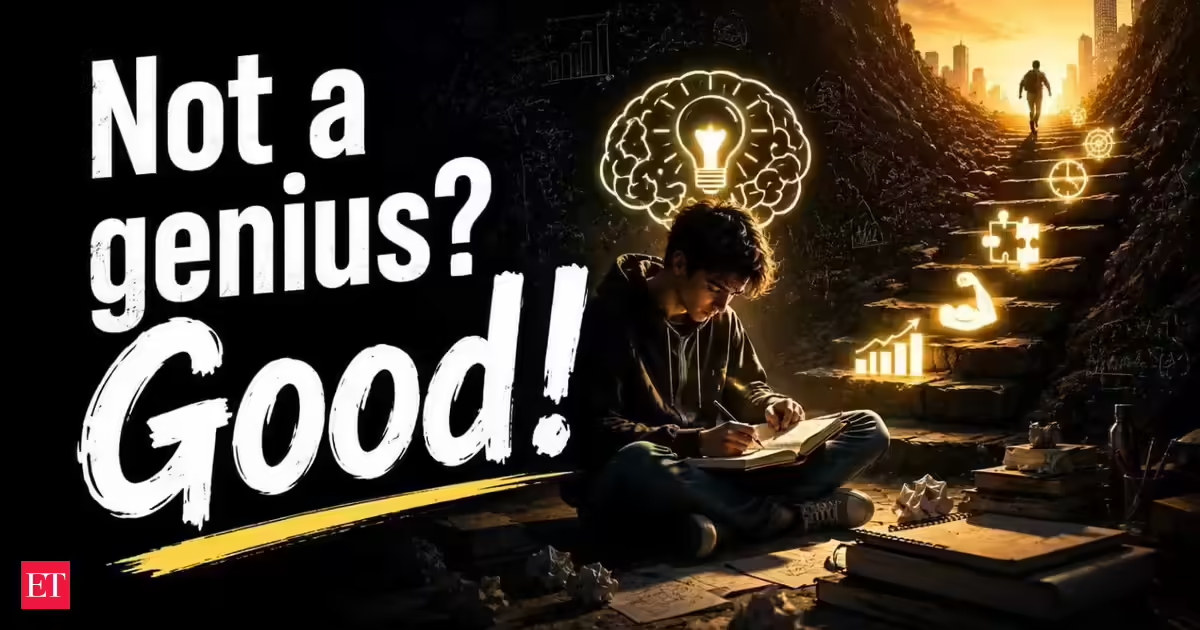
Everyone knows someone who seems good at almost everything. They perform well at work, pick up skills quickly, communicate confidently, and often succeed in multiple areas of life. To outsiders, it can look like pure talent or unbelievable luck. But psychology says the truth is more complex. Experts believe people who appear “naturally good” at many things often share specific mental traits, learning patterns, and emotional habits that quietly shape their success.The Myth of Natural TalentPsychology has long challenged the idea that success comes purely from talent. Research by Carol Dweck on the Growth Mindset Theory suggests that people who believe abilities can improve through effort are more likely to succeed across different fields.Instead of seeing failure as proof of weakness, these individuals treat mistakes as feedback. This mindset allows them to learn faster and adapt more easily than others.You Might Also Like:Why Some People Learn Faster Than OthersOne major factor is cognitive flexibility, the brain’s ability to switch between ideas, adapt to new situations, and solve problems creatively.People who are good at many things often have high cognitive flexibility. They can transfer knowledge from one area to another, which helps them learn skills more efficiently.For example, someone who excels at music may also perform well in languages because both involve pattern recognition and memory processing.The Role of Deliberate PracticePsychologists argue that what looks like effortless talent is often the result of deliberate practice, a concept popularized by Anders Ericsson.You Might Also Like:This type of practice is intentional, focused, and repetitive. People who appear naturally gifted often spend years quietly refining their abilities while others only see the final result.Athletes like Cristiano Ronaldo are frequently described as talented, but much of their success comes from disciplined routines and relentless practice.The “Lucky Person” PsychologyLuck does play a role in life, but psychology says some people are better at creating opportunities.You Might Also Like:Research on the Luck Factor Theory by Richard Wiseman found that people who consider themselves lucky are often more open-minded, optimistic, and socially engaged. These traits increase the chances of noticing and acting on opportunities.In other words, “luck” is sometimes a psychological pattern rather than random chance.High Self-Efficacy and ConfidenceAnother important concept is self-efficacy, developed by Albert Bandura. Self-efficacy refers to a person’s belief in their ability to succeed.People who are good at many things often approach challenges with confidence rather than fear. This confidence encourages them to try new experiences, which increases learning and growth over time.The Power of CuriosityPsychologists also highlight the role of intrinsic motivation, the desire to learn for personal satisfaction rather than external rewards.Highly capable individuals are often deeply curious. They enjoy mastering new skills because the process itself feels rewarding. This internal motivation keeps them engaged long enough to improve.Modern innovators like Elon Musk are often cited as examples of people who explore multiple fields through intense curiosity and learning.Why It Looks Effortless to OthersPeople usually see the outcome, not the process. This creates what psychologists call the Iceberg Effect, the visible success hides years of invisible effort, failure, and persistence.Social media has intensified this perception. Platforms like Instagram and TikTok often showcase polished achievements without revealing the hard work behind them.As a result, success appears effortless even when it is not.Adaptability Is the Real SuperpowerPsychology suggests that adaptability may matter more than talent itself. In a rapidly changing world, people who can adjust, learn quickly, and remain emotionally resilient tend to succeed in multiple areas.This aligns with the concept of grit, introduced by Angela Duckworth, which combines perseverance and long-term passion.Can Anyone Become Good at Multiple Things?Experts say yes. to a certain extent. While genetics and environment influence ability, many skills can improve through practice, mindset, and consistency.The biggest difference often lies in willingness to keep learning despite discomfort or failure.It’s Rarely Just LuckThe psychology of people who seem good at everything reveals that success is usually a combination of mindset, adaptability, curiosity, and sustained effort. Luck may open a door, but psychological traits determine who walks through it and keeps going. What appears effortless from the outside is often built on years of invisible persistence and emotional resilience.FAQs:Are people who are good at everything naturally talented?Not always. Psychology suggests mindset, practice, and adaptability play major roles in success.You Might Also Like:Does luck influence success?Yes, but optimistic and open-minded people are often better at recognizing opportunities.
Psychology says people who are good at everything and are sensed ‘naturally gifted’ aren’t just lucky but this hidden secret behind their talent comes with a warning
The psychology of people who appear to excel at everything suggests that success is often driven by mindset, adaptability, curiosity and consistent effort. Luck may create an opportunity, but psychological traits are what help someone step through the door and continue moving forward.
724 words~3 min read