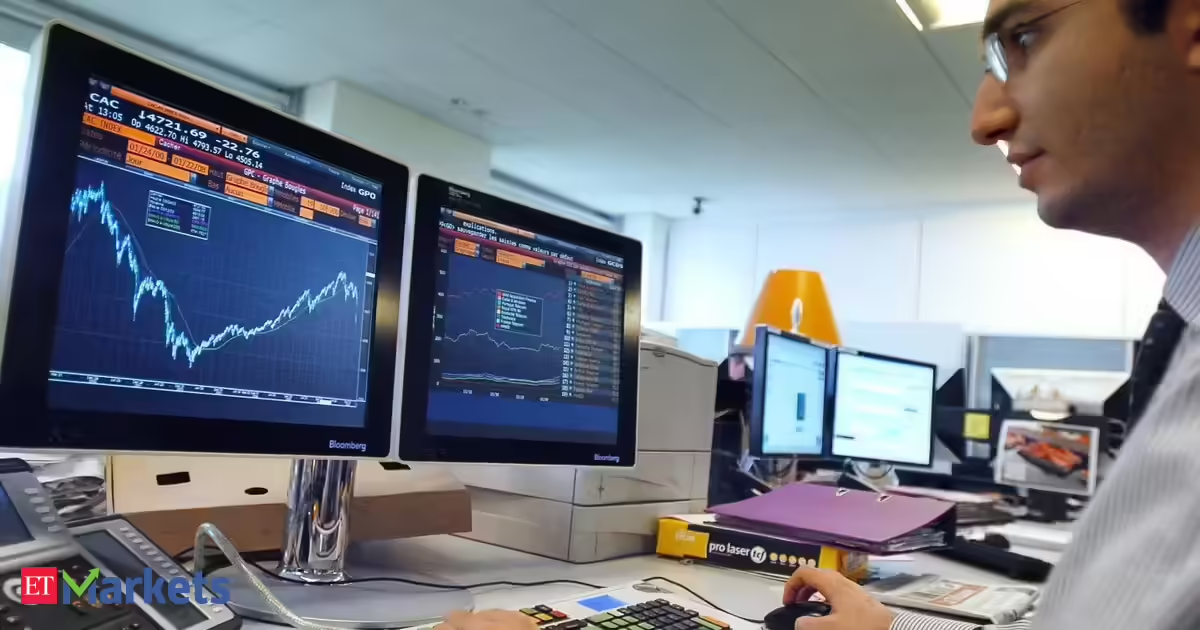
The pan-European STOXX 600 index edged up 0.2% to 629.51 points by 0829 GMT, bringing it about 1% away from a record high hit in February before the conflict started. Automobiles and parts was among the top gainers across sectors, rising 2.6%, with Volvo Cars jumping 7% after the company said it received a U.S. government approval that would allow it to continue selling vehicles in the country.The sector was also lifted after that registrations in the European Union, Britain, and the European Free Trade Association rose 7% in April, taking the total for January through April 4.8% above a year earlier. Chemical stocks also gained over 1.3% as AkzoNobel shot up 16% after the paint maker rejected a joint cash takeover offer of €73 ($85) per share from rivals Nippon Paint and Sherwin-Williams. Meanwhile, escalating tensions in the Middle East kept gains in check, as Iran called recent U.S. strikes a violation of the ceasefire, while Israel bombed Lebanon."Markets are sort of just putting it to the back of their mind," said Michael Hewson, a senior financial analyst at iFOREX Europe."The new status quo is essentially continued uncertainty about a ceasefire, and until such times as things deteriorate really badly, they're going to work on the basis that there's going to be a resolution at some point."Brent crude prices lost 2%, but at $97 a barrel, they kept inflation worries at the top of investors' minds as markets priced in at least two 25-basis-point interest rate hikes by the European Central Bank this year. Dutch central bank chief Olaf Sleijpen said that the persistence of energy price shocks will be a key factor guiding the ECB's next policy decision.Among laggards, Naturgy lost 4.3% after Private equity fund CVC Capital Partners sold its entire 13.8% stake in the Spanish energy company, worth around €4 billion ($4.66 billion).Clean energy stocks such as Nordex fell 5%, while Orsted and Vestas lost 2% and 4%, respectively.Pernod Ricard edged up 3.2%. that Indian investigators concluded that the beverage maker withheld the age and composition of its Scotch whisky imports to pay lower tariffs and asked the company to pay $314 million in back taxes.
Global Markets: European shares edge higher as auto, chemical stocks rise
European shares neared an all-time high, boosted by strong auto and chemical stocks, despite ongoing Middle East tensions. Investors are cautiously optimistic about a resolution, while persistent energy price shocks keep inflation worries and potential ECB rate hikes in focus. Naturgy and clean energy stocks lagged.
360 words~2 min read