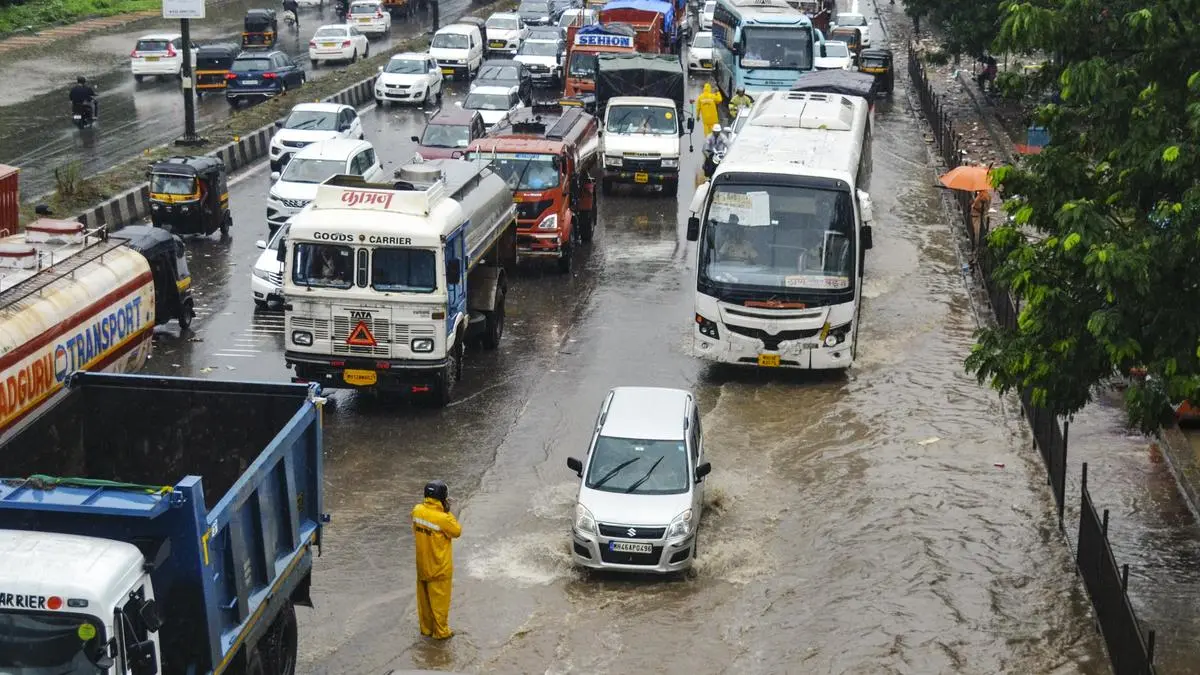
This is the time of the month when large parts of India wait desperately for some sign of the monsoon. Many businesses carry monsoon risk on their books. Too much or too little rain can cause lots of damage.
So, when the NCDEX issued a circular last week announcing a Liquidity Enhancement Scheme for Mumbai Rainfall Futures (ticker: RAINMUMBAI), one naturally got excited. The contract covers the monsoon months and makes a payout based on the occurrence and magnitude of predefined weather conditions. This is different from insurance, which compensates for actual loss. It’s the beginning of a market for monsoon risk, and it is about time India had one.How will the RAINMUMBAI contract actually work?
Imagine you run a mid-sized construction company in Mumbai with a large infrastructure project underway. Your July budget, which factors in some predictable rainfall, assumes your crew works 20 days, unlike the usual 25 days in non-monsoon months. But if July is an unusually heavy rainfall month, your workers cannot be on site, and your losses increase.
With RAINMUMBAI, you can buy a July futures contract that is structured to pay off when Mumbai’s measured rainfall in July exceeds a certain level, say 700 mm, for the month. The measurement has to come from a designated source such as the India Meteorological Department (IMD). If July ends up getting much higher rain than normal, say 800 mm, your futures position settles at a gain, and offsets the costs you are bearing. If the month turns out to be drier than expected, with rainfall at 500 mm, your futures position settles at a loss.Let’s say the contract is priced at 700 mm, meaning the market expects 700 mm of July rain. Each millimetre of rainfall above or below this entry price is worth a fixed rupee amount: say Rs 500 per mm per lot. And you buy one lot at 700 mm. If the actual rainfall is 820 mm, then your profit is (820-700) x 500 = Rs 50,000. If the monsoon is 500 mm, then your loss is (500-700) x 500 = Rs 1,00,000. But this may be offset by the fact that your workers were able to pull off the 25 days of work, and your revenues are on track. You may think that it’s a price worth paying for the hedge.Who is selling this futures contract? The NCDEX contract proposes a designated market maker (DMM): a professional trading member who commits to being present in the market continuously, posting prices at which they will both buy and sell. This is a serious operational commitment. In exchange, the DMM receives an incentive that changes depending on their presence. Over time, there may be traders on both sides of the market.