The federal agency says it wants to forward fund all competing research project grants next year.
Photo illustration by Justin Morrison/Inside Higher Ed | Dragon Claws/iStock/Getty Images
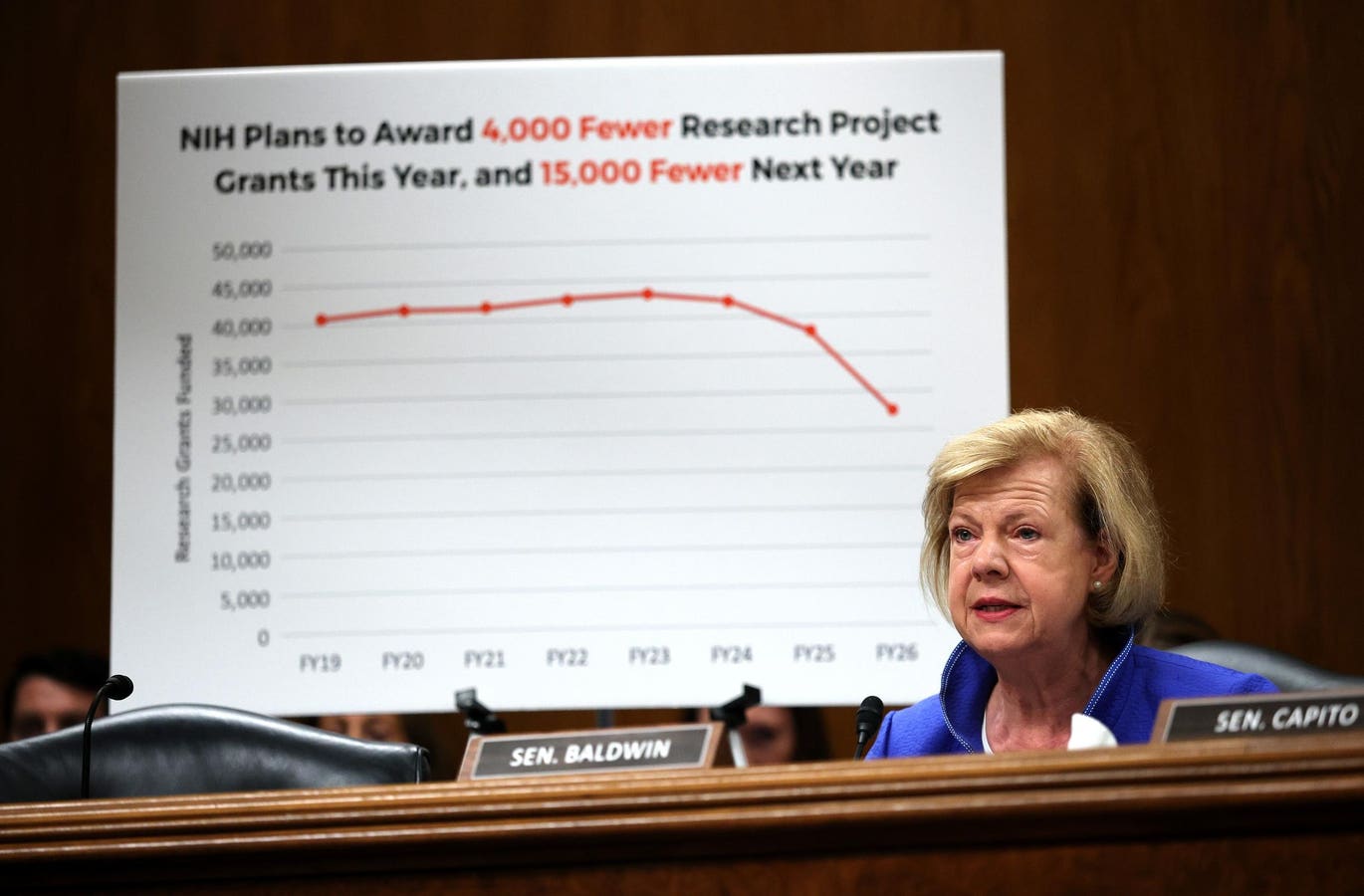
The National Institutes of Health, a huge funder of universities’ biomedical research, has stepped up its controversial practice of obligating funds up front for research grants that are usually funded over multiple years, the Association of American Medical Colleges says in a new report. This practice leaves less money in the current fiscal year to fund new scientific studies and pay researchers, increasing the competition among grant applicants for a smaller pot of dollars.
The NIH has a more than $47 billion budget this year, much of which will go outside the agency to universities and independent research institutes in the form of grants. Last year, roughly $37 billion in NIH funding went out as these “extramural” grants, the AAMC said.
Congress banned NIH from obligating more money this year than last toward “multiyear grants”—also called “forward-funded grants”—by slipping that cap into an appropriations act.