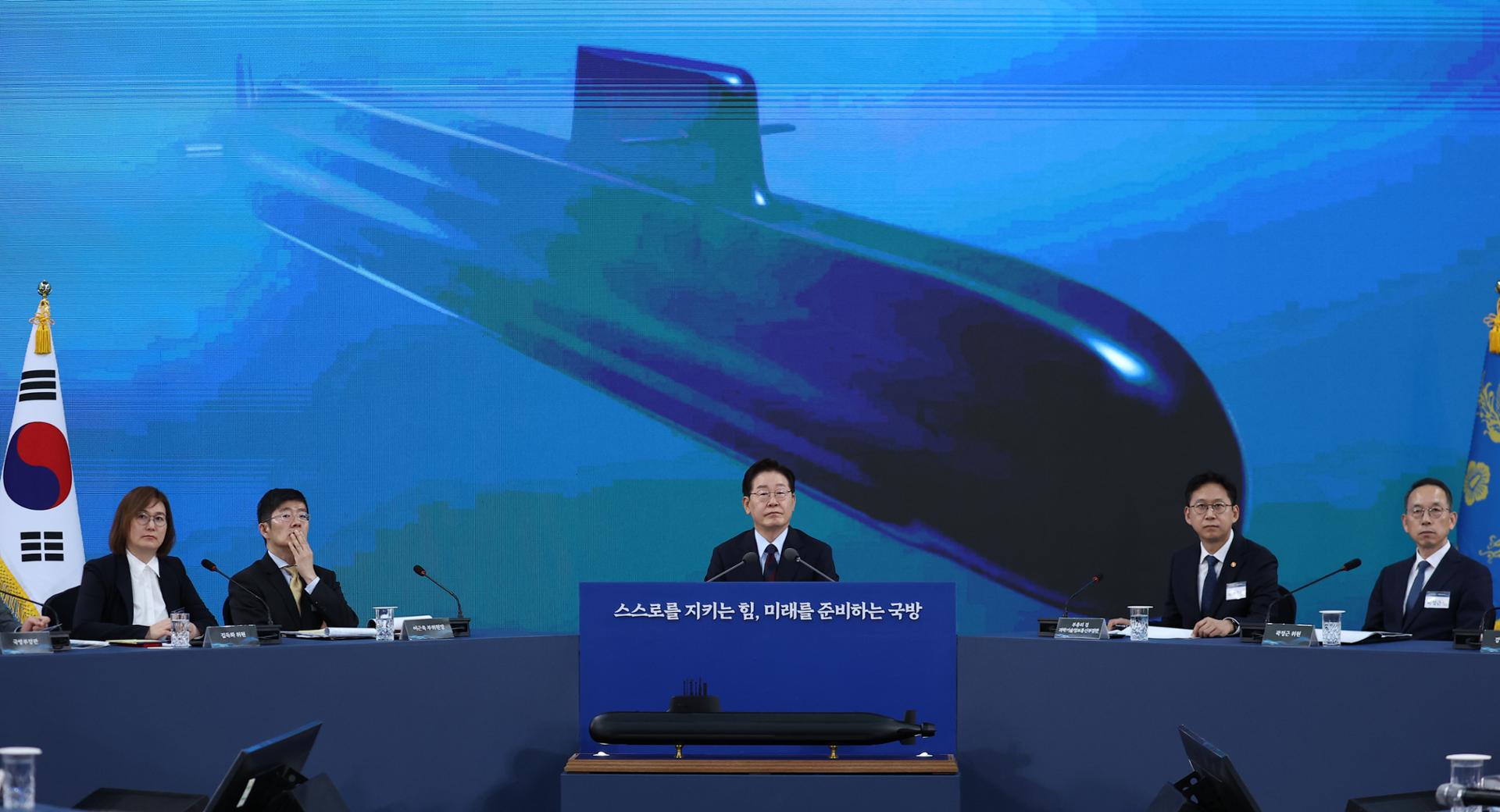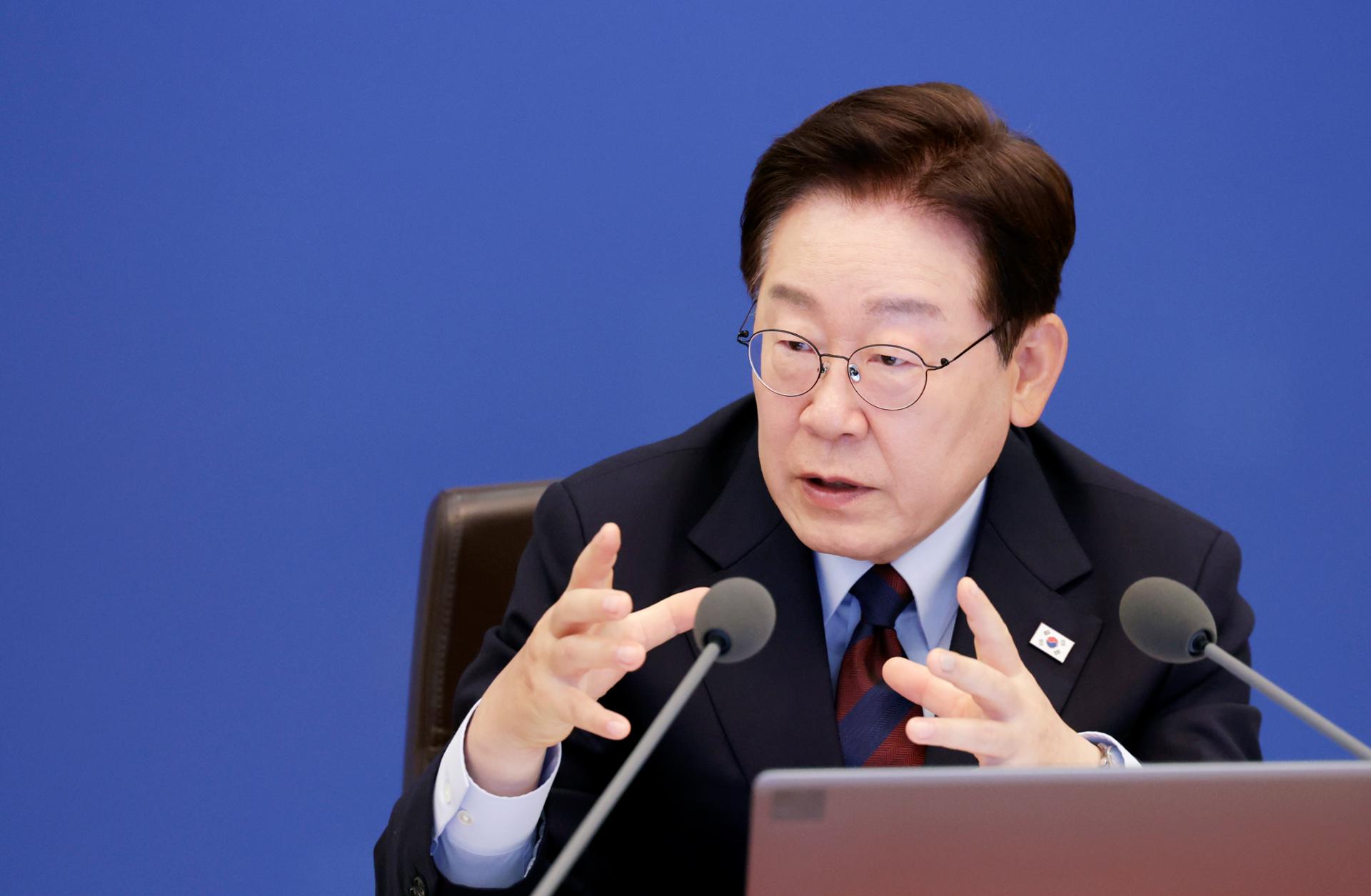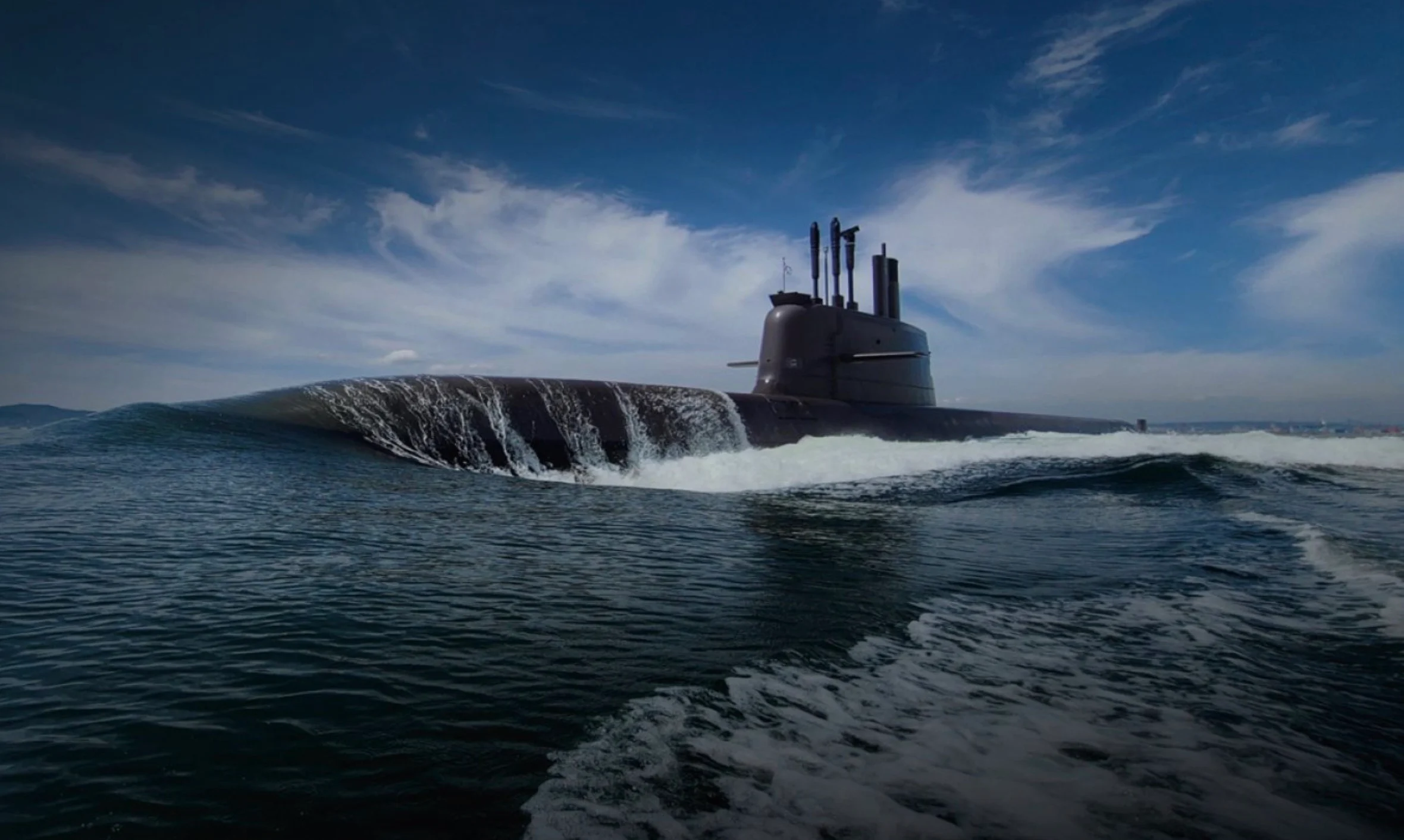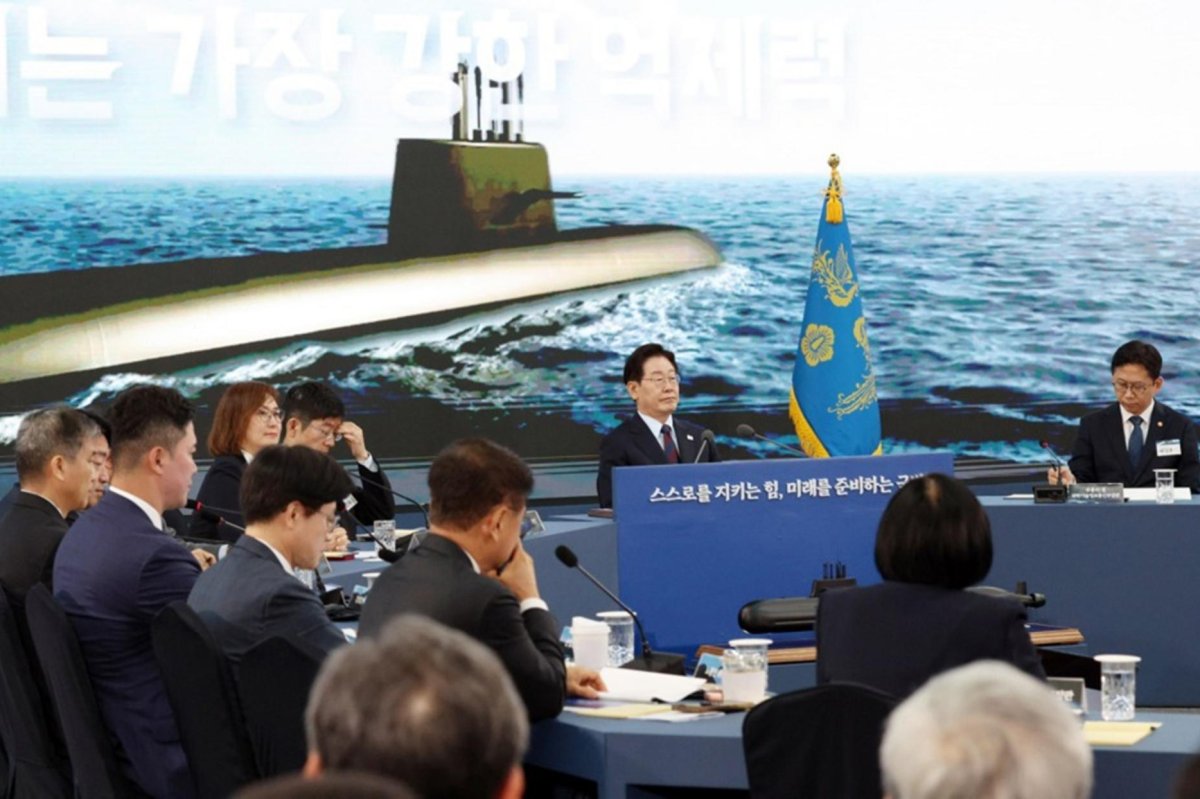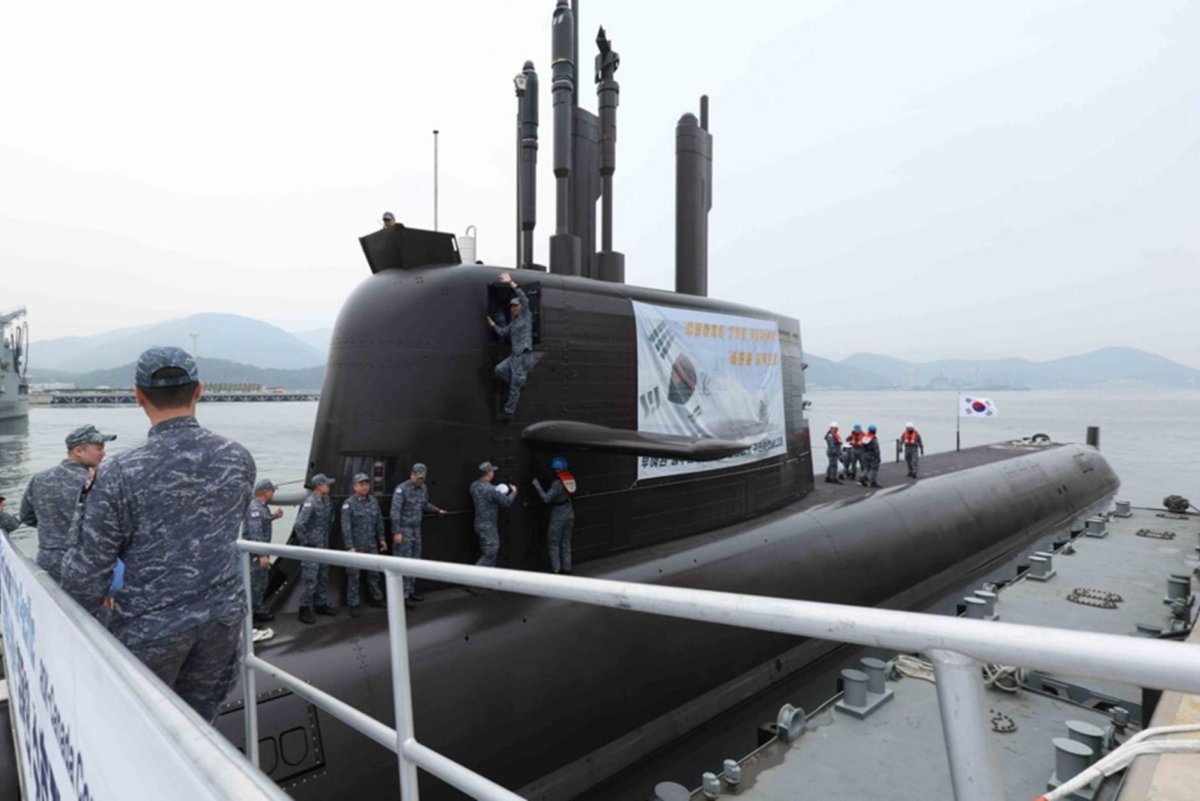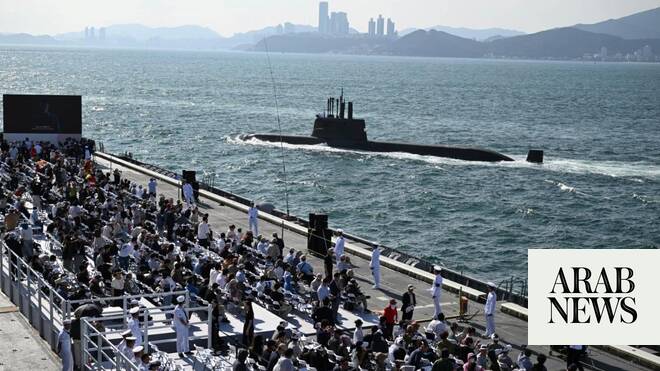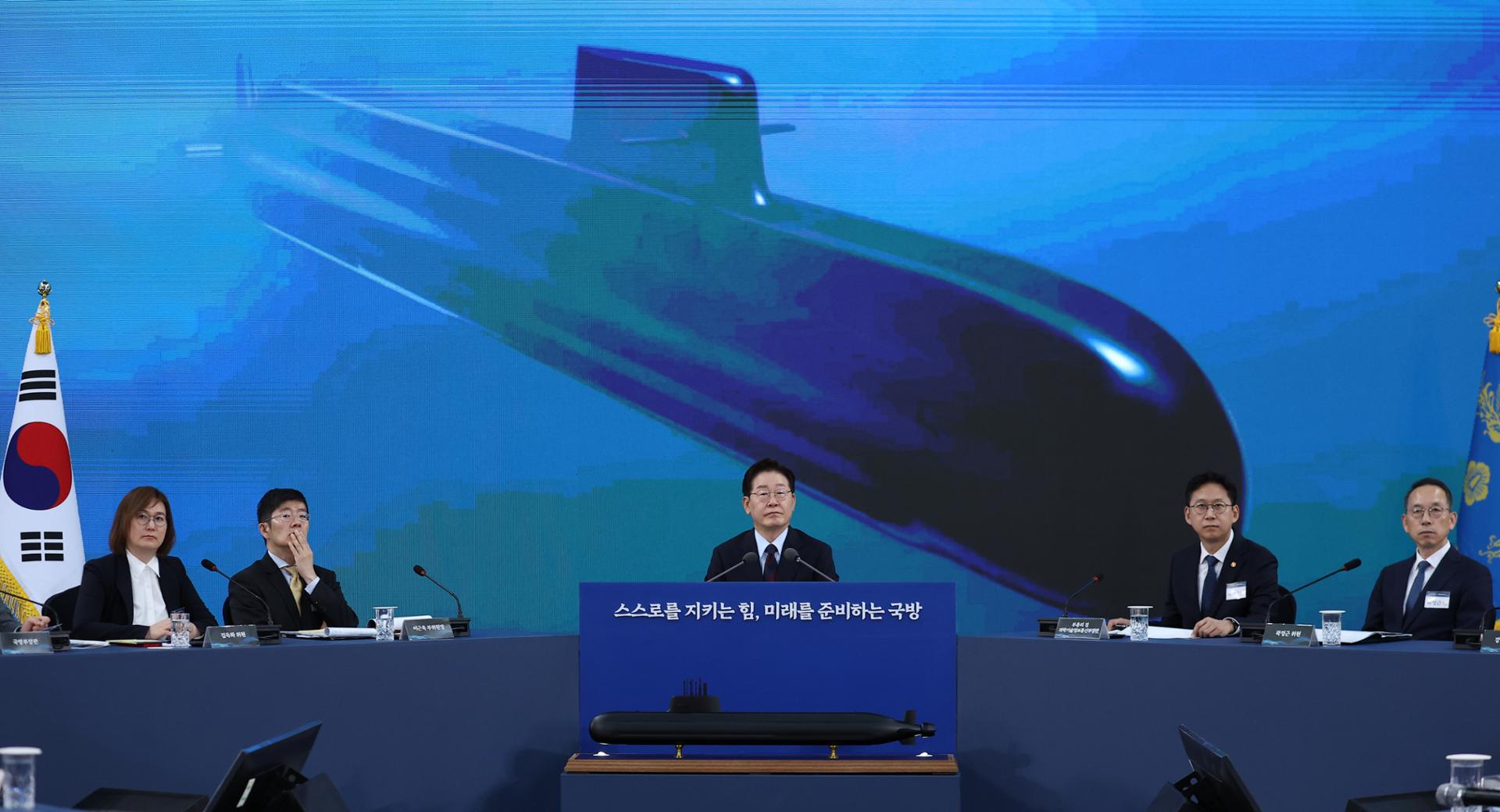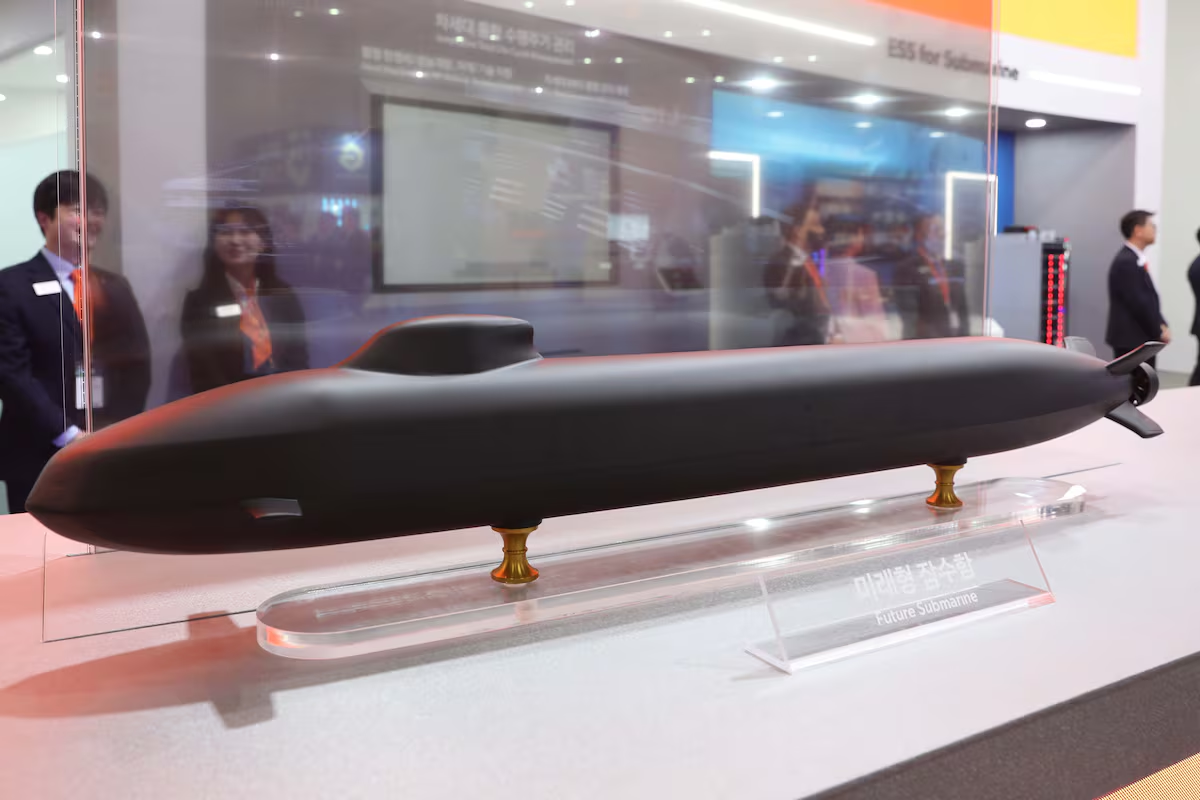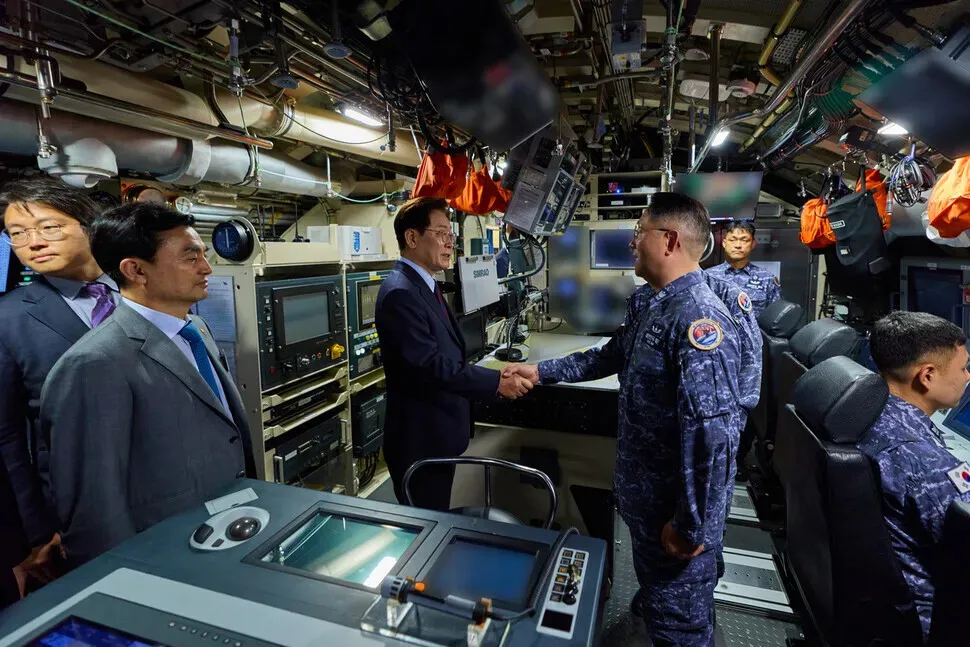
President Lee Jae Myung meets and encourages the crew of the Shin Chae-ho, a 3,000-ton submarine, at the ROK Navy’s submarine command in Changwon’s Jinhae District on May 26, 2026. (courtesy Blue House)
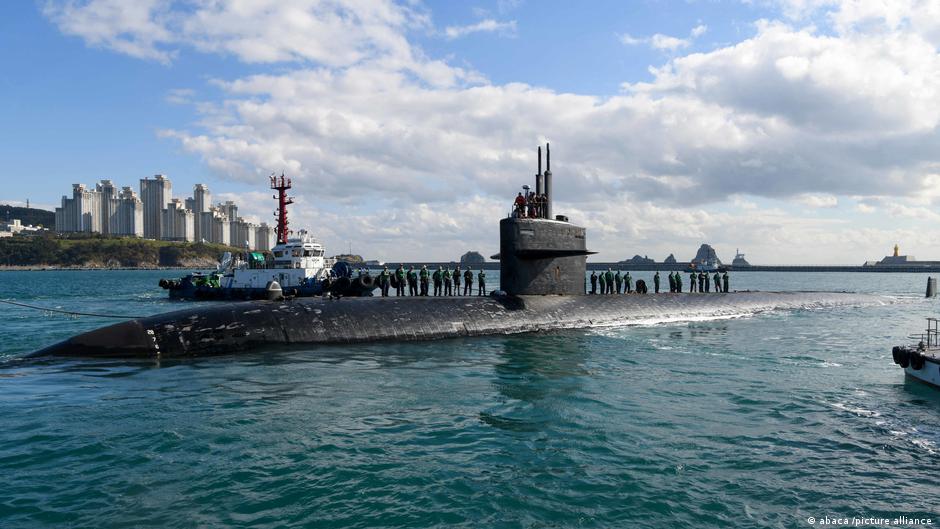
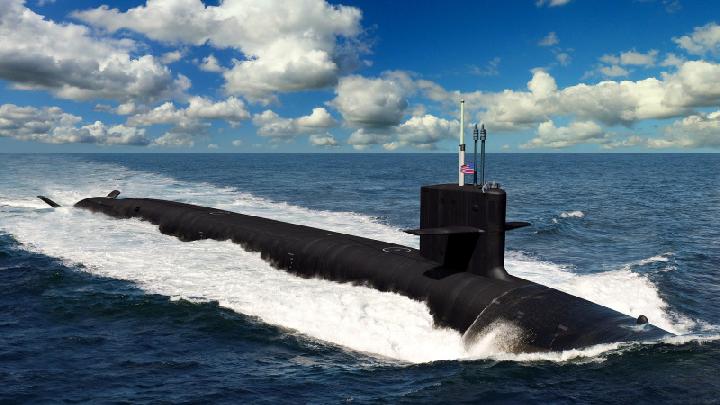
The Korean government said it plans to build and field its first nuclear-powered submarine by the mid-2030s and deploy those submarines to naval units by the late 2030s. But there are numerous obstacles that must be navigated with help from the US, such as acquiring nuclear fuel, and the technical deliberations are expected to be rocky.Korean Defense Minister Ahn Gyu-back described the government’s master plan for developing nuclear-powered submarines in the first session of the Future National Security Committee that was held on Tuesday at Korea’s submarine command in Jinhae, South Gyeongsang Province, with President Lee Jae Myung in attendance.The submarine development project is named “Jang Bogo N,” representing the aspiration of upholding the spirit of Korea’s first submarine, called the KSS Jang Bogo. The “N” in the name describes the vision of applying “nuclear” power to a “next-generation” model of submarine that embodies “neo technology.”“This will play a key role in countering North Korea’s submarine-based nuclear missile threat,” Ahn said, adding that nuclear-powered submarines “will contribute to the creation of an underwater kill chain because they’re capable of monitoring and tracking North Korean submarine forces more quickly and secretly than diesel-powered submarines.”The military is reportedly looking to build at least four such submarines.“The nuclear-powered submarines will be developed and constructed in the Republic of Korea,” Ahn said.The goal is for the submarines’ hulls and propulsion systems (small nuclear reactors) to be built in Korea, with nuclear fuel being acquired with assistance from the US.With the announcement of its master plan on Tuesday, the government unclassified a nuclear submarine development initiative that had been secretly pursued for 32 years.Moving the classified initiative into the public record was apparently aimed at assuaging concerns that Korea might seek to acquire nuclear weapons, as well as formalizing the submarine project before US President Donald Trump leaves office.Korea has been trying (and failing) to develop nuclear-powered submarines for 32 years as part of an initiative that dates back to 1994, during the presidency of Kim Young-sam.The biggest hurdle has been American concerns that greenlighting nuclear-powered submarines could open the door for Korea to develop its own nuclear weapons.Korea cannot run nuclear-powered submarines unless it receives nuclear fuel from the US to power the small reactors that are their propulsion systems.Since the two countries’ current atomic power agreement is limited to civilian use, a separate agreement would be needed for Korea to acquire enriched uranium for military purposes.Section 91 of the US Atomic Energy Act stipulates that with presidential consent, nuclear materials for military purposes may be transferred to other countries.There had been a tug-of-war between Korea and the US on this point until they released a joint fact sheet last November. That’s why technical discussions going forward are expected to be challenging.Korea reiterated that, under its master plan, it would only build submarines armed with torpedoes and other conventional weapons, and not strategic submarines equipped with nuclear weapons.The master plan includes a pledge to carry out Korea’s nonproliferation duties with transparency and resolution in another attempt to ease concerns that Korea might try to acquire the bomb.The master plan also articulates the basic stance that Korea will neither acquire nor develop nuclear weapons of any kind.It further said that Seoul would develop safeguards capable of being installed on nuclear-powered submarines in partnership with the International Atomic Energy Agency and would faithfully comply with its nonproliferation obligations.Korea also intends to use low-enriched uranium (less than 20%), which is unsuitable for nuclear weapons.Another reason for publishing the master plan is to make progress on the nuclear-powered submarine project before Trump leaves office.While the two leaders reached an agreement on the submarine project last October, follow-up talks have been delayed for several reasons, including the fallout of a private data leak at Coupang and slow movement on Korea’s promised investment in the US.By preemptively announcing its master plan for the nuclear-powered submarines, the Korean government is attempting to jumpstart the development process.By Kwon Hyuk-chul, staff reporter; Seo Young-ji, staff reporter; Kim Nam-il, staff reporterPlease direct questions or comments to [english@hani.co.kr]