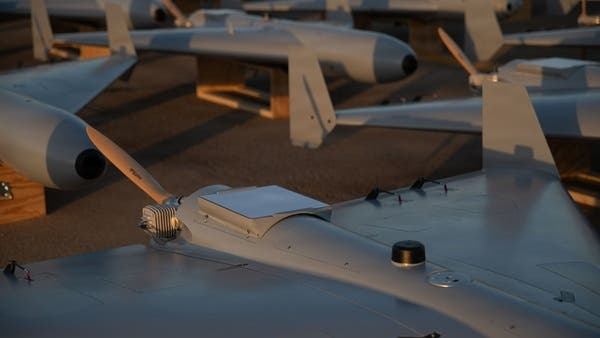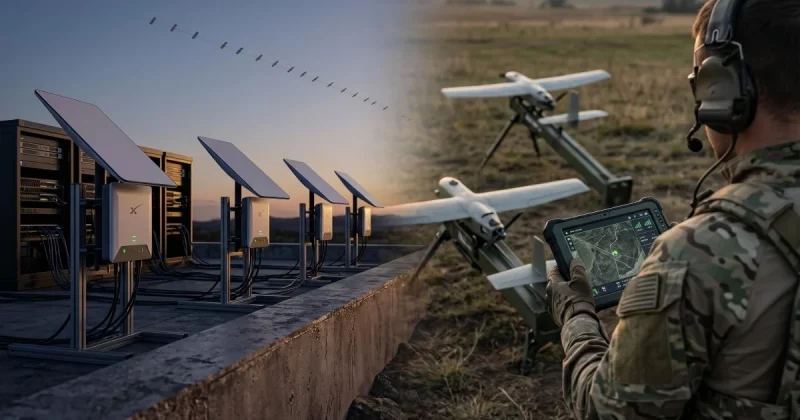
The Pentagon has denied claims that the department has been clashing with Elon Musk's SpaceX over costs to use its satellite internet network, which the military's kamikaze drones rely upon in the war against Iran.Reuters has reported that within weeks of the United States launching strikes, SpaceX executives met with Pentagon officials and argued the military should pay more to use its network.The Pentagon ultimately agreed to pay SpaceX's price increase, Reuters reported, almost doubling the cost of each Low-cost Unmanned Combat Attack System (LUCAS) drone, which initially cost $US30,000 ($42,000) per unit.The US deployed a squadron of its new one-way LUCAS drones to the Middle East in December. (Supplied: US Navy/Kayla McGuire)In a post on X, Pentagon spokesperson Sean Parnell said the report was "wrong" without elaborating why. "SpaceX remains a strong and valued partner to the Department of War," he wrote."The claims in this article are simply not based in reality and do not reflect the close, effective collaboration between our teams."Unlike widely available consumer Starlink terminals, SpaceX sells a military-specific version called Starshield to the Pentagon under a 2023 agreement.Starshield terminals can connect to both commercial Starlink satellites and a separate, more secure constellation, also called Starshield, a Reuters source said.SpaceX argued the LUCAS drones were operating under conditions aligned more closely with its aviation-tier subscription, the report said, rather than a lower-tier service it had been paying for.Pentagon officials argued the higher tier's monthly fee of $US25,000 ($35,000) per unit was designed for aircraft, not kamikaze drones that used the connection for a matter of minutes or hours, according to a Reuters source.In a post on X, Elon Musk labelled the report "false" but said the civilian Starlink system had been improperly used "for military purposes".In a separate post, he said "the company" that made the drones was at fault, not the Pentagon.Reuters said SpaceX did not respond to a request for comment, while a Pentagon official said the office responsible for acquiring the terminals, the Commercial Satellite Communications Office, was working to find other competitors."The Department of War is committed to fostering a competitive environment for commercial satellite communications," an official said.A spokesperson for Spektreworks, which makes the LUCAS drone, directed all questions to the Pentagon.SpaceX has US government 'over a barrel'Reuters said the disagreement over Starlink's use on LUCAS drones was one example of rising tensions the Pentagon has had with SpaceX in recent months.The report said the Pentagon, which has been trying to help Iranian citizens bypass government-imposed communications blackouts, also disagreed with SpaceX over pricing for a plan to provide the population direct-to-cell connection to Starlink.SpaceX proposed charging as much as $US500 million ($698m) to launch the capability, along with a $US100m ($139m) monthly fee to operate it, according to a Reuters source and Pentagon documents — prompting alarm from defence officials over the price.Reuters could not determine whether an agreement had been reached."The ongoing disputes, which have not previously been reported, underscore how the Pentagon's growing reliance on SpaceX is handing Musk greater leverage over a critical layer of US national security," the report said.Clayton Swope, a senior fellow at the Center for Strategic and International Studies, said SpaceX held greater leverage over the Pentagon compared to traditional defence contractors.With a large commercial market for Starlink, alongside its rocket launch and artificial intelligence businesses, Mr Swope said the company "certainly has the US government over the barrel"."If there was no Starlink, the US government wouldn't have access to a global constellation of low earth orbit communications," he told the Economic Times last month.
Pentagon denies reports of clash with SpaceX over Starlink price hike
The Pentagon has denied claims that the department has been clashing with Elon Musk's SpaceX over costs to use its satellite internet network, which the military's kamikaze drones rely upon in the war against Iran.
592 words~3 min read