In yet another twist in the redistricting wars that President Donald Trump initiated in 2025, Republicans suffered major setbacks in two Southern states on Tuesday.Republican efforts to eliminate congressional districts represented by Black Democrats in Alabama and South Carolina failed in the courts and the legislature, respectively. These marked the first major failures to redraw district lines to favor Republicans since the Supreme Court eviscerated the Voting Rights Act in April.The two losses for Republicans extinguished hopes of further tilting the House map towards the GOP column ahead of the midterm elections by eliminating seats protected by the Voting Rights Act, as no other Southern governor has called a special session to do so this year.On Tuesday morning, a three-judge district court panel ruled that Alabama could not eliminate a second Black-opportunity congressional seat that the panel previously ordered to be drawn as the state’s preferred map intentionally discriminated based on race.“Ultimately, we cannot see our way clear to requiring Alabamians to cast their votes in the 2026 elections under a districting plan tainted by intentional race-based discrimination,” the decision states. “And under the unusual circumstances of this case, we conclude that a limited order requiring the Secretary to continue using this Court’s race-blind map will not disrupt Alabama’s elections.”The same district court panel required Alabama to draw a map with a second House district in 2022 that provided Black voters an opportunity to elect a candidate of their choice. In 2023, the Supreme Court upheld this ruling in a 5-4 decision in Allen v. Milligan. Alabama refused to abide by this decision and the panel ordered the adoption of a map with one Black-majority seat and one Black-plurality seat.After the Supreme Court almost completely gutted the Voting Rights Act in Louisiana v. Callais on April 29, it required the panel to reconsider the case in light of Callais’ requirement that Voting Rights Act challenges can only succeed when intentional racial discrimination is found. Alabama responded by passing a bill suspending its May 19 primaries and reinstituting the map that the panel previously overturned in 2023.“We reject in the strongest possible terms the State’s attempt to finish its intentional decision to dilute minority votes with a veneer of legislative regularity,” the panel’s decision states.With the district court’s decision on Tuesday, Alabama must continue to use the race-blind map ordered by the court that includes two Black-opportunity districts for the 2026 election. This is a big victory for Democrats, who stand to lose numerous House seats across the South as white Republicans move quickly to eliminate seats held by Black Democrats following the Callais decision. Alabama has promised to appeal the decision to the Supreme Court.“I am disappointed, but not at all surprised, that the three-judge panel has again struck down Alabama’s blandly unobjectionable map that has been in place for decades,” Alabama Attorney General Steve Marshall, a Republican, said in a statement on Tuesday. “I find nothing in the U.S. Supreme Court’s vacatur order of May 11 that would provide a basis for this outcome; thus, we will immediately appeal this decision to the Supreme Court.”Since the Supreme Court’s decision in Callais, white Republican lawmakers across the South have moved to erase House seats where Black voters are able to elect their chosen representatives. The move combines two objectives: tilting the House to favor Republicans, which follows Trump’s orders, and reducing Black political representation.Tennessee and Louisiana both eliminated Black-majority seats following Callais. Mississippi and Georgia both plan to hold special sessions to eliminate Black-majority seats ahead of the 2028 elections. Absent a finding of intentional racial discrimination or other violation of state constitutions, these maps are likely to stand under Callais’ new rules.Alabama’s case was different since the district court panel had already found that the legislature intentionally discriminated against Black voters. The Callais decision even noted that it did not overturn Allen v. Milligan, merely asking the panel to review the record and re-decide the case.While Alabama is prohibited from using the map previously found to discriminate in 2026, the panel has ordered further proceedings and changes could be made before the 2028 elections.By Tuesday afternoon, the GOP faced another next setback when 12 Republicans in the South Carolina state Senate sided with Democrats to block an effort to eliminate the state’s lone Black-majority House district during a special session called by GOP Gov. Henry McMaster. The bill, which previously passed the state House, failed by a 24-20 vote.Democrats and civil rights advocates cheered the bill’s failure, which came on the same day that early voting began in the state’s primaries.“This victory for democracy and fair legislative processes belongs to everyone who raised their voice,” Jay Parmley, South Carolina Democratic Party executive director, said in a statement.“Don’t let anyone tell you that our political fate is set in stone,” Jace Woodrum, executive director of the ACLU of South Carolina, said in a statement. “Remember that showing up and fighting for democracy still matters.”
Republicans Suffer 2 Big Map Losses Ahead Of The Midterms
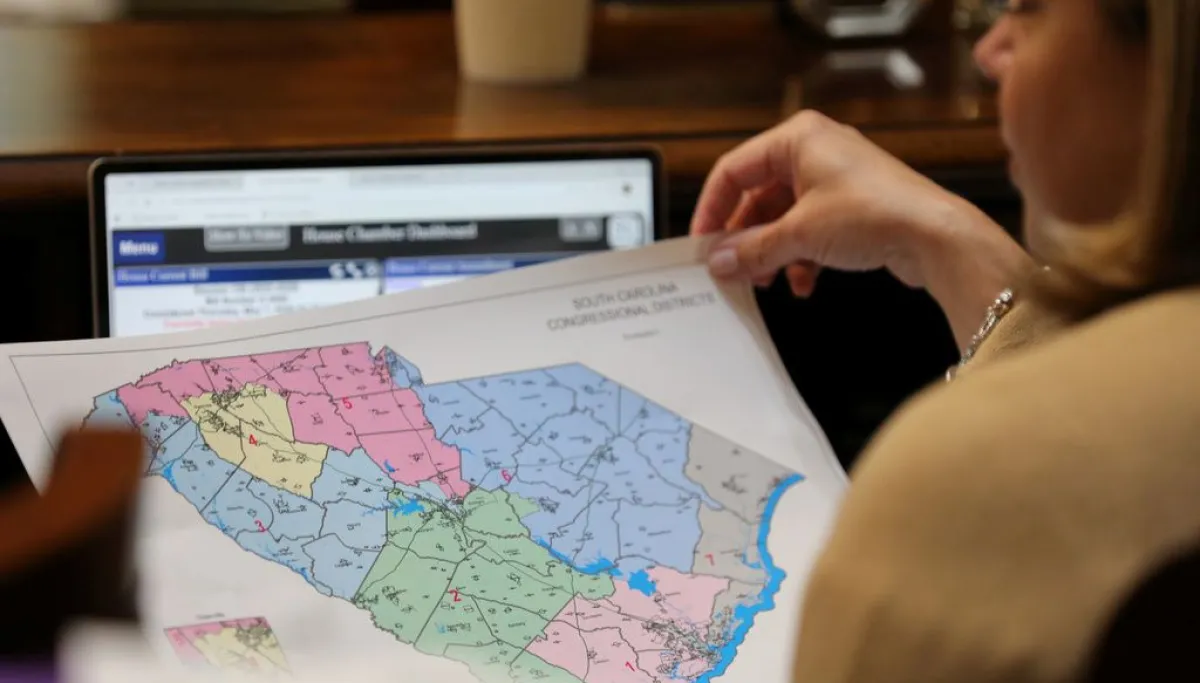
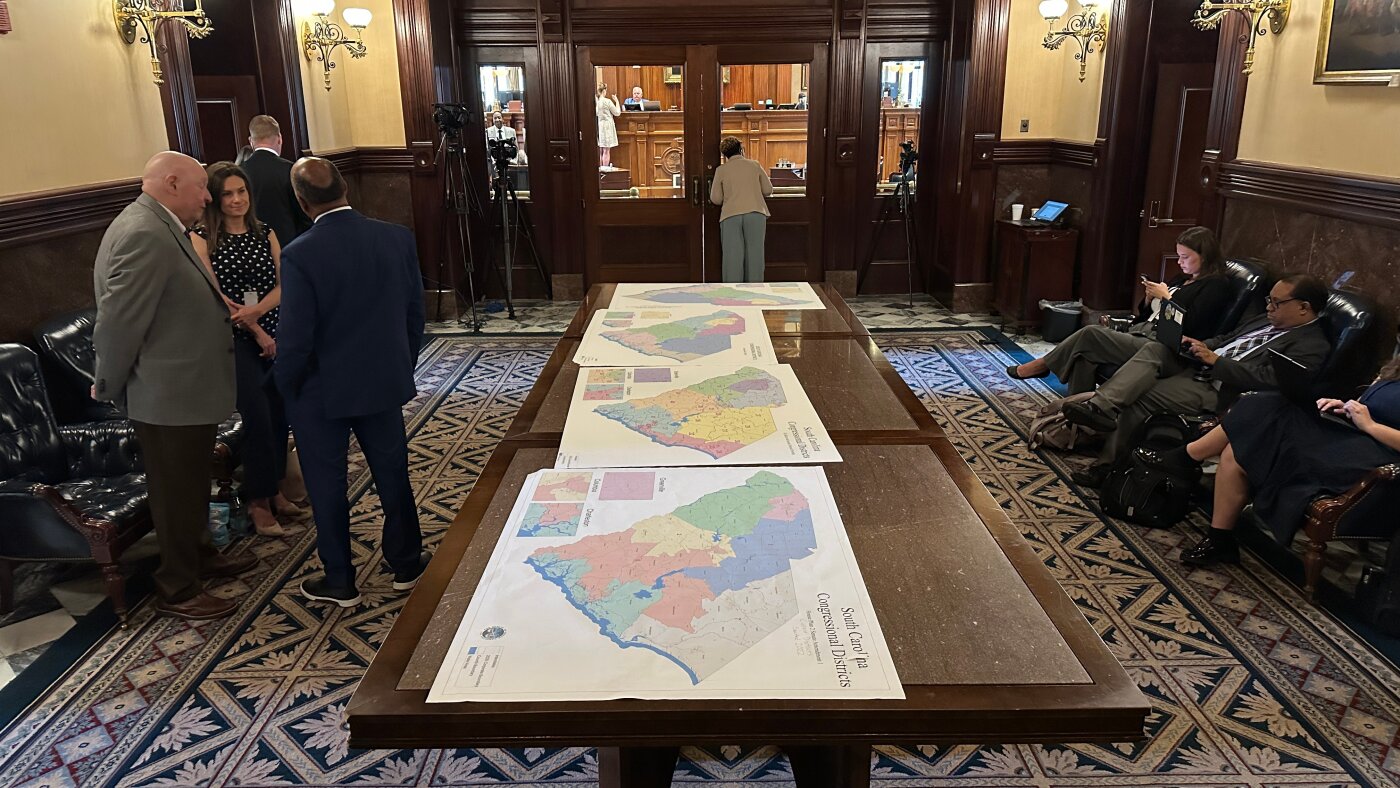
Republicans also rejected an effort to eliminate the lone Democratic House seat in South Carolina on Tuesday.
824 words~4 min read