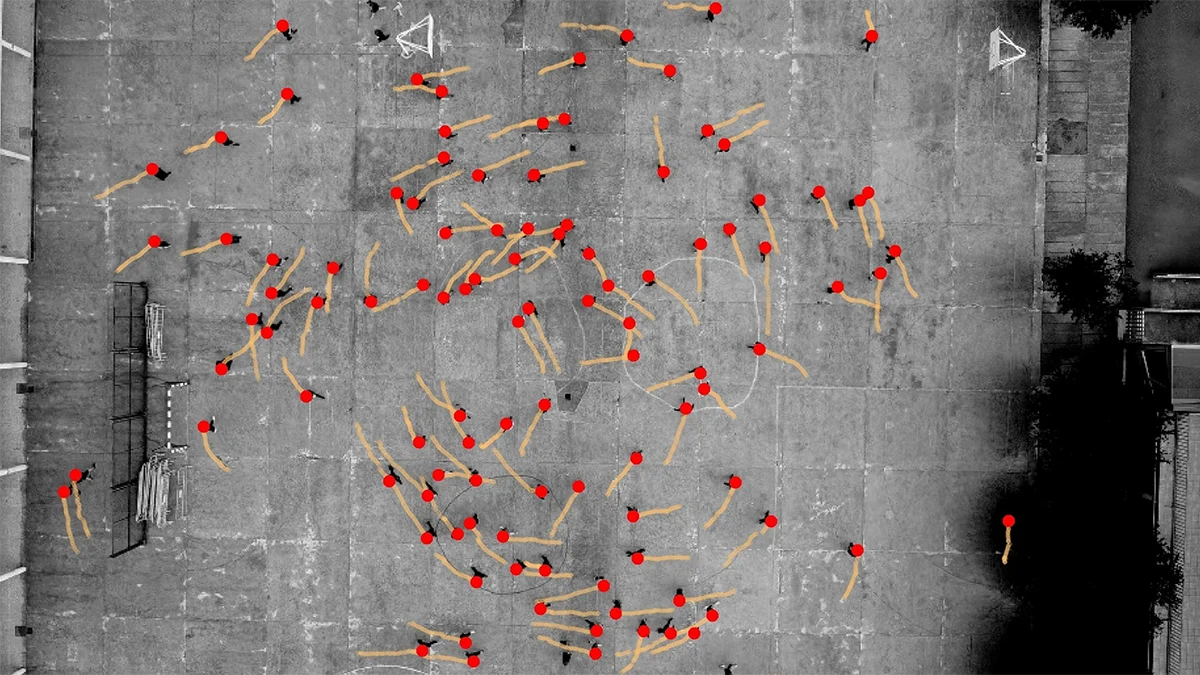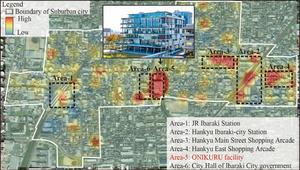
Our new paper in Cities, led by ETHOS PhD student Kanaha Shoji, develops an interpretable, data-driven framework that investigates the links between urban form features and walking behavior. Enhancing neighborhood design for pedestrians presents a powerful opportunity to foster sustainability in urban settings. Improving walkability is one strategy that can help cities reduce energy consumption, lower emissions, and improve public health. Architectural theories have long emphasized the importance of pedestrian-accessible design in fostering vibrant, resilient communities. However, empirical evaluations of pedestrian activity across large spatiotemporal scales remain limited.This study presents a data-driven analysis of how urban form features are associated with pedestrian count data from motion sensors in Melbourne's Central Business District. We defined 5- and 15-minute walking isochrones from each sensor, retaining 50 features after preprocessing. Tree-based regression and feature importance models were used to assess the relative importance and marginal effects of urban form features on pedestrian activity. Our findings show that high bench density and job counts within a 15-minute isochrone are linked to increased pedestrian activity. Dwelling counts and elderly population are also key predictors, suggesting the impacts of demographics and land use mix. Additionally, green spaces, visual factors, and tram stops also show greater importance, with their marginal effects varying by time and day type, emphasizing the need to account for temporal variations. Our findings also show alignment with survey data, offering deeper insights.Overall, this study highlights the potential of analyzing urban design features alongside walking data to inform pedestrian-oriented city planning. Our approach demonstrates how accessible spatial and longitudinal data can support data-based policymaking and urban planning by uncovering associations relevant to walkability.Access the paper here: https://doi.org/10.1016/j.cities.2026.107148Access the code here: https://doi.org/10.5281/zenodo.20153519FundingFunding for this study was provided by the Swiss National Science Foundation (SNSF) under the Driving Urban Transitions (DUT) program [216904]. Additionally, the Excellence Research Internship Program at EPFL made it possible for Benjamin Tarver to contribute to this study.
New paper uncovers new links between urban form and walking behavior
Our new paper in Cities, led by ETHOS PhD student Kanaha Shoji, develops an interpretable, data-driven framework that investigates the links between urban form features and walking behavior.
316 words~1 min read