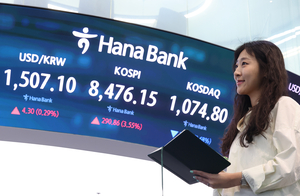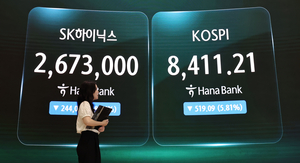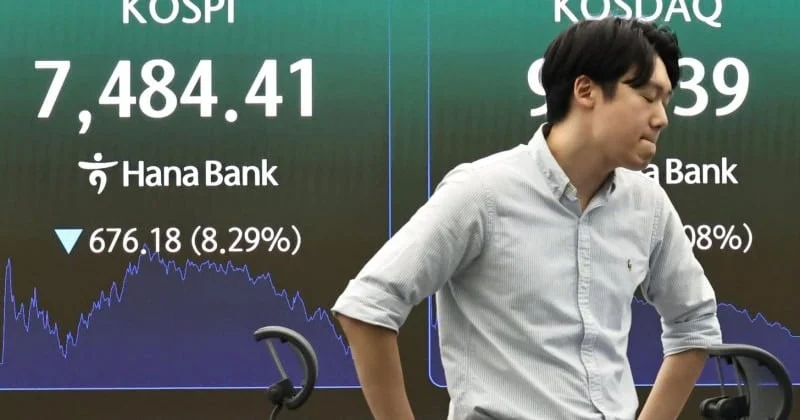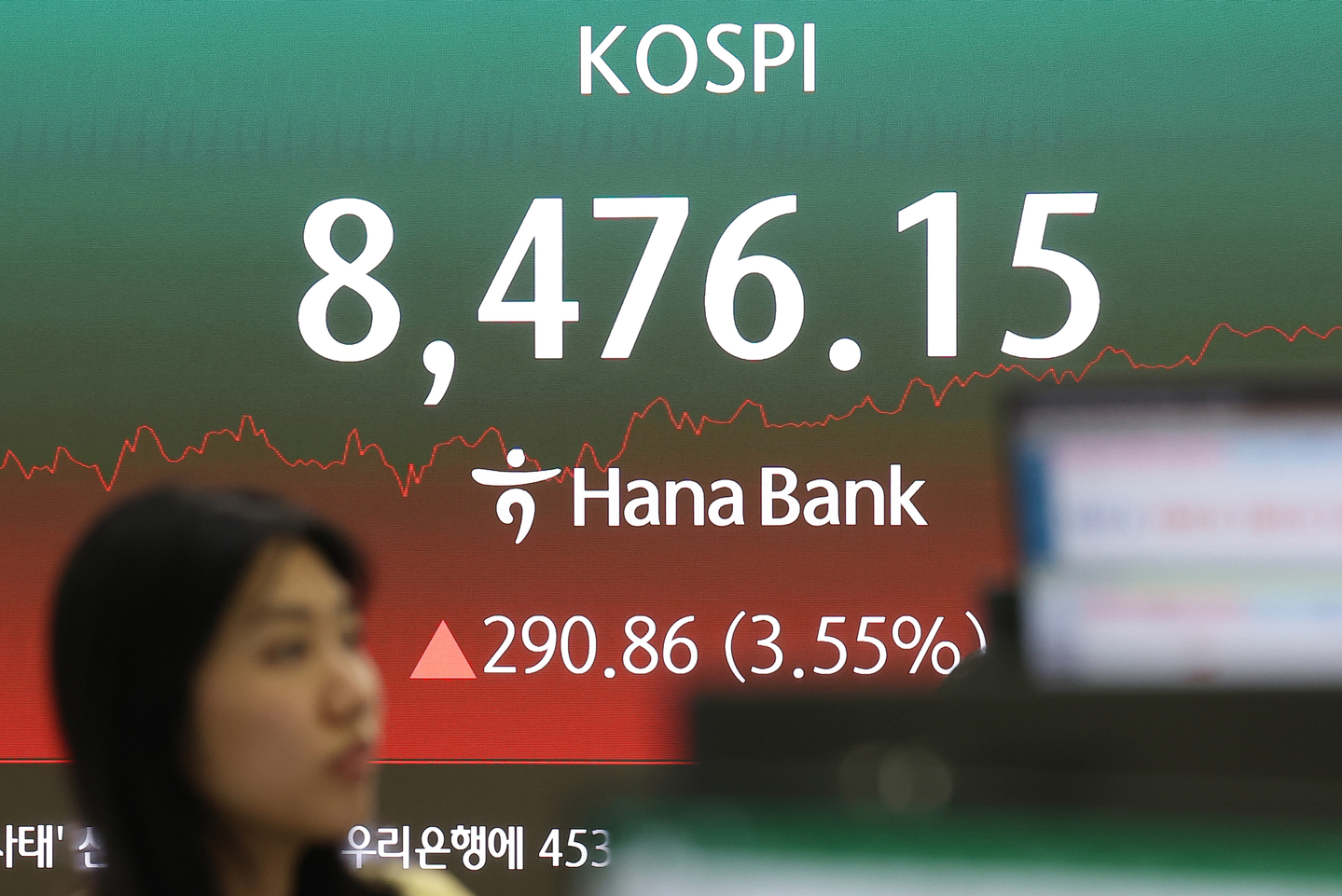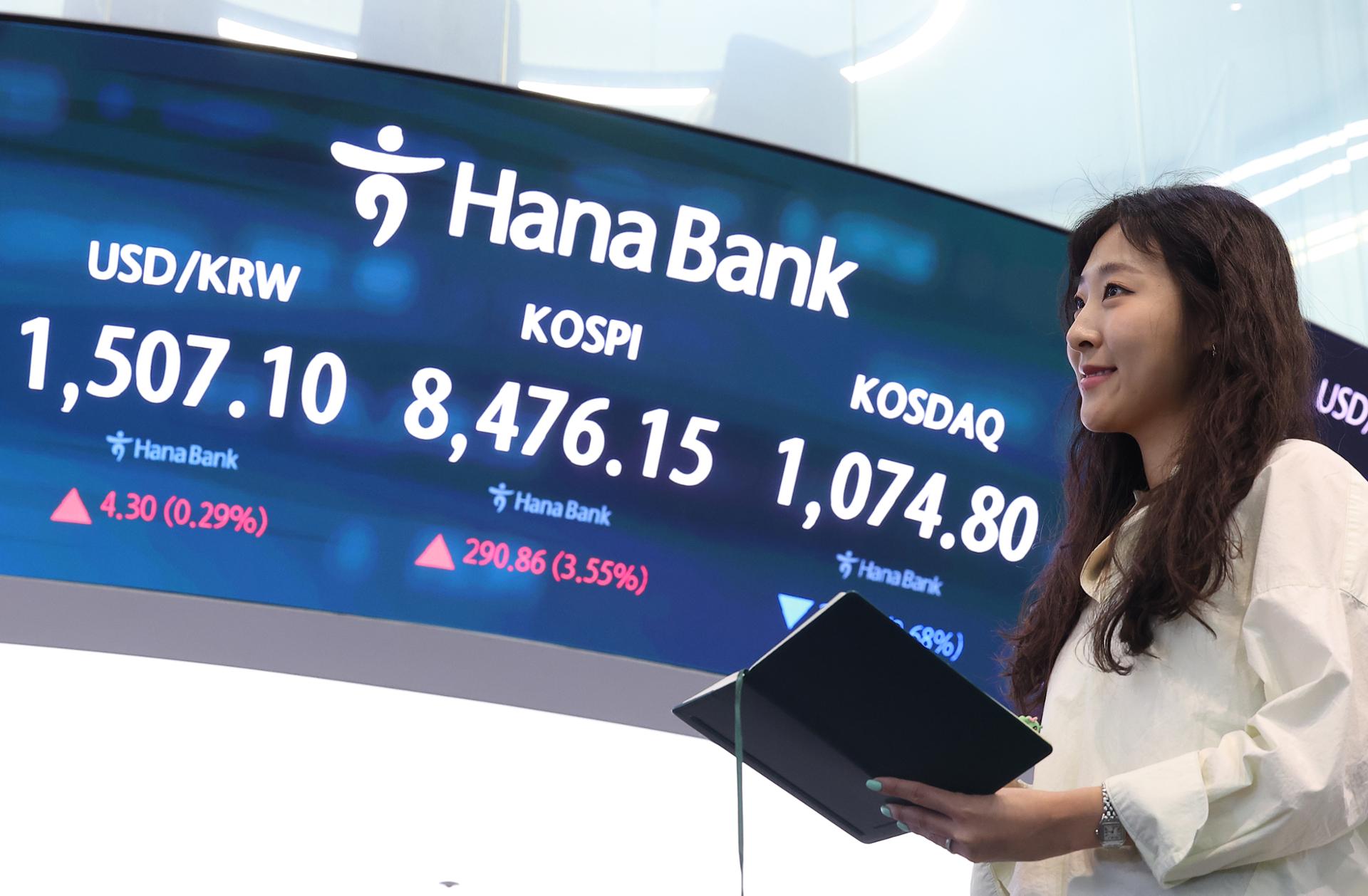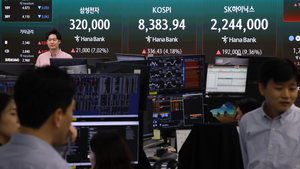
Analysts say recent foreign selling reflects rebalancing, not retreat A financial data screen at Hana Bank's dealing room in central Seoul shows the Kospi standing at 8,383.94, while shares of Samsung Electronics and SK hynix trade at 320,000 won and 2.244 million won, respectively, Wednesday. (Yonhap) Foreign investors may be selling South Korea hard, but they are sitting on a bigger slice of the market than before.While the benchmark Kospi has been on a dizzying rally in recent sessions, hitting a fresh intraday high of 8,457.09 Wednesday as of press time, overseas investors appear to be pulling back from local equities.Offshore investors have dumped shares worth more than 96 trillion won ($63.8 billion) on the Kospi this year, sparking concerns over a sustained foreign exodus from Korean equities. In May alone, they offloaded over 40 trillion won on the main board.Yet despite the heavy selling, foreigners own more of the market — an unusual dynamic that reflects the sharp increase in overall market valuations and gains concentrated in large-cap stocks.Sell more, own moreEven amid massive net selling, offshore investors' share of the market has continued to edge higher.Foreign investors held 39.45 percent of the Kospi as of Tuesday, up over 3 percentage points from 36.28 percent at the end of 2025. It was also more than 1 percentage point higher than the 38.17 percent recorded in early May, before the latest wave of heavy selling began.The divergence comes as overseas investors hold large stakes in blue-chip stocks. For instance, foreign ownership among the market's biggest heavyweights Samsung Electronics and SK hynix amounts to 48.37 percent and 51.62 percent, respectively.As the share prices of the chipmakers have nearly tripled this year, their weightings in the Kospi have increased significantly, lifting foreign investors' share of the market.Market analysts suggest foreign investors are increasing their exposure to Korea, rather than abandoning the market."Foreign investors are tolerating an increased allocation to Korean equities," said Lee Kyeong-su, an analyst at Hana Securities."If there had been no willingness to increase exposure to Korea, they would have maintained the foreign ownership share of 36 percent at the beginning of the year, recording net sales of 230 trillion won this year."The data suggest that the recent wave of selling has been driven more by portfolio rebalancing following the market's sharp rally."The recent large-scale net selling appears to reflect not an aggressive reduction in positioning, but rather profit-taking and portfolio rebalancing," said Kwon Soon-ho, analyst at Daishin Securities.Betting on holding companiesAmid this sharp portfolio rebalancing in the Kospi, overseas investors are actively increasing exposure to holding companies.The top pick among holding-company stocks for foreign investors was SK Inc., the holding company of SK Group. They have net bought SK Inc. shares worth 633 billion won year-to-date, lifting the stake in the holding company to 29.78 percent as of Wednesday from 26.95 percent at the end of last year.HD Hyundai saw foreign ownership edge up to 26.28 percent from 25.52 percent, while Doosan Corp. posted a sharper jump to 19.1 percent from 14.98 percent.Holding companies, long associated with persistent valuation discounts, are drawing renewed investor interest as their stable cash flows and shareholder-friendly policies boost their appeal, analysts said.Will June deliver?An upgrade of Korea's market status by Morgan Stanley Capital International could serve as a turning point for the local stock market, helping attract a larger pool of global passive capital.Unlike active and hedge funds, which frequently adjust their positions, passive funds track benchmark indexes over the long term and allocate capital according to index weightings.Korea remains classified as an emerging market in MSCI's index despite years of efforts to gain developed-market status.Expectations are building that Korea could earn an upgrade soon, a step that could encourage global institutional investors to raise their exposure to Korean stocks. The MSCI is set to announce a reclassification in June.If Korea makes it on the watchlist this year, the index provider would announce its reclassification in June 2027, with the actual inclusion taking effect a year later."A reclassification to developed-market status is a key priority for Korea, as it could trigger net foreign inflows and provide fresh momentum for the Kospi," an official from a local brokerage house said.
Are foreigners really ditching Kospi — or doubling down?
Foreign investors may be selling South Korea hard, but they are sitting on a bigger slice of the market than before. While the benchmark Kospi has been on a diz
697 words~3 min read