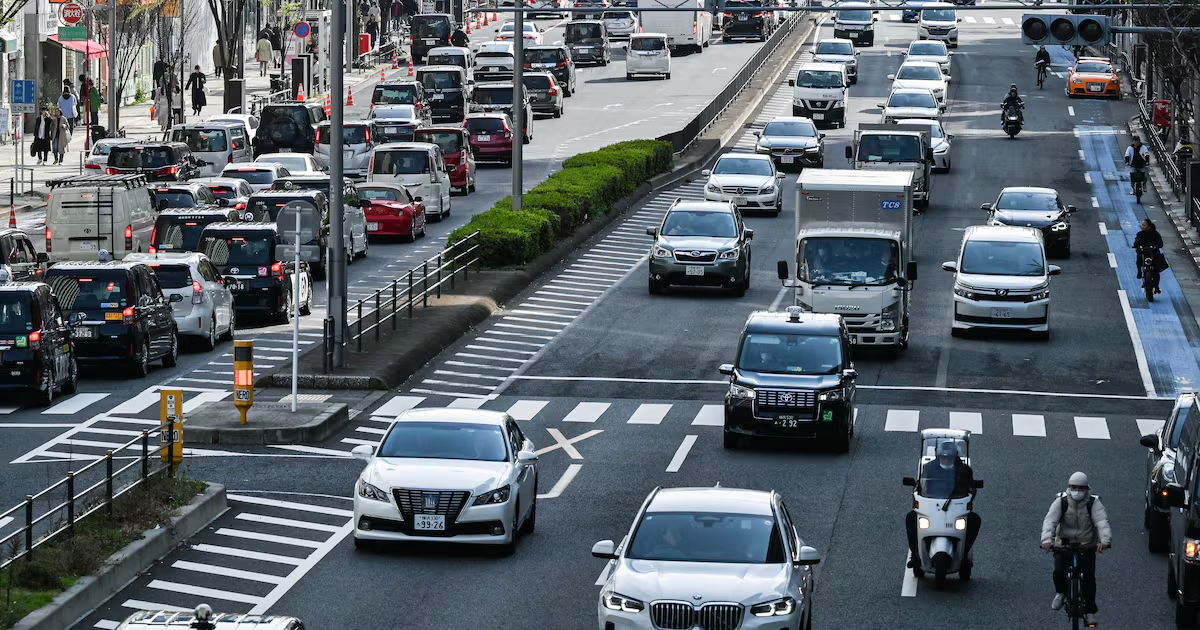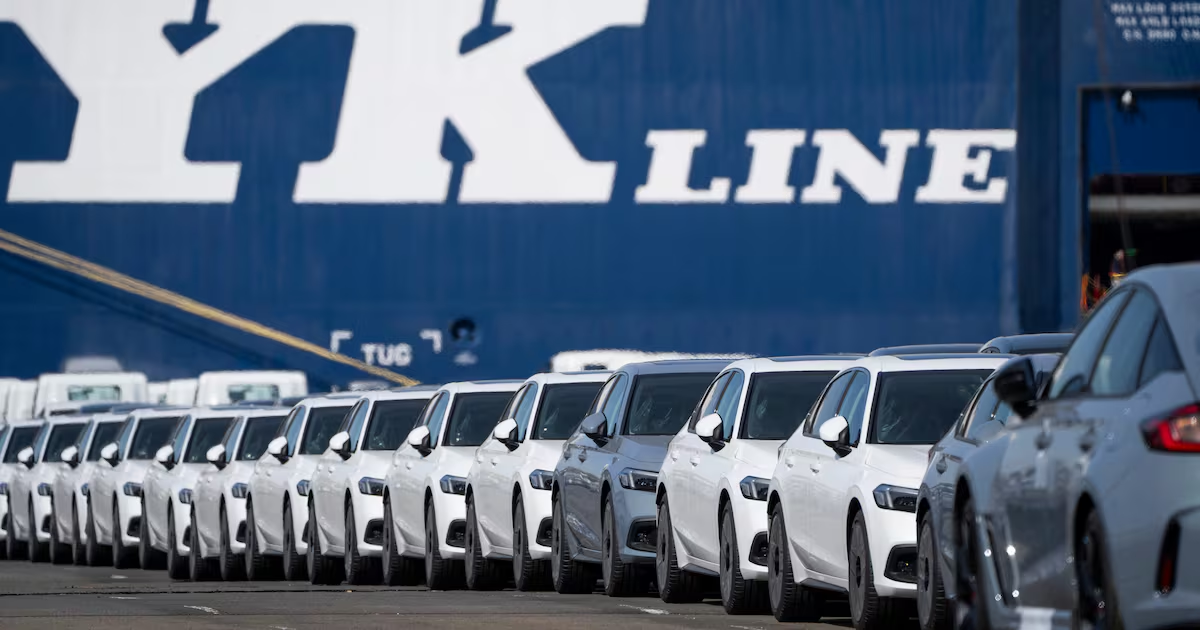
I have noticed in discussions with some motor dealers a couple of issues that keep cropping up, namely availability of insurance and future trade-in ability [for Japanese imports]. What is the issue as regards insurance, and why are some insurance companies refusing to quote for such cars? Secondly, is there a risk when it comes to trading in such cars, particularly if one wants to trade in with a main dealer that the trade-in won’t be accepted? – RB, from Co LouthIn theory, there should be no issue with insurance, as long as the car in question is a model – or equivalent thereof – of a car that’s also sold in Europe. And the Motors team here at The Irish Times know several people driving Japanese imports who have not encountered any issue with getting insurance. Well, at least no more issues than the normal ones of finding a competitive quote. However, it seems that a few insurers are tarring all imports from Japan with the same cliched brush.That brush is largely to do with parts availability. Back in the 1990s, when importing used Japanese cars first became fashionable, this could indeed be a problem, as many of the cars being brought to these shores were what are known by enthusiasts as JDM cars – Japanese domestic market – and variants or models you couldn’t buy in Europe, hence the issue with parts backup. Why do insurers worry about parts? Because parts that are hard or slow to obtain drive up repair prices, and if you have a collision and need to claim on your insurance, it drives up the cost to your insurer if the car is languishing on a forecourt, waiting for spares to cross half the world. However, the current market for Japanese imports has evolved considerably since then. The fact is that most of the cars we’re importing from Japan now are not actually even cars made by Japanese car companies but rather vehicles such as the VW Golf or BMW 3 Series sold in Japan with right-hand drive. Why is this? Because twice in the past two decades – from 2009 to 2013 and again from 2020 to 2022 – Irish new car sales went in the tank, and that meant that three years down the line there was an insufficient national “car park” to meet second-hand demand. Previously, dealers would have gone to the UK to find suitable stock, but the fall of the Brexit guillotine has closed that path off for all but a few. Switching to Japanese imports made more sense thanks to two things. First, Japanese second-hand values are generally much lower than in the UK (Japanese buyers prefer to buy new) and so that helped to balance out the extra costs of shipping and customs duty. Second, and possibly more importantly, Japanese used cars are immaculate, and it’s well-known in the trade that a year-old Japanese market Golf (or similar) will be in far, far better condition than the same car first registered in Ireland. So why the insurance issues? Paul O’Connor runs Paul O’Connor Cars in Dungarvan, Co Waterford, and specialises in the importing of used cars from Japan. O’Connor told The Irish Times: “Most of our business is with the likes of BMW 5 Series, or 3 Series, or VW Golfs and the like, and we’ve generally had no issues with customers getting insured on the cars. “I think the problem is that some insurers have had a few bad experiences with people owning niche Japanese cars, and they all just basically paint with the same brush. Out of, say, 50 cars a month that we might sell, maybe two or three might have an issue with insurance, but it’s a lack of knowledge from the insurers’ point of view.”Insurance Ireland, the umbrella organisation which represents insurers at the national level, said of the issue: “Insurance Ireland is not aware of reports that some motorists with imported vehicles are experiencing difficulties obtaining motor insurance cover. “Underwriting and pricing decisions made by individual insurers are based on a range of factors, including their prevailing claims experience, theft trends, repair costs, parts availability and vehicle security features. “Consumers considering purchasing an imported vehicle should check insurance availability before purchasing, and there are specialist insurers available with experience in imports. To make the process easier a consumer should ensure that they have appropriate full documentation, proof of any modifications and a service record.”Basically, you shouldn’t have any issues unless it’s an unusual car, but the kicker to that is what insurers decide is unusual can vary from moment to moment. When it comes to trade-in, again there ought not to be any major issues. As long as the car you’ve bought comes with a full service history and you can show its full background, well… a Golf is a Golf is a Golf, right? That said, there will always be dealers who will do their best to lowball you on a trade-in and who will try to use the Japanese import factor as a form of leverage against you. If you’re not happy with the trade-in you’re being offered, take your business elsewhere; there are plenty of car dealers in the country.
Why are some insurance companies refusing to quote imports?
Motors help desk: Practical advice on your motoring queries, from buying and selling to issues you have with your current car
872 words~4 min read