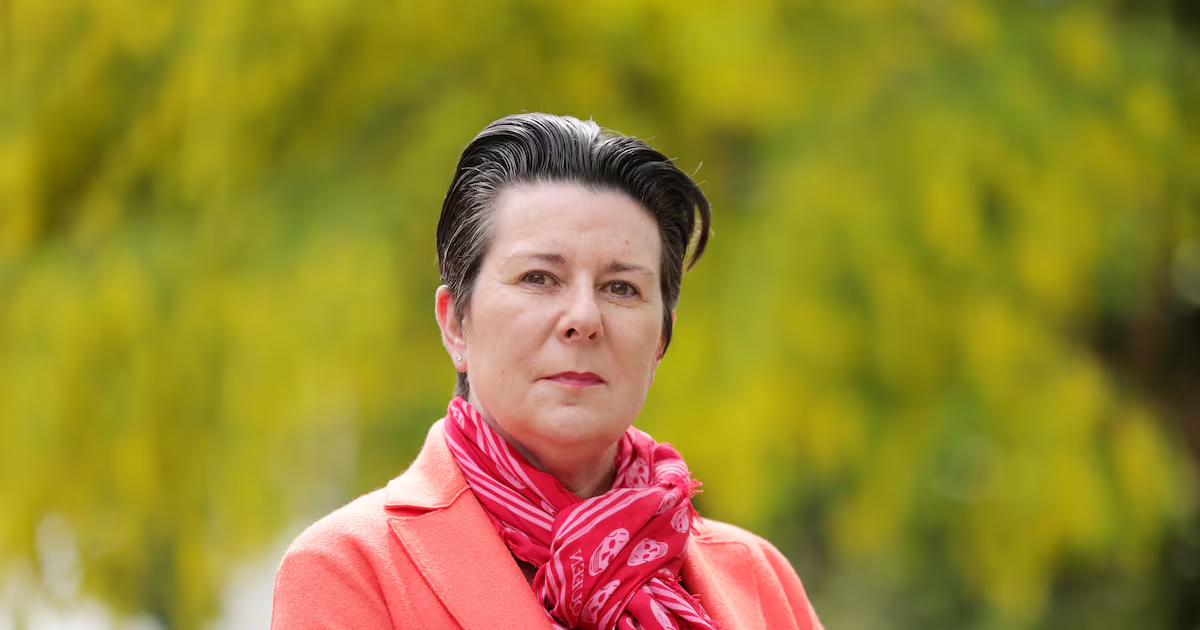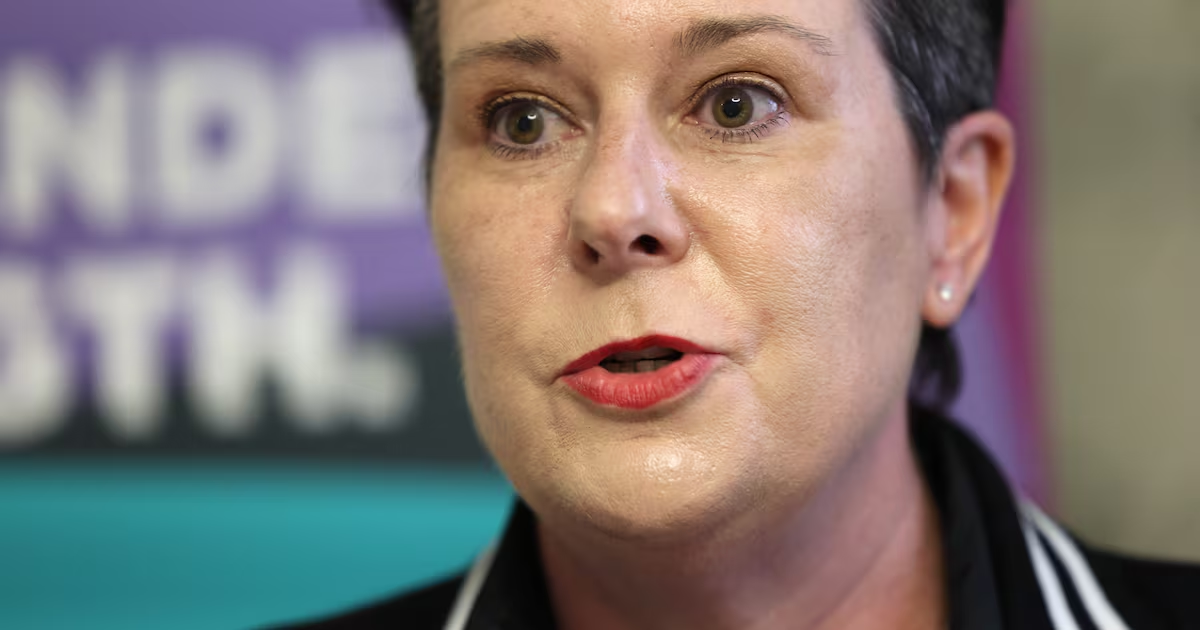
The special advocate for survivors of institutional abuse has said she is “hugely frustrated” at how the Government is running its mother and baby institution redress scheme. Patricia Carey said it was “really disappointing” that almost 2½ years into a five-year scheme, only 5,200 people had received “paltry redress”. “It’s appalling,” she told reporters in Dublin on Tuesday. “Women whose children were taken from them forcibly have received less than €15,000. That’s the average payment, €15,000. That’s the price for forcible removal of a child from their family of origin.”Carey noted that the State had, at the same time, paid €6.8 million “to an outsourced company to provide telephones and administration services” for the scheme. She called for the redress scheme to be extended to include all people who spent time in an institution. An estimated 24,000 people are excluded, including those who spent less than six months as a child in an institution, and children who were boarded out – a precursor to fostering.About 7,225 applications have been submitted under the redress scheme since it opened in March 2024 – less than 22 per cent of the estimated 34,000 people eligible, Carey said. The scheme is due to remain open until 2029.As of last month, about 5,300 redress payments had been made. Some €78 million has been spent on redress to date, with an average payment of €15,000. The scheme has a budget of €800 million.Carey, who was born in the Bessborough mother and baby institution in Cork, accused the Government of “heaping more upset, more trauma and more shame on people” by excluding them from the scheme. She said she had, to date, only had “one single conversation” with Minister for Children Norma Foley about extending the scheme, though she hoped they would speak again.Survivor Noel Manning alleged the Government’s approach amounted to “we’re sorry, but we’re not that sorry”. Manning was also born in Bessborough before being transferred to Temple Hill in Blackrock, Dublin, where he spent the early months of his life.Survivor Noel Manning: 'It makes me very angry. I’m very disappointed as well.' Photograph: Dara Mac Dónaill He cannot apply for redress because Temple Hill is not deemed an eligible institution under the scheme.“I’m one of the 24,000 excluded ... My journey, as I see it now, is from illegitimate to ineligible. “That’s how the State sees me ... this is how the State sees 24,000 other people like me. These are the labels applied to us, and it makes me very angry. I’m very disappointed as well.”James Sugrue experienced years of abuse when he was boarded out as a child. He said any apology to survivors was “very shallow” unless it was accompanied by action.“It fills me with despair that we are again going up a dead-end road and nothing will happen in the end, but believe me, I’m not going to give up on it. I will keep fighting this until I can’t fight any more,” he said.A review into the redress scheme was due to be carried out this year. However, Sinn Féin MEP Kathleen Funchion said it was nearly June and “we still have no date” for when it would be completed or even started.Survivor James Sugrue: 'It fills me with despair that we are again going up a dead-end road and nothing will happen in the end.' Photograph: Dara Mac Dónaill “We know that there was €800 million set aside. Now, it doesn’t take a genius to figure out if you have €800 million set aside and you spend €78 million, maybe open up the scheme and widen it out, let people apply that should be eligible for it,” she said. “It is 100 per cent the right thing to do to begin with, but the money is actually there.”Funchion said “serious pressure” needed to be put on religious orders to make them contribute to the scheme. “We should look at maybe the creation of a Criminal Assets Bureau-style situation – if the religious institutions are not going to pay up, well then assets must be seized.”A statement from the Department of Children said the redress scheme, “like any such scheme, has eligibility criteria, including what institutions are included in it and time spent there”.“It is acknowledged that some survivors are not eligible for the scheme and are disappointed by this,” the statement said.“However, it should be noted that the scheme is just one of a large suite of actions under the Action Plan for Survivors and Former Residents of Mother and Baby and County Home Institutions.”In relation to religious orders contributing to the scheme, the department noted that then-minister for children Roderic O’Gorman “commenced a process of engagement with religious organisations in 2021″ before an independent negotiator, Sheila Nunan, took over the process, which concluded with her report in 2025.“Of the eight organisations mentioned in the report, two made offers of a voluntary contribution to the payment scheme,” the statement said. “The negotiation process was a voluntary exercise. The religious orders who have not chosen to make a contribution to the payment scheme have since been directly contacted to outline Government’s firm belief that more should and must be done by them in this regard.”
‘Really disappointing’: Institutional abuse survivor advocate ‘hugely frustrated’ by redress scheme
Patricia Carey says €15,000 is ‘the price for forcible removal of a child from their family’
866 words~4 min read