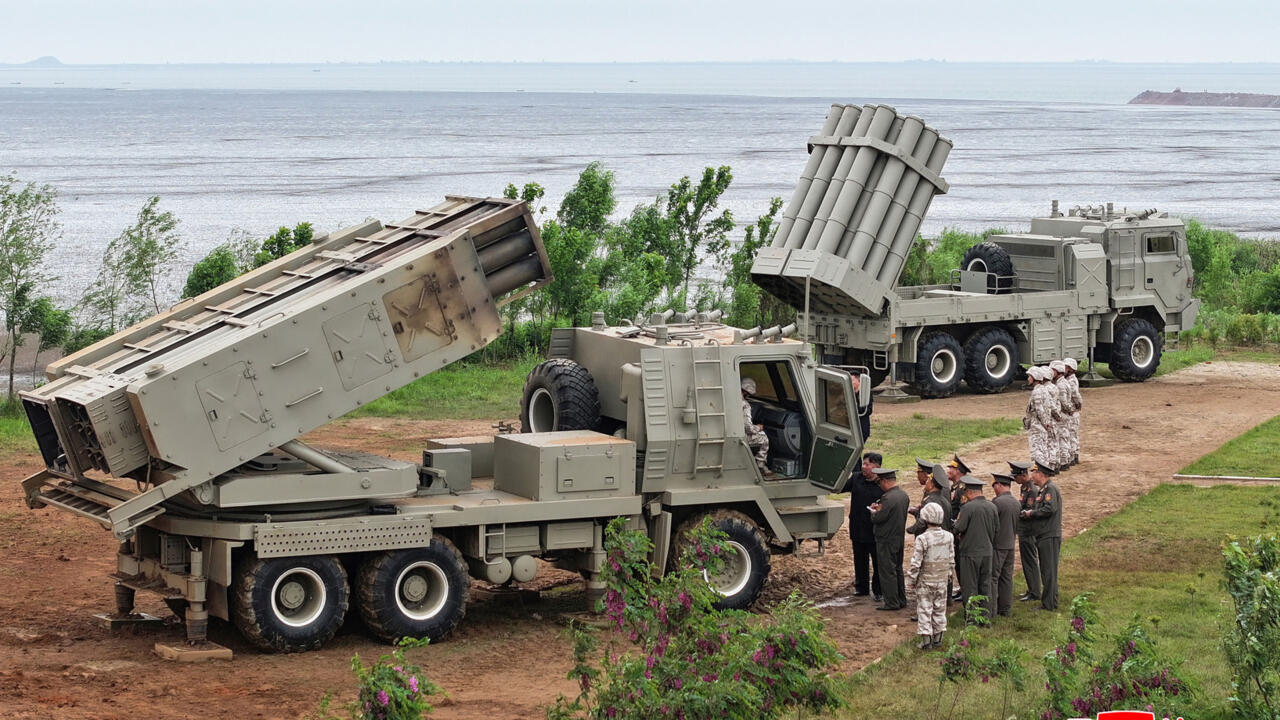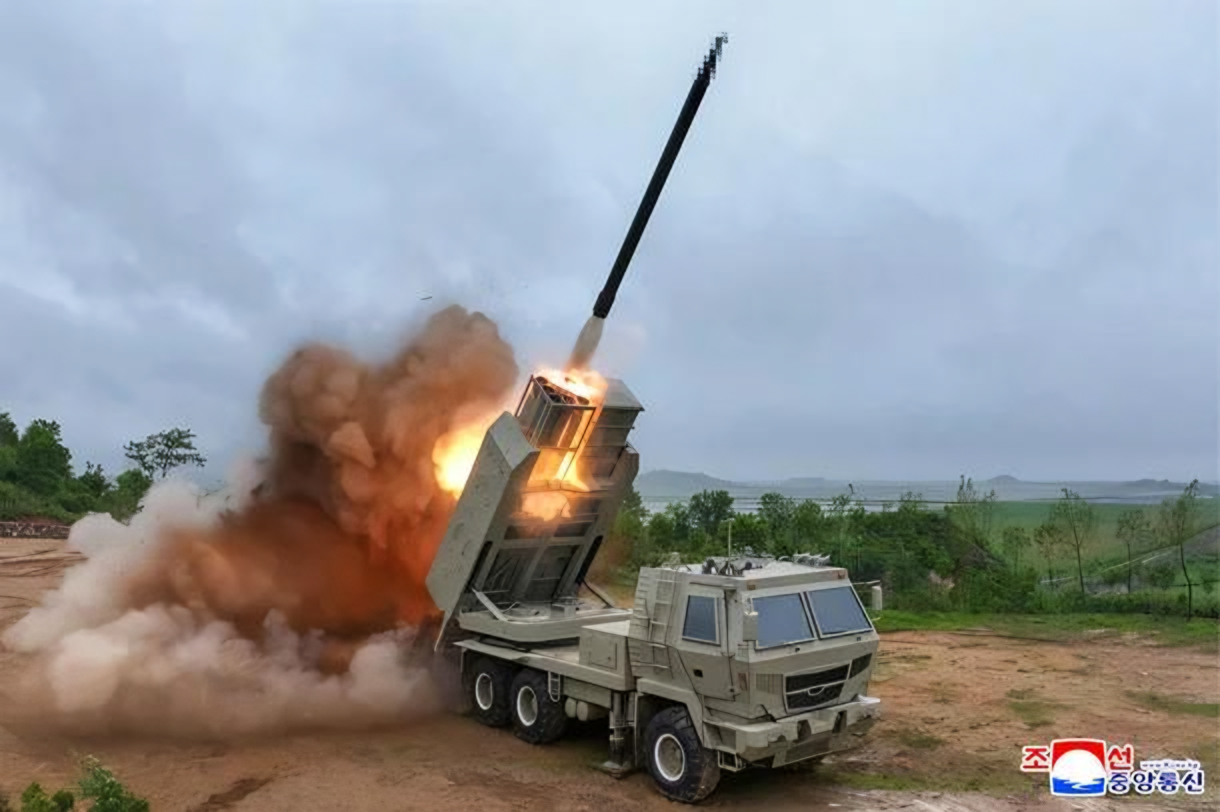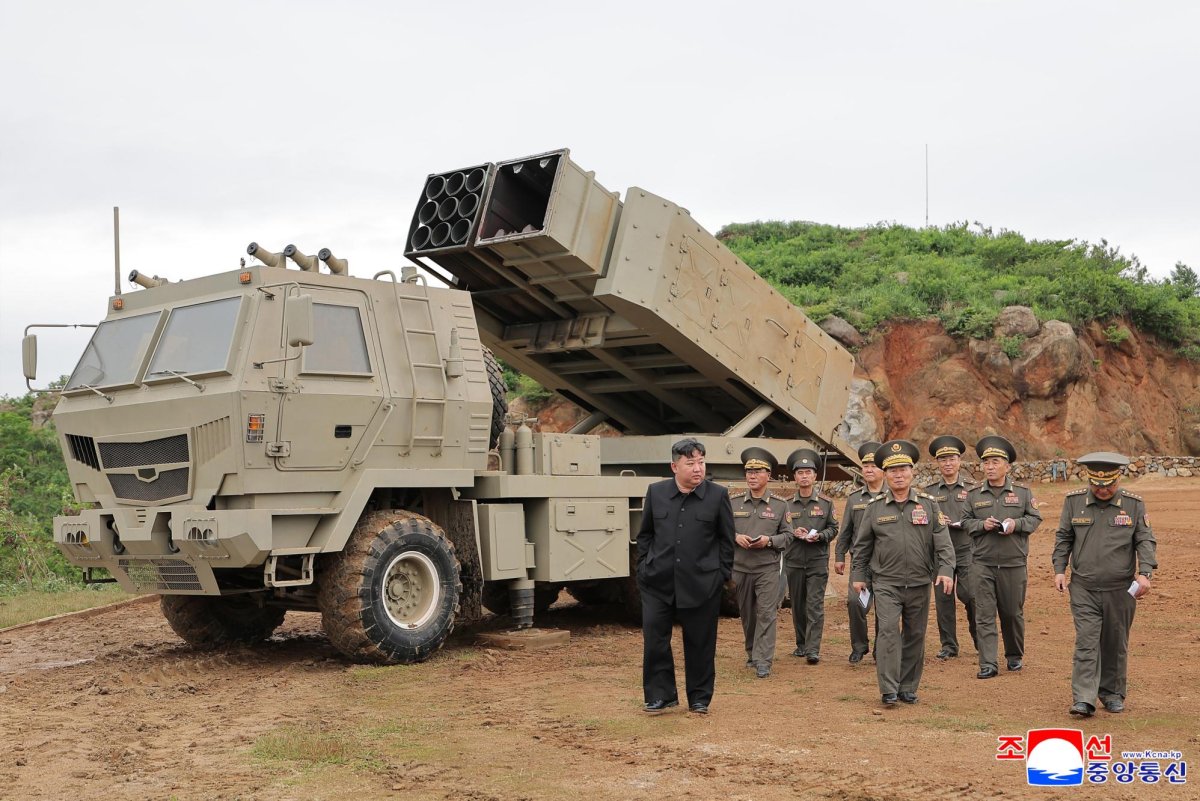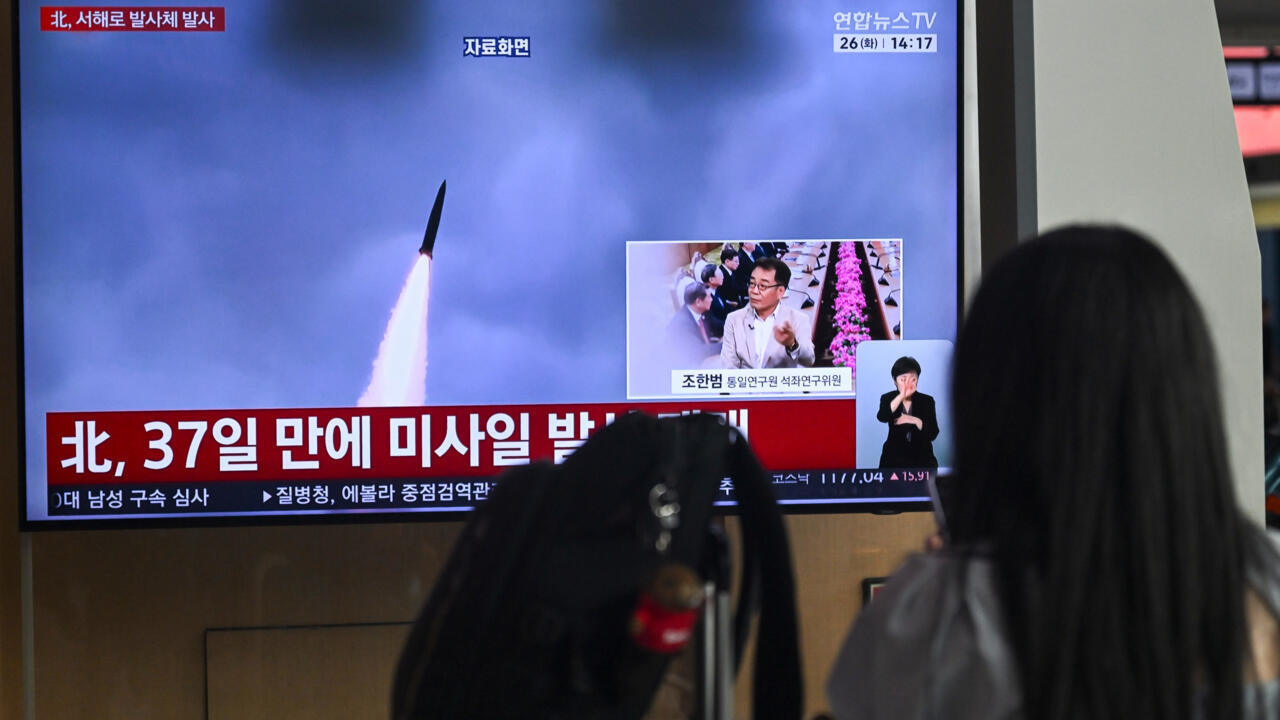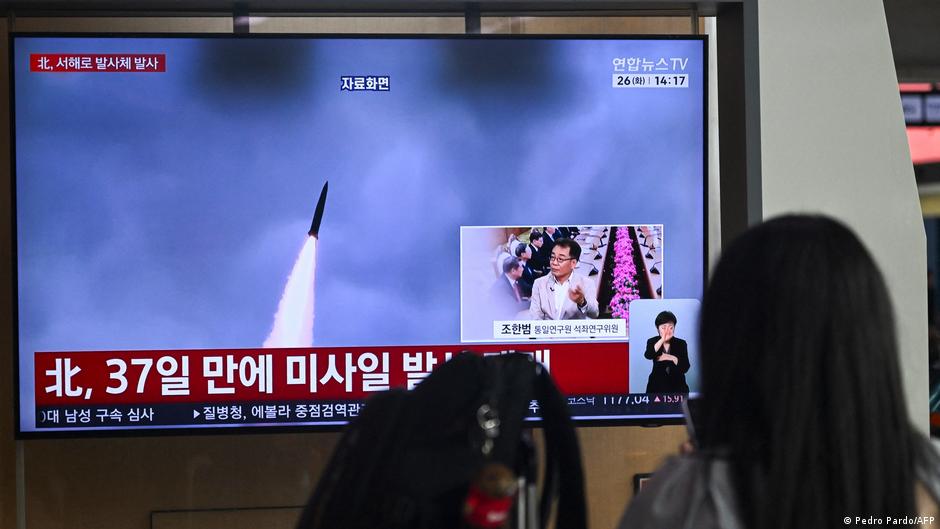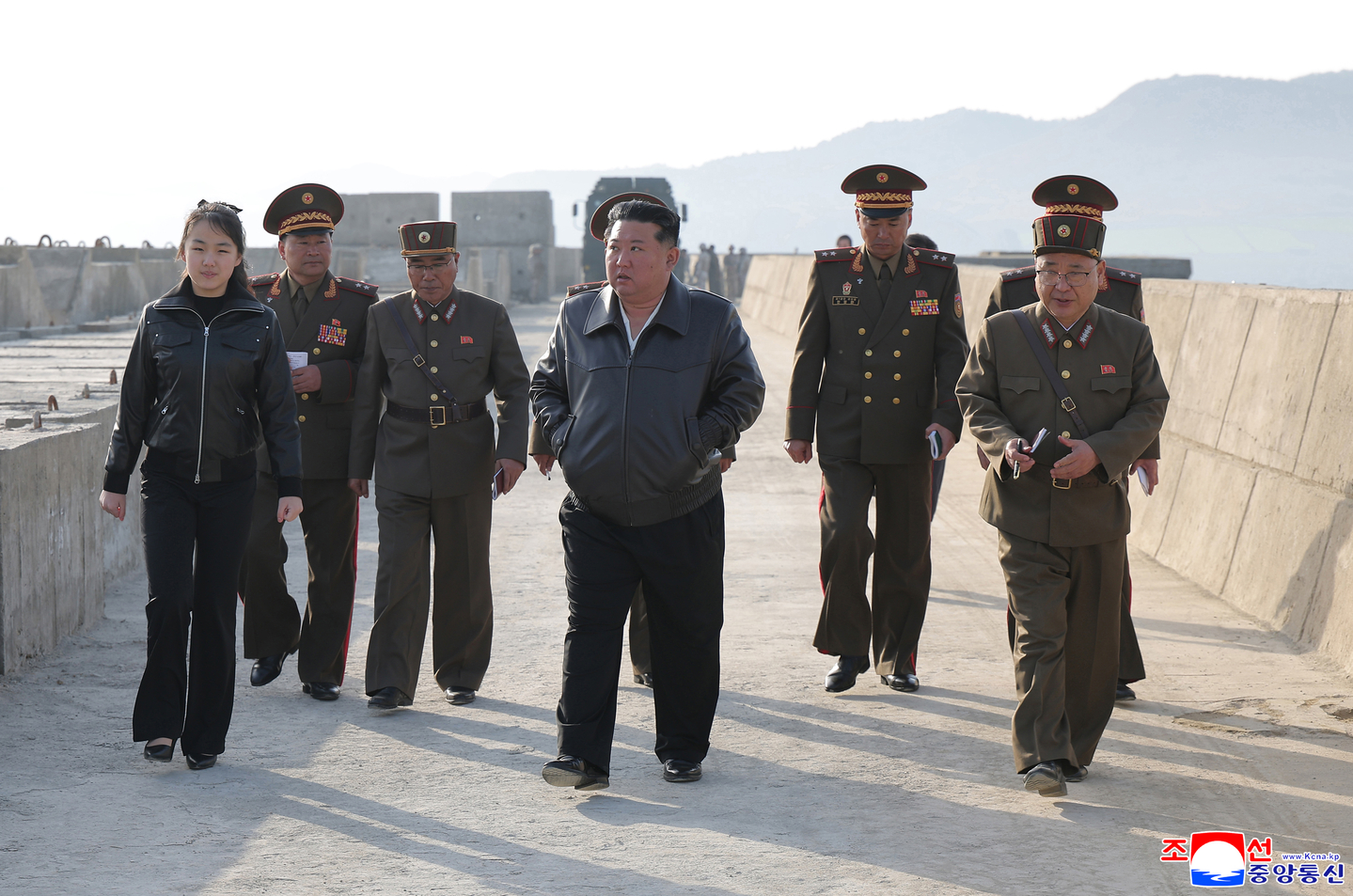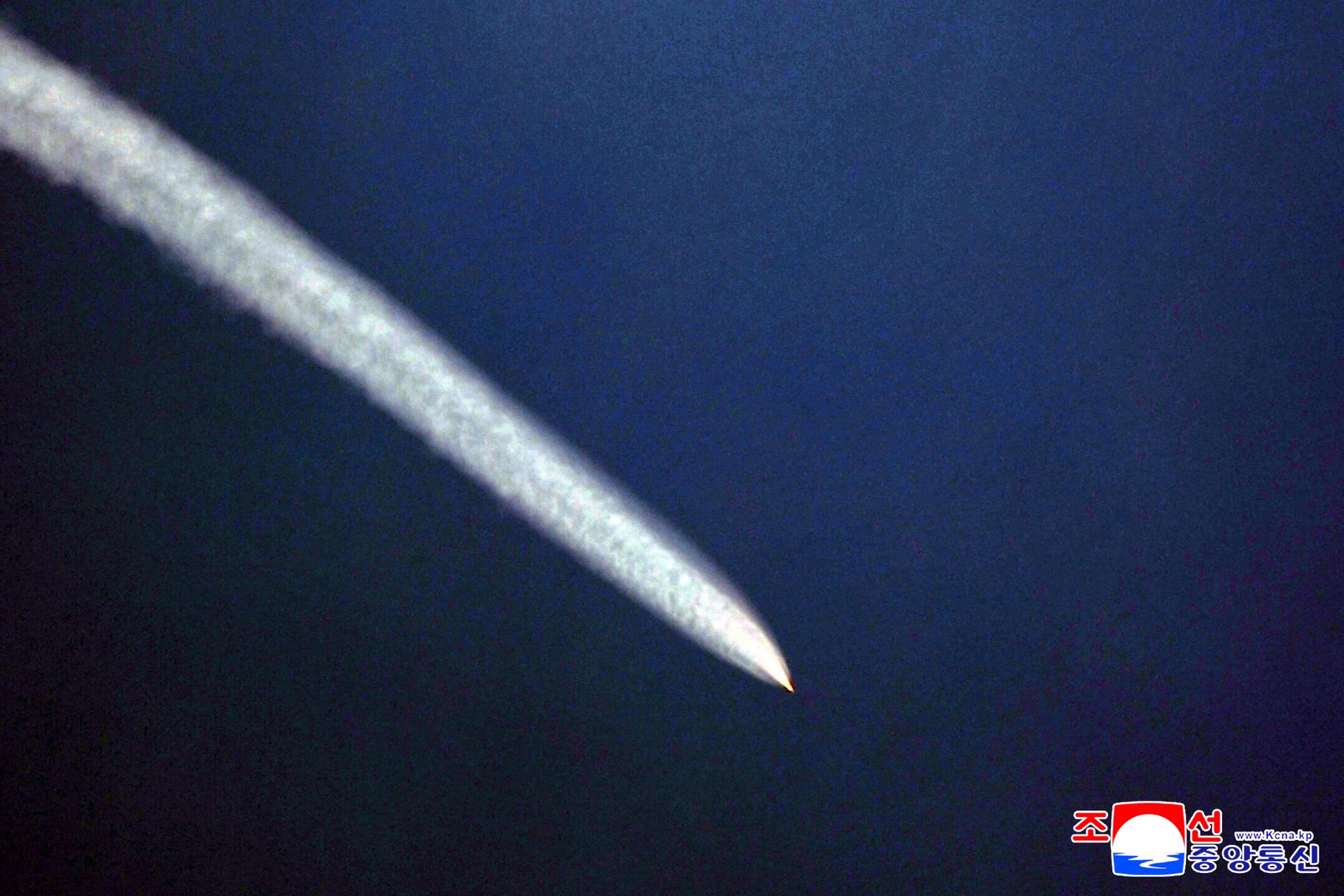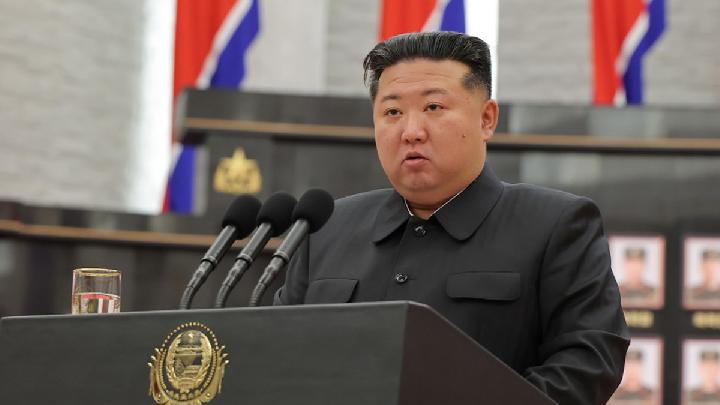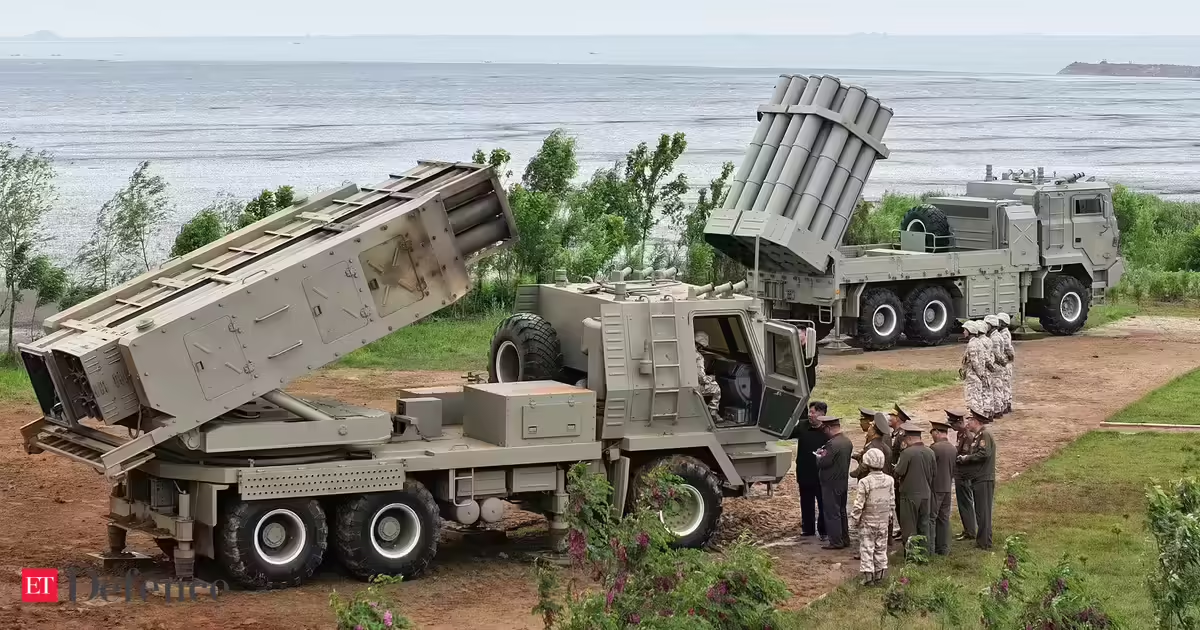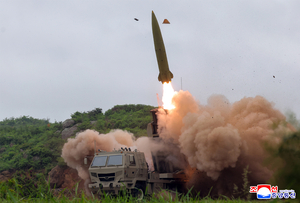
North Korean leader Kim Jong-un oversaw tests of a lightweight multipurpose missile launching system and a multiple tactical cruise missile weapon system developed by the Academy of Defence Sciences on Tuesday, the Korean Central News Agency reported the following day. (KCNA-Yonhap) North Korea said Wednesday that leader Kim Jong-un oversaw tests of a new lightweight multipurpose missile launcher and tactical cruise missile systems, highlighting what analysts described as growing efforts to modernize Pyongyang’s tactical strike capabilities with advanced technologies, including artificial intelligence-guided targeting.The Korean Central News Agency reported that the Missile Administration and the Academy of Defence Sciences conducted the tests Tuesday as part of North Korea’s five-year national defense development plan for modernizing its artillery and missile forces.The announcement came a day after South Korea’s military detected the launch of multiple close-range ballistic missiles and artillery rockets from the Jongju area of North Pyongan Province. CRBMs are generally defined as ballistic missiles with ranges of less than 300 kilometers.According to the KCNA, the launches were aimed at assessing the effectiveness of a “special mission warhead” mounted on a tactical ballistic missile, as well as verifying the performance and reliability of a 240-millimeter guided artillery rocket equipped with an ultra-precision autonomous navigation system. The tests examined the strike precision of a tactical cruise missile incorporating AI-guided targeting technology.KCNA said Kim voiced “great satisfaction," describing the results as “a clear signal” of advances in military modernization and combat capability enhancement.The report gave special attention to a tactical cruise missile slated for deployment with long-range artillery brigades positioned near what North Korea referred to as the “southern border area” — wording seen as consistent with Pyongyang’s increasingly confrontational characterization of inter-Korean ties under its “two hostile states” doctrine.According to KCNA, the missile integrates terrain contour matching navigation, ultraprecision autonomous navigation and an AI terminal guidance function, enabling it to accurately hit targets within a range of 100 kilometers through what the North called “multimode flight based on gliding and propelling.”KCNA also stressed that the firing control and automation systems of all launch vehicles had been upgraded to suit “modern warfare,” enabling more automated, long-range and precision strike operations.Kim reaffirmed that North Korea’s policy of steadily strengthening both its nuclear and conventional forces “remains unchanged,” warning that Pyongyang’s determination to defend its sovereignty and right to self-defense would “be expressed in a clearer action.”The simultaneous launch of close-range ballistic missiles, guided artillery rockets and tactical cruise missiles was seen by experts as an unusual attempt to demonstrate North Korea’s combined strike ability while complicating interception by missile defense systems.It marked North Korea’s eighth known missile launch event this year, following the April 19 firing of tactical ballistic missiles from the Sinpho area toward the East Sea.The tests took place one day after South Korea announced a long-term plan to build nuclear-powered submarines and place them into service beyond the late 2030s.Analysts said the latest tests reflected North Korea’s accelerating push to integrate advanced technologies into operational weapons systems.Lim Eul-chul, a professor at Kyungnam University’s Institute for Far Eastern Studies, said Pyongyang’s official mention of an “AI terminal guidance function” in tactical cruise missiles was particularly notable because it suggested efforts to maximize both strike accuracy and evasive maneuverability.Lim also pointed to North Korea’s emphasis on the “complete upgrade” of firing control and automation systems for all transporter erector launchers, saying the move likely indicates improvements in surprise-launch capability and simultaneous strike operations rather than simple projectile upgrades.“The tests appear aimed at showcasing combined strike capabilities using tactical ballistic missiles, guided artillery rockets and cruise missiles against frontline regions and the Seoul metropolitan area in a contingency,” he said.Lim added that Pyongyang’s repeated references to deployment in the “southern border area” underscored North Korea’s continued framing of South Korea as a separate hostile state rather than part of the same nation.He said Kim’s remarks about possessing “destructive power” capable of making enemy survival “theoretically impossible” suggested growing confidence in North Korea’s ability to penetrate or neutralize South Korea’s Kill Chain preemptive strike system and Korea Air and Missile Defense system.The expert also argued that North Korea may be accelerating tactical weapons modernization while Washington remains focused on conflicts in the Middle East and Ukraine, seeking to solidify international acceptance of its status as a de facto nuclear weapons state.Lim said advances in technologies such as terrain contour matching and AI-guided targeting also raised the possibility of Russian technology transfers or joint development cooperation amid expanding military ties between Pyongyang and Moscow.Yang Moo-jin, a distinguished professor at the University of North Korean Studies, said the latest launches were part of broader efforts to modernize North Korea’s artillery and missile forces by improving the range and precision of guided rockets and tactical cruise missiles.Yang noted that the planned deployment of 100-kilometer-range tactical cruise missiles near the inter-Korean frontier appeared intended to strengthen direct military threats against South Korea, particularly in the Yellow Sea region.He also linked the moves to North Korea’s recent constitutional revision formally defining South Korea as a separate hostile state, saying Pyongyang has increasingly emphasized military reinforcement along what it calls the “southern border area.”Yang added that North Korea’s ambiguous treatment of maritime boundaries in the Yellow Sea — including the Northern Limit Line — may indicate efforts to strengthen deterrence in the area while preserving the possibility of turning it into a future zone of military confrontation.
North Korea touts AI-guided tactical weapons in latest missile tests overseen by Kim
North Korea said Wednesday that leader Kim Jong-un oversaw tests of a new lightweight multipurpose missile launcher and tactical cruise missile systems, highlig
896 words~4 min read