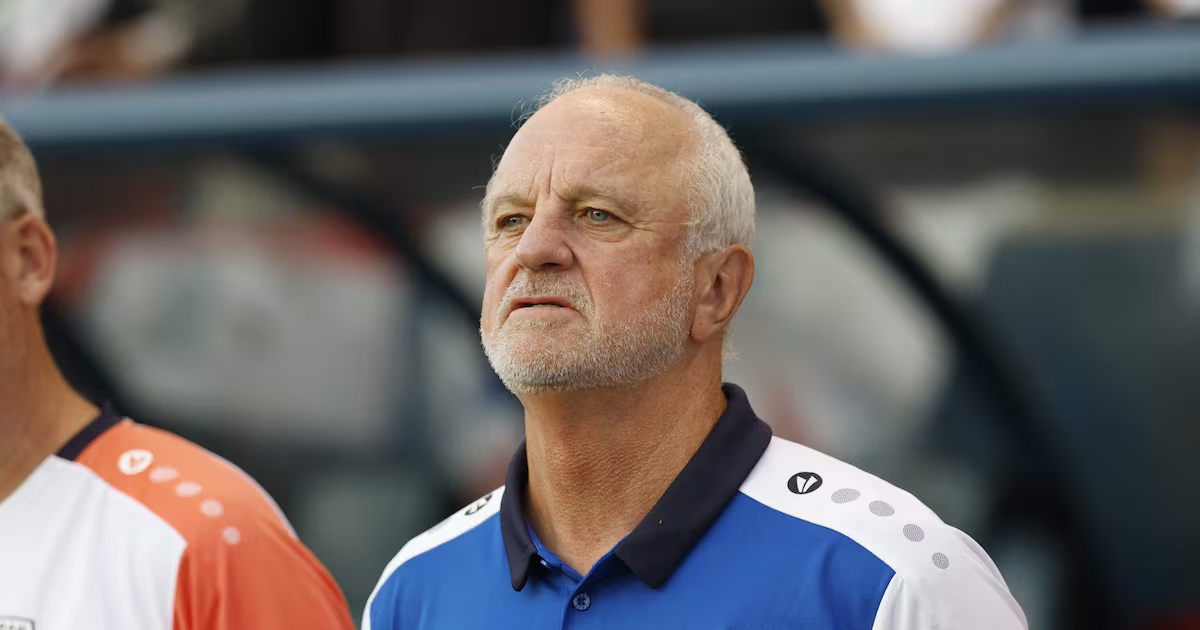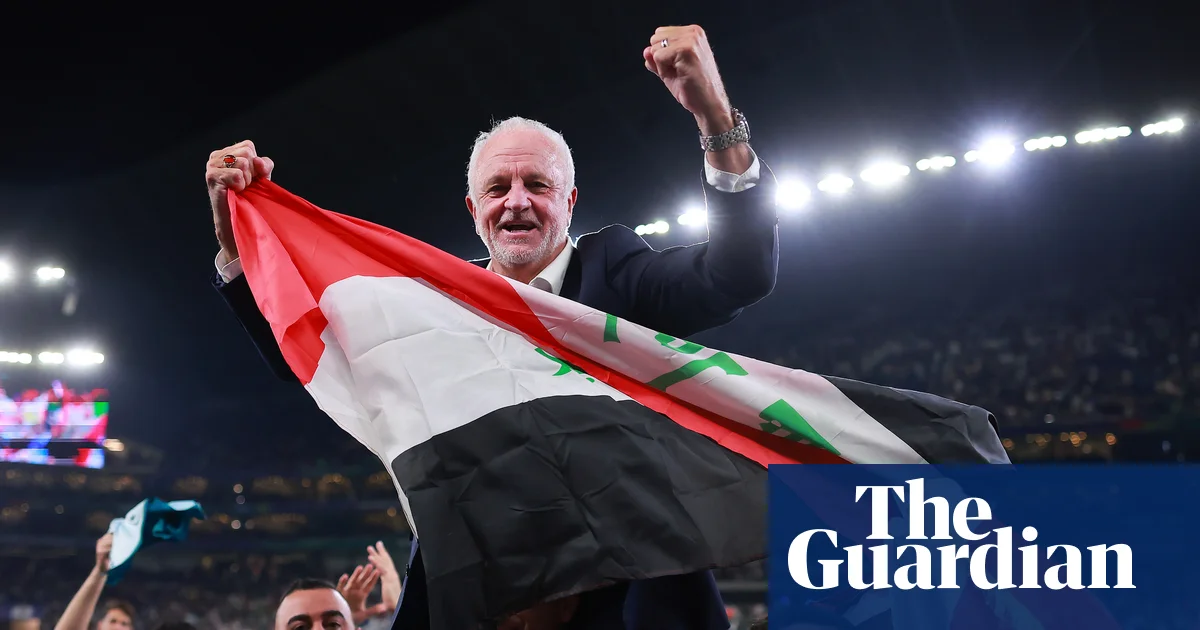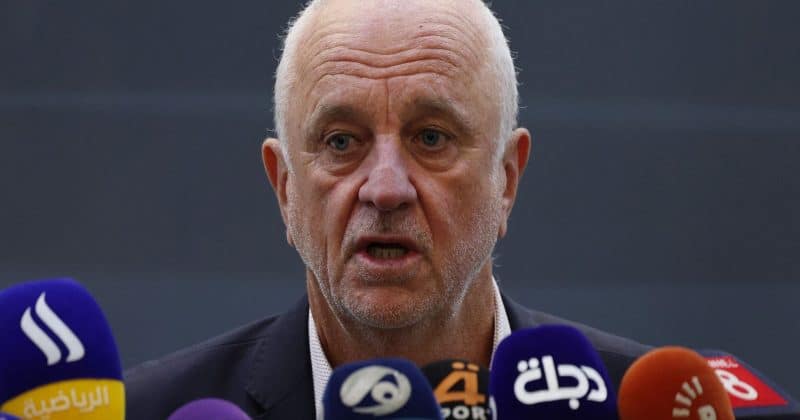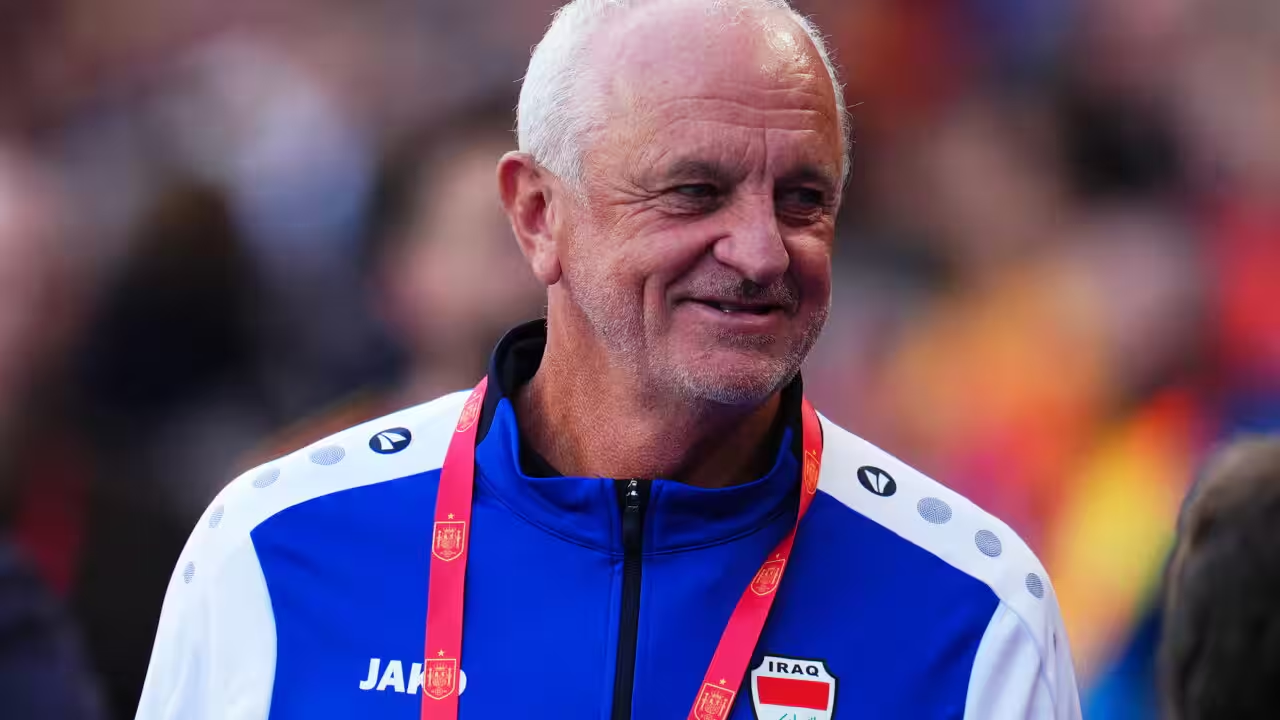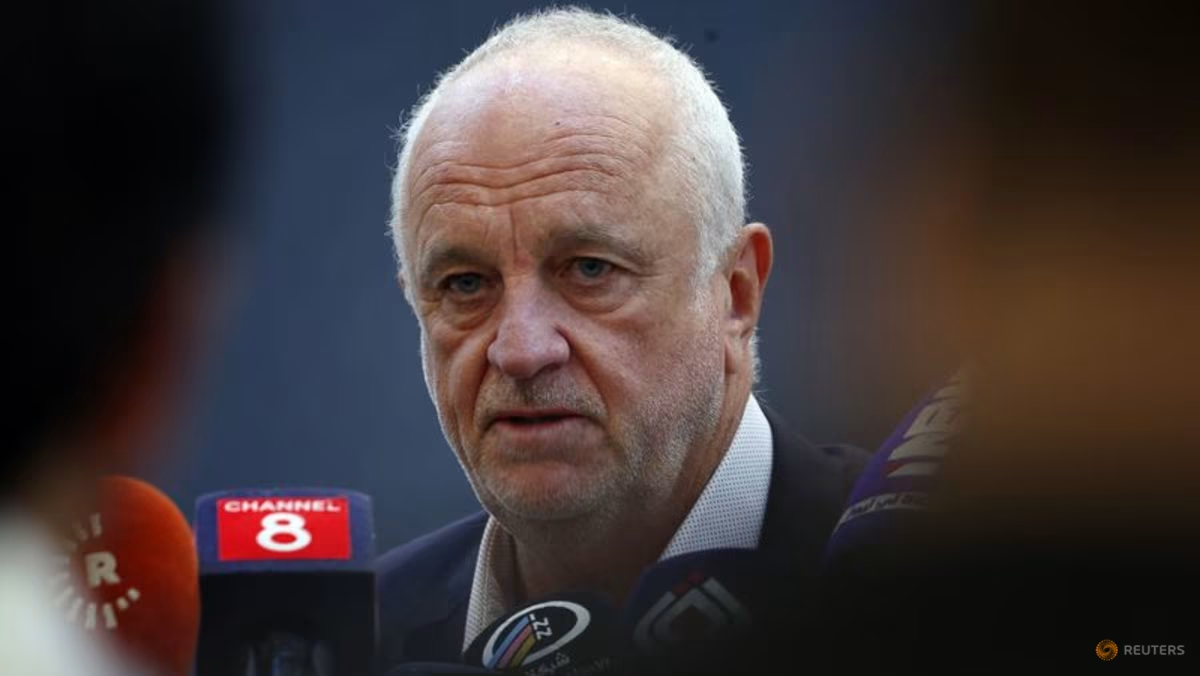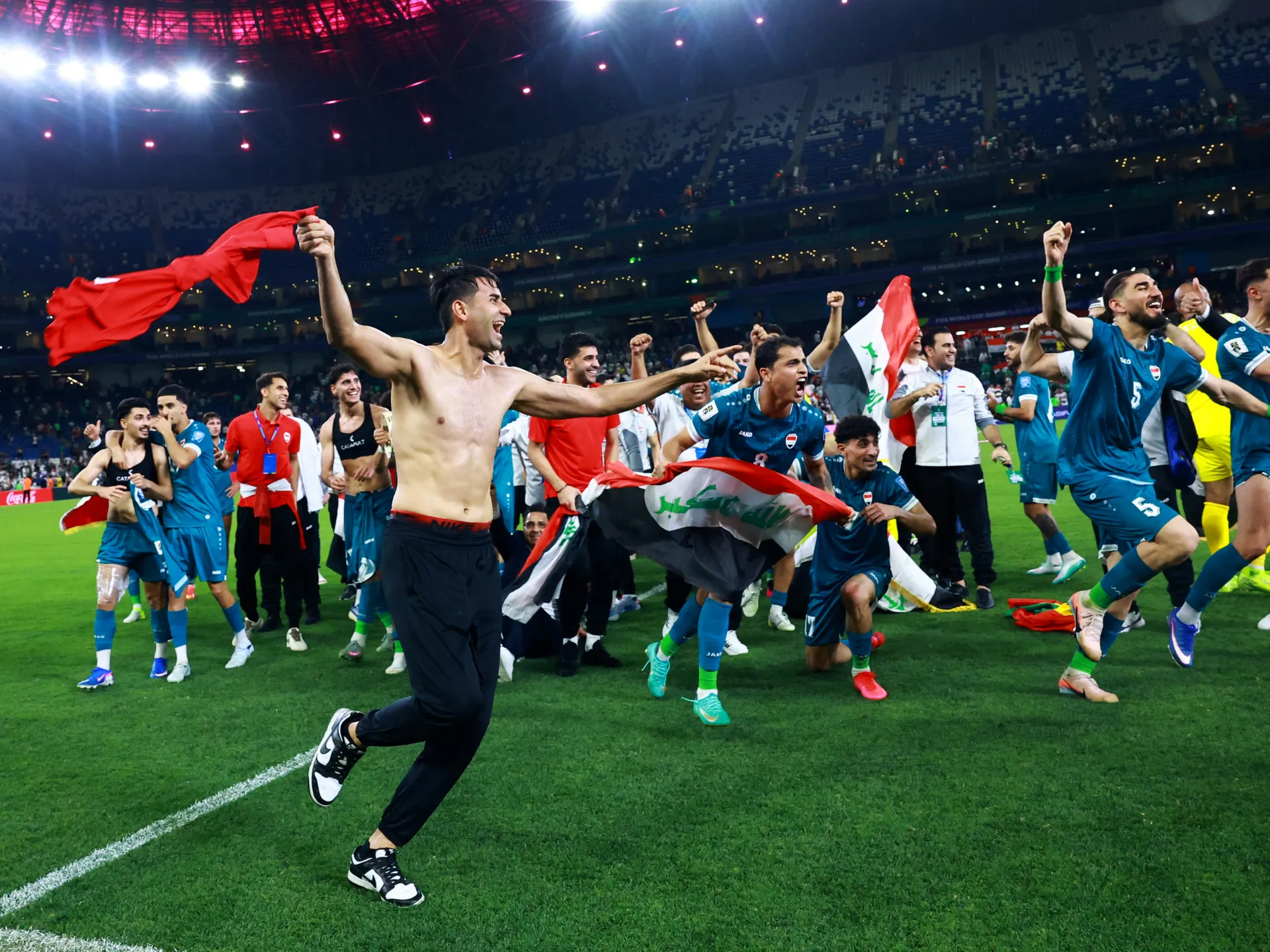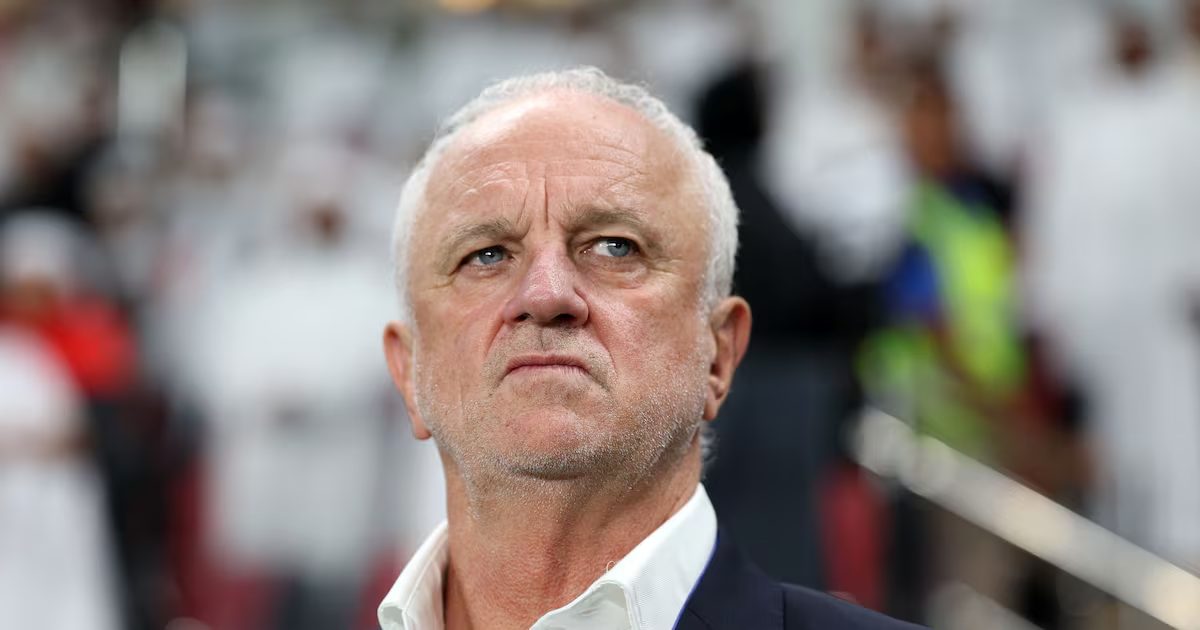
It's fair to say Graham Arnold's family had some reservations when he told them he wanted to take the Iraq job. They had only just got used to having him around after he'd resigned as Australia coach in September 2024, so were concerned about his desire to leave for Baghdad and a nation bruised by war.“When this job came, I have to say 50, actually, 75 per cent of the family were very negative about me coming to Iraq because of the perception in the Western world of what Iraq and Baghdad is like,” Arnold told The National of his appointment in May 2025.“Now, I've been here for 10, 12 months and it's not true. They're improving the country every year and it's developing more and more. It's gone through a lot of heartache and pain with the wars, but the country and the people are fantastic.” When Arnold says he's been there for a year, he means it. “I had in my contract that I could come and go between Fifa windows, but I did that once and I couldn't do it again,” he said. “I then lived in Baghdad for eight months. I really had to understand the culture of Iraqis and the Middle East because it is completely different to Australia.“I couldn't turn the players into Australians all of a sudden and expect them to be like Australians. I had to adapt to their culture and also adjust things to help them with the discipline side of things to achieve what I expected to achieve – and that was to qualify for the World Cup.”Graham Arnold, left, head coach of Iraq, chats with UAE counterpart Cosmin Olaroiu before a World Cup qualifier in Abu Dhabi. EPAInfoAfter his crash course in Iraqi culture, Arnold did exactly that, doing what no other coach had managed since 1986, in guiding the Lions of Mesopotamia to a global finals via the intercontinental play-offs in Monterrey, Mexico.“I've been so impressed with Iraq as a place and especially in terms of football,” he added. “It's 45, 46 million people who are obsessed with the game. You can see when you speak to people that all they've ever wanted is qualification. The World Cup is something you remember forever.”Morning calls “just to check in” with wife Sarah and “weekly video calls with the kids and grandkids” have kept Arnold in touch with events back in Sydney, while they have “watched every minute and supported Iraq the whole way”. He says the key to qualification was fostering a family spirit in the Iraq camp, smoothing over differences and creating a deep bond among a diverse squad featuring numerous players who grew up abroad.“I am huge on culture and that was one of the things I was worried about,” Arnold explained. “First thing I noticed on day one was there were six tables of five players. They were separated. On two or three tables were Iraqis and on the other tables, the foreign boys. Straight away, I removed that and made it one big table of all the players, so they're all sitting together and communicating. “And, I have to say, if you just see the reaction after the games, even against the UAE [in qualifying], the reaction of the players with each other, you can see they love each other.The words 'one family ... we did it' appear on the screen as Graham Arnold attends a pre-World Cup press conference in Baghdad. ReutersInfo“The local boys understand that, obviously, with the wars that went on years ago, that a lot of the Iraqis moved out of Iraq, and they lived in Sweden, Denmark, Norway, Australia, wherever. But the players, I have to say, the foreign-based players, all they want to do is make Iraq proud. "I think they sit and talk to their parents about what they went through and they just want to do the country of Iraq proud, and do their parents proud.”Iraq's reward for their historic qualification was being drawn in what is widely regarded as the World Cup's most difficult group, alongside tournament favourites France, Afcon finalists Senegal, and a Norway side led by Erling Haaland.It's a good thing Arnold relishes the role of being the underdog, something he has learnt to embrace in three previous trips to the World Cup with Australia – as assistant to Guus Hiddink in 2006, again to Pim Verbeek in 2010, and as Socceroos boss himself in 2022, when they narrowly lost to eventual champions Argentina in the last 16 having beaten both Tunisia and Denmark in the group. “I learnt more in 10 months with Guus than I would have done in 10 years on my own,” said Arnold of his time working with the legendary Dutch coach. “And Pim was a fantastic man, the opposite of Guus, but taught me more about man management than anyone. “Guus sent me the most beautiful text after [we qualified]. He always calls himself 'ex-Aussie boss', he just said how proud he was and 'you're an amazing coach' and 'World Cup next, keep it going'.”Australia boss Guus Hiddink, left, and assistant Graham Arnold appeal during the World Cup 2006 match against Croatia in Berlin. Getty ImagesInfoFirst up for Iraq on June 17 is a game against Norway and prolific Manchester City striker Haaland who, with 55 goals in 49 caps, is improbably even more lethal in the shirt of his national team.“Of course, he is an incredible player. One of the best number nines, probably, you know, going back to the [Marco] Van Basten era – he's that great of a player. But can we stop the delivery? Can we pick him up in the box, make sure that the centre-backs [look after him]. We've got big boys at the back – 1.96m, 1.97m – big, strong boys.“We're playing against Norway and it's going to be stinking hot," he added. "The Scandinavians won't be used to that heat, that weather. So, it's going to be an advantage to us because a lot of our boys are used to playing in 40-degree heat. We've got to use that.“I always send the players out to win the game. The mentality is we're going to be in their face for 90 minutes. If you give good players time on the ball, give them space, they're going to kill you. So, we're going to take away the space. We're going to be physical.”It doesn't get any easier for Iraq, with a game against a France side featuring Kylian Mbappe, Ousmane Dembele and Michael Olise in Philadelphia on June 23, before a group finale against African heavyweights Senegal in Toronto on June 26. But Arnold said: “It's great being the underdog because all the pressure is on the opponents. There's nothing written in black and white that Norway are going to beat Iraq. France are going to beat Iraq. Senegal are going to beat Iraq.“There's nothing confirmed. It still has to happen. So, we need to have that mentality that when we go there, we're going to do something special. Today is a once-in-a-lifetime opportunity for all the players and even the coaching staff. We've got to get ourselves ready and we've got to forget about the names of the opponents. “We have to get ourselves ready to perform at our best, which we can control. We can't control what they do, but we can go there and get ourselves ready to shock the world.”That preparation will of course involve an incredible amount of technical and tactical work, but Arnold believes psychology is their biggest weapon as they seek to navigate a hazardous path to the knockout stages. “What's important is that I make sure our culture is right,” he said. “They are all brothers, the players. I'm like a father to them. My backroom staff are like uncles to them, and we're there to get the best out of the boys.”That all starts against Norway at Gillette Stadium in Foxborough, Massachusetts. Asked what his final message will be ahead of that pivotal opening game, Arnold says: “Go out and do your family proud. Go out and do Iraq proud.”
‘Ready to shock the world’: Graham Arnold and Iraq relish Haaland and Mbappe tests | The National
Aussie coach bullish about team's chances as Lions of Mesopotamia get ready for first World Cup appearance for 40 years
1,357 words~6 min read