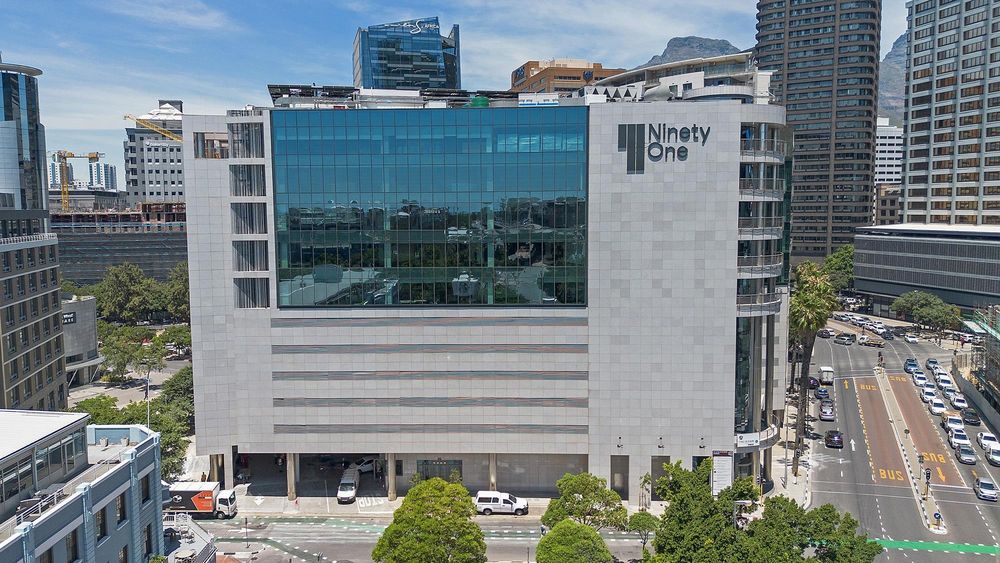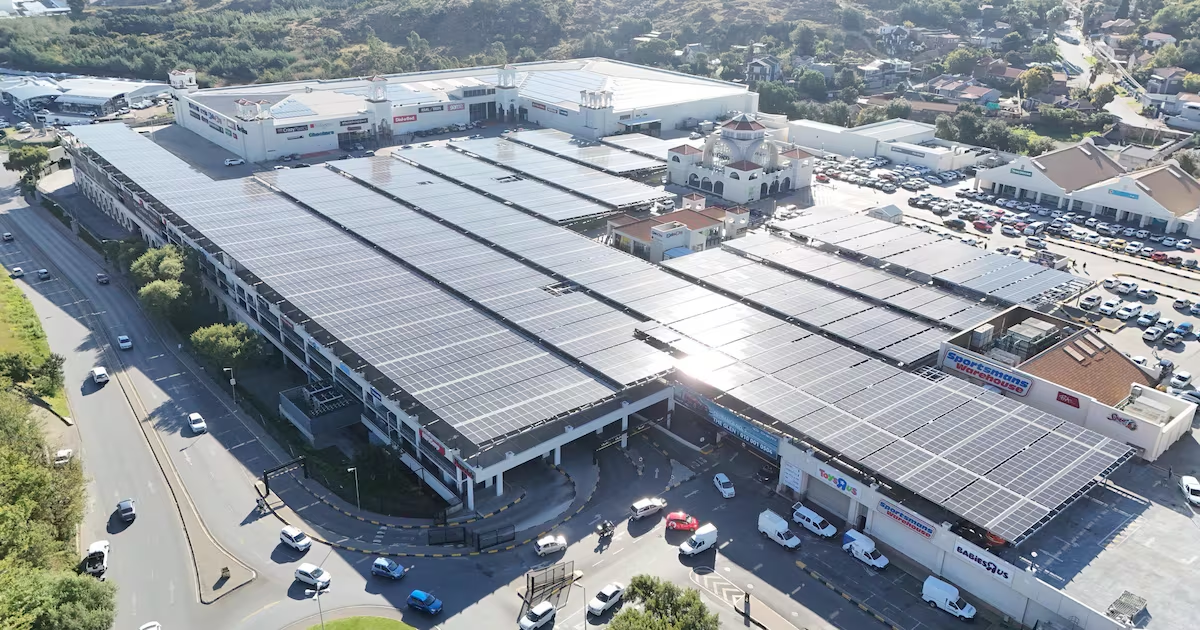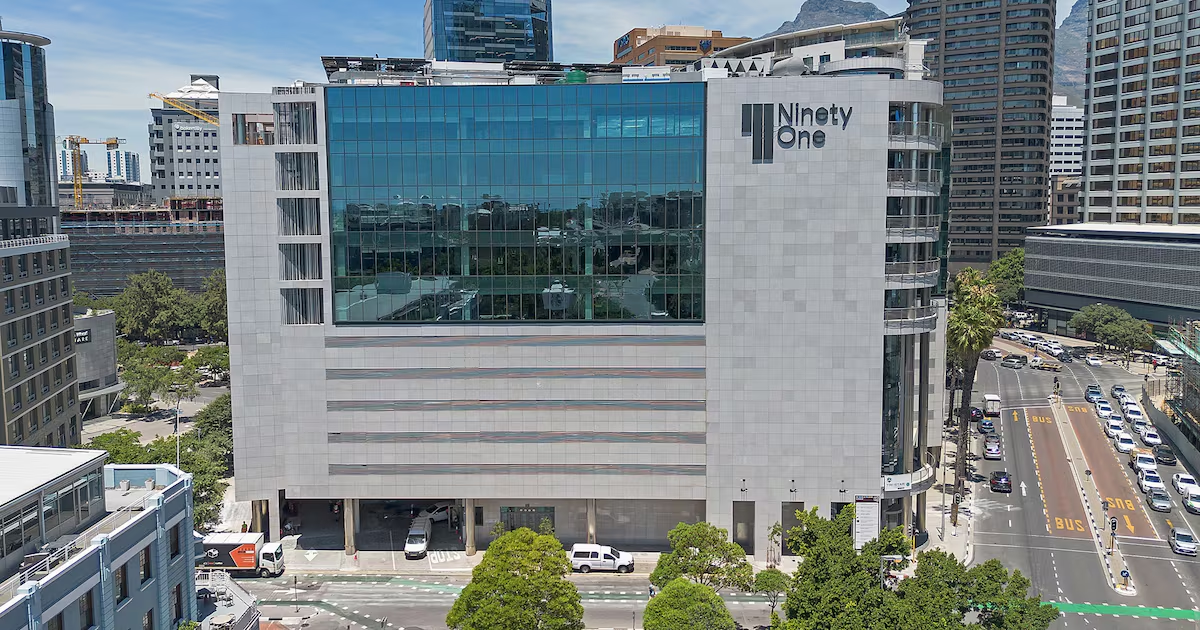
The City of Cape Town, renewable energy trader Etana Energy and listed property group Growthpoint have implemented SA’s first pooled renewable electricity wheeling model across multiple buildings connected to a municipal grid, in a move that could accelerate private renewable energy supply in the city.The model, which completed its first pooled power allocation in April, enables renewable electricity generated remotely to be distributed across a portfolio of buildings instead of being matched to individual properties, creating greater flexibility in balancing electricity supply and demand.Growthpoint has already signalled its intent to scale the initiative, with more than 30 Cape Town properties across its retail, office, industrial, logistics, healthcare and student accommodation portfolios lined up for inclusion in the next phase of the wheeling rollout.Five Growthpoint buildings are presently supplied through the pooled wheeling arrangement, including the recently refurbished 36 Hans Strijdom office building on Cape Town’s foreshore, occupied by investment manager Ninety-One.The other participating buildings are Constantia Village mall, Centennial Place office complex in Century City, Montclare Place mall in Claremont and Newlands on Main offices.According to the agreement, power generated at the Boston Hydroelectric Plant near Clarens, Free State, is sent through Eskom’s transmission network to Cape Town, where it is distributed through the city’s grid to participating Growthpoint properties. The hydroelectric facility is co-owned by independent power producer Serengeti Energy and Growthpoint, while Etana Energy acts as the licensed electricity trader and exclusive offtaker managing billing and settlement across the portfolio.Scale and simplicityGrowthpoint SA CEO Estienne de Klerk said the pooled wheeling structure is part of the company’s renewable energy strategy and demonstrates that collaboration between municipalities and companies can help accelerate electricity market reform.“What makes this different is scale and simplicity. By matching renewable electricity supply across a portfolio of buildings rather than property by property, we can deliver clean electricity for our tenants more flexibly, more efficiently, and at a competitive price,” De Klerk said.The model follows Cape Town’s municipal wheeling pilot in 2023, which laid the groundwork for more complex trading structures, as municipalities and large energy users turn to alternative electricity supply arrangements amid rising tariffs, constrained grid capacity and mounting pressure to decarbonise energy consumption.Growthpoint already supplies 10 office buildings in Sandton with renewable energy through its e-co₂ green benefit scheme, using wheeling agreements through the Eskom grid. Etana Energy CEO Evan Rice said the project demonstrates the commercial viability of dynamically allocating renewable electricity across multiple customers while simplifying settlement and billing processes.“We are very grateful to the team at the City of Cape Town for their commitment to innovation and their collaborative approach to finding solutions that enable renewable energy adoption in the city,” Rice said.Cape Town mayoral committee member for energy Xanthea Limberg said the initiative reinforces the city’s ambitions to be a leader in municipal energy reform and renewable energy adoption.“The city’s pooled wheeling facility is a decisive leap in advancing the vision set out in our energy strategy,” Limberg said.The Boston Hydroelectric Plant is expected to become one of several generation facilities supplying Etana’s Cape Town wheeling pool in the coming months. Future allocations will include additional Growthpoint properties as well as the V&A Waterfront, De Klerk said.
Hydroelectricity powers five Cape Town buildings in Growthpoint renewable energy project
Hydroelectricity from Clarens in the Free State powers group’s offices and malls
529 words~2 min read