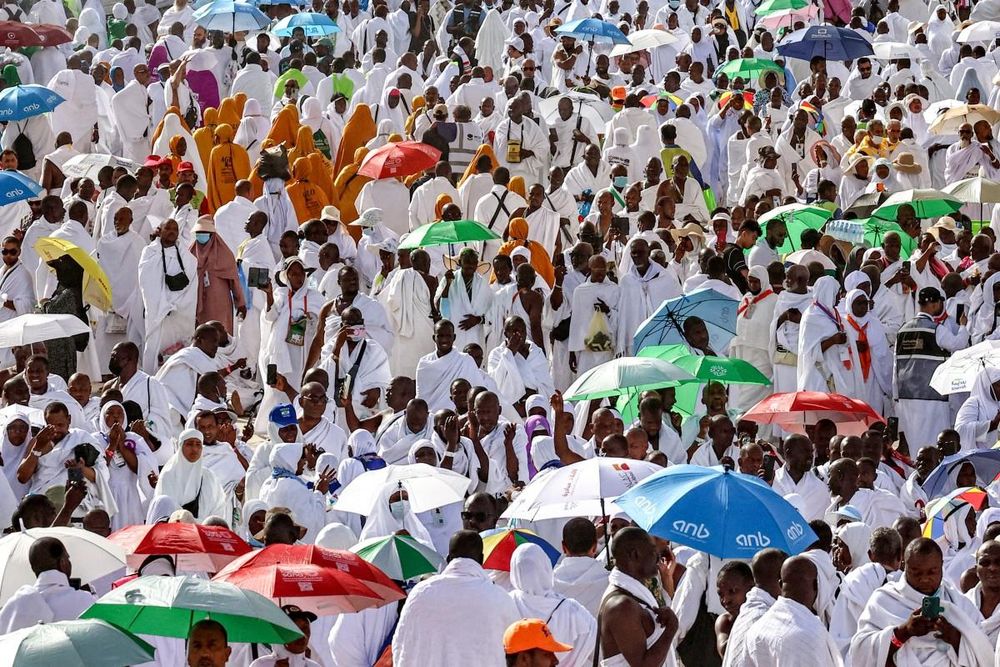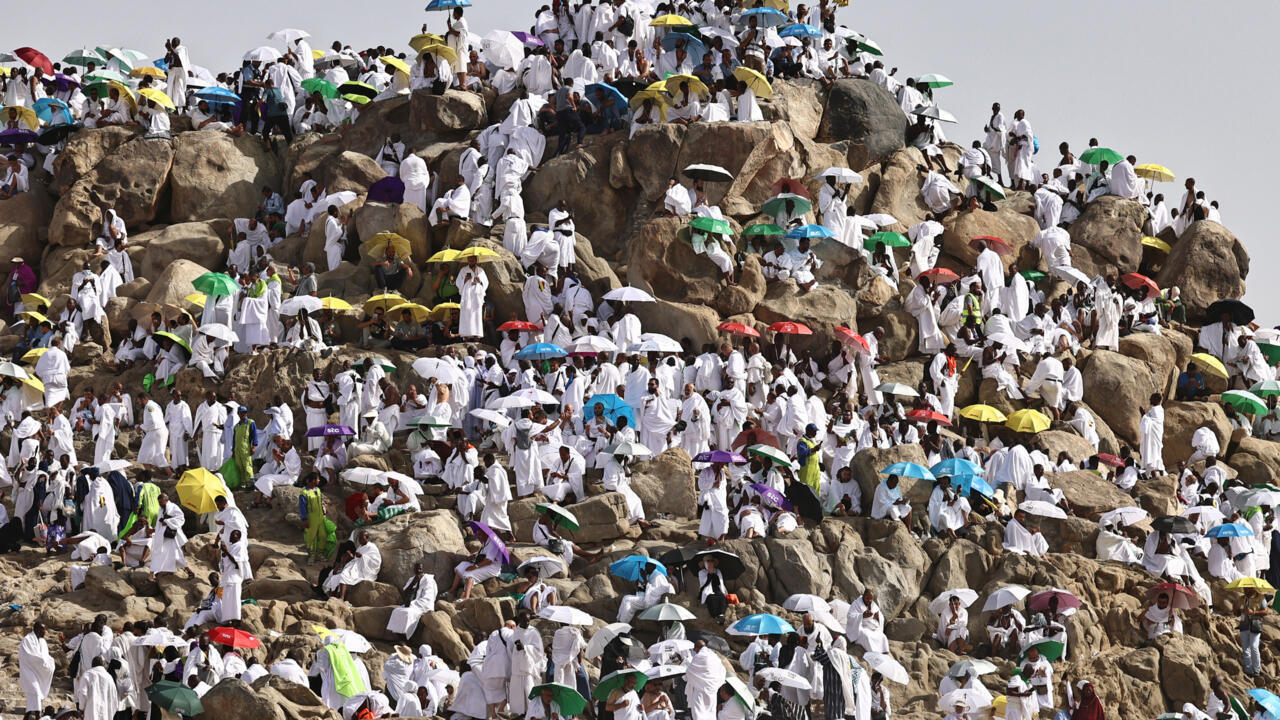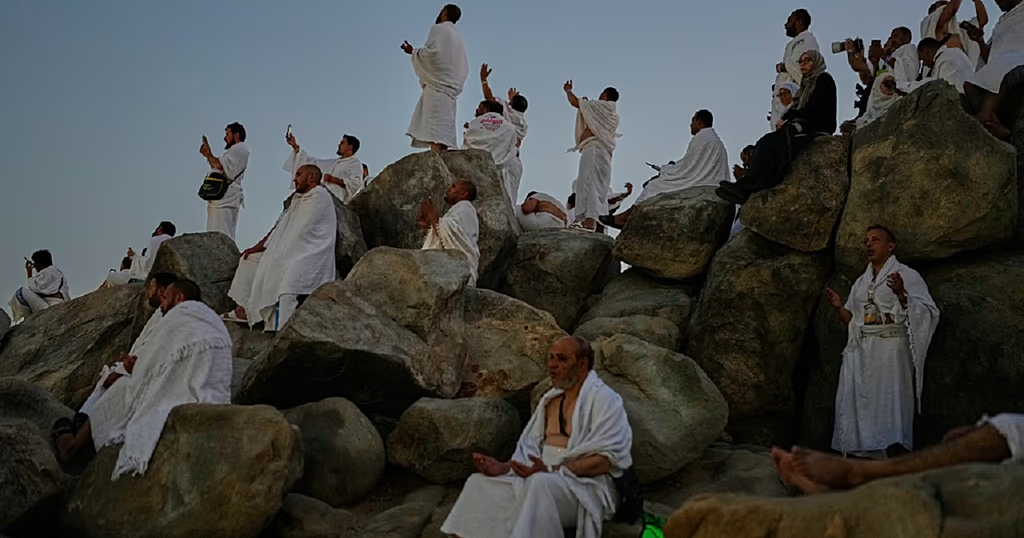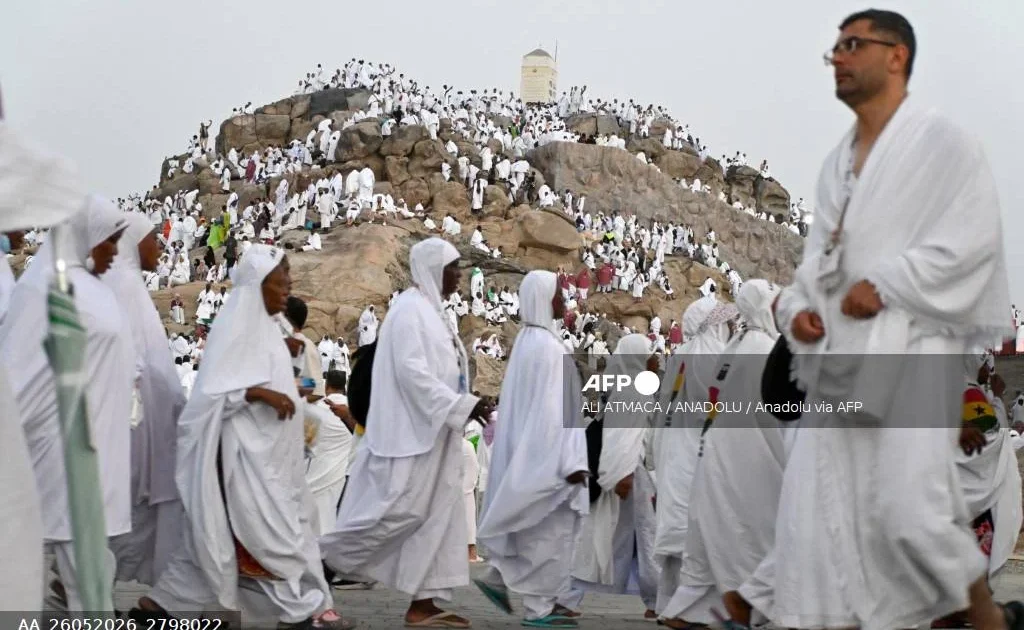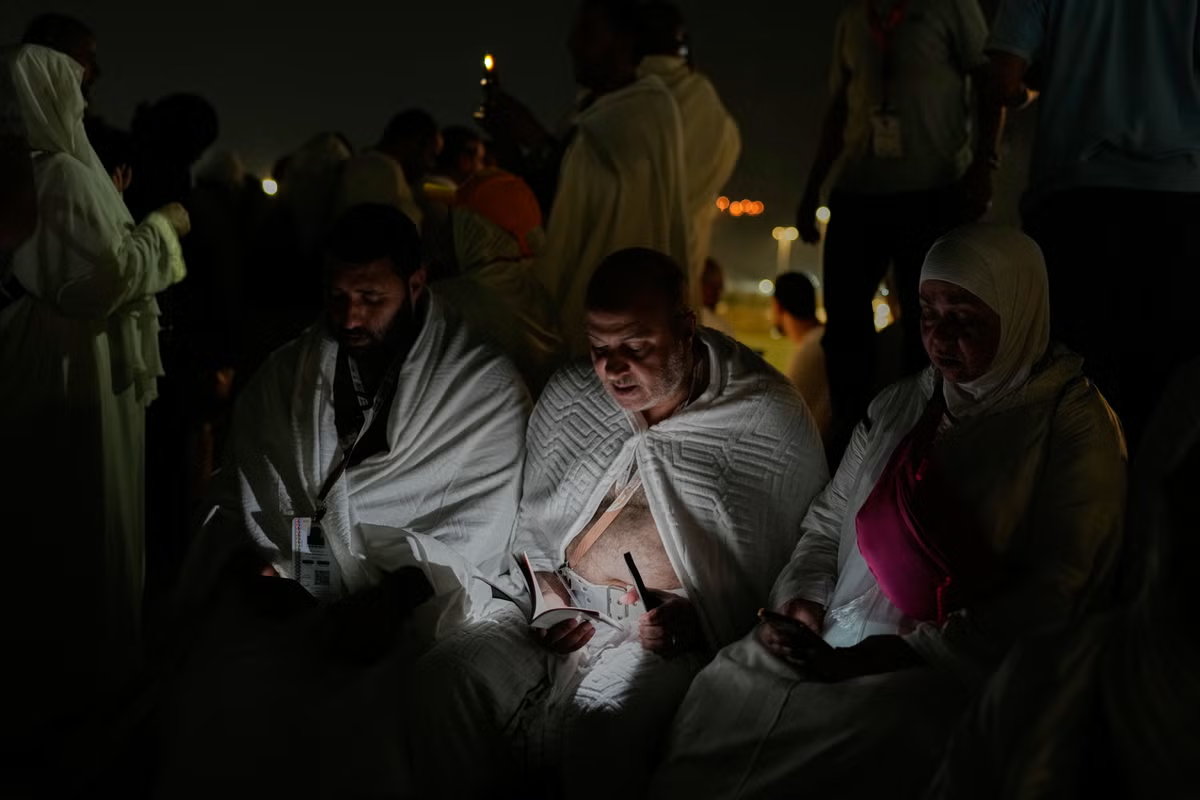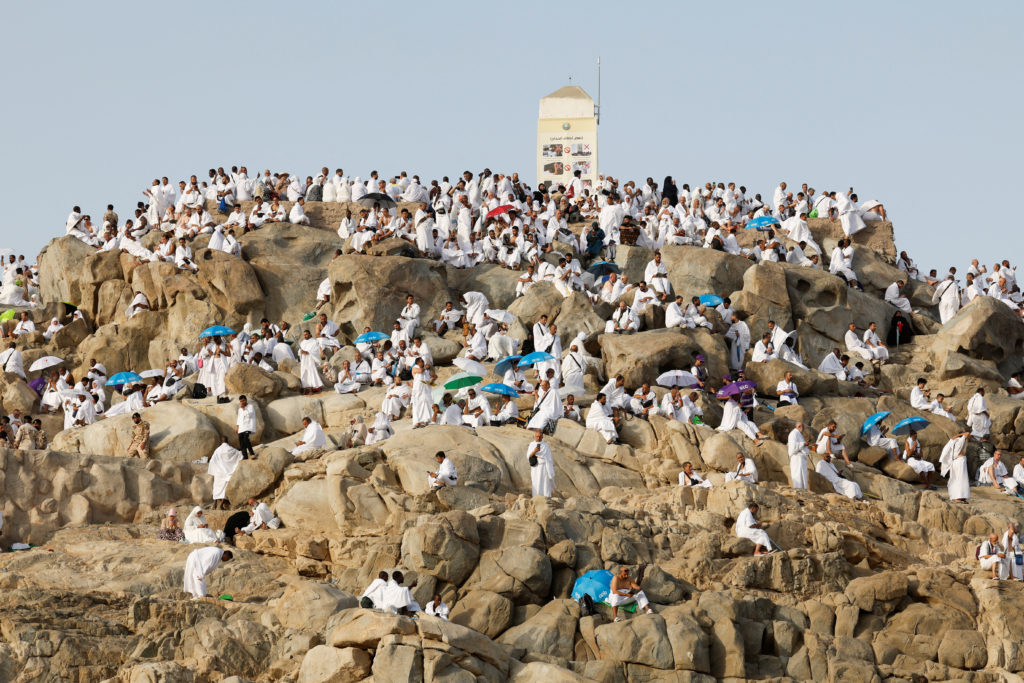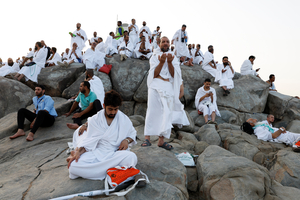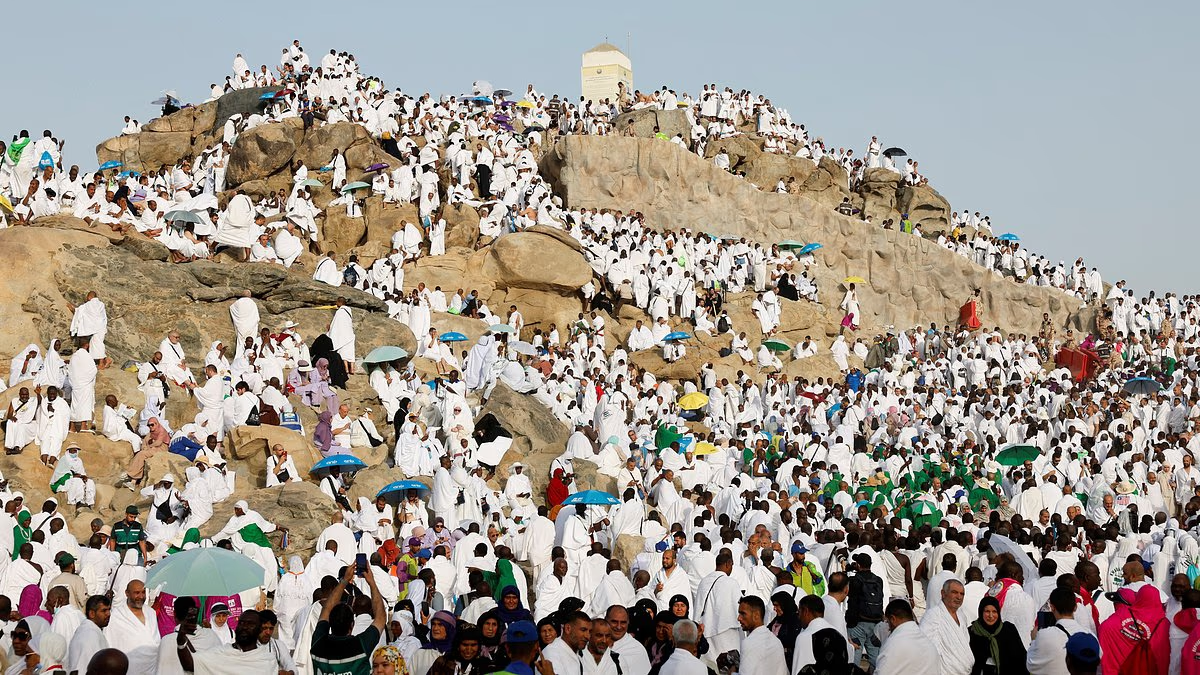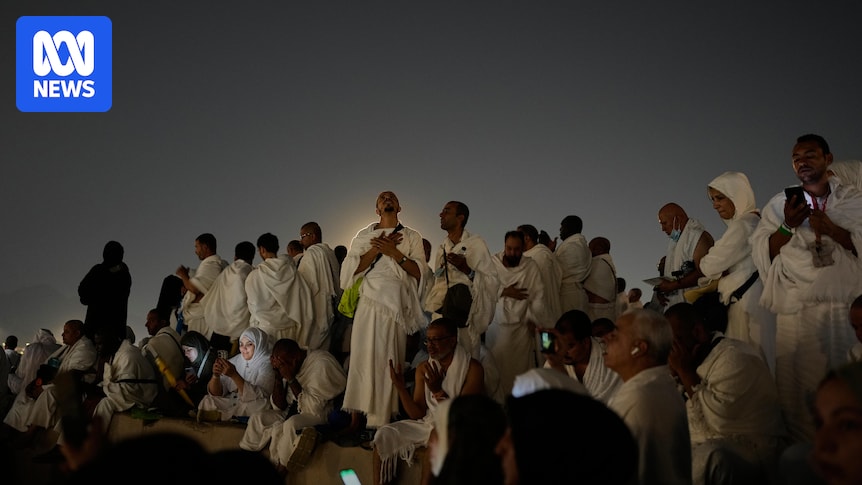
Thousands of Muslim worshippers have converged on the rocky hills and plains of Saudi Arabia's Mount Arafat as the annual Islamic pilgrimage, the Hajj, reached its peak.Despite the sweltering heat, pilgrims gathered for intense prayer near the holy city of Mecca, where the Prophet Mohammed is believed to have delivered his last sermon.Pilgrims gathered at the top of a rocky hill known as Mount Arafat on the second day of the five-day Hajj. (AP: Altaf Qadri)More than 1.7 million people joined the five-day Hajj this year, according to official figures."This happens once in a lifetime," Mohammad Asal, an Egyptian pilgrim said."People here have prepared their prayers, hoping that God will respond to them, because we know that … the most important ritual of the Hajj is being in Arafat."On Mount Arafat, pilgrims engage in intense prayer. (AP: Altaf Qadri)The pilgrimage is one of the Five Pillars of Islam, required for Muslims at least once in their lifetime if they are physically and financially able to do it.Volunteers handed out bottles of water, parasols and food packages to the tens of thousands of pilgrims as they made their way toward Mount Arafat, as helicopters buzzed overhead.Temperatures have hit highs of 44 degrees Celsius in Mecca in recent days, prompting Saudi authorities to urge pilgrims to protect themselves from the sun during the mostly outdoor rituals.As hats are not allowed during the pilgrimage, many men rely on umbrellas for shade. (AP: Altaf Qadri)Officials have been offering misting fans and other methods to keep pilgrims cool in the heat. (Reuters: Ibraheem Abu Mustafa)Since men are prohibited from wearing hats during the Hajj, many carry umbrellas to try to keep the blistering sun at bay.Saudi health workers have increasingly relied on drones to supply a vast array of medical clinics treating heat-stressed pilgrims during the Hajj.Rather than relying on congested roads filled with pilgrims travelling on foot, drones have been a reliable technological remedy for helping keep the 127 clinics spread across Mecca, Mina and Arafat adequately provisioned.After Mount Arafat, pilgrims spent the night in Muzdalifah, collecting pebbles for the symbolic "stoning of the devil" ritual in Min.The visit to Mount Arafat is one of the key points in the journey. (AP: Altaf Qadri)On the hill, Muslims recite parts of the Koran. (AP: Altaf Qadri)This year's rites follow waves of Iranian strikes on targets in Saudi Arabia and its Gulf neighbours after the United States and Israel attacked the Islamic republic in late February."Even if the war were still ongoing, I would not have backed out," Fadel, 49-year-old US national who asked that only his first name be used, told AFP."We are undoubtedly in the safest place in the world," he said, referring to a passage from the Koran.Many international pilgrims were warned against making the journey amid the conflict in the Middle East. (AP: Altaf Qadri)Amid the uncertainty, the American embassy in Riyadh last month advised US citizens not to participate.The Australian government has also issued a warning to citizens, suggesting they "reconsider" travelling to Saudi Arabia.Muslim pilgrims will also visit the Kaaba, Islam's holiest site. (AP: Altaf Qadri)But for many, the chance to perform the sacrosanct Muslim rite has taken precedence over the fears of instability caused by the war.Sayed, a 47-year-old Australian on his seventh Hajj, said there were no "second thoughts about coming here"."When you make the intention to come, you come with a reason and a purpose," he said."And that's why you're here and put your faith in God that everything will be fine."ABC/AFP/AP
More than a million worshippers brave searing heat for annual Hajj pilgrimage
Thousands of Muslim worshippers converge on the rocky hills and plains of Saudi Arabia's Mount Arafat as the annual Islamic pilgrimage, the Hajj, reached its peak.
585 words~3 min read