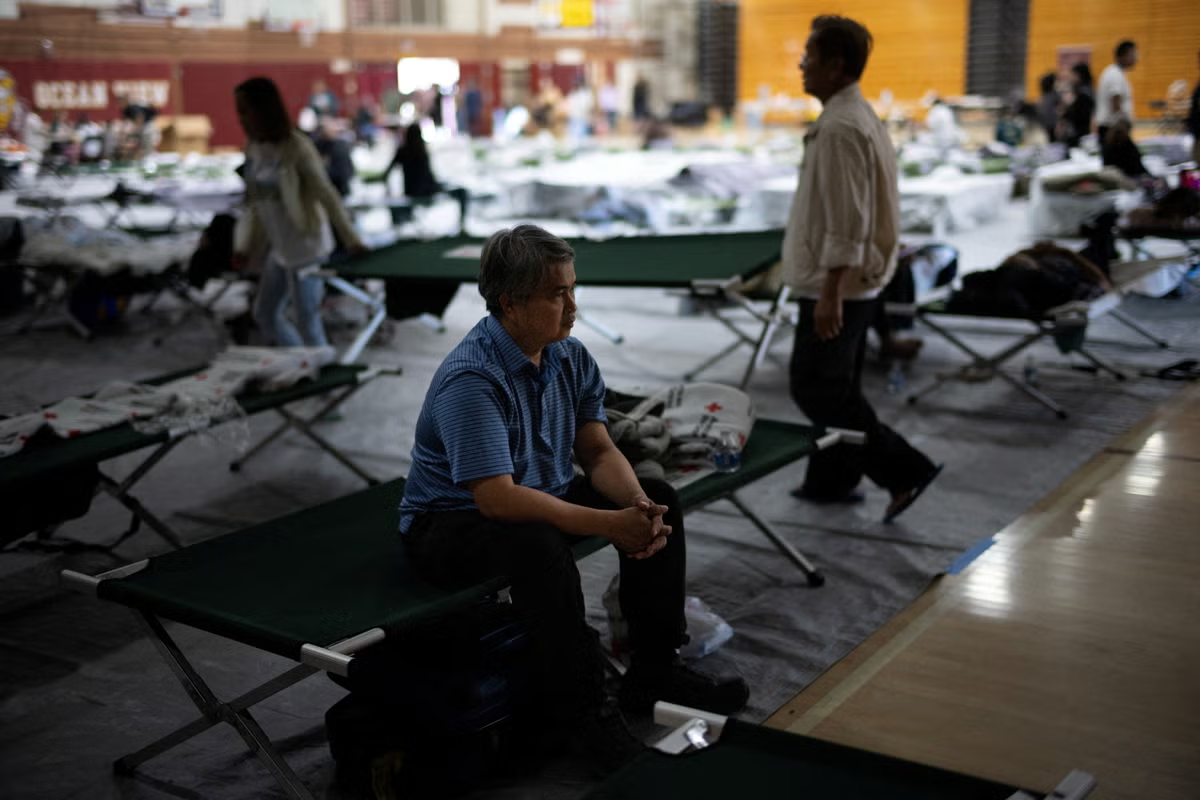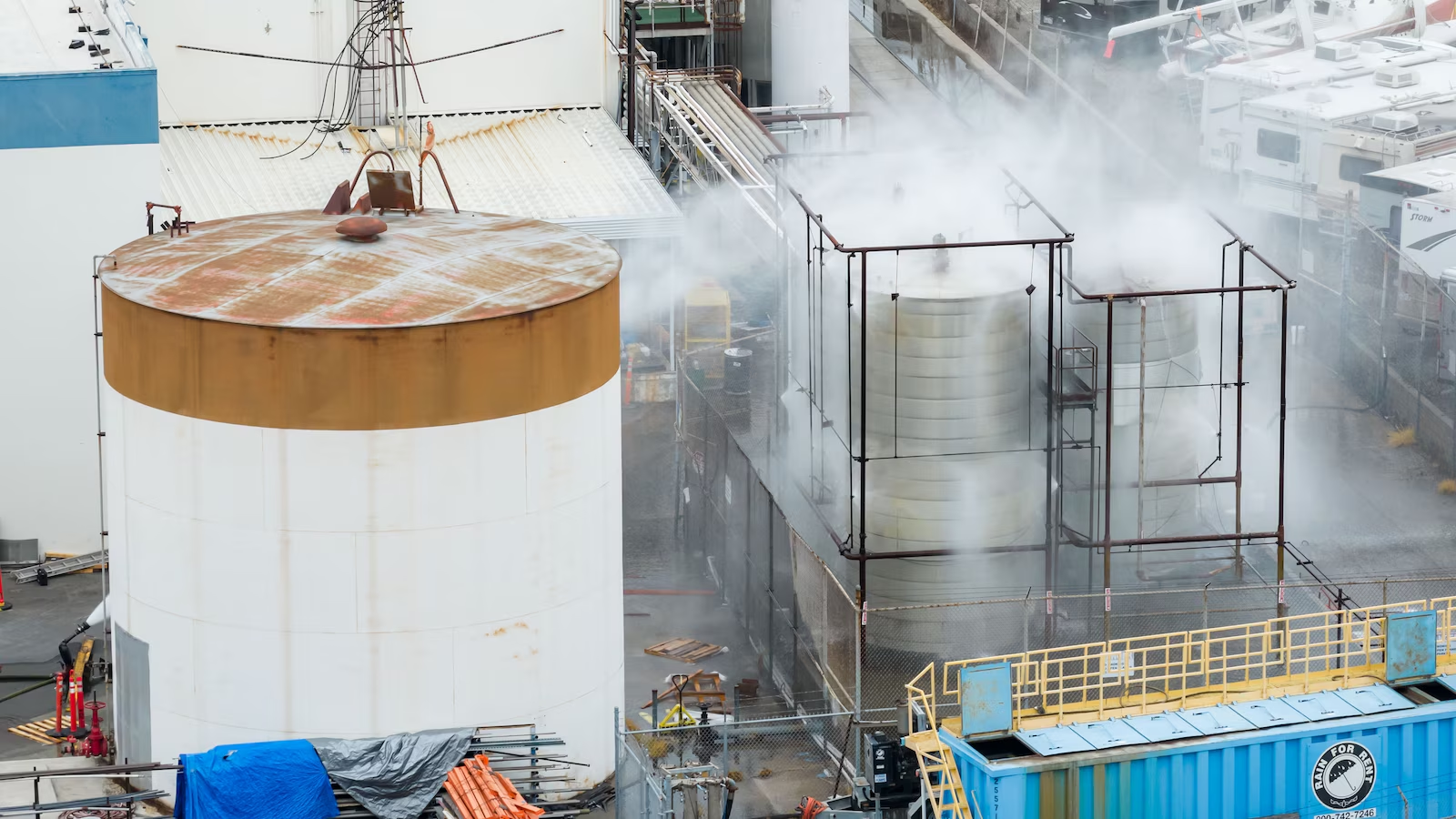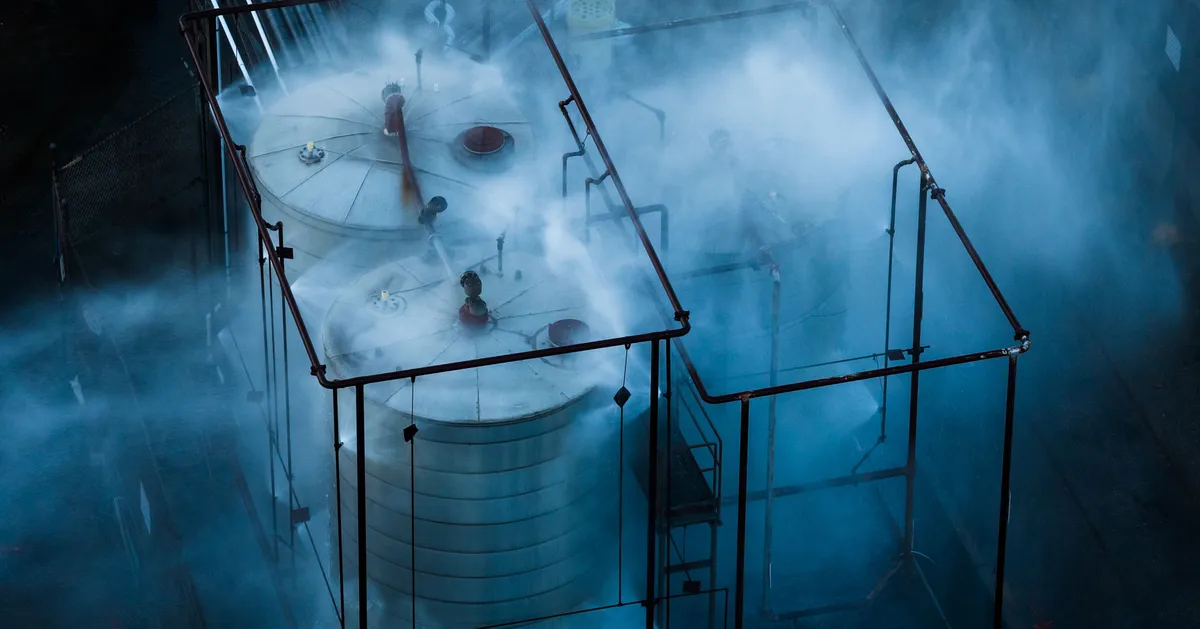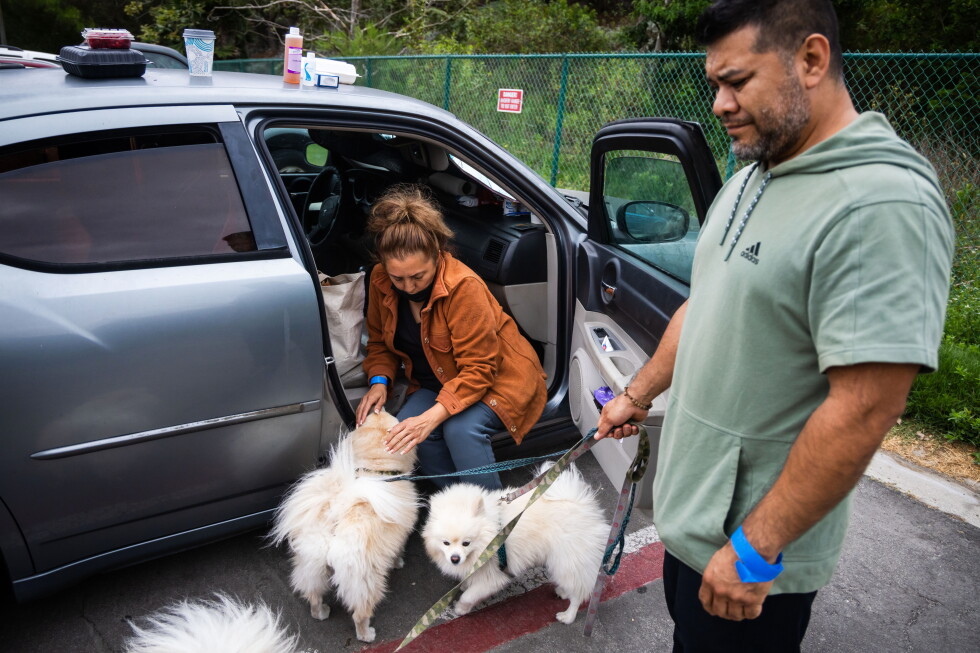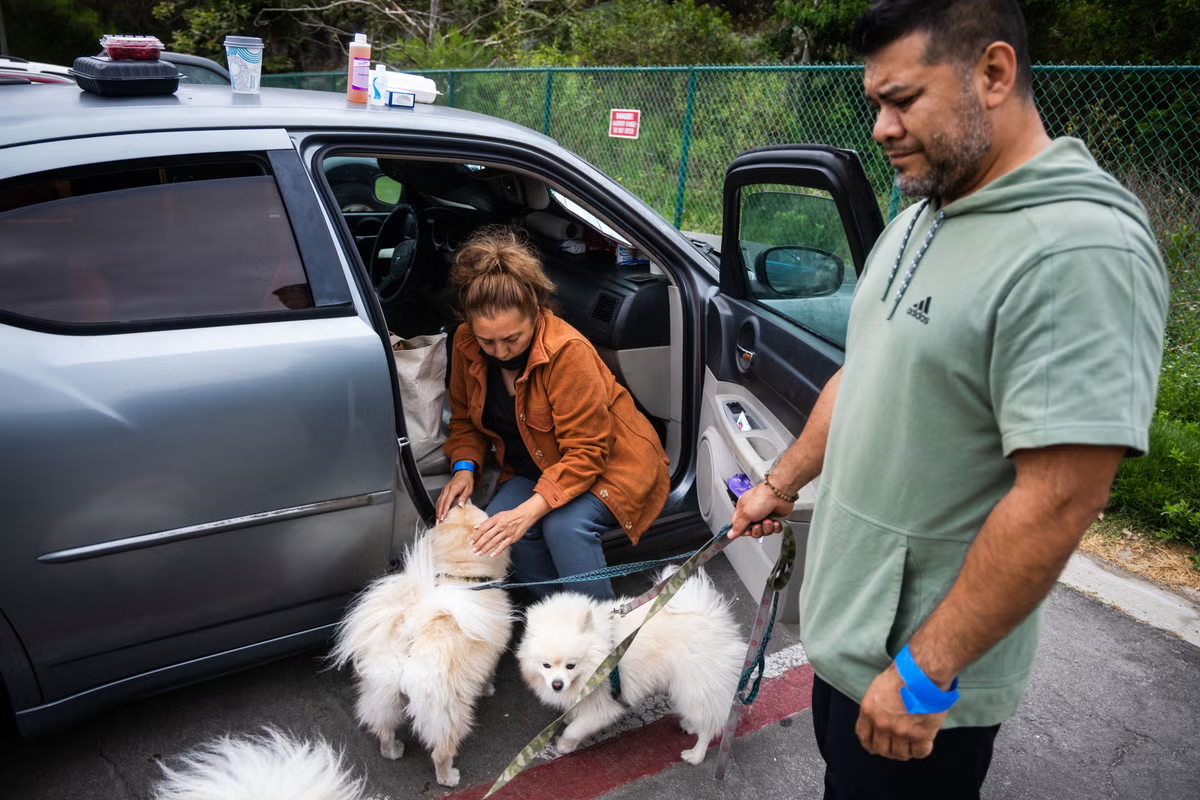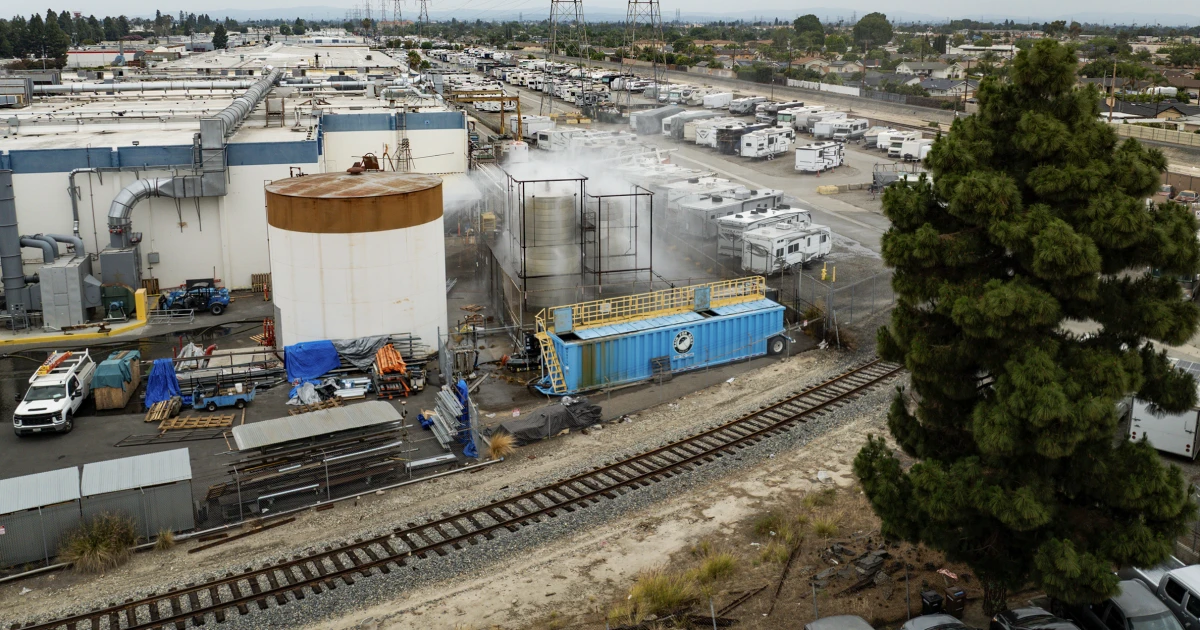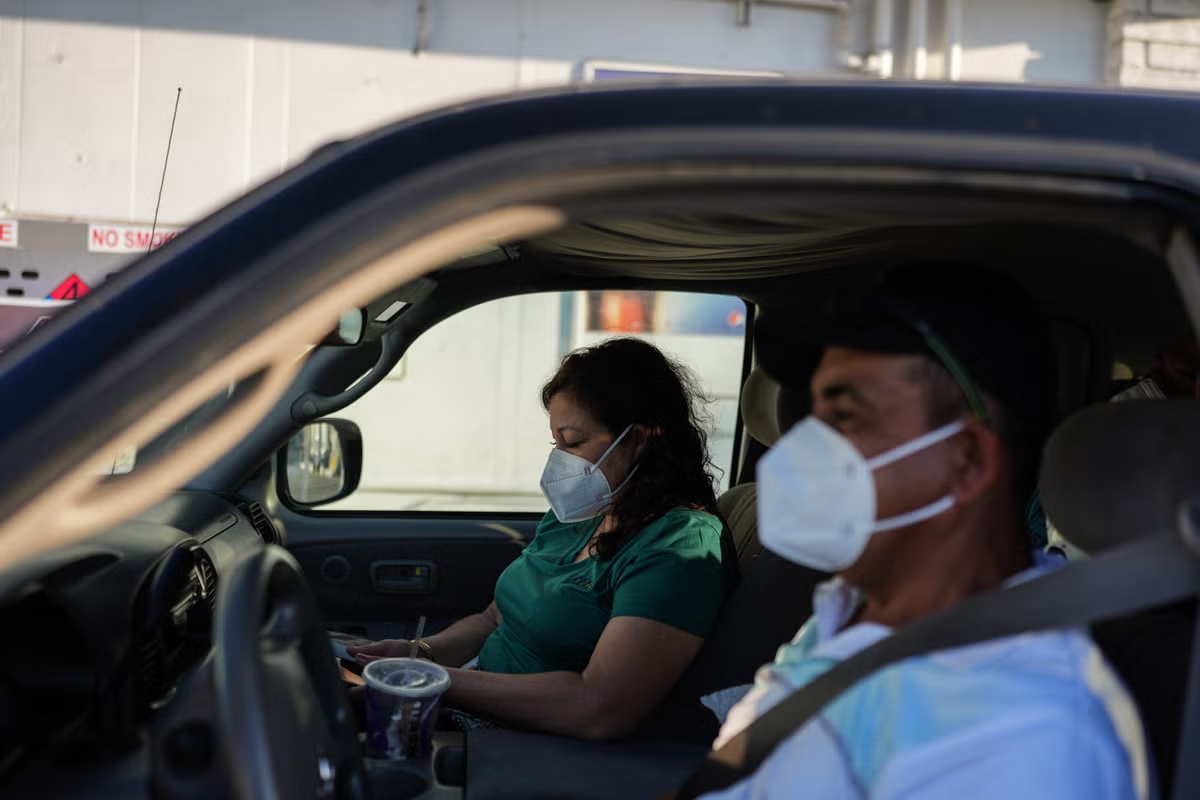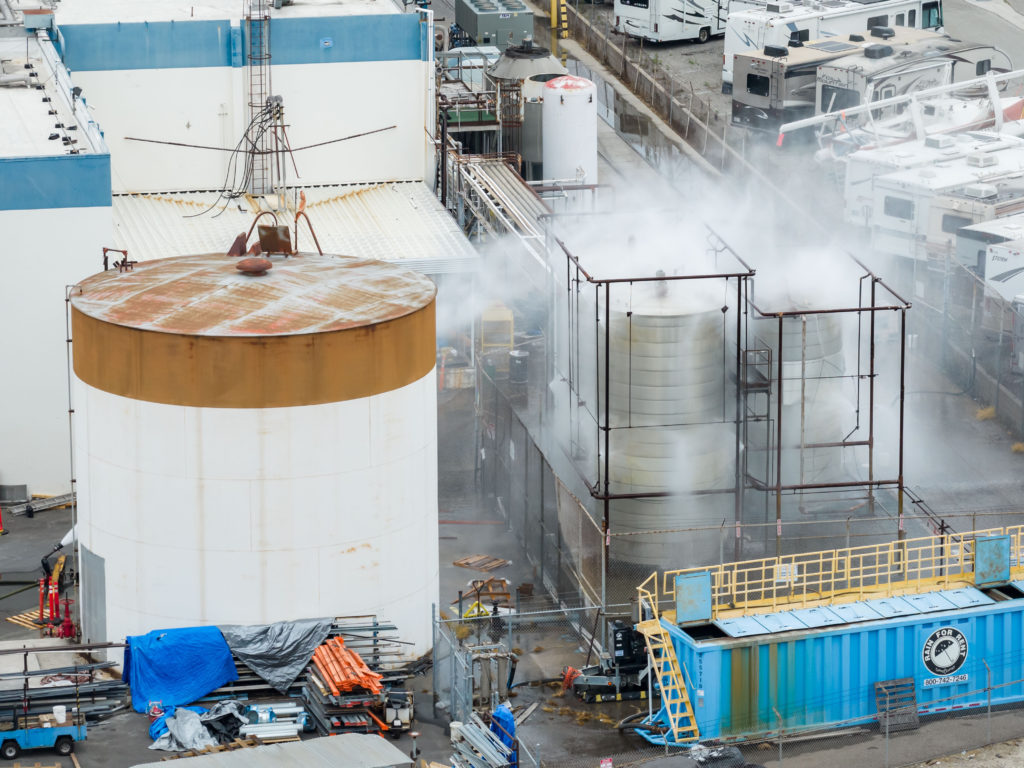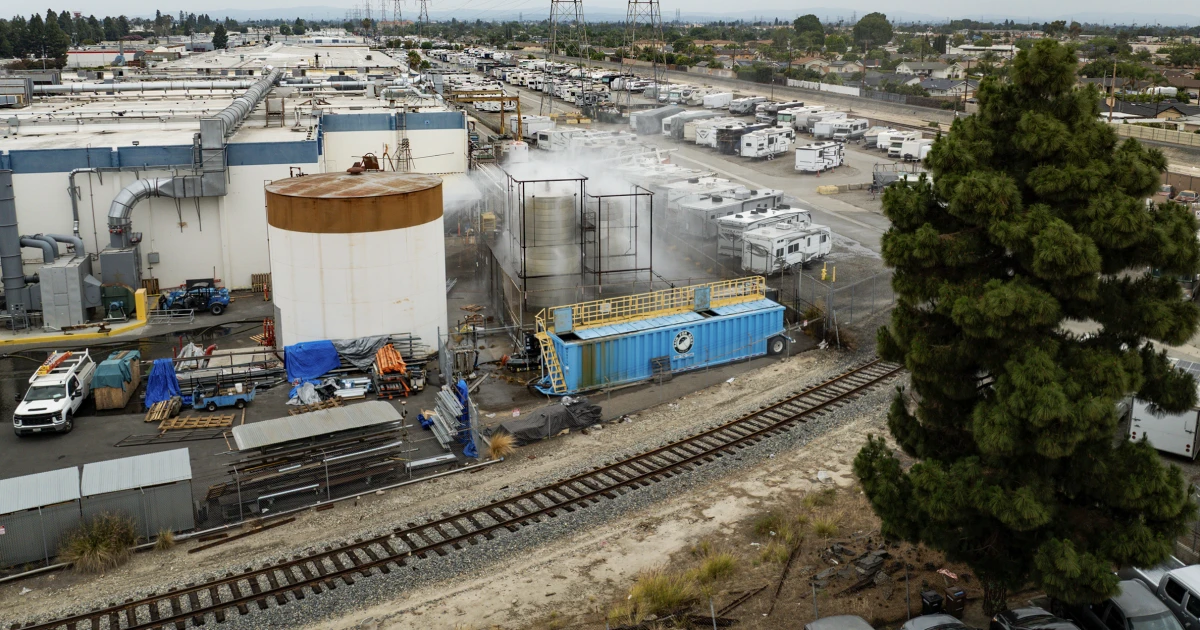
WorldAbout 16,000 people remain under evacuation orders in Southern California as an overheated chemical tank still poses a risk to homes closest to the site, and officials gave no word Tuesday on when residents might be able to return home.While catastrophic explosion has been averted, risk of smaller blasts or spills remainsThe Associated Press · Posted: May 26, 2026 8:53 PM EDT | Last Updated: 1 hour agoListen to this articleEstimated 5 minutesThe audio version of this article is generated by AI-based technology. Mispronunciations can occur. We are working with our partners to continually review and improve the results.Barricades block a street in the evacuation zone in Garden Grove, Calif., on Tuesday due to an ongoing risk from an overheated chemical tank. (Jae C. Hong/The Associated Press)About 16,000 people remain under evacuation orders in Southern California as an overheated chemical tank still poses a risk to homes closest to the site, and officials gave no word Tuesday on when residents might be able to return home.The crisis forced 50,000 people to evacuate from in and around the Orange County city of Garden Grove last week. A crack that formed by chance on the tank relieved pressure and helped avert a catastrophic explosion, allowing most evacuees to return home over the U.S. Memorial Day weekend.But the risk of a smaller explosion or potential spill kept orders in place for about a third of the evacuees. Many are living out of hotel rooms, tents, emergency shelters at schools or staying with family or friends.Evacuation order lifted for some Californians living near damaged chemicals tankIsabel Mendez was among those still waiting to return to her mobile home. She said a rash broke out on her face and she developed tingling lips and a sore throat while evacuating last week. After spending several expensive nights in a hotel, she is now staying with her mother in the Los Angeles area.Mendez said she remains uncertain about returning home because she does not trust official assurances that the area is safe. "Of course it is still dangerous," she said.An evacuee hugs a small child at a shelter at the Elks Lodge in Garden Grove, Calif., on Tuesday. (Jae C. Hong/The Associated Press)Exposure to methyl methacrylate — a highly flammable chemical used to make plastics — can cause serious respiratory and neurological problems, as well as irritation to the skin, eyes and throat, according to the federal Environmental Protection Agency (EPA).The tank at GKN Aerospace Transparency Systems, which makes cockpit windows, canopies and windshields, contains between 22,700 and 26,500 litres of the chemical."We apologize for the ongoing disruption this incident is causing, and our priority remains its safe resolution," the company said, "so that residents can return to their homes as quickly as possible."Separately, an implosion of a chemical tank on Tuesday at a pulp and paper mill in Washington state killed one person while nine others are unaccounted for, authorities said. WATCH | How a crack in chemical tank helped avert explosion:Potential crack in California chemical tank could avert explosion, officials sayMay 24|Duration 2:05Fire officials say a potential crack in a pressurized tank containing a toxic and highly flammable chemical at an aerospace manufacturing plant in California may help avert a cataclysmic explosion as tens of thousands of residents have been ordered to evacuate.Cooling system valve failedCrews at the California plant worked overnight to ensure two nearby tanks were neutralized and would not be affected by the compromised tank, Orange County Fire Capt. Brian Yau said.The tank overheated because a valve on the cooling system failed, fire officials said."That's what kept it at 50 degrees," or 10 C, said Orange County Fire Authority Division Chief Craig Covey. "Due to that failure, the tank went into the heating-up process because it wasn't continuing to be chilled," he said at a news conference Monday evening.What is methyl methacrylate, the chemical that's caused a state of emergency in southern California?Crews sprayed water on the tank until the interior temperature stabilized to 33.3 C, down from 37.7 C over the weekend, the fire department said Tuesday.The sprinkler system at the facility continues to douse the tank, and the company said its technical specialists and firefighters removed insulation from the tank to help cool it.Fire officials also tested storm drain water and found it was clean, McGovern said."There was no contamination," Orange County's health director, Regina Chinsio-Kwong, said at a Monday news conference. "You should feel comfortable going home even if you're across the street from that new zone line."Two evacuees sit in their pickup truck at a gas station within the evacuation zone in Stanton, Calif., on Monday. The chemical can potentially cause serious respiratory and neurological problems and irritation to the skin, eyes and throat, the U.S. Environmental Protection Agency says. (Jae C. Hong/The Associated Press)Environmental risksThe crisis occurred in central Orange County, which is a densely populated area made up of a cluster of cities, including Garden Grove. The city of 170,000 people, along with neighbouring Westminster, is home to Little Saigon, the largest Vietnamese community outside Vietnam.It is also next to Anaheim, home to Disneyland's two theme parks, which were not under evacuation orders.The South Coast Air Quality Management District will monitor the air for several months, and the EPA will be checking sewer and storm drains for spills, Orange County Supervisor Janet Nguyen said.As the tank heated up, the chemical converted from liquid to gas, ramping up the pressure and explosion risk, said Andrew Whelton, a Purdue University engineering professor who has studied environmental contamination. Some of the methyl methacrylate may already have hardened into a stable plastic similar to plexiglass, reducing the danger, he said.California officials say potential crack on overheated chemical tank could lower risk"The tank was on track for a catastrophic explosion," Whelton said. "The formation of a crack seems to have allowed pressure to vent."The risk remains of a smaller blast that could send projectiles or even a chemical plume toward nearby homes, he said, adding that the tank needs to get closer to 15.6 C to 21.1 C before conditions are considered significantly safer.The California crisis is reminiscent of a 2014 chemical spill in Charleston, W.Va., caused when storage tanks failed. That spill prevented the capital city and surrounding areas from using their tap water for several days.Businesses were temporarily shut down and hundreds of people headed to emergency rooms for issues from nausea to rashes. The disaster inspired a new state law requiring more inspections and registrations of above-ground storage tanks.
Some 16,000 Californians still out of their homes due to overheated chemical tank | CBC News
About 16,000 people remain under evacuation orders in Southern California as an overheated chemical tank still poses a risk to homes closest to the site, and officials gave no word Tuesday on when residents might be able to return home.
1,081 words~5 min read