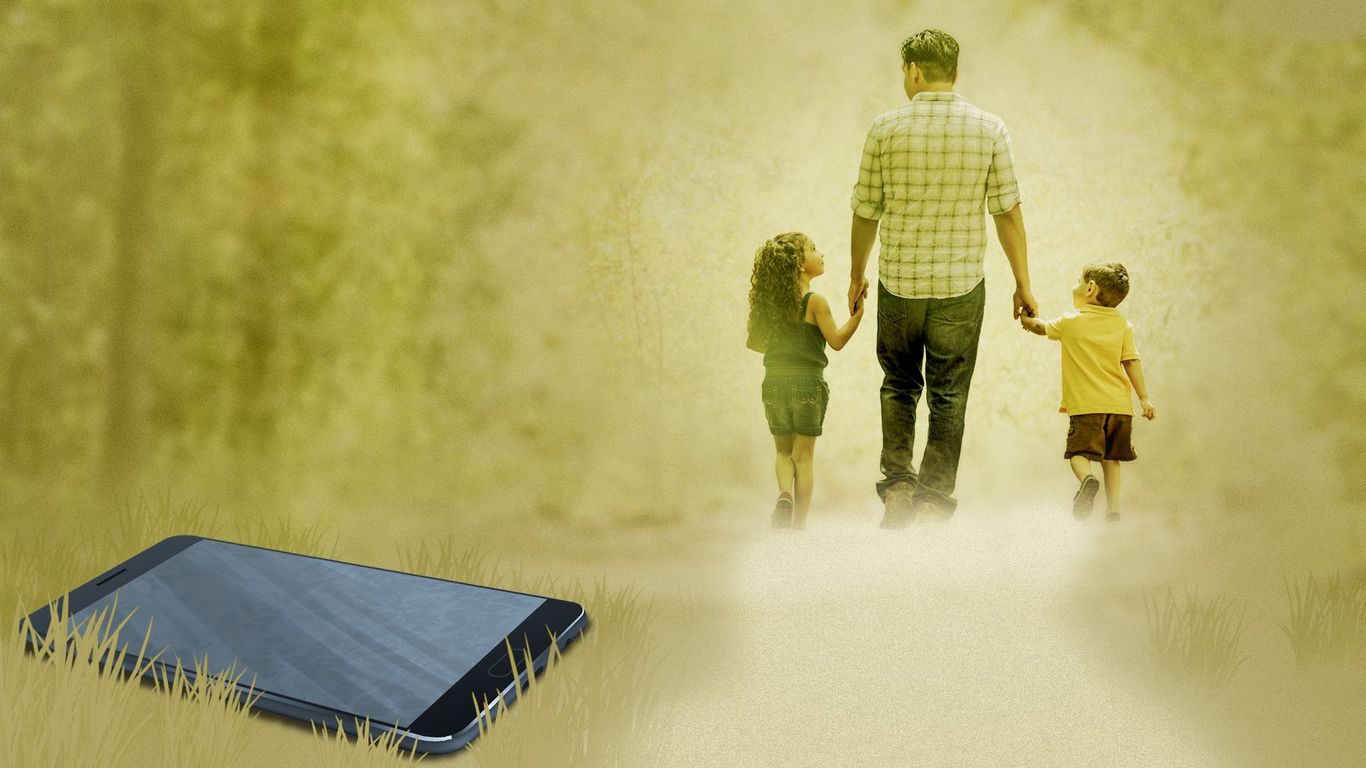
Illustration: Sarah Grillo/Axios. Stock: Getty ImagesNo one snapped footage of my daughter Ava's first home run. I was umpiring behind the plate and couldn't ethically take out my iPhone to capture that moment in the New Mexico desert. Why it matters: The home run doesn't exist in the cloud, but my mind recorded every detail. It will never be erased as long as I am me. That's the beauty of a memory created when we put the smartphone away.I can replay it anytime: the hard slap past third base, a 10-year-old's dash around the bases while holding her helmet, her teammates sprinting from the dugout, our quick smiles at each other as she crossed the plate.Had I recorded it on my phone, we'd have watched it a few times that night. Then it would have disappeared into the maze of "important" moments in our digital archives that we infrequently revisit.The big picture: We're programmed to pull out our phones at crucial — often milestone — moments: weddings, piano recitals, kids' basketball games, award presentations, birthday serenades and graduations. We'll rarely rewatch them. And as we stare into a screen, we lose out on being present.We are missing opportunities to load up our minds with shared events and images that can't be deleted or repeated. Our brains have more space than we use — and don't charge a storage fee.The test: I recently took a sabbatical and tried to put the phone down more.I took walks in the desert mesa with my dog Chaco and watched sunsets across the Sandia Mountains, streaked watermelon red.I watched my daughter Elena blow out birthday candles while announcing her last year in single digits. "My little girl years are almost gone," she proudly declared. I saw a lowrider cruise his pink Impala along Route 66 in downtown Albuquerque as a homeless man yelled, "Beautiful car. Ima get mine one day, too!" The driver raised his fist, as if saying, I'm rooting for you. I stared down a rattlesnake during a confrontation on a desert dirt road. "I know who sent you, but I'm not going with you right now," I said. The snake swirled away behind the juniper, and I stood there, alone. Between the lines: My mind has a lot of space to fill and not much time. My family has a history of Alzheimer's, which came for my grandfather Carlos, and his siblings.I may have the gene, but I'm more worried I'll be left with the bad memories if I don't load up on the good soon.A few of my bad ones took place before I set foot in kindergarten. I can't delete the footage, no matter how hard I try. I'm 52.I'm 3 or 4 years old. I walk into a room where Tommy, an infant my mother is babysitting, is lying. He's cold. My mom comes in to wake him up but he's lifeless, a victim of sudden infant death syndrome.Same age: My neighborhood in Houston is in flames. There's a riot outside over the police killing of 23-year-old Joe Campos Torres. It's the fire this time.There's a domestic dispute in my home. The police are called and I'm carried away, my toddler arms swinging at an officer. Zoom out: "Don't mind dyin', but don't wanna die alone," bluesman Marcus King sings. Nah, I know little Tommy will be there somewhere in that room when it's my time. The bottom line: I want better memories waiting for me at the end.I want to recall Ava's swing, her turn around second, the crowd screams and her smiling gaze at me right before she touches the plate. Right before I go home.
Put down the camera phone for images your memory can't delete
Your mind doesn't charge storage fees for memories.
609 words~3 min read