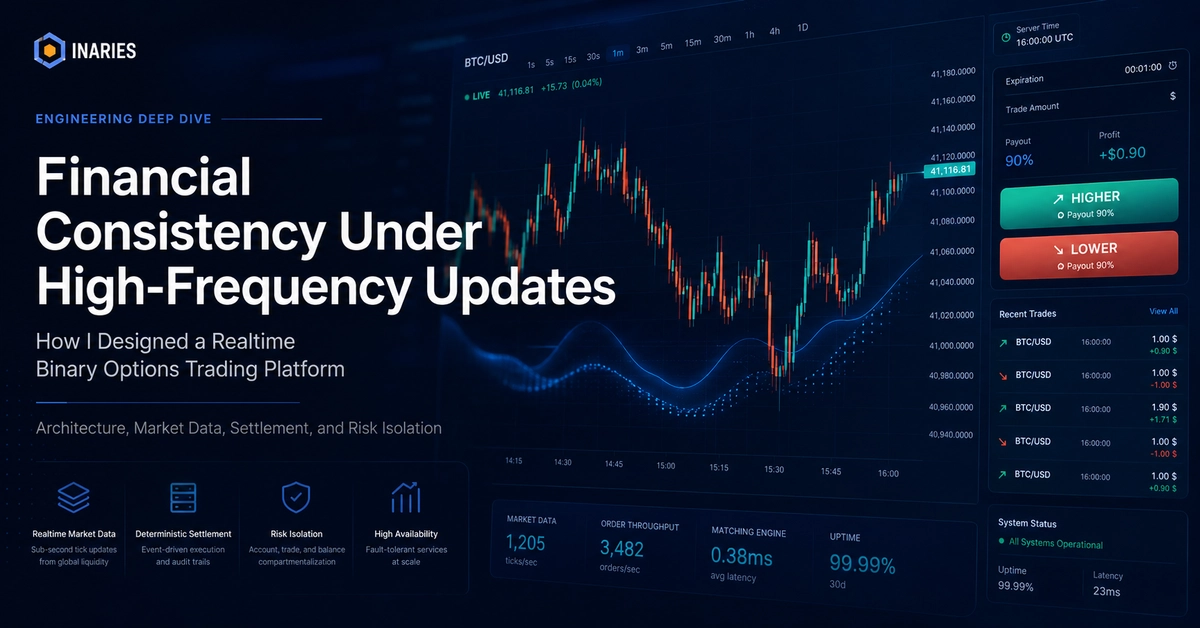
From 2018 to 2024 I designed and implemented a production-deployed realtime binary options trading platform as the sole architect and full-stack engineer on the project.
At first glance, a platform like this looks like a chart, a timer, and two buttons. That is the least interesting part. The hard part is deciding where financial truth lives when prices change constantly, users open short-lived positions, browser tabs freeze, quote feeds can go stale, and balances still need to remain correct.
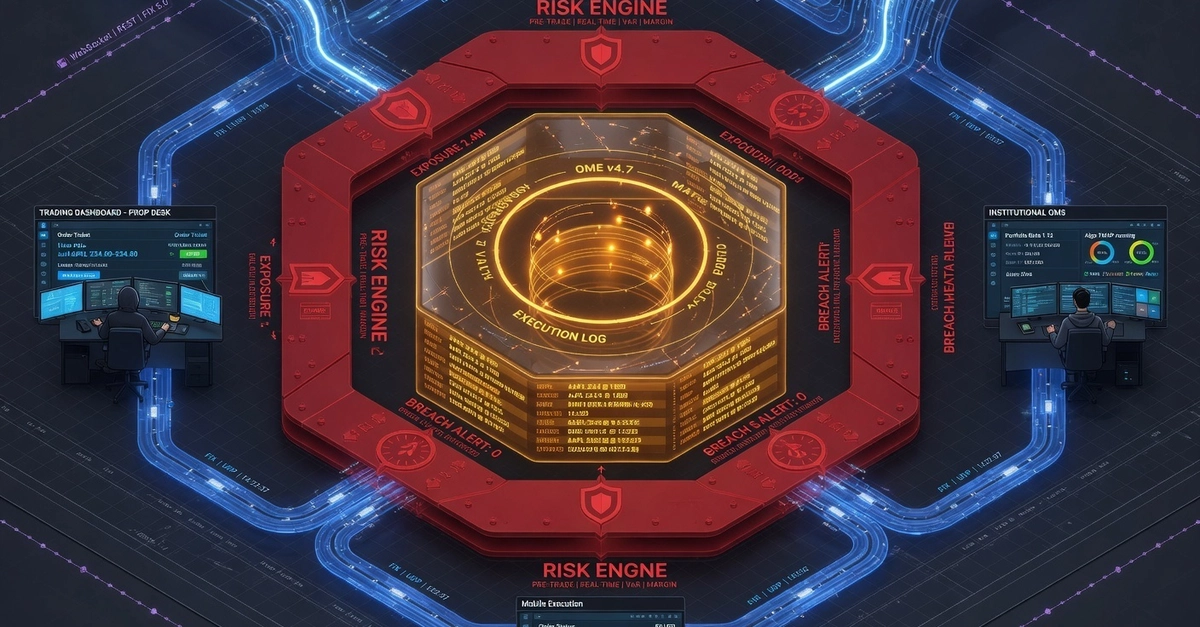
The system I built included a client trading terminal, an administrative SPA, realtime quote ingestion, order placement, automatic settlement, real/demo/tournament trading modes, payment flows, withdrawals, KYC workflows, anti-fraud controls, referrals, tournaments, Redis-based broadcasting, and Docker-separated runtime processes.
This article focuses on the engineering architecture: how I separated visualization from financial authority, how orders were accepted and settled, why I kept placement synchronous, and why a realtime financial system should optimize feedback without letting the UI become the source of truth.
This is an engineering architecture case study about a historical software project. It is not investment advice, does not promote trading activity, and does not discuss trading strategies.