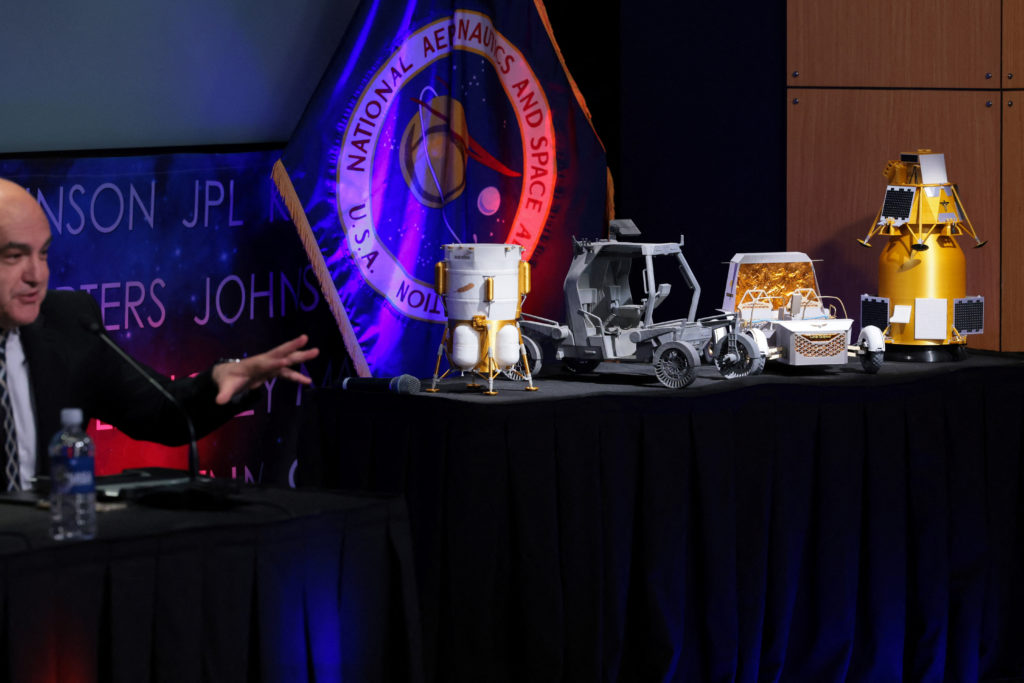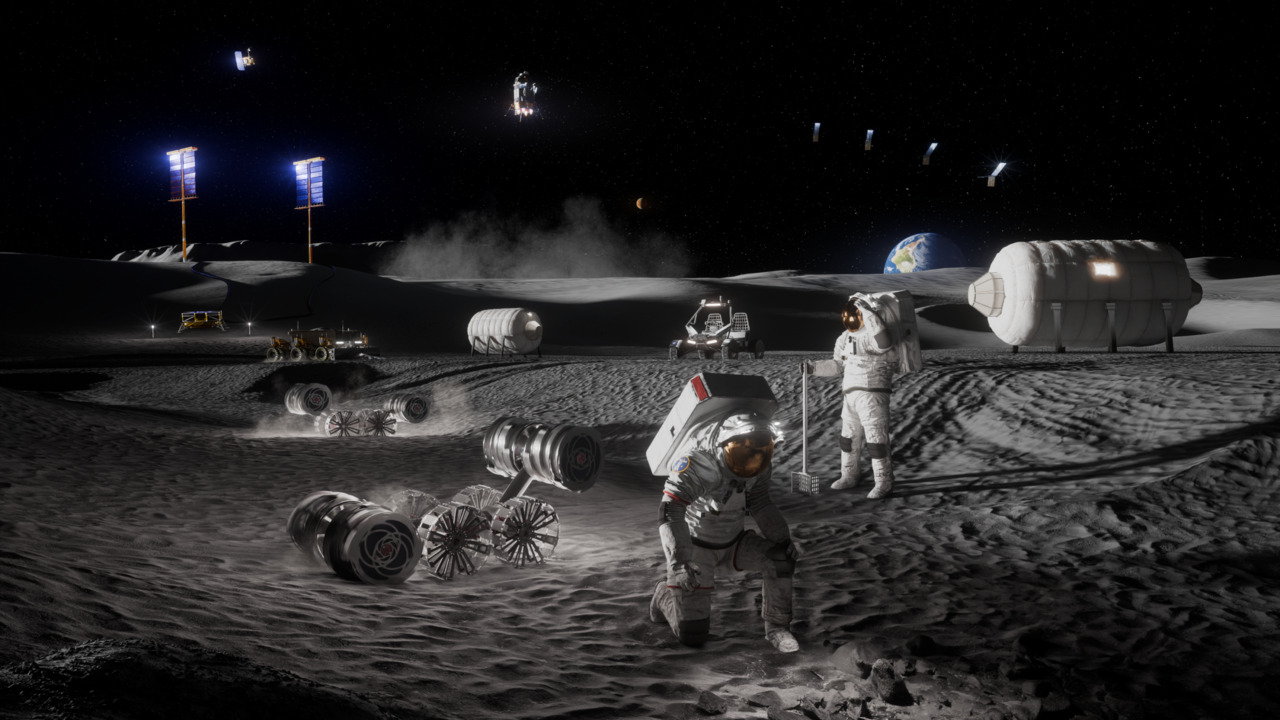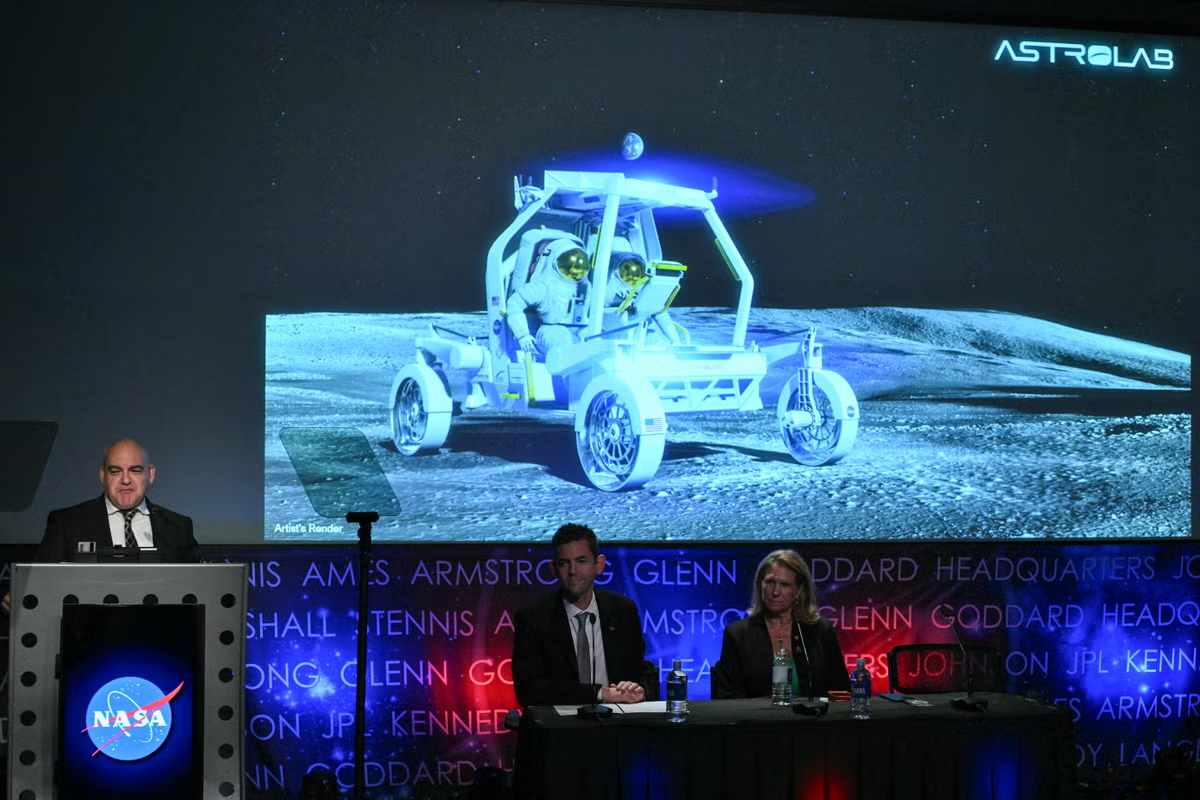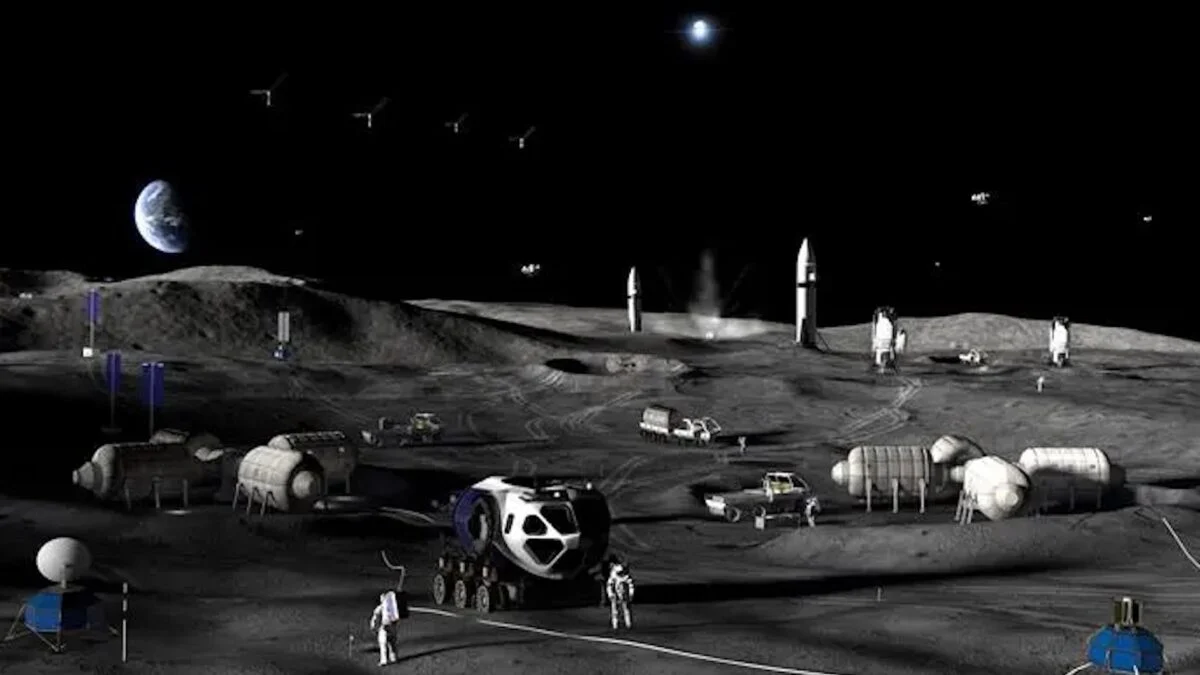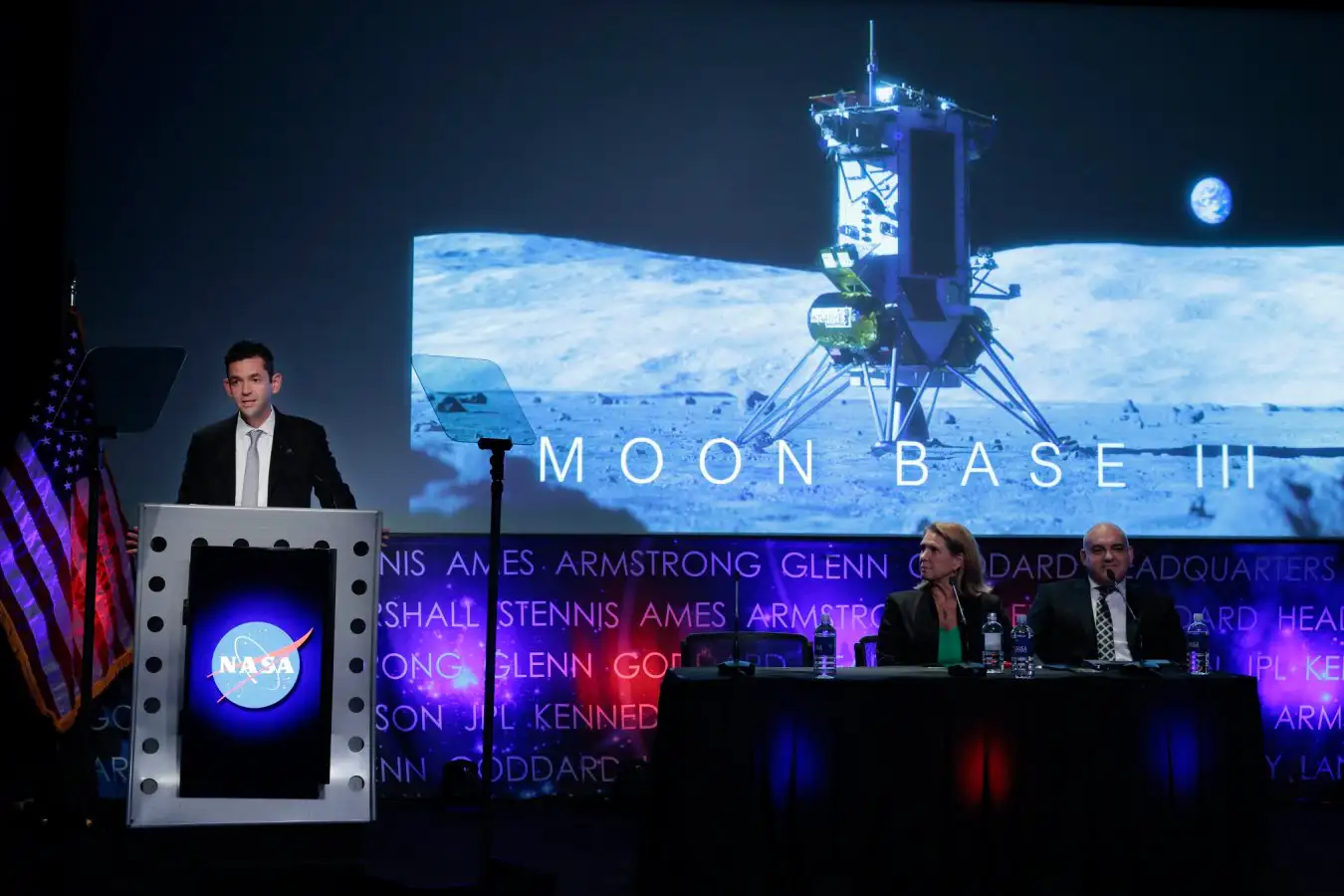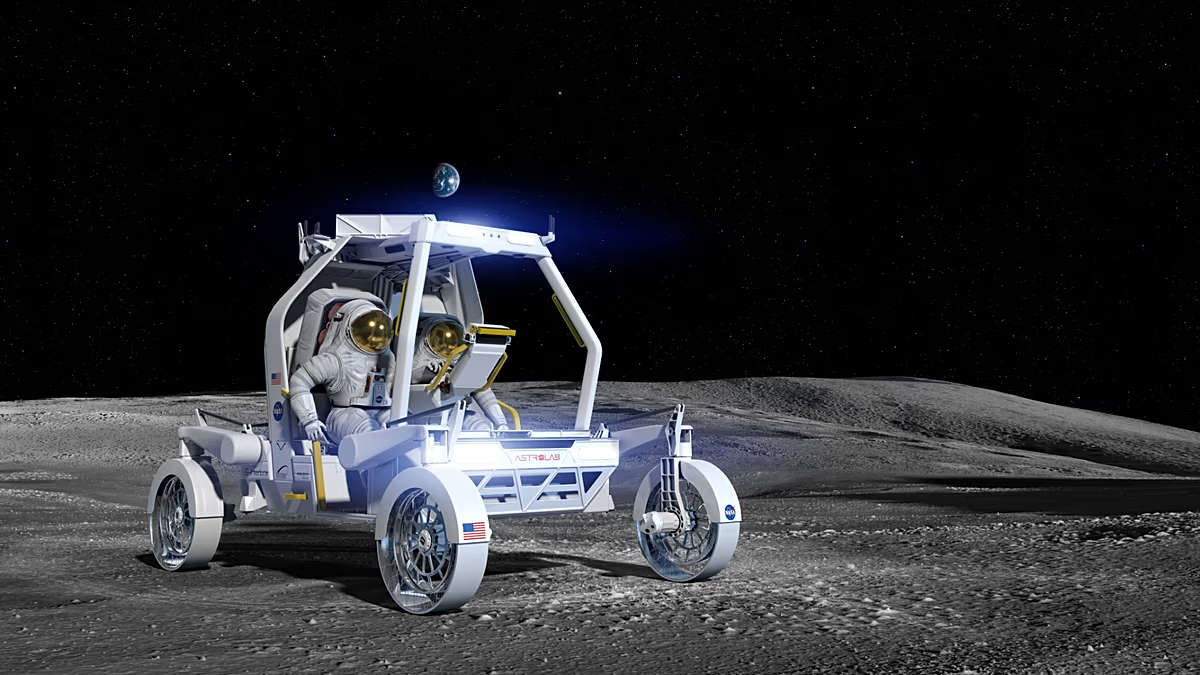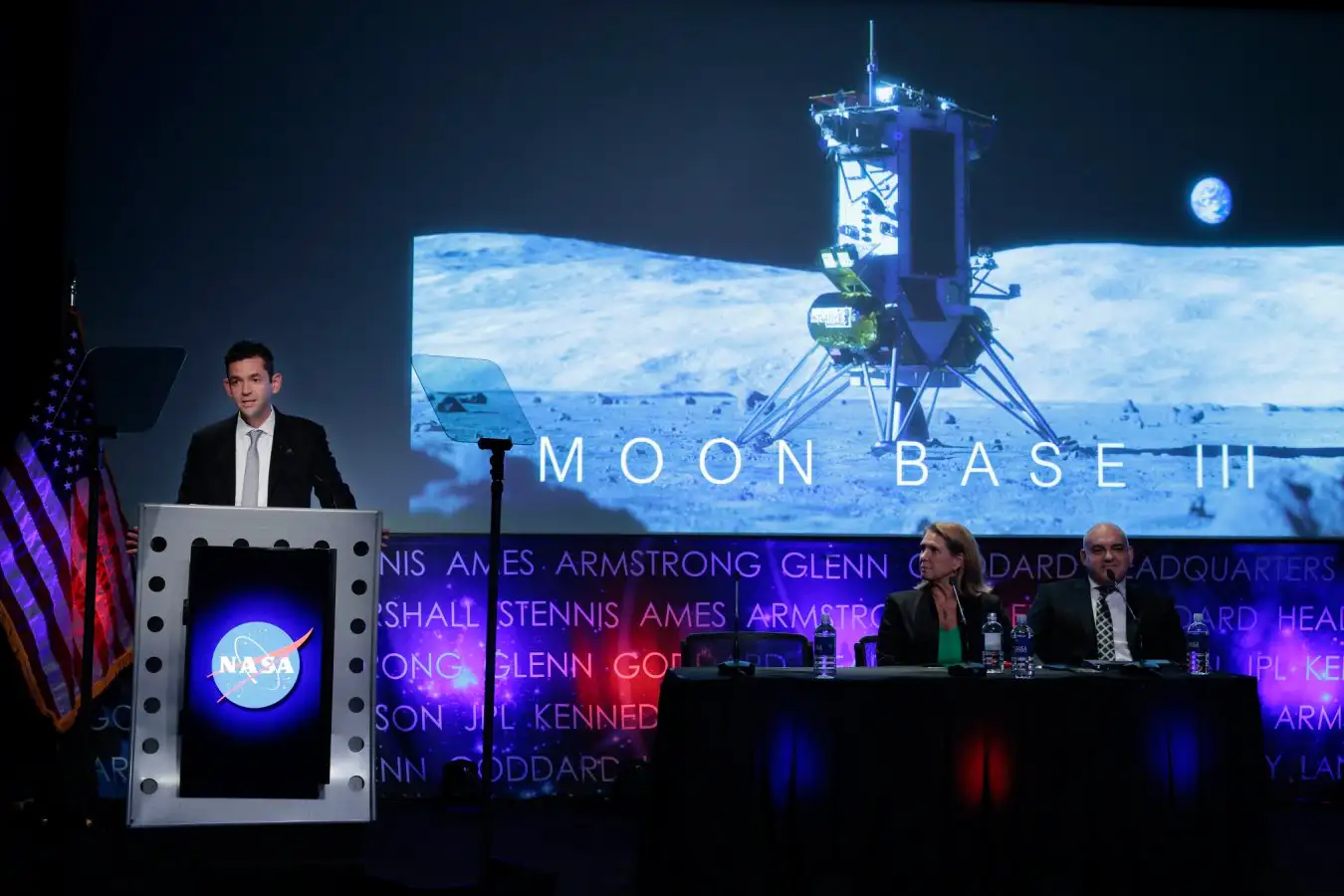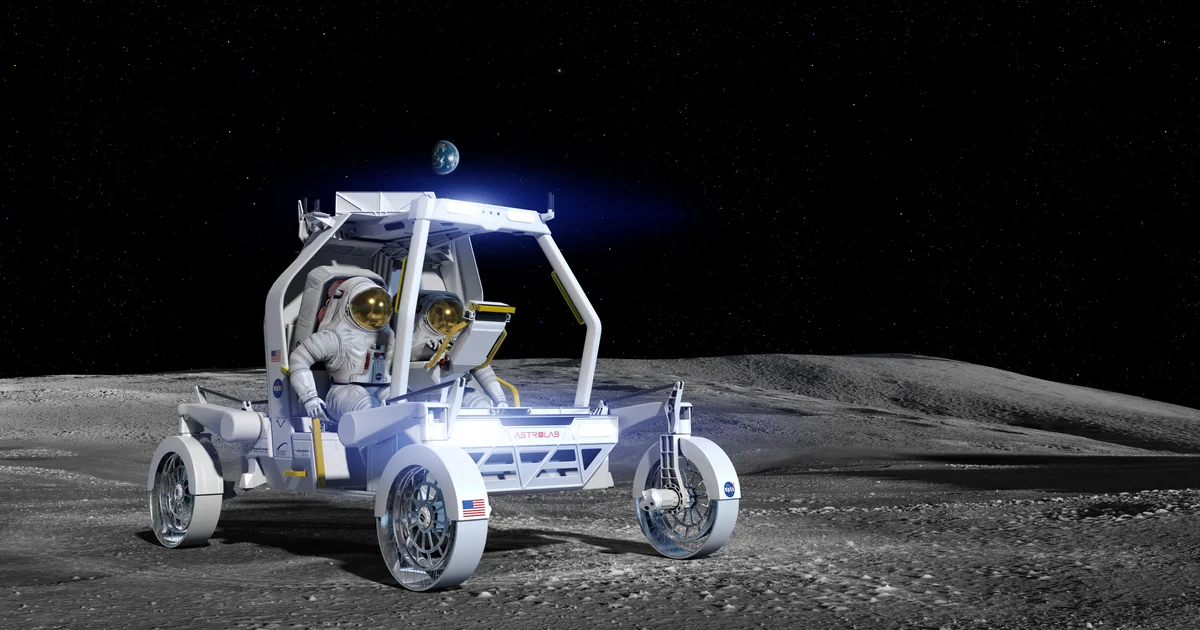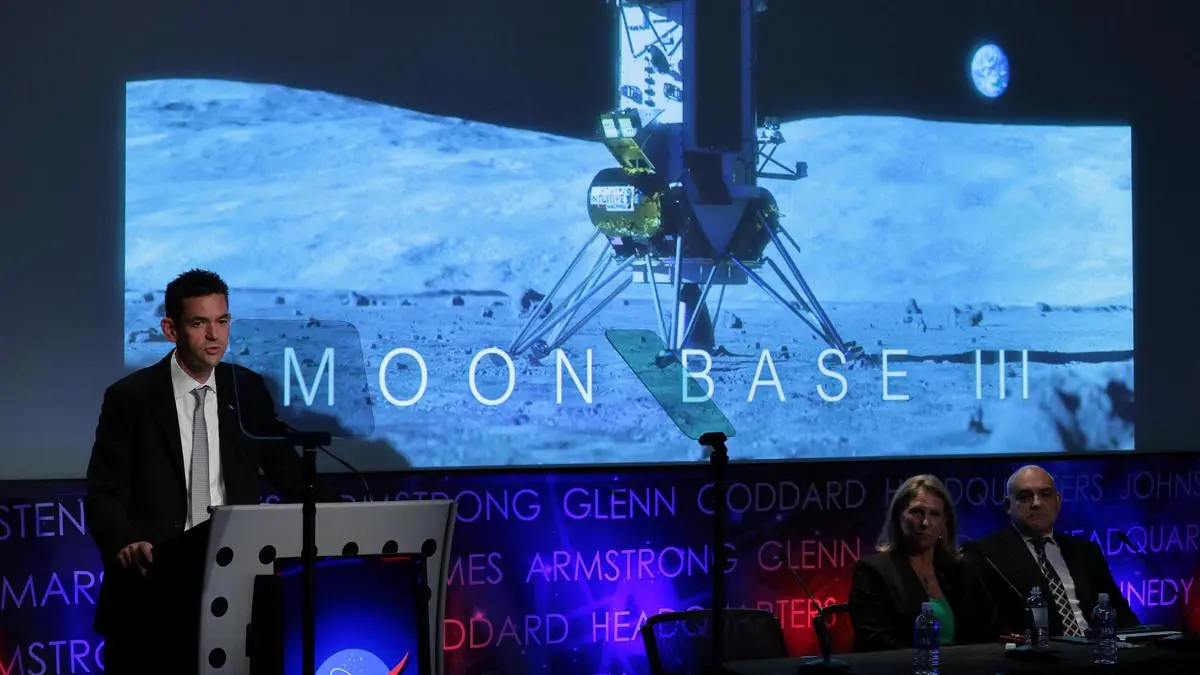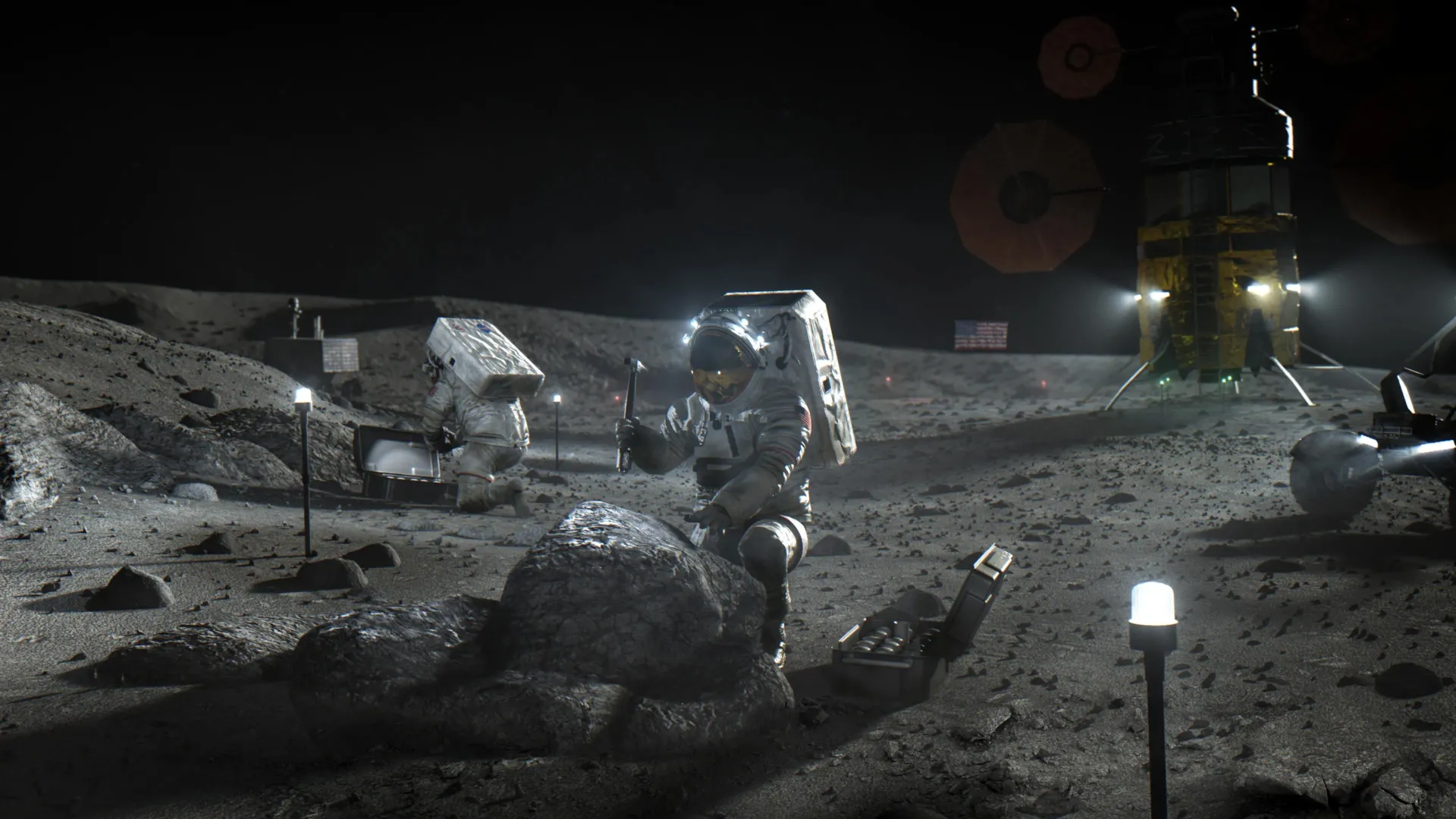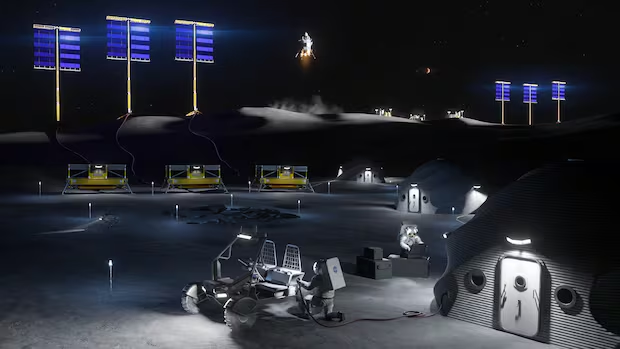
ScienceNASA has provided the first look at its plans for its moon base, which include several robotic missions to the surface of the moon as early as this year.Lunar base could span more than 100 kilometres and involves several commercial partnersNicole Mortillaro · CBC News · Posted: May 26, 2026 5:18 PM EDT | Last Updated: 1 hour agoListen to this articleEstimated 5 minutesThe audio version of this article is generated by AI-based technology. Mispronunciations can occur. We are working with our partners to continually review and improve the results.This illustration shows a concept for what NASA's Moon Base could look like. (NASA)NASA held a press conference today announcing plans for a lunar base, as well as its commercial partners that will make it come to fruition.“People are looking up again, believing in big things again, and paying attention as America returns to the moon again — and this time to stay,” NASA administrator Jared Isaacman said during a press conference on Tuesday.The plans are continuing off the success of the Artemis II mission around the moon last month, and will be part of the Artemis program that is set to return humans to the lunar surface.The new plans come after Isaacman revealed in February that he was shaking things up at the space agency, including adding an Artemis mission and “pausing” Lunar Gateway, a proposed space station that would be in orbit around the moon.Canada’s MDA Space was to provide the station with another robotic arm called Canadarm3. The new plans for what NASA is calling its Moon Base include a lander awarded to Blue Origin. That will be part of Moon Base 1, set to launch later this year.This illustration shows Blue Origin's Mark 1 cargo lunar lander. (Blue Origin)Moon Base 2 will include lunar terrain vehicles (LTVs). The first one was given to Astrolab, which will be delivered by Astrobotic, the second to Lunar Outpost, two commercial companies that will be part of NASA’s Commercial Lunar Payload Services (CLPS), a program that includes private companies contracted to the space agency for various services.Finally, Moon Base 3 will include payloads from the European Space Agency and the Korea Astronomy and Space Science Institute.There have already been a few missions in the CLPS program with varying degrees of success.The plans also include lunar drones that will be provided by NASA’s Jet Propulsion Laboratory and delivered by the commercial partner Firefly Aerospace.WATCH | Why Canada plays a key role in modern space race:Why Canada plays a key role in modern space raceFebruary 23, 2024|Duration 7:22With the world’s first successful commercial lunar lander touching down on the moon this week, CBC’s Bob McDonald and Nicole Mortillaro break down why it matters and how Canada is poised to become a major player in the commercial space exploration industry.“We are working alongside our many international and commercial partners to leverage the incredible capabilities, from commercial industry, to build a moon base for all we hope to accomplish in this endeavour,” said Isaacman.Canada was not mentioned in today's announcement.“We're having a lot of individual conversations with various international partners about the types of missions we could collaborate on,” said Lori Glaze, acting associate administrator for NASA's exploration systems development mission directorate. “So there's a lot of that discussion on going right now.”Several missionsThe proposed plans aren’t small.“We envision the Moon Base to be hundreds of square miles, with different assets, all building up to the objective of permanent lunar presence on the moon,” said Carlos García-Galán, program executive for the Moon Base. “Phase 1 … we'll have 25 launches, 21 landings, and we're planning to deliver about four metric tonnes of cargo to the surface of the moon,” said García-Galán, “And we want to graduate from that to 60 metric tonnes to 150. By the time we get to Phase 3.”WATCH | Canada's questions for the Artemis II crew:Canada’s questions for the Artemis II crewMay 20|Duration 19:34The Artemis II crew (Reid Wiseman, Victor Glover, Christina Koch, Jeremy Hansen) meets up with CBC News chief correspondent Adrienne Arsenault in Montreal to answer questions from Canadians about their historic million-kilometre mission around the moon.The idea is that these robotic missions will provide the necessary tools for Artemis astronauts. The first mission to the lunar surface will be Artemis IV, which NASA says will happen in 2028.Gordon Osinski, a professor in planetary geology at Western University who was also the lead for the cancelled Canadian rover mission, welcomed the announcement.“Following on the success of Artemis II and recent robotic missions to the moon, I think it's highly possible that these first three moon-based missions may actually happen this year,” he said. “I really do think what they achieve is going to be possible.... I think with anything in life, if you don't aim high, you're never going to get there.”We’ve already been to the moon, so why are we going again?NASA says it will put humans on the surface of the moon in 2028. How realistic is that?As for Canada’s involvement, Osinski said that we’re not necessarily out of the race. He noted that there is another larger rover planned, but that the Canadian Space Agency's timeline is in the mid-2030s.“So we really have to get our act together in Canada to make sure that we can keep up with NASA. You know, the pace has accelerated. And NASA's not going to wait.”There will be more announcements in the coming months, Isaacman said. All in preparation for a long-term presence on the lunar surface.“We are building humanity's first outpost beyond Earth,” Glaze said. “Through Artemis, we are going. And with Moon Base, we're going to stay.”ABOUT THE AUTHORBased in Toronto, Nicole covers all things science for CBC News. As an amateur astronomer, Nicole can be found looking up at the night sky appreciating the marvels of our universe. She is the editor of the Journal of the Royal Astronomical Society of Canada and the author of several books. In 2021, she won the Kavli Science Journalism Award from the American Association for the Advancement of Science for a Quirks and Quarks audio special on the history and future of Black people in science. You can send her story ideas at nicole.mortillaro@cbc.ca.Follow Nicole Mortillaro on Twitter
NASA reveals first plans for a moon base | CBC News
NASA has provided the first look at its plans for its moon base, which include several robotic missions to the surface of the moon as early as this year.
1,038 words~5 min read