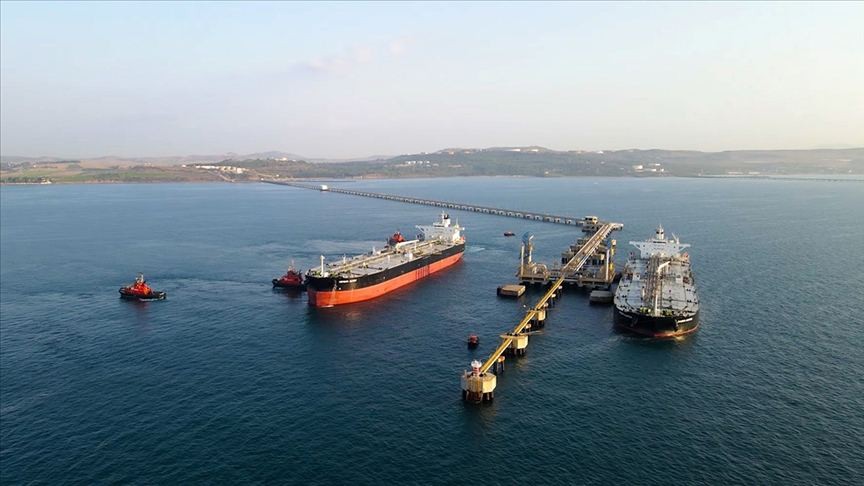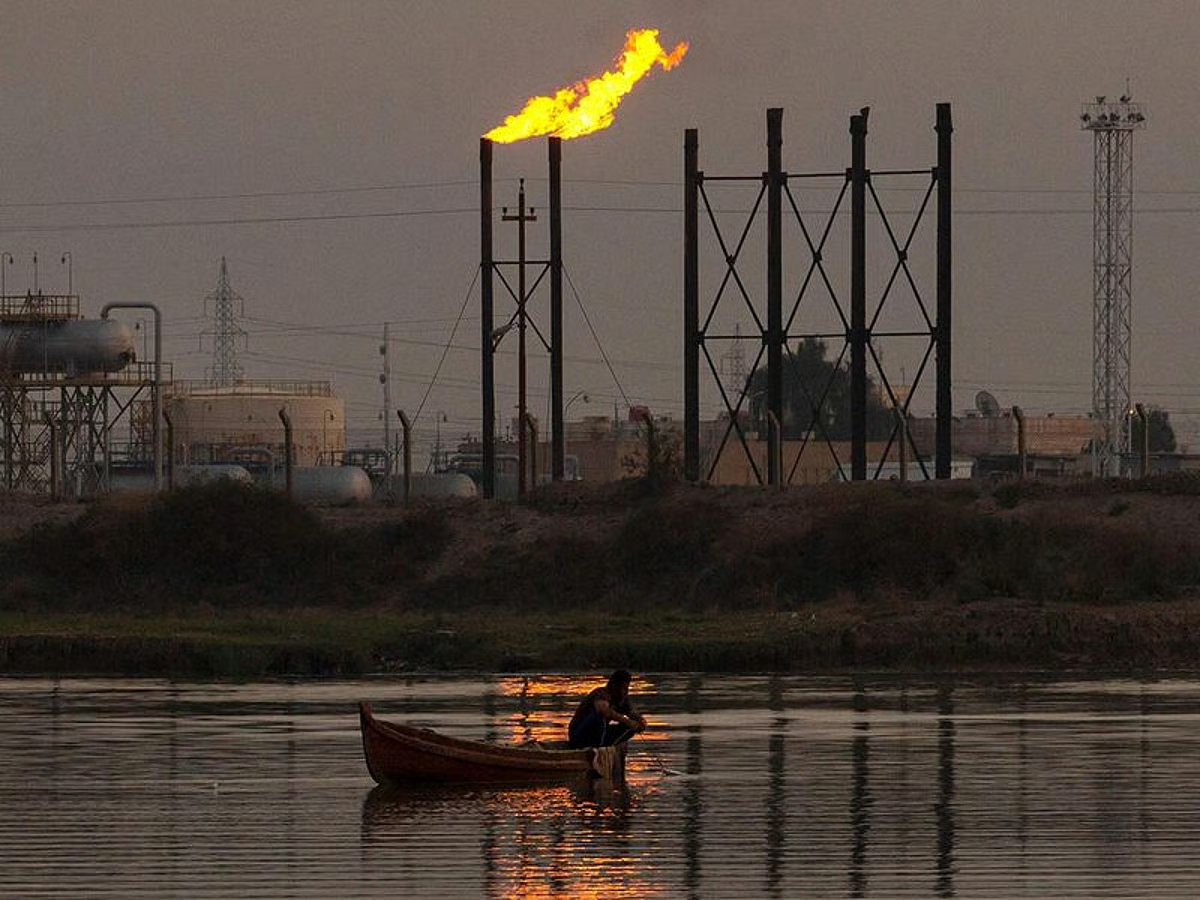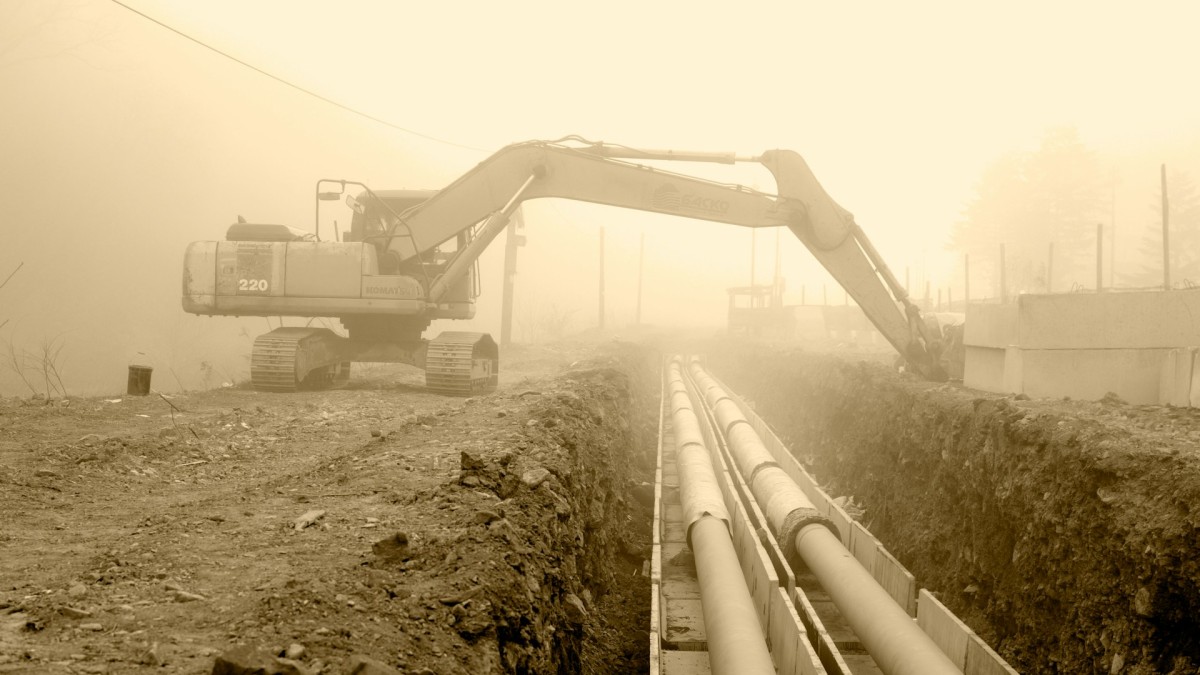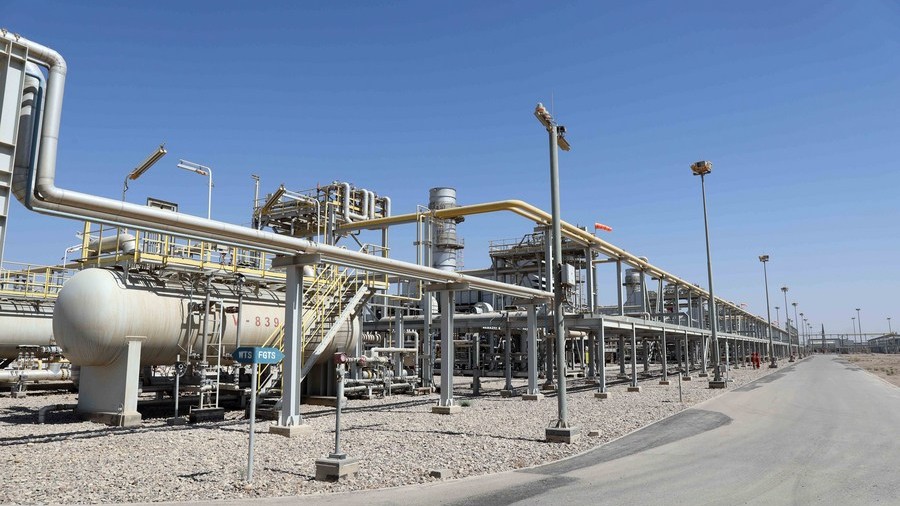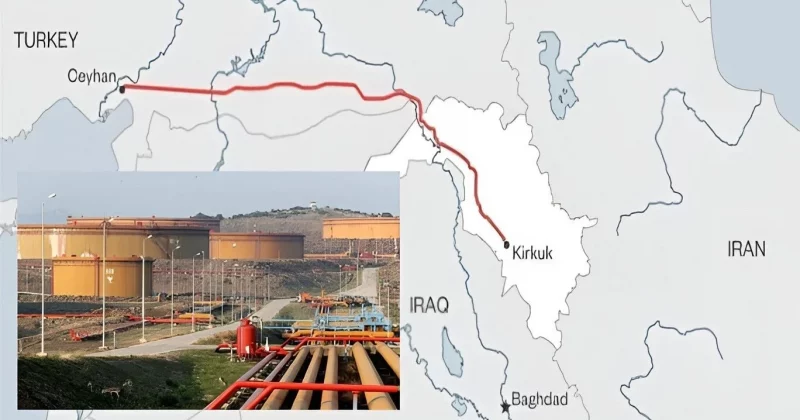
Authored by Simon Watkins via OilPrice.com,Iraq's oil production has collapsed to just 1.39 million bpd after the Strait of Hormuz blockade stranded exports.Baghdad is urgently trying to revive northern export routes through Turkey, including the Kirkuk-Ceyhan system and a new Kirkuk-Nineveh pipeline.China is re-emerging as a major strategic player in Iraq's energy infrastructure, with Chinese firms heavily involved in Baghdad's new north-south pipeline expansion.April was indeed the cruellest month for decades for Iraq's crude oil production, with an average of 1.389 million barrels per day (bpd) over the period. This compares to a monthly average of 3.47 million bpd from January 2002 to the end of March this year, and an average of over 4.1 million bpd in the three months leading up to the onset of the U.S./Israel-Iran War on 28 February. The last time oil production fell to the current level in the country was in the early 2000s, during and immediately following the 2003 U.S.-led invasion. Even for a diversified economy, this would spell bad news, but for Iraq, it is existential, with over 90% of its annual budget historically coming from oil and around 95% of that black gold having to pass through the still-blockaded Strait of Hormuz before it is monetised. The effective closure of that key export route meant that Iraq's domestic oil storage tanks quickly filled to maximum capacity, and because it has extremely limited options to transport its crude elsewhere, it has been forced to shut down production wells entirely. As disastrous as it is now, even worse may be to come soon, as these shutdowns can cause permanent damage to wells through a loss of reservoir pressure, water infiltration, and corrosion, among other factors. In Iraq's case, many of its biggest mature southern fields are highly susceptible to these problems. This is why the race has been on in Baghdad to secure other export options, most notably now, pipeline options in the north, but these bring their own sets of problems with them.Historically, moving oil from the southern part of Iraq administered by the Federal Government of Iraq (FGI) in Baghdad was a largely redundant exercise, with little demand for it from Europe that was not already being filled by oil coming from the country's semi-autonomous northern region, presided over by the Kurdistan Regional Government (KRG). Instead, the onus of the FGI's export drive was to the East, especially to China - a route involving the Strait of Hormuz. This was also a pivotal means by which sanctioned Iranian crude oil could be surreptitiously transported to the same destination, rebranded as non-sanctioned Iraqi oil, with all elements involved in this mechanism analysed in full in my latest book on the new global oil market order. Aside from the ongoing conflicts with Washington that this continued practice brought with it for Baghdad, it also meant that the Federal Government could focus on measures aimed at stopping the KRG's oil exports to Europe via a pipeline running into the Turkish port of Ceyhan, thus pressuring its ability to generate financing independent of Baghdad. This was central to Baghdad's long-term objective to destroy the economic infrastructure of the Kurdistan region before rolling it into the remainder of a unified Iraq as just a regular administrative region. The idea was in line with the geopolitical ambitions of Baghdad's superpower sponsors, China and Russia, as also detailed thoroughly in my latest book. These objectives were outlined some time ago by a very senior member of the Russian administration to a senior source who works closely with Iran's Petroleum Ministry, and then exclusively relayed to OilPrice.com: "By keeping the West out of energy deals in Iraq, the end of Western hegemony in the Middle East will become the decisive chapter in the West's final demise." On the other hand, the U.S. and its allies wanted to bolster the independence of the Kurdistan region to act as leverage to extend their influence in the rest of Iraq to the south. Their objective was to have the Kurdistan region expel all Chinese, Russian, and Iranian companies from the region, and then to gradually push for the same to happen in the rest of Iraq.The key lever Baghdad used to effect this plan to subsume the northern Kurdistan region was a deal struck in 2014, in which the FGI pledged to send the KRG money each month from Iraq's central government budget (17% at the time the deal was made) in exchange for the KRG pledging to send oil produced in its region (around 550,000 bpd at the time of the initial deal) to the FGI. The deal has never worked properly, with either Baghdad accusing Erbil of underdelivering oil (and selling it separately outside the terms of the agreement) or Erbil accusing Baghdad of underpaying from the budget - or both simultaneously. This, though, has caused a big problem for Baghdad since the outbreak of U.S./Israel-Iran War, in that the KRG had the only workable pipeline solution that would enable Baghdad to move its oil anywhere for monetisation through exports. Moreover, the supply/demand dynamics shifted so that European refiners grew desperate to secure any replacement barrels to compensate for those that had come through the Strait. To capitalise on this - but with no fully working pipeline itself, and disagreements with the KRG still simmering away - Baghdad has resorted in recent weeks to transporting oil to Turkey as and when it can through trucks overland.Something is better than nothing, of course, but these volumes pale into insignificance when compared to those that could be achieved through a working pipeline, and it is this that Baghdad is aiming to get up and running as soon as possible. Not that long ago, the FGI had an oil pipeline that ran from the disputed, federally-controlled Kirkuk province adjacent to Iraq's Kurdistan region to the Turkish port of Ceyhan. It ran northwest from the Kirkuk K1 field through federal territory (the Salahaddin and Nineveh provinces, near Mosul) up to the border town of Fishkhabur. This "original" Kirkuk-Ceyhan Pipeline or Iraq-Turkey Pipeline (ITP) consisted of two pipes, which theoretically had a nameplate capacity of 1.6 million bpd combined and was split into 1.1 million bpd for the 46-inch (1,168-mm) diameter pipe and 500,000 bpd for the 40-inch (1,016-mm) line. This FGI-controlled pipeline's export capacity reached between 250,000 and 400,000 bpd when running normally, but even before the Islamic State entered the picture in 2014, the pipeline was subject to repeated and ongoing attacks by various Sunni militant groups operating in the region. Given its unreliability as an export option, the KRG constructed its own single side-track pipeline, from the Taq Taq field through Khurmala, which joins the Kirkuk-Ceyhan pipeline in the border town of Fishkhabur. This had a nameplate capacity of 700,000 bpd, which was then increased to 1 million bpd, although it has so far reached only 900,000 bpd.With or without a peace deal between Iran and the U.S./Israel alliance, Baghdad is now pushing ahead with the Kirkuk-Nineveh pipeline as part of the Iraq-Turkey crude oil pipeline extending to Ceyhan Port on the Mediterranean Sea, which is independent of the KRG. The Kirkuk-to-Nineveh line is not a standalone project, but rather is the vital northern leg of the rehabilitated federal network, proving the physical pipe required to carry oil around the KRG's territory and deliver it directly to the Fishkhabur border terminal. The 350,000-bpd design capacity of this Kirkuk-to-Nineveh segment reflects the Oil Ministry's cautious, phased approach, as they cannot safely test the entire 1.6 million bpd nameplate capacity of the old system at once. Opening this 350,000-bpd pipeline allows Baghdad to easily handle the initial trial target of 150,000 to 250,000 bpd of Kirkuk crude next month. Moreover, once the southern Basra-to-Haditha corridor is built, it will plug into this newly opened Kirkuk-Nineveh-Fishkhabur line, creating a seamless, high-volume flow from the Persian Gulf to Turkey - at least, that is the idea.However, just when the West thought that Iraq might be moving back into its own sphere of influence and away from China's, Beijing's hand has appeared again in this grand pipeline project. To obviate any future problems that might come in transporting oil from its massive southern fields out into the world, Baghdad is working to connect these directly to the northern network, and to achieve this, it has agreed to partner heavily with Chinese engineering firms. This will be part of the US$1.5 billion emergency infrastructure budget approved by former Iraqi Prime Minister Mohammad Shia al-Sudani that ties into the 2019 "Oil-for-Projects" agreement between Baghdad and Beijing, fully analysed in my latest book on the new global oil market order. Suffice it to say here that under this framework, Iraq sets aside 150,000 barrels of oil per day in an escrow account to serve as collateral for such work undertaken by Chinese entities. Indeed, Baghdad bypassed traditional open public bidding to directly invite specialised Chinese state companies to fast-track construction of the US$5 billion Basra-to-Haditha pipeline - the 700-kilometre mega-corridor designed to pump 2.5 million bpd from the south up toward the northern networks.
Iraq's Oil Collapse Sparks Race For New Export Routes
April was indeed the cruellest month for decades for Iraq's crude oil production...
1,515 words~7 min read