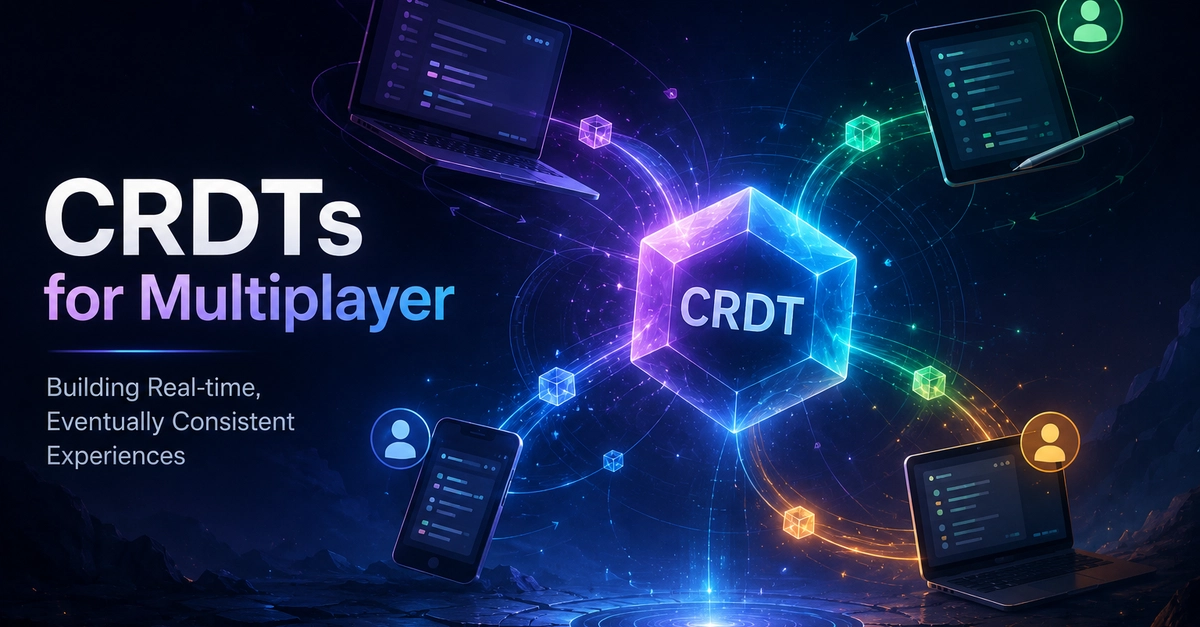
This is an excerpt. The full article includes a live YATA double-linked list simulator — type into two peer editors, toggle network partitions to simulate offline-first edits, and watch Y.js automatically resolve merge conflicts in real time. Read the full interactive version →
The Local-First Wave: Why OT Is Not Enough
Building real-time collaborative software used to require a centralized server orchestrator. For decades, the industry standard was Operational Transformation (OT) — the architecture powering Google Docs.
In OT, every local edit is wrapped into an operation and sent to a central server. The server acts as the single source of truth, recalculating operation coordinates to resolve conflicts and broadcasting adjusted commands back.
The OT Bottleneck: The server must be active 100% of the time, maintaining a complex sequence history buffer. The moment a client drops offline, peer-to-peer sync becomes nearly impossible to reconcile, leading to silent document divergence.