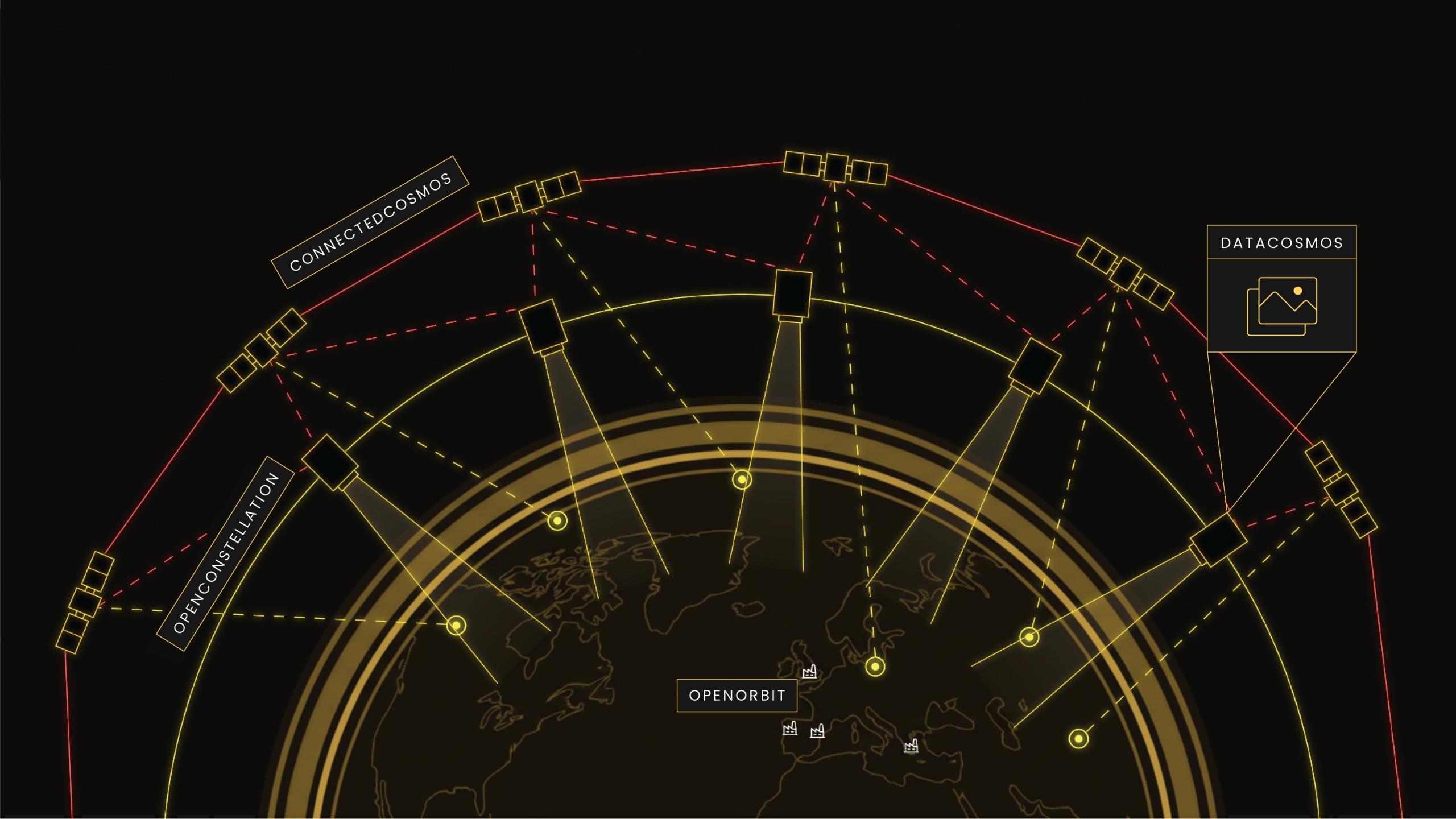
Open Cosmos, based in the United Kingdom, is facing a 2028 deadline to field an ambitious broadband constellation for Europe. That system, ConnectedCosmos, aims to reduce reliance on undersea cables and Earth-based hubs. CEO Rafel Jorda Siquier sat down with SpaceNews to talk about the project, and the broad impact he envisions for low-latency satellite data transfer.
This interview has been edited for space and clarity.
SpaceNews: The [Internet of Things] arena has been around for 10 years or so. Why is it just starting to get more traction with space?
Rafel Jorda Siquier: Many people look at the IoT only as a way to connect small devices, when in reality it’s another sensing source, so you have another set of data sets that enable you to understand the ground truth, combining that with in-orbit observation, so Earth observation and remote sensing through a diverse range of sensors empowers that much more. It enables automatic tasking, it enables calibrating better the information that you gather from orbit and then it also enables automation on the ground by delivering the insight in real time exactly at the point where it needs to be actioned.
We’ve heard about this idea of integrated data; we’ve heard about end-to-end solutions. But what’s different about putting these capabilities on the same satellites versus integrating them on the ground? What’s the advantage there?