For the past two years, the story of falling home prices was largely a Sun Belt story — an unwinding of the pandemic-era land rush that had sent values in Austin, Tampa, and Phoenix to unsustainable heights. As recently as February, JPMorgan’s rosy national forecast was masking a “Sun Belt full of pain,” with Florida and Texas bearing the brunt. That regional narrative is now changing.
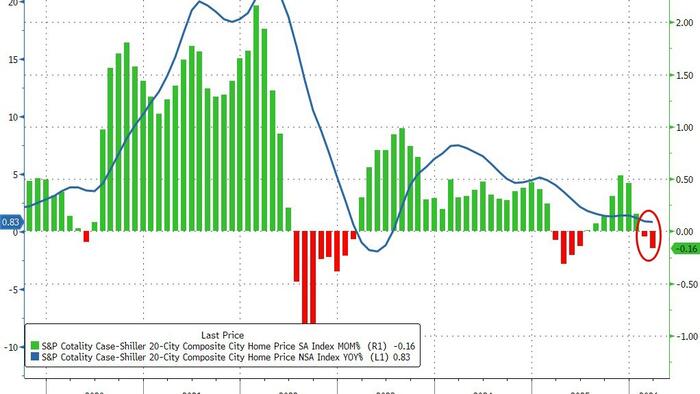
New data released Tuesday showed the S&P Cotality Case-Shiller 20-City Home Price Index fell 0.2% month-over-month in March on a seasonally adjusted basis, the second consecutive monthly decline. The annual pace of appreciation slipped to just 0.8%, and the three-month annualized rate — a cleaner read on momentum — collapsed to -0.2% from 2.3% the month prior.
More striking than the national numbers is where the weakness is now showing up. Los Angeles posted a 1.6% annual decline. Washington, D.C. turned negative. Both are now joining markets like Tampa (-1.9%) and Dallas (-1.7%) in the red. Capital Economics, which cut its full-year U.S. home price growth forecast to 1% from 3%, and North America economist Thomas Ryan wrote that the deterioration is “no longer just a Sun Belt story.”
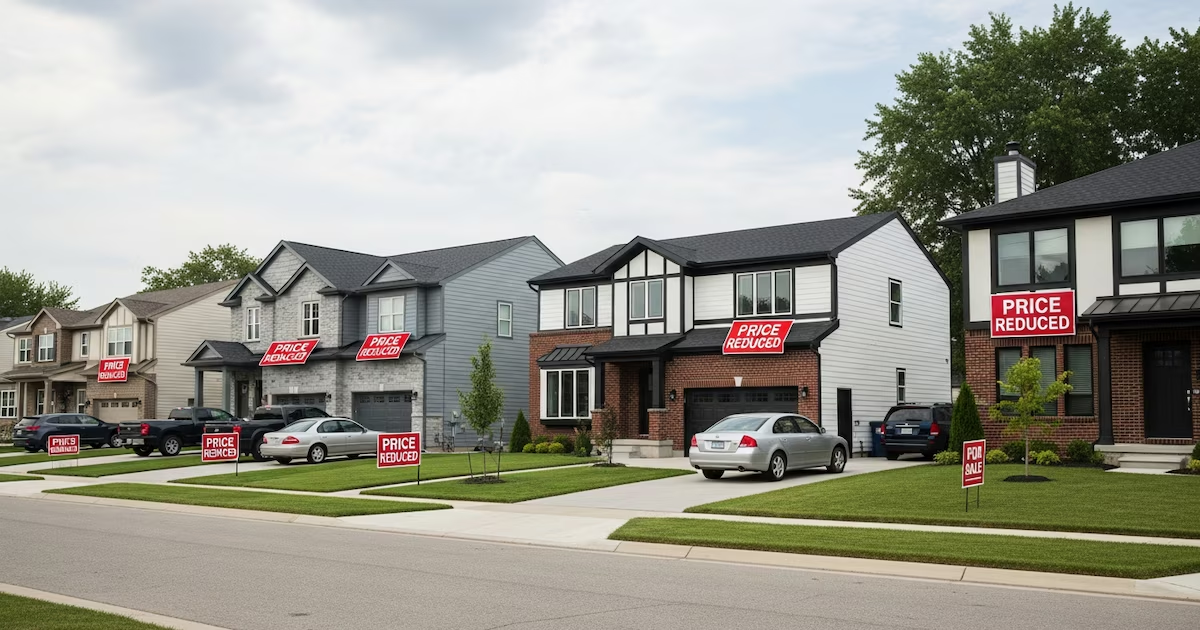
The demand-side rot has been building for a while. Nearly 20% of new homes saw price cuts in the fourth quarter of 2025, concentrated in the South and West, Fortune reported in February, with Texas accounting for a disproportionate share of listings with price reductions. Even a brief dip in mortgage rates to below 6% failed to bring buyers off the sidelines, as January existing home sales cratered despite the momentary rate relief. The structural freeze runs deeper still: as Fortune reported, roughly 80% of mortgage holders are sitting on rates above the pre-2022 sub-4% threshold, leaving would-be sellers locked in and inventory stubbornly constrained.