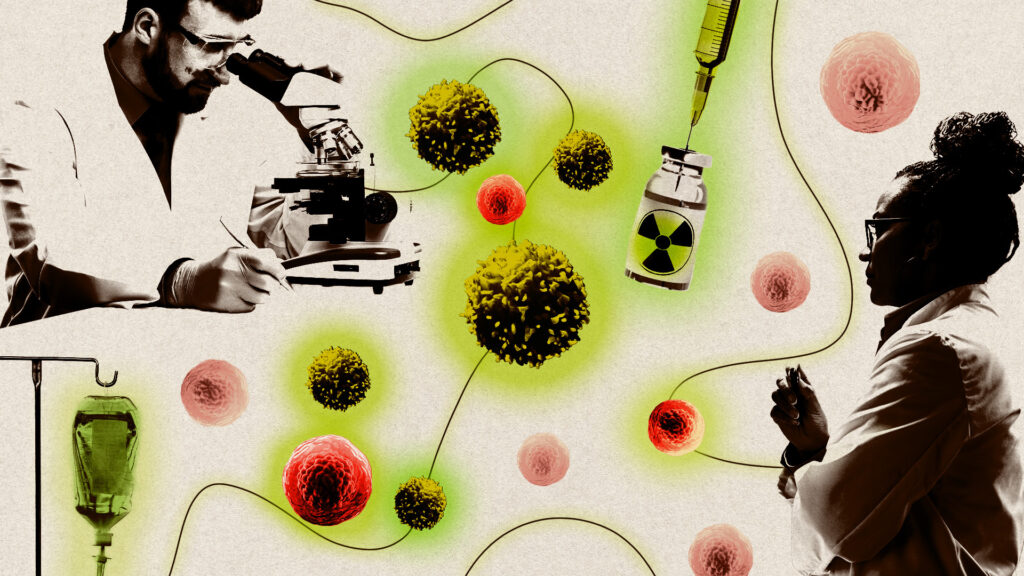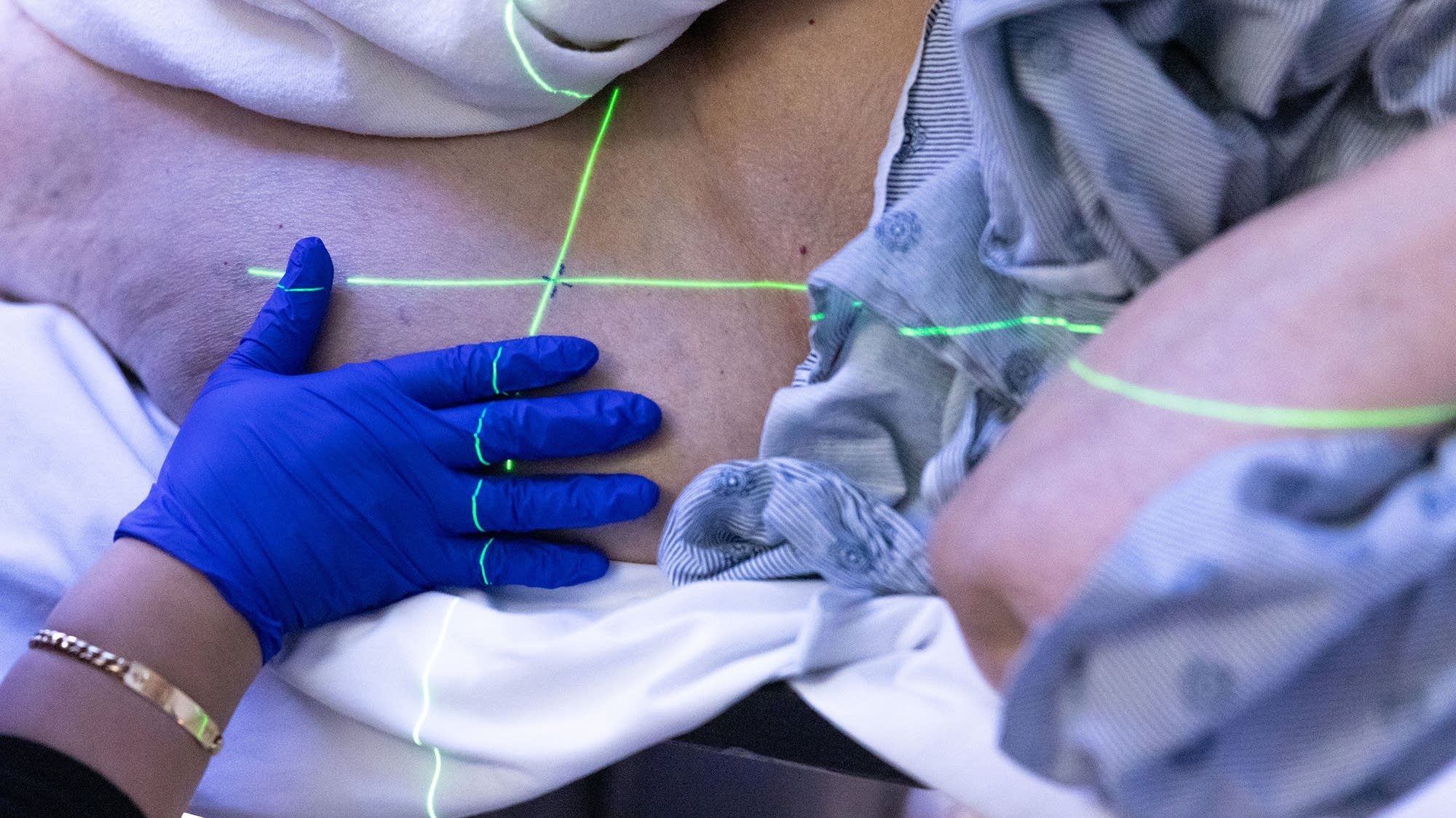
The radioactive drug industry is booming. The radiopharmaceuticals market is expected to grow 10% a year to reach more than $24 billion by 2034.Helping drive that growth are emerging therapies that could solve one of the biggest problems with current radiotherapy treatments — damaging healthy cells along with tumors.To discuss the growing market, “Marketplace Morning Report” host Sabri Ben-Achour spoke with Mark Peplow, a science journalist whose work has appeared in New Scientist and Nature. Below is an edited transcript of their conversation. Sabri Ben-Achour: The radiation treatment that most people are probably familiar with is where a doctor zaps a tumor with a beam of radiation. There's also injecting radioactive isotopes into a patient. This new way of using radiation is different. How?Mark Peplow: It's different because often when patients receive radiotherapy, it will affect not just the cancer cells, but it will affect other parts of their body, as well. Targeted alpha therapy, the idea of it is that you take a radioactive isotope that emits radiation and you attach it to a wrapper — a molecule that will seek out cancer cells — so that it can deliver a targeted blast of radiation. The idea is that it makes the therapy much more effective, and it reduces those off-target side effects as well. Ben-Achour: The radiation that's emitted by these isotopes, in particular, is kind of different. How? Peplow: So, yeah, so in high school, we learned that there are three different types of radiation. The first is called alpha. That's what we're talking about here — that is, two protons and two neutrons that make up the nucleus of a helium atom, actually. And you can imagine these as slow, lumbering, very heavy, but they're like a tank, right? They have huge amounts of energy. Other types of radiation include beta radiation; those are sort of fast-moving electrons. And there's also gamma radiation, which is used often in radiotherapy, and that's like a very energetic form of light, really. It's an electromagnetic wave.Ben-Achour: But some go further than others? And some take out more healthy tissue than others?Peplow: Right, yeah, that's right. So targeted alpha therapy is really one corner of a broader area of therapeutic research called radioligand therapy, and there've been a couple of really big successes over the last 10 years using a beta-emitting isotope called Lutetium. While these Lutetium therapies are very effective, there's a great deal of interest in trying to use alpha particle-emitting isotopes, where the alpha particles travel a much shorter distance, but they pack a much bigger punch. And the idea is to try and focus all of their energy on just the very small area of cancer cells that need to be eradicated. Ben-Achour: How effective are they, these new treatments?Peplow: Clinical trials are underway to find out. Beta therapies — there are two sort of big successes over the last 10 years. One is called Lutathera, one is called Plavicto, and clinical trials have shown them to be very effective against gastrointestinal cancer and prostate cancer, respectively. As far as the alpha therapies go, the clinical trials are underway, really, and different isotopes have reached different stages. For actinium-225, that's the most advanced, really, and we have some agents that have progressed into the final stage of clinical testing, but you know, there's still a long way to go. From June 2025: Half of all women need more than a mammogram to detect breast cancer. Insurers won't always pay for it.From March 2025: How federal funding cuts are affecting cancer research at Duke UniversityFrom May 2023: New mammogram age guidelines could detect cancer earlier — and add costs for womenFrom July 2019: The battle over who gets to sell pills for cancer treatmentFrom May 2017: This cancer patient is devoting his life to making drugs more affordableBen-Achour: You wrote that the global production of Actinium-225 is just 1-10th of a milligram per year. Where do you get these isotopes from?Peplow: Yeah, that was even less than I expected. I knew that this was an extremely rare material, and I knew it was in very short supply, so much so, in fact, that some clinical trials have been held up because of a short supply of Actinium-225. There are probably three main ways to produce it. The first is from radium. It was used for many years in cancer treatment, where you literally got some radium and put it on the tip of a needle and inserted that into people. That treatment really has been superseded by more effective methods, but it meant that all over the world were lots of these leftover sources of medical radium brachytherapy needles. The International Atomic Energy Agency is in the process of gathering these abandoned sources together, so that they can actually take that radium and then use various methods to convert it into isotopes, such as Actinium-225.Ben-Achour: There are others? I mean, they can get it from nuclear waste, too.Peplow: Yeah, and there's a huge amount of interest in extracting this from nuclear waste. One of the biggest efforts in the United States basically exploits a store of a couple of tons of Uranium-233. All of this material is stored at Oak Ridge National Laboratory, and this radioactive material is busy decaying into a variety of things, including something called Thorium-229. This thorium naturally decays into Actinium-225, so they sort of skim off every week or two, whatever has accumulated. Isolate that, and they can use that to create these actinium-based drugs.Ben-Achour: Is there enough supply, or will there be enough supply anytime soon for this to be a treatment that is widely available? Peplow: Well, really, we have two sort of timelines that are hopefully going to converge. We've got the clinical trials, which should by the year maybe 2030 start to show that these things are effective, and they could get regulatory approval, and therefore could start being used in tens of thousands, perhaps even hundreds of thousands of patients per year. And at the same time, companies are ramping up their production capacity, so that they can potentially meet that. So, for example, just this month, just a few weeks ago, Terra Power broke ground on a $450 million facility in Philadelphia. That's going to massively increase their Actinium-225 production capacity. Everybody's working towards this time where we're expecting one or two of these new targeted alpha therapies to come through, and then all of these facilities are really going to ramp up further and further from there.
The next cancer drug boom may depend on radioactive waste
Targeted alpha therapies could better attack tumors while reducing damage to healthy tissue.
1,092 words~5 min read