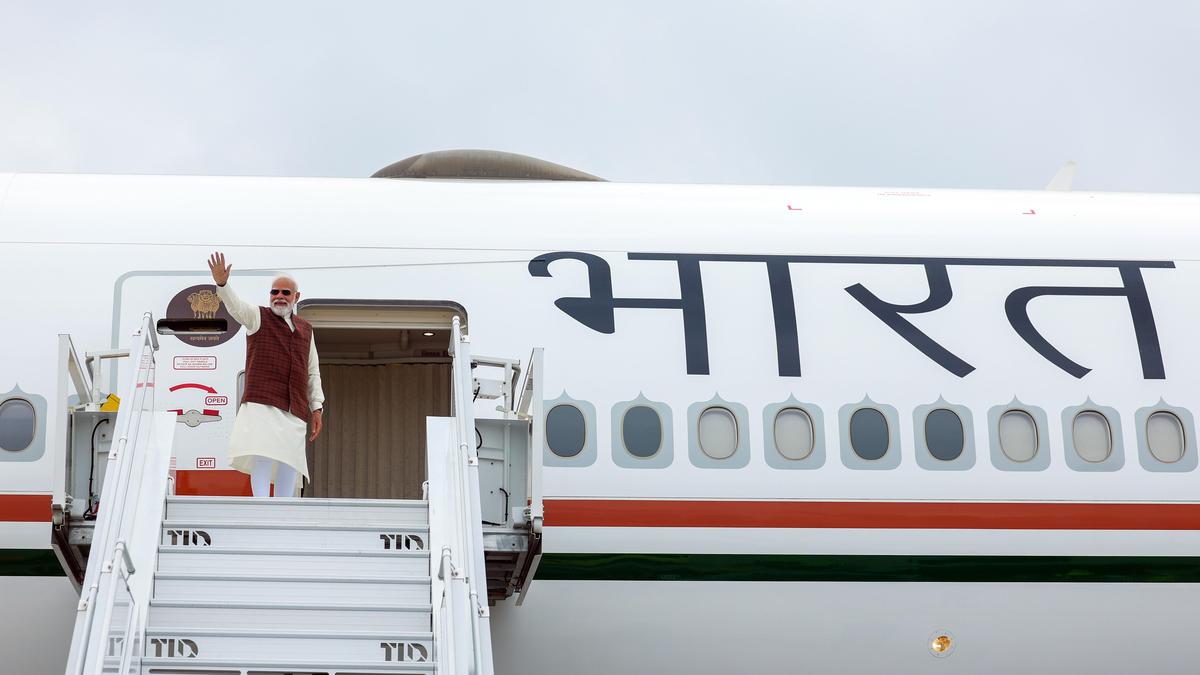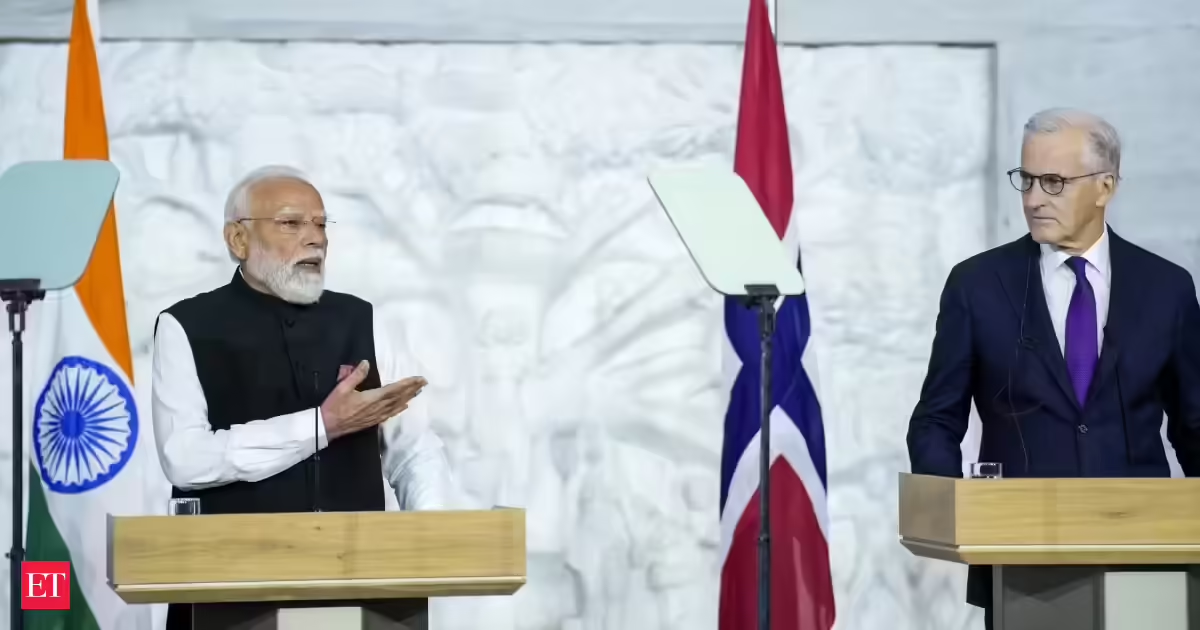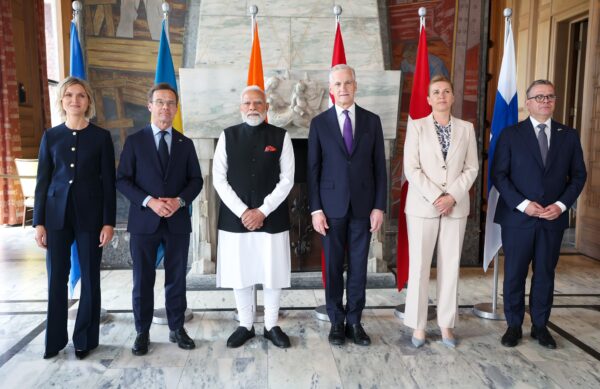
Coming at the back of a recently signed India-EU Free Trade Agreement as well as the India-EFTA Trade and Economic Partnership Agreement (TEPA) signed with Iceland, Liechtenstein, Norway, and Switzerland, Indian Prime Minister Narendra Modi’s visit to Gothenburg and his subsequent appearance at an India-Nordic summit in Oslo were, on the surface, about familiar themes: innovation, green transition, AI, and advanced manufacturing.
However, the trip might also catalyze the emergence of a more consequential story. The industrial and technological domains that were tabled in Gothenburg are not merely commercial opportunities; they are also precisely the competencies that any serious Arctic player needs. Taken alongside India’s existing Himadri research station in Svalbard and its growing interest in Arctic shipping routes, therefore, Modi’s Nordic tour could also be interpreted as the opening move in a deliberate strategy to build India’s High North credentials through partnerships with the Nordic states: Denmark, Finland, Iceland, Norway, and Sweden.
Look at what was actually agreed in Gothenburg. The India-Sweden bilateral relationship was formally upgraded to a strategic partnership, structured around four substantive pillars: a security and defense dialogue, a next-generation economic partnership, emerging technologies (including cooperation on AI, 6G, quantum computing, and space), and the green transition. Crucially, the two sides have also committed to doubling bilateral trade and investment within five years with a dedicated Bilateral Trade and Investment Summit planned in India for 2027.