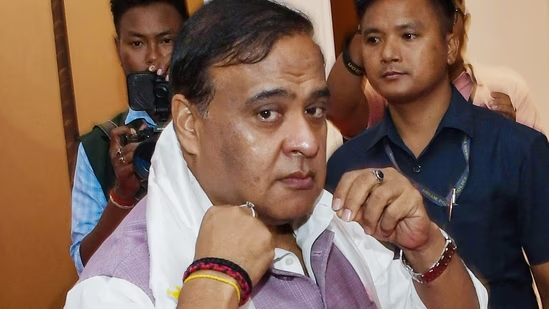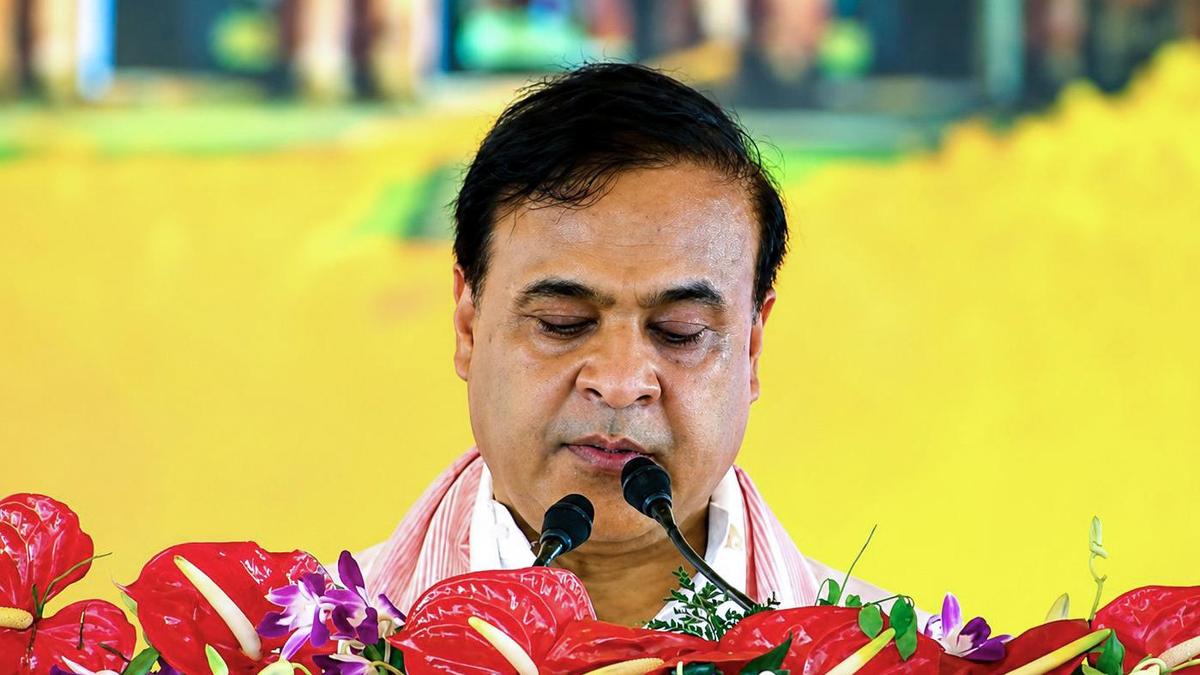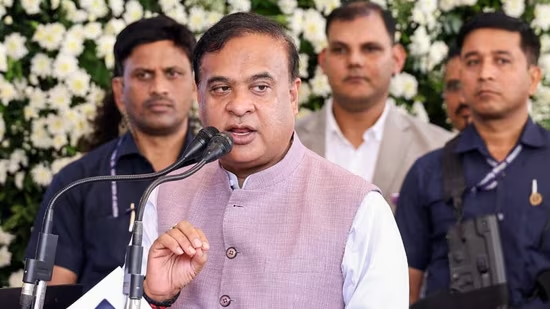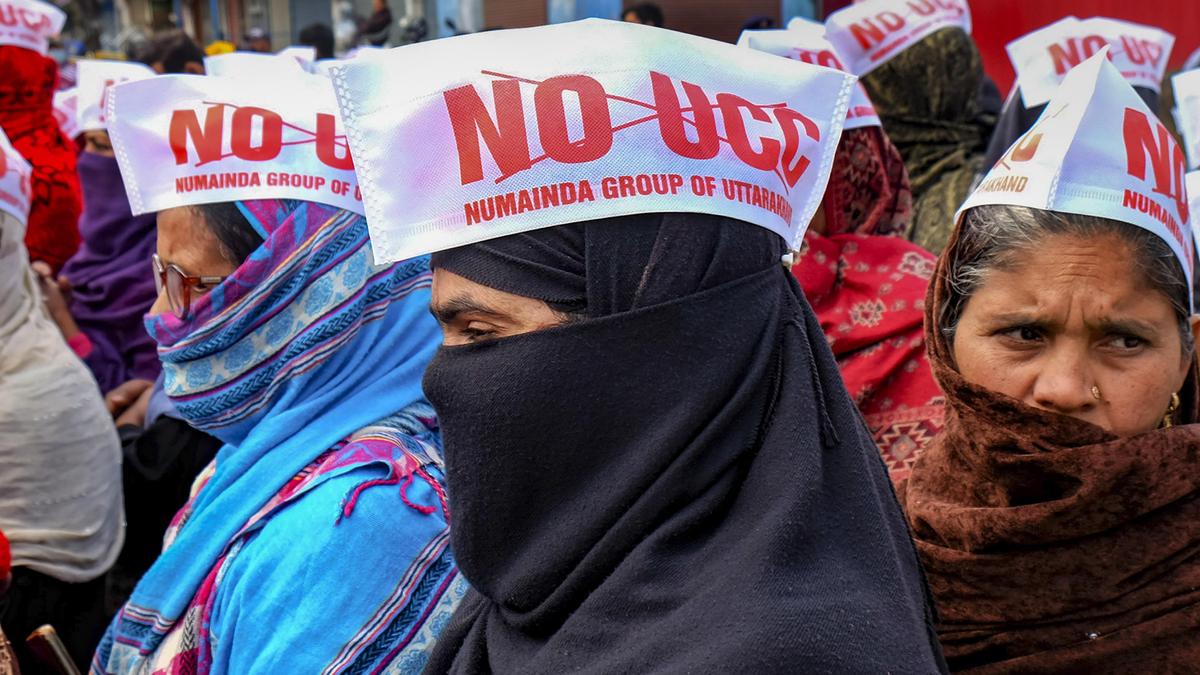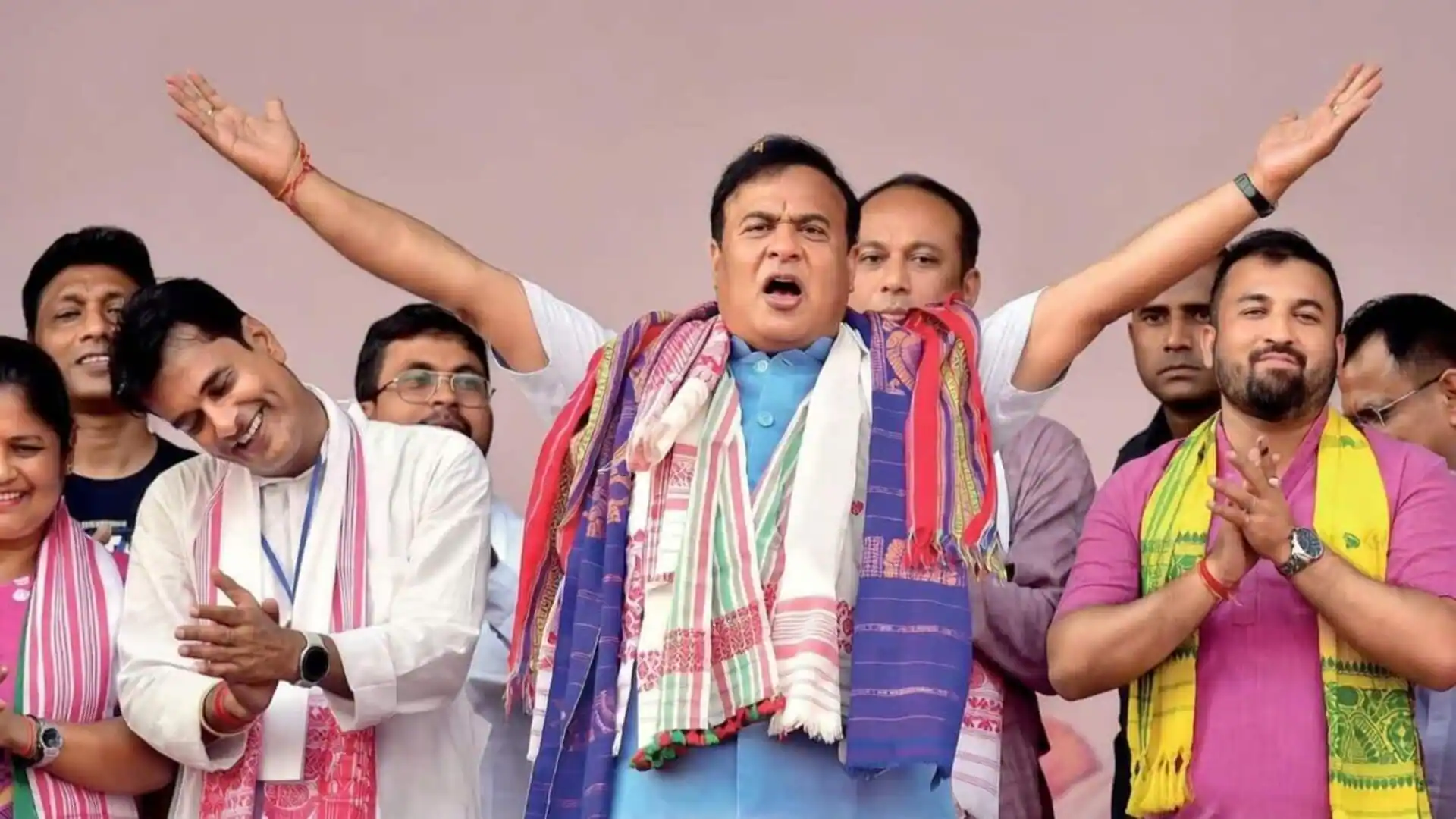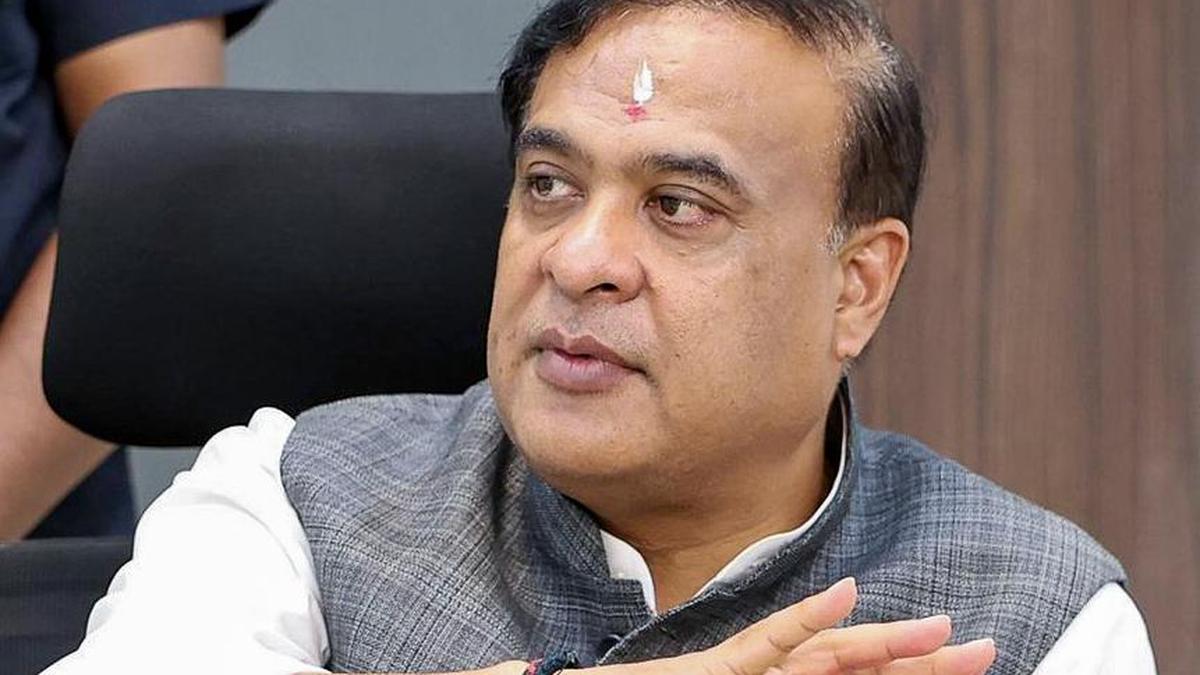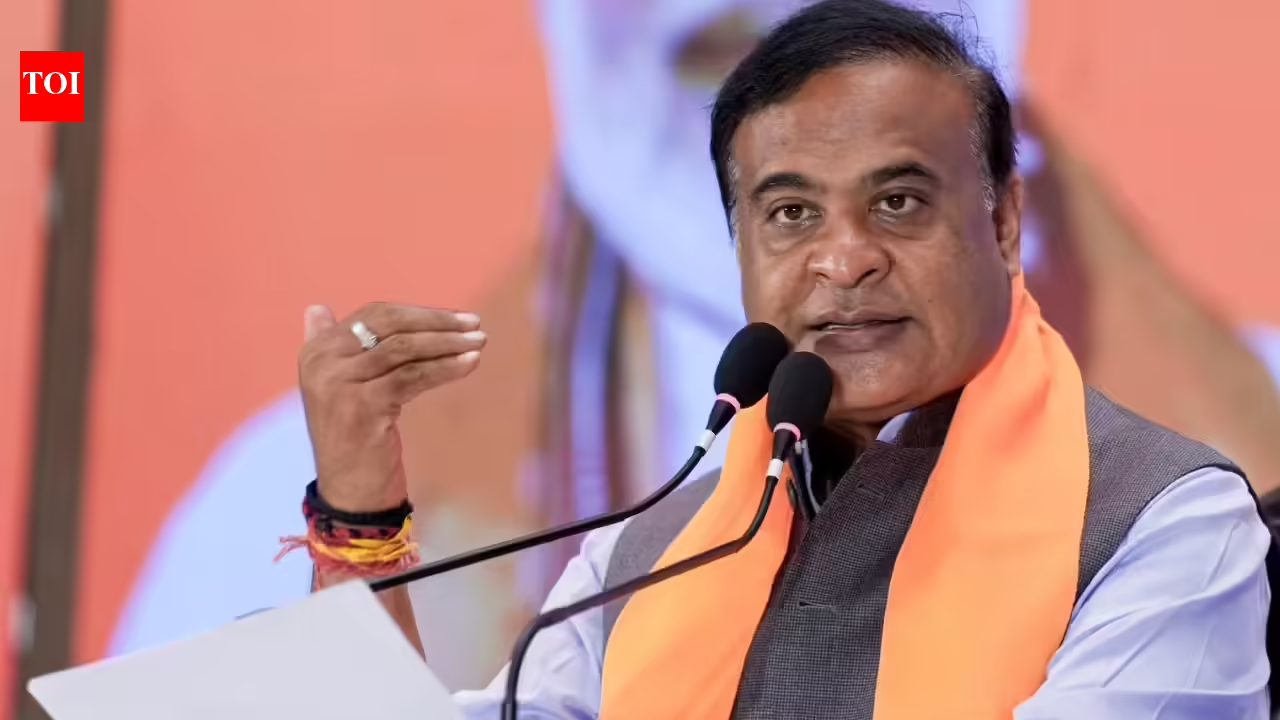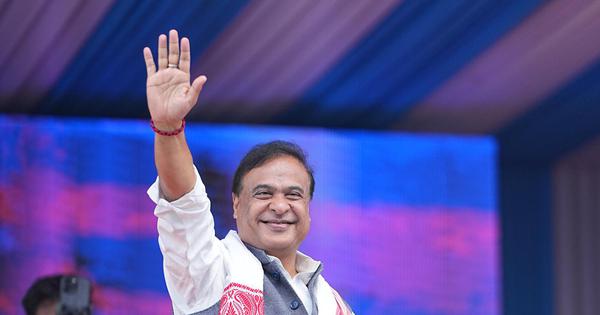
Guwahati: Assam chief minister Himanta Biswa Sarma said that in the recently held assembly BJP and its allies cornered nearly 50 percent vote share. Sarma defended the tabling of Uniform Civil Code (UCC) in the state Assembly.Replying to the motion of thanks to the Governor's address in the Assembly, Sarma moved quickly to address concerns that the legislation is politically motivated or targeted at minorities. "We do not want anyone to feel that we ignore minority communities because we receive fewer votes from them. The Uniform Civil Code is being brought to secure the rights of women from minority communities.”The Chief Minister laid out the specific objectives driving the proposed law - ensuring women's right to property, curbing child marriage and polygamy, and expanding women's democratic participation.He said, "The Uniform Civil Code will guarantee women the right to live with dignity and exercise their rights over property. It will help prevent child marriage and polygamy," Sarma said, describing the legislation as a landmark social reform that would usher in a "new life" for minority women.”The Chief Minister expressed confidence that the state would become the third in the country, after Uttarakhand and Gujarat, to move toward implementing the UCC. "This is a reform for the empowerment of women, and I believe people across communities will eventually support it," he added.All India Majlis-e-Ittehadul Muslimeen (AIMIM) and Hyderabad MP Asaduddin Owaisi launched a pointed attack on the legislation, accusing the Assam government of using the UCC as a vehicle to impose Hindu personal law on Muslims. Owaisi alleged that Hindu principles were being quietly embedded into rules governing succession, inheritance and divorce - areas where Muslim personal law currently applies.He also highlighted what he called a glaring internal contradiction - the bill exempts tribal communities from its purview entirely, while making it binding on Muslims. "Only Hindu culture is being protected, while Muslims have to comply with these so-called uniform rules. Every community has the right to protect its culture under Article 29 but why is only the tribals' autonomy being protected?" he wrote on social media. The AIMIM chief went further, arguing that the legislation runs against the original intent of India's founding fathers.Sarma said, “ On the occasion of Eid Al Adha, several Eidgah committees graciously accepted our appeal to refrain from cow qurbani (slaughter )in consideration of the sentiments of all communities. This reflects a powerful message of communal harmony, mutual respect and unity in society.”Sarma announced that he would build a Rs 10 lakh crore economy by 2028. Sarma said NDA's thumping victory less as a political triumph and more as a public endorsement of his government's development model. The alliance not only secured 102 seats, he said, but also saw its vote tally surge with BJP candidates alone polling over 81.92 lakh votes, AGP adding 14 lakh and BPF contributing 8 lakhs, pushing the combined NDA tally past the 1 crore mark.He said, "The NDA won all Scheduled Tribe reserved seats and tea tribes-dominated ones, while winning all Opposition could just wrest one seat reserved for the Scheduled Caste.”He stressed the need for stronger action against illegal immigration and the protection of indigenous land rights, particularly in char areas, the riverine islands where displacement and encroachment remain persistent concerns.He talked about the geopolitical tension between the United States and Iran and warned that a prolonged conflict in the Strait of Hormuz could deliver a serious economic blow to both India and Assam.He added, "If the conflict between the United States and Iran does not de-escalate soon, its impact will inevitably be felt in India as well. We import crude oil, fertilisers and several essential commodities from abroad, and any disruption in global supply chains or shipping routes pushes prices upward”.He said problems in the Strait of Hormuz had already contributed to a steep rise in petrol and diesel prices over the past several days. "Rising crude oil prices directly affect fuel costs and transportation expenses, which then influence the prices of everyday commodities," he said, describing the situation as "increasingly worrying for the entire world."He added, "This is naturally a matter of concern for the Government of India and for Prime Minister Narendra Modi as well. We hope the conflict will subside soon and normalcy will return. The government has also activated a price monitoring mechanism to track fluctuations in essential commodities and prevent hoarding, black marketing or artificial shortages from amplifying the pain of global price rises.He added the government proposes Price Stabilisation Fund, a buffer to assist the state respond more effectively to sudden inflationary shocks triggered by global developments.He said, "For the last five years, one political party believed that by attacking the Chief Minister's family they would win elections. Fake passports from three different countries were circulated before the public to malign my family. But the people of Assam wanted development, not politics based on personal attacks, and therefore they rejected such campaigns.Winning today does not guarantee victory tomorrow. Politics changes very quickly. There are examples where leaders won comfortably in parliamentary elections but lost soon after because people sensed arrogance and pride in them.”
Assam to move ahead with UCC as Himanta defends reform push, targets Rs 10 lakh crore economy by 2028
Assam's Chief Minister Himanta Biswa Sarma is pushing for a Uniform Civil Code, stating it will empower minority women and promote equality. He also highlighted the NDA's recent electoral success as a mandate for his development agenda. The Chief Minister also addressed concerns about rising global oil prices and their impact on India's economy.
852 words~4 min read