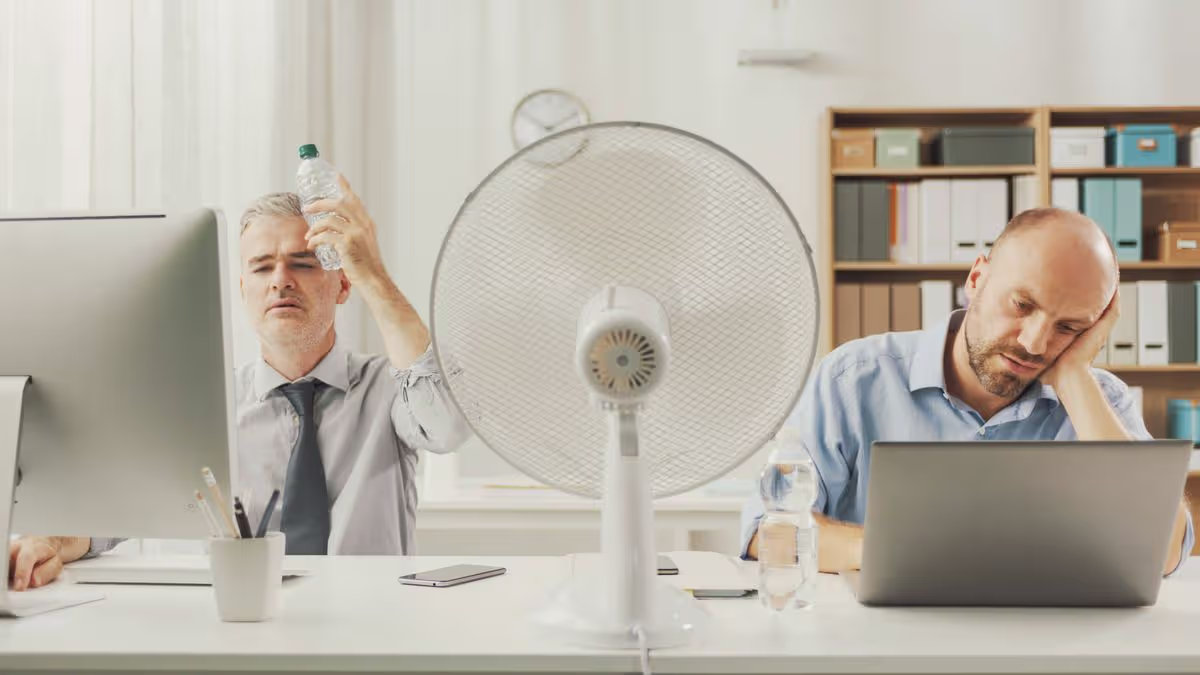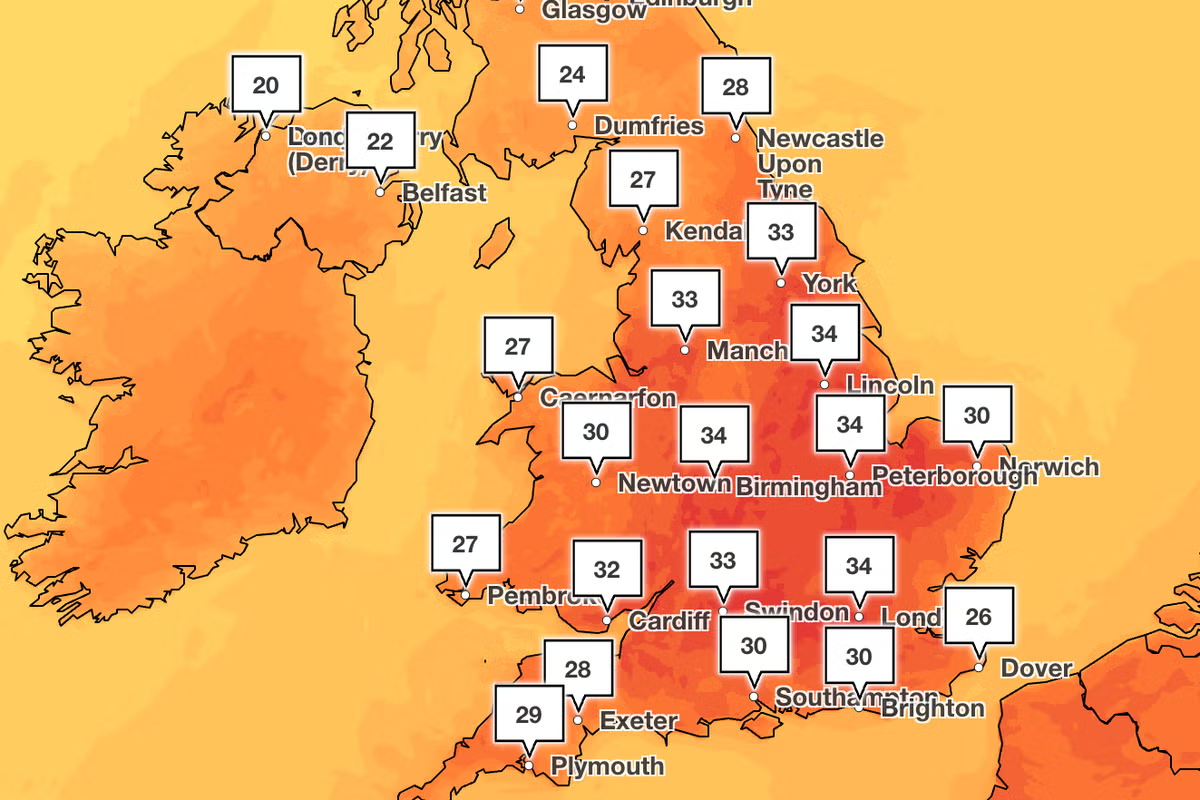
The UK heatwave has raised urgent questions about workplace temperature rights14:36, 26 May 2026As the UK heatwave persists, driving temperatures into the high 20s and low 30s, the challenge of staying productive and safe at work has sparked a nationwide legal discussion. Highlighting staff concerns, searches for the term "too hot to work" have jumped by over 2,000%, according to research, prompting employment law specialists to outline the legal safeguards workers have when temperatures soar.The straightforward answer to whether you can cease working is frequently disheartening for overheated staff, as UK law currently does not set a maximum temperature at which employees can automatically stop working or be sent home. This differs from the guidance on minimum temperatures, which recommends that a workplace should be at least 16C, or 13C if the work involves physical exertion.Despite the absence of an upper threshold, legal specialists emphasise that employers remain under a rigorous legal obligation. Under UK employment law, specifically the Health and Safety at Work Act 1974 and the Workplace (Health, Safety and Welfare) Regulations 1992, every employer has a non-negotiable duty of care to guarantee a safe working environment and maintain "thermal comfort".James Muller, Principal Associate in Weightmans' health and safety team, stresses that employers must implement all "reasonably practicable" measures to ensure staff are not at risk of heat-related illnesses. Failure to fulfil this responsibility could lead to enforcement action, reports the Liverpool Echo.Such action could potentially result in criminal prosecution by the Health and Safety Executive (HSE) or the local authority. Workers who fall ill or sustain injuries due to a workplace's failure to act might be eligible to pursue personal injury compensation.What are an employee's rights to refuse to work in hot weather?The guidance for workers remains careful. You should typically not abandon the workplace unless you feel unwell and require sick leave. While Sections 44 and 100 of the Employment Rights Act 1996 provide protection, permitting workers to remove themselves from situations where they reasonably believe they are in "serious and imminent danger" that they cannot avert, this protection is limited to specific immediate safety threats and is not intended for general discomfort.If extreme heat poses a substantial threat to health and safety, employers must take appropriate action, which may include sending staff home. In many cases, when a worker is sent home but remains ready and willing to work, they may still be entitled to payment, depending on the circumstances and their employment contract.Trade unions, including the TUC and UNISON, are actively pushing for the government to introduce a specific legal maximum temperature for indoor work, proposing 30C, or 27C for demanding physical activity. Until such legislation is enacted, workers are encouraged to raise their concerns with their employer and demand a thorough risk assessment.What are an employer's responsibilities for staff in hot weather?To maintain this duty of care, employers are recommended to implement a series of measures, typically starting with a risk assessment. These steps should include:FlexibilityHydration and breaksVentilation and coolingDress codeVulnerable peopleEmployers are encouraged to be as accommodating as possible. This might mean permitting flexible hours to prevent commuting during the hottest periods, promoting remote working, or even reducing the working day if practically feasible. Rearranging demanding tasks to cooler parts of the day (for instance, before 11 am or after 3pm for outdoor workers) is also particularly helpful.A consistent, safe supply of cool water must be made available, and staff must be prompted to remain hydrated. More regular breaks should also be granted, especially for those in physically intensive roles, to avoid heat-related conditions.Employers are legally obliged to guarantee a healthy working environment by supplying adequate quantities of fresh or purified air. While air conditioning isn't legally mandated, offering fans or portable air conditioning units, servicing existing systems, and opening windows to improve ventilation can help sustain a "reasonable" working temperature.Article continues belowDress codes should be relaxed for warmer weather where feasible, though employers can still demand certain presentation standards for customer contact or safety purposes. Staff should confirm with their employer rather than presuming shorts or flip-flops are permissible.Businesses must pay close attention to staff members with pre-existing health conditions or who are expecting a baby, as they are disproportionately impacted by extreme heat. Tailored, individual risk assessments are necessary for these individuals.
UK heatwave workplace rights explained when it's 'too hot to work'
The UK heatwave has raised urgent questions about workplace temperature rights
712 words~3 min read