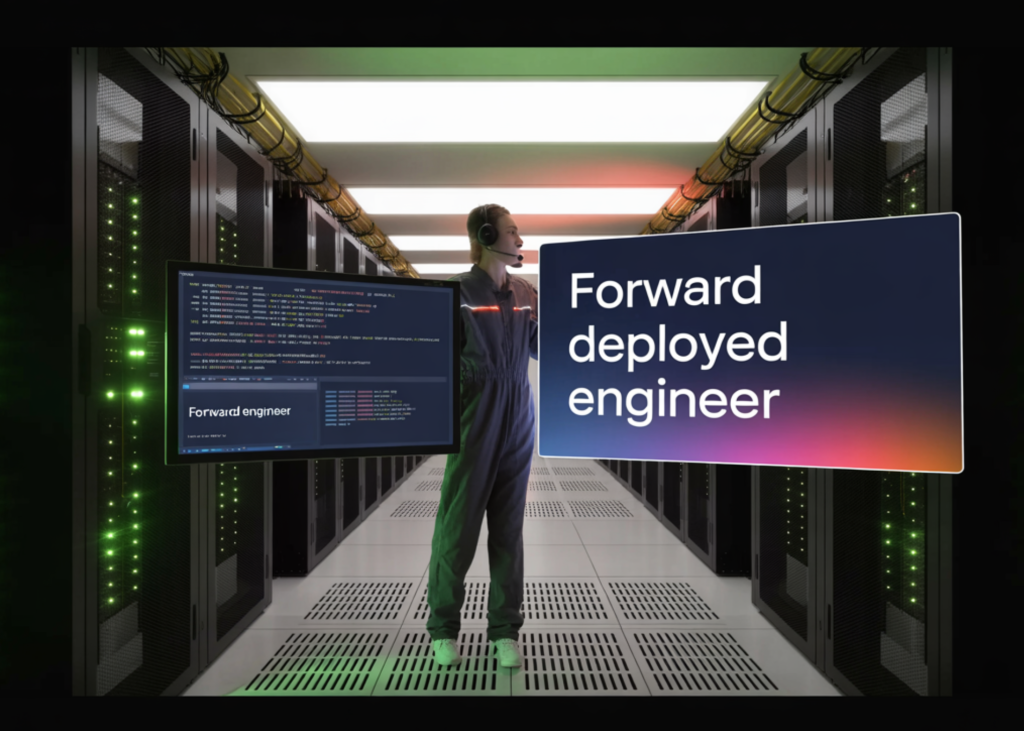
Shammy Narayanan is Vice President for Data, AI, and Architecture at Welldoc, leading enterprise AI and digital transformation initiatives.gettyI began my career in the era of the mainframe, a time when desktops were a luxury and the internet was a fragile privilege that only a select few accessed via the rhythmic screech of a dial-up modem. In those days, technical survival depended on a near-photographic memory of COBOL syntax and JCL parameters. When logic failed, we had to physically turn the worn pages of printed manuals.The shift to client-server and mobile computing was our first dramatic democratization, turning laptops into staples and the internet into a commodity. The developer's value shifted from memorizing the syntax to mastering the concept, with platforms such as Stack Overflow serving as our collective safety net. Today, we've entered the third great epoch: the era of "vibe coding." Now, the barrier to entry is the deep, intuitive understanding of the product's soul. Yesterday, we wrote code to build features; today, we curate intent to manifest solutions.If I were starting my career all over today, the questions I'd face are fundamentally different: Is it even worth learning a language when AI can generate the code? Is a career in computer science still a lucrative path? The answer to both is a resounding "yes"—but with a caveat.While a foundation in data structures and algorithms remains nonnegotiable, the focus has moved from the "what" to the "how." We're migrating from the era of concept to the era of design. In this new landscape, a developer must look beyond the screen to understand the brutal reality of the last mile.Building a RAG chatbot using 10 documents as a proof of concept is relatively easy. In the vibe-coding honeymoon phase, it works like magic. However, magic doesn't scale. Move that same bot to 100 documents, and the "vibe" begins to fray. Move it to thousands, and efficiency, accuracy and security collapse under the weight of unmanaged complexity. This is where the "curator of intent" earns their keep. The path from a prototype to a production-grade asset is built on the pillars of scalability, rigorous security and sustained performance. To navigate this, the industry is demanding a different breed of architect: the forward deployed engineer (FDE).The Refined Crux: The Anatomy Of The Forward Deployed EngineerThe mandate of the FDE is to master the sprawling ecosystem of agentic orchestrators. FDEs must understand the specific DNA of their tool kits: recognizing that while a platform such as Lovable or Replit Agent is unmatched for rapid, "vibe-to-prototype" speed, a tool such as Claude Code or GitHub Copilot Workspace may be better suited for complex, multi-file architectural refactoring. There's no "one size fits all" in 2026; there's only the right tool for the right constraints.Beyond tool selection, the FDE is the new guardian of computational economics. They must be masters of token optimization, knowing exactly when to splurge on a frontier model and when to pivot back to traditional, deterministic programming. Why waste expensive tokens on sorting or merging data when a few lines of Python can do it with 100% reliability and zero cost?This leads to the most difficult shift: unlearning the deterministic mindset. In the mainframe era, input A always led to result B. In the age of LLMs, we operate in a probabilistic fog where the same prompt can yield a hundred different yet similar outcomes. The FDE's job is to manage this variance. They must have a visceral understanding of hallucinations and the multilayered fortification required to stop them.Take, for example, an AI agent designed to summarize executive emails. A "vibe" approach might accidentally allow the model to hallucinate a reply and send it. An FDE builds the defense:• Layer 1 (The Prompt): Strict system instructions to prohibit outgoing traffic.• Layer 2 (The Architecture): Hard-coding the API to read-only access, ensuring the model is physically incapable of hitting "send."Ultimately, FDEs are orchestrators. They task an agent to develop a plan, subject that plan to rigorous automated evaluations and select the execution model based on the required precision. In the hands of an FDE, AI is a carefully governed engine of business value.The Refined Conclusion: The Death Of The SpecialistThe uncomfortable truth is that if the same few large language models build every product, then every product will eventually look, feel and function identically. When code is commoditized, the "vibe" becomes a beige baseline of fonts and colors. Real market differentiation, the kind that creates industry leaders, is found in the creative friction of how features are integrated and reimagined.Moving deeper into this agentic era, the traditional silos between the product owner and the technical designer are dissolving. The product owner must now understand the gravity of technical debt, and the technical designer must possess the nose for market fit. To be a narrow specialist today is to be a cog in a rapidly automated machine.The future belongs to the FDE, a multifaceted orchestrator who blends a slice of business analysis with a designer's empathy and a product owner's vision. AI has democratized the ability to build, and the only remaining scarcity is the wisdom to know what to build and the discipline to ensure it's secure, scalable and superior.The agentic era has removed the complexity of coding, but it's also doubled the premium on human judgment. To stay front and center, you must stop being a translator for the computer and start being an architect for the business.Forbes Technology Council is an invitation-only community for world-class CIOs, CTOs and technology executives. Do I qualify?
The Forward Deployed Engineer: The Role AI Can't Replace
The agentic era has removed the complexity of coding, but it's also doubled the premium on human judgment.
923 words~4 min read