
August 04, 2025
3 min read
Add topic to email alerts
Receive an email when new articles are posted on
Please provide your email address to receive an email when new articles are posted on .
Food allergy management is shifting from passive strategies — such as avoidance, carrying epinephrine and hope — to proactive interventions. Most patients and families are aware of strict avoidance and emergency plans. But today, evidence-based tools like oral immunotherapy, sublingual immunotherapy (SLIT) and omalizumab (Xolair; Genentech, Novartis) offer new hope for those burdened
August 04, 2025
3 min read
Add topic to email alerts
Receive an email when new articles are posted on
Please provide your email address to receive an email when new articles are posted on .

We are facing sobering news about allergies. Part of the story is that children, for whom serious allergies used to be a rare…

As scientists have learned more about the biology behind food allergies that affect millions nationwide, a new market for…

Nearly one in 13 children in the United States has food allergy, or an average of two children in every classroom. That…
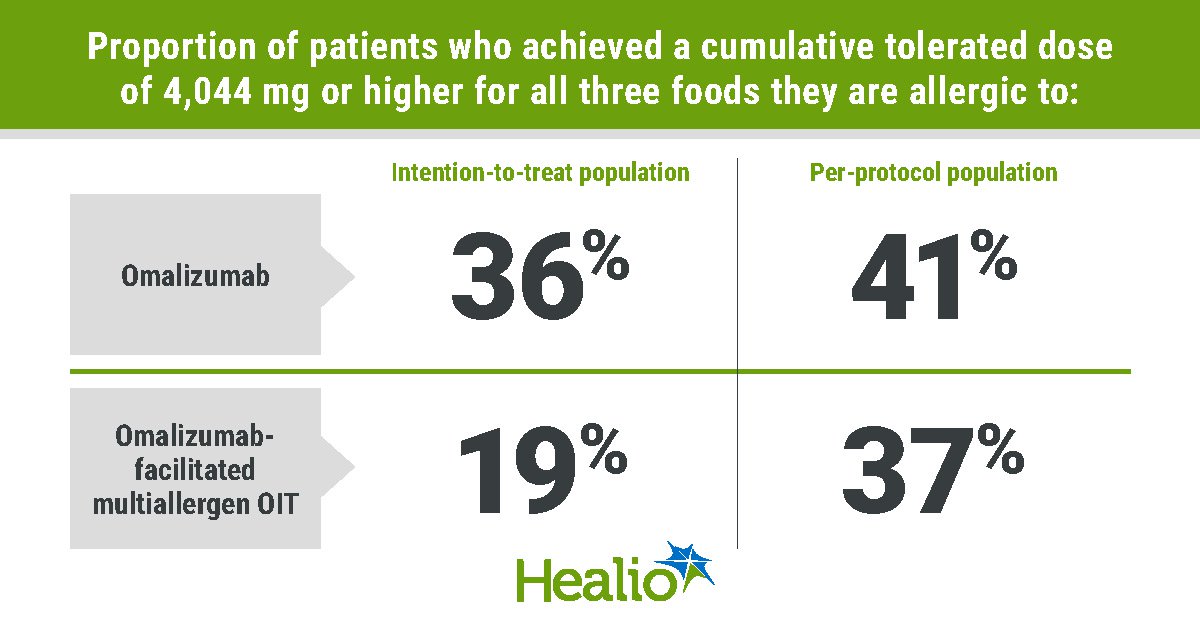
Among patients with multiple food allergies treated with omalizumab, 36% achieved a cumulative tolerated dose of at least 4,044…

When living with food allergies, patients and their families face burdens related to allergic reactions, costs and mental health,…

Find the latest Drug/Insect/Latex Allergy news articles, videos, podcasts, and meeting coverage from medical experts and key…