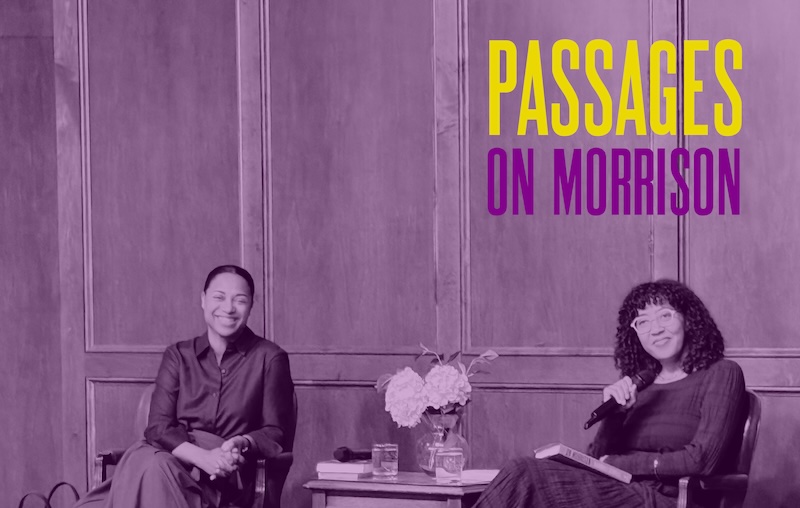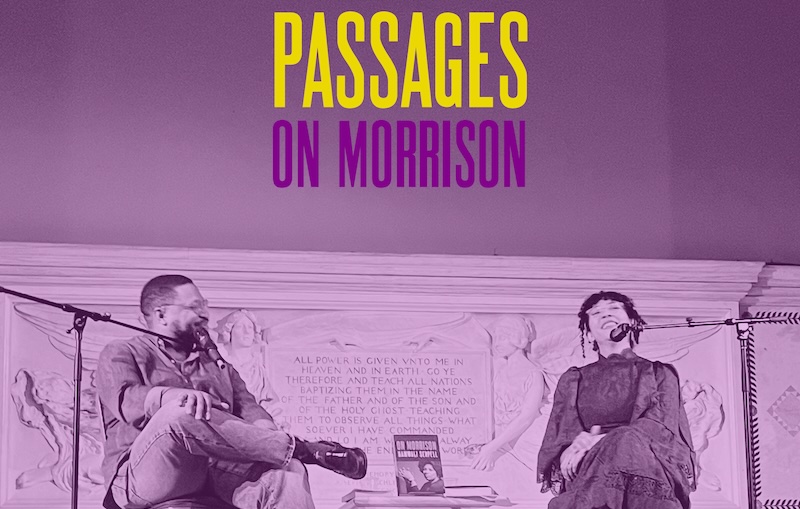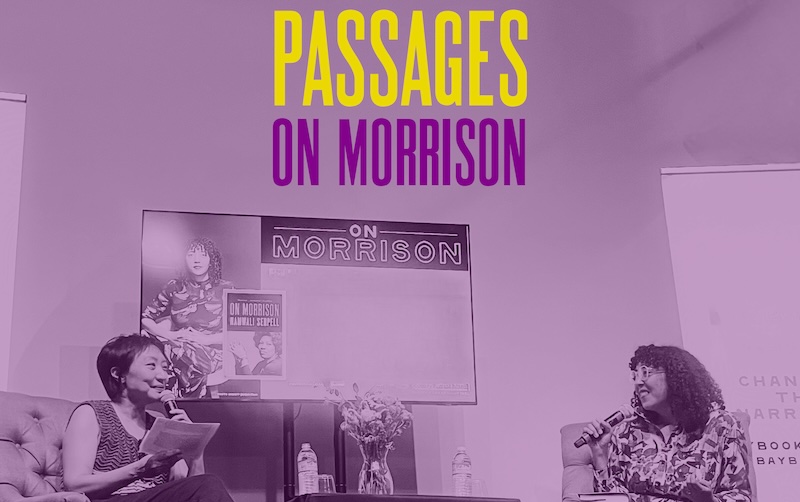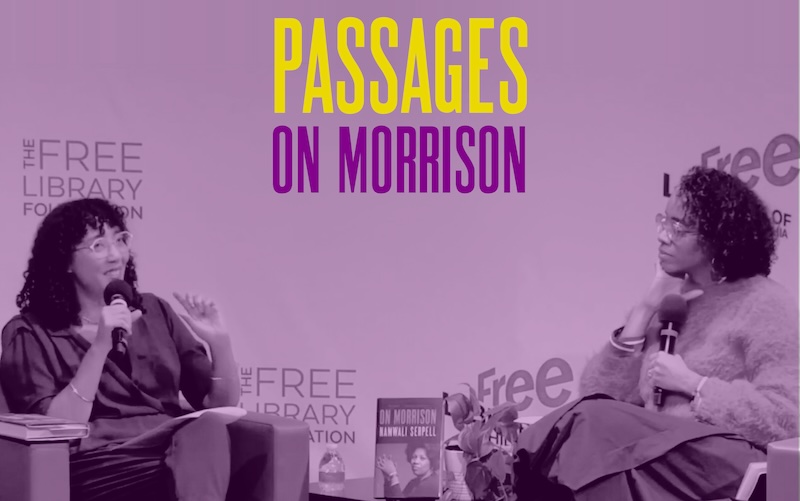
For the launch of Ohio’s year-long, state-wide celebration of Toni Morrison, Namwali Serpell flies to Columbus to talk with poet and essayist Hanif Abdurraqib. With the help of the audience, they read the ending of Morrison’s Song of Solomon and then open up the scene’s quiet violence and ambiguous action. The passage leads them to discuss the challenges of adapting Morrison’s novels for film, the power of evoking the inexplicable, and the influence of African folk tales on Morrison’s work.
*
From the podcast:
Hanif Abdurraqib: I think inherently in Morrison’s work, there’s a question of the sonic qualities of language, and she thinks about language in these ways that make it feel… I don’t know if she thought about herself this way, but it comes across that she is someone who is rigorous like a conductor would be, the conductor of a band, and not necessarily someone who is thinking language first, but also thinking about the sonic qualities, sound, of language and how they can transform the way a word arrives to us.
Namwali Serpell: She’s so good at explaining what she’s doing in some of her essays, right? She has this command to analyze herself, ’cause she’s, you know, a scholar and a critic and an editor, and one of my favorite things is there’s one version of her essay where she’s analyzing the opening of Beloved. She actually marks out the meter of “124 was spiteful,” like the way a poet would, or the way that a jazz musician would, right, where the emphasis falls. And she says, “I know ‘124 was spiteful.’ Full stop. ‘Full of a baby’s venom,’ is not grammatically correct. I know that,” she says, “but I needed to break those into two in order to get the rhythm that I wanted.”