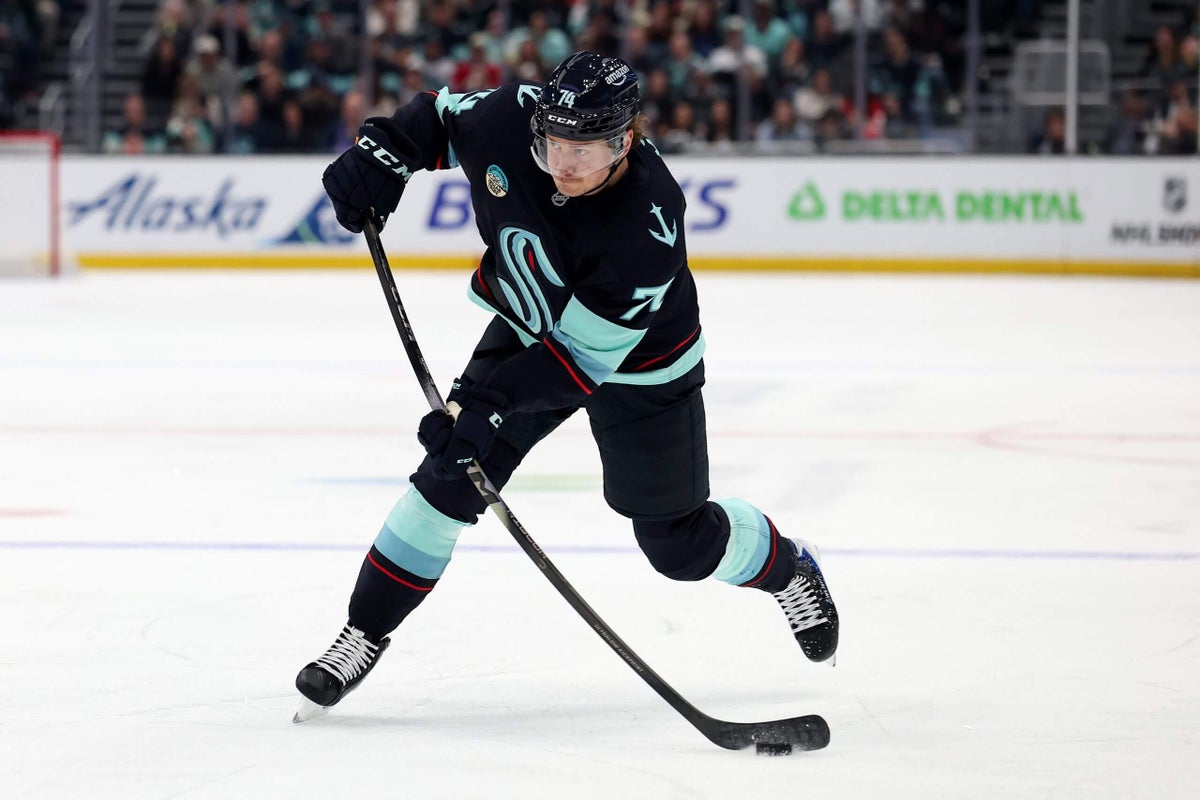
With the Grand Rapids Griffins’ season now over, the page officially turns to the Detroit Red Wings’ offseason — and it’s a big one.After missing the playoffs for a 10th straight season, the Red Wings’ needs are clear if they’re going to snap that drought in 2026-27. Detroit needs to improve its five-on-five scoring and get much harder to play against, especially in the bottom six.So, how can they do that? Today, we’ll look at three paths they could take via trades, call-ups and free-agent signings to try and address their issues.Many elements of these projections are interchangeable — especially the line combinations — but I tried to show a variety of potential configurations while avoiding repeat names for outside additions. In that spirit, there are, of course, many other possibilities not listed here.But hopefully, seeing some scenarios laid out like this helps to highlight the possibilities and the pain points as July 1 draws closer.Scenario 1: The targeted addsLWCRWBobby McMannDylan LarkinLucas RaymondAlex DeBrincatAndrew CoppPatrick KaneEmmitt FinnieMarco KasperMichael Brandsegg-Nygård J.T. CompherMichael McCarronMason AppletonMichael RasmussenCarter MazurLDRDGSimon EdvinssonMoritz SeiderJohn GibsonBen ChiarotJustin FaulkSebastian CossaAlbert JohanssonJacob Bernard-DockerWilliam WallinderOutside additions: Bobby McMann (UFA, projected 4 years x $6M AAV); Michael McCarron (UFA; projected 3 years x $2.5 million AAV)Remaining cap space: $7 millionThe pros: This approach doesn’t look radically different from last year’s Red Wings, but it would consciously address both of their biggest lineup holes.In McMann, Detroit would be adding a player who scored 29 goals last season between the Maple Leafs and Kraken, with 99th-percentile speed according to NHL EDGE, and who is willing to lay the body at 6 feet, 2 inches. That all sounds like a pretty good complement to Dylan Larkin and Lucas Raymond, basically keeping the elements that worked with Emmitt Finnie in that spot but upping the finishing ability.That could make a big difference. Finnie had 13 goals in his very solid rookie season, but based on his shot quality (according to Evolving Hockey) would have been expected to finish with 21.42. That’s a big gap. McMann, meanwhile, had nearly identical individual expected goals (20.91) but significantly outperformed that number, finishing with 29.Maybe that’s a sign of some pending regression for McMann (and positive regression for Finnie?), but even at the expected 21 goals, McMann’s combo of speed, power and finishing would play nicely on the top line, and free up Finnie to be part of the solution in the bottom six.In this scenario, a line of Finnie, Marco Kasper and Michael Brandsegg-Nygård would be a bit green, but it would also be fast and physical — two things Detroit didn’t get nearly enough of in this part of the lineup last season. All three have 15-20-goal potential, though the lack of a true setup man on this trio stands out as a potential snag. One solution to that would be to swap Kasper and Andrew Copp here — looking to recapture the 2024-25 chemistry between Kasper, Patrick Kane and Alex DeBrincat, and tapping into Copp’s passing for Brandsegg-Nygård. There are trade-offs each way.And on the fourth line, the Red Wings bring in an even more physically imposing piece in McCarron, a metro-Detroit native who makes use of his 6-6 frame and was a valuable piece for Minnesota in this year’s playoffs.In this scenario, the Red Wings don’t rush to shed any contracts because, financially, they don’t need to — preserving some depth in case injuries strike. But these adds still bump Michael Rasmussen out of the lineup as a scratch to start, and Detroit could easily swap in Carter Mazur for Mason Appleton if the latter’s second-half offensive struggles continue. This fourth line is not necessarily a true identity line, but keep in mind: Appleton was part of an excellent checking line in Winnipeg, and the goal here would be creating something closer to that.The defense remains as it was to end last season, which leaves Axel Sandin-Pellikka to start in Grand Rapids — still just a phone call away but able to keep refining his game in the AHL while ready for a call-up any time.This is the least drastic of the three scenarios, but with just two targeted additions, this build would make the Red Wings faster and tougher, while hoping McMann and Brandsegg-Nygård help boost five-on-five offense on the first and third lines.The cons: The case against this approach is mainly the risk with free-agent contracts, which tend to cost extra in both term and dollars. That feels like a particular risk for these two players, who are hitting free agency right around the peak of their value. McMann has scored 20 goals two years in a row, which is reassuring, but if he plays closer to 20 than last season’s 29, there’s a good chance his contract will look inflated. That said, he could still be a nice piece in the middle six in that scenario.
Red Wings offseason scenarios: 3 paths to improving the roster and making the playoffs
Let's explore how different signings, trades and promotions could impact the Red Wings' lineup in 2026-27.
2,274 words~10 min read