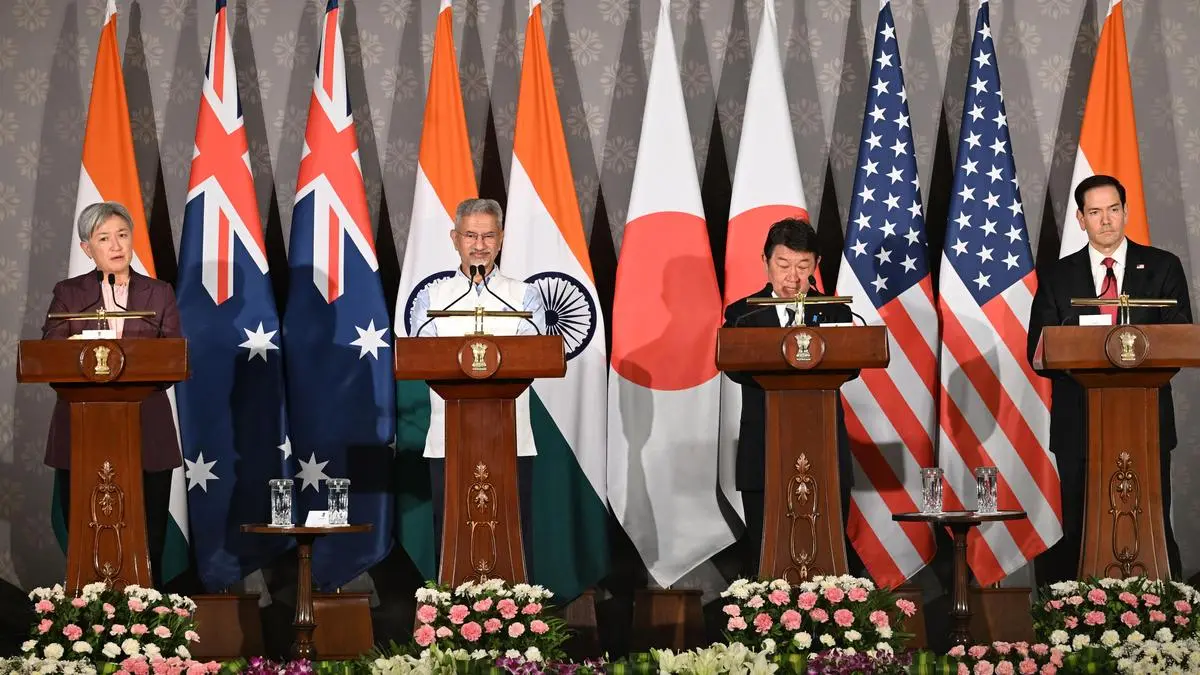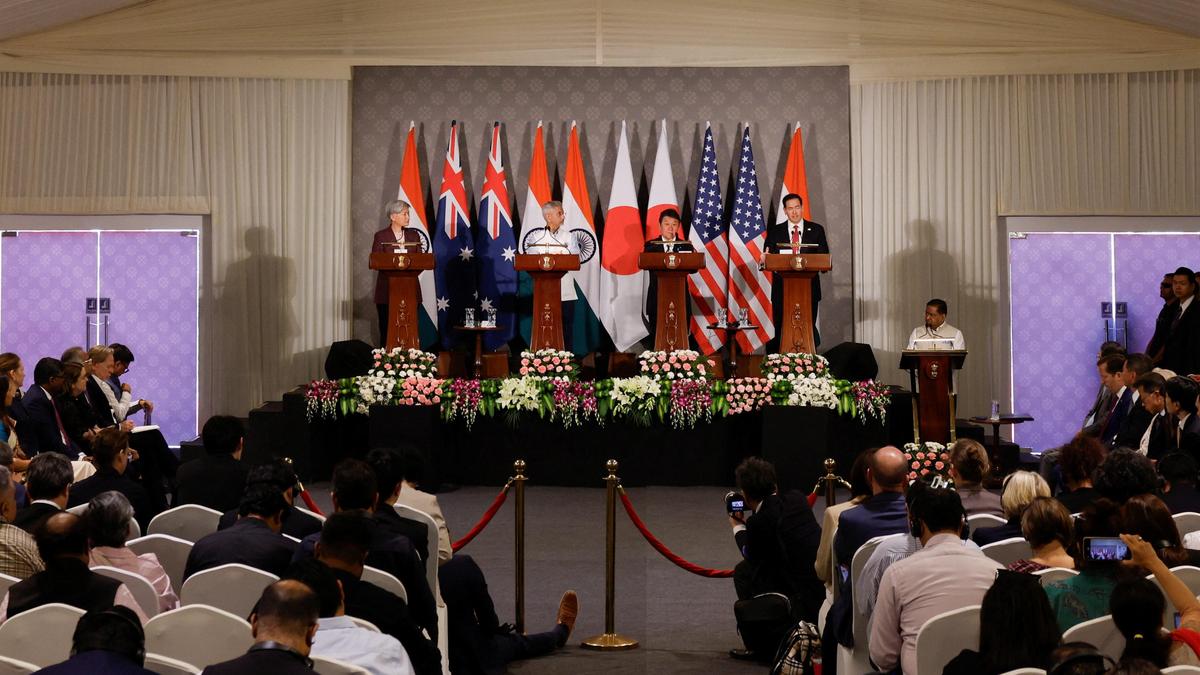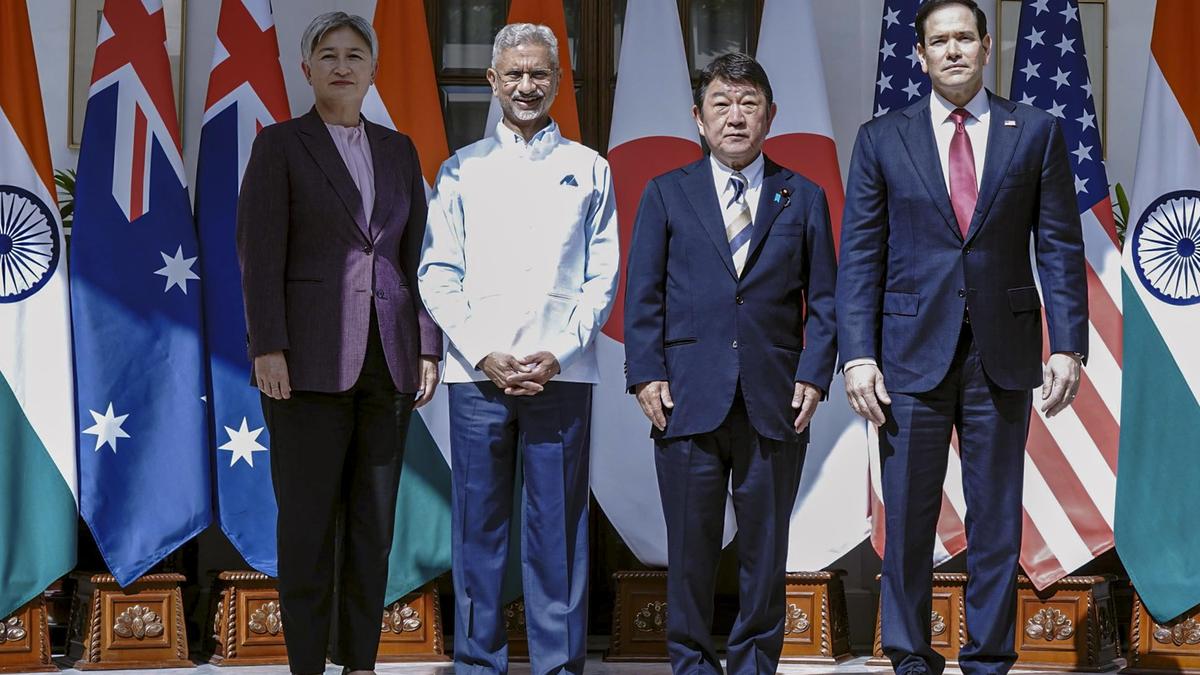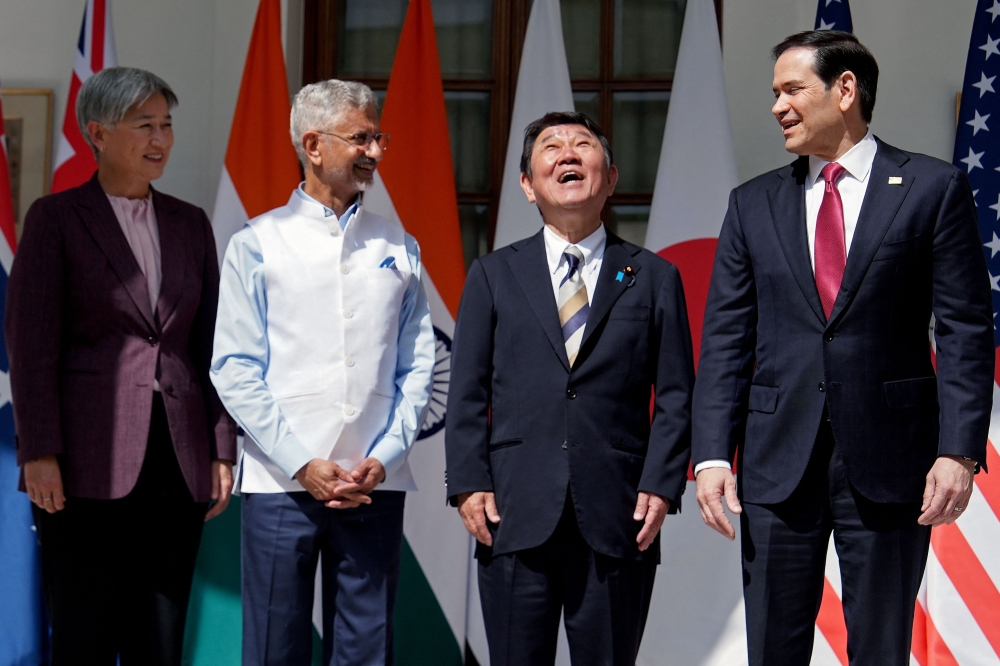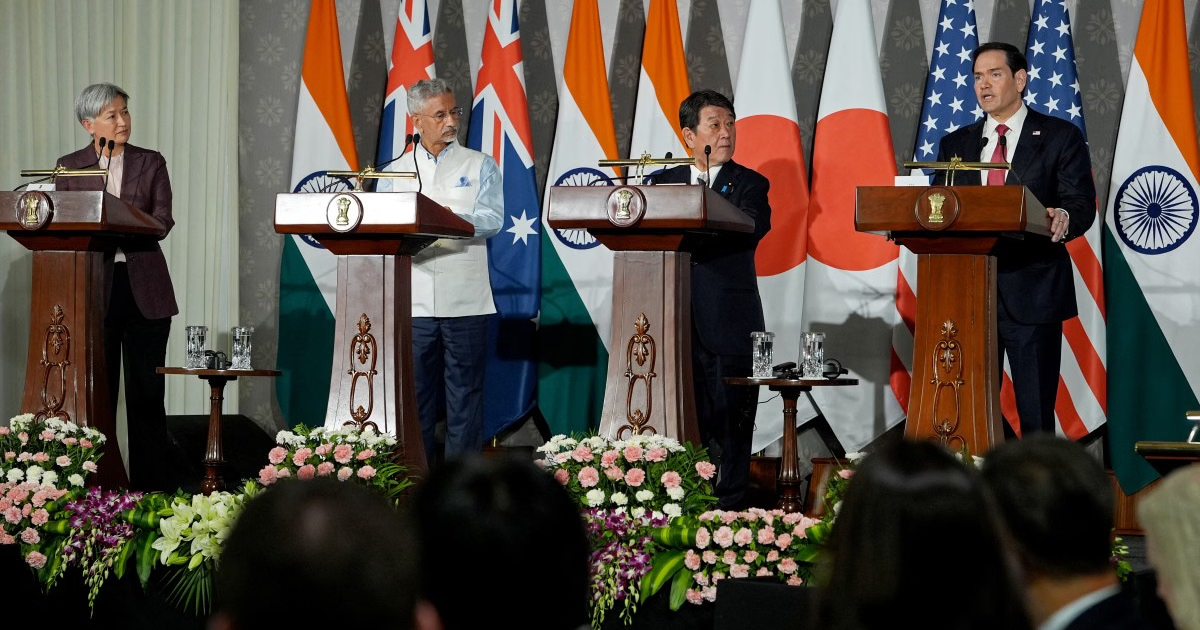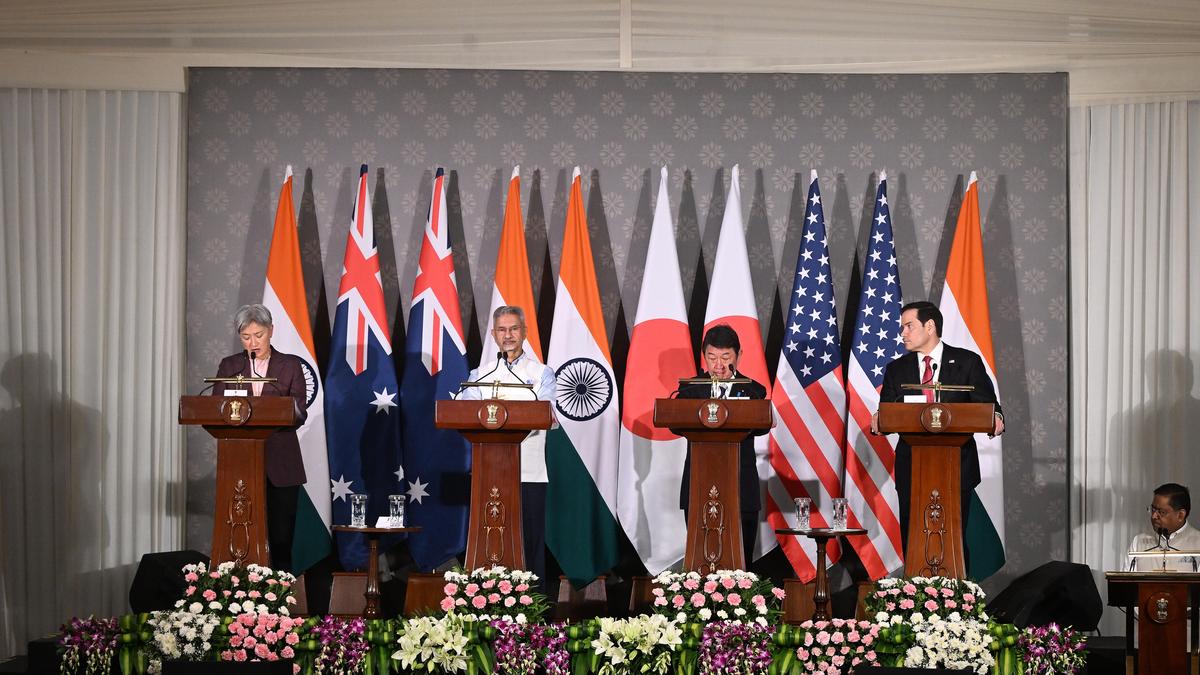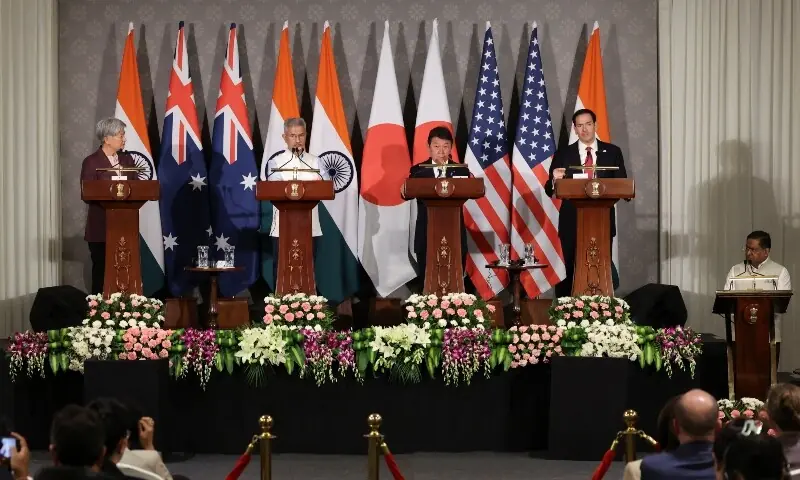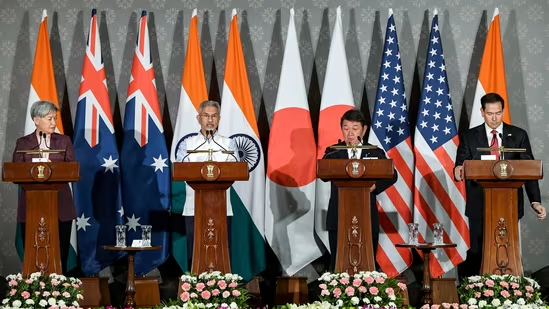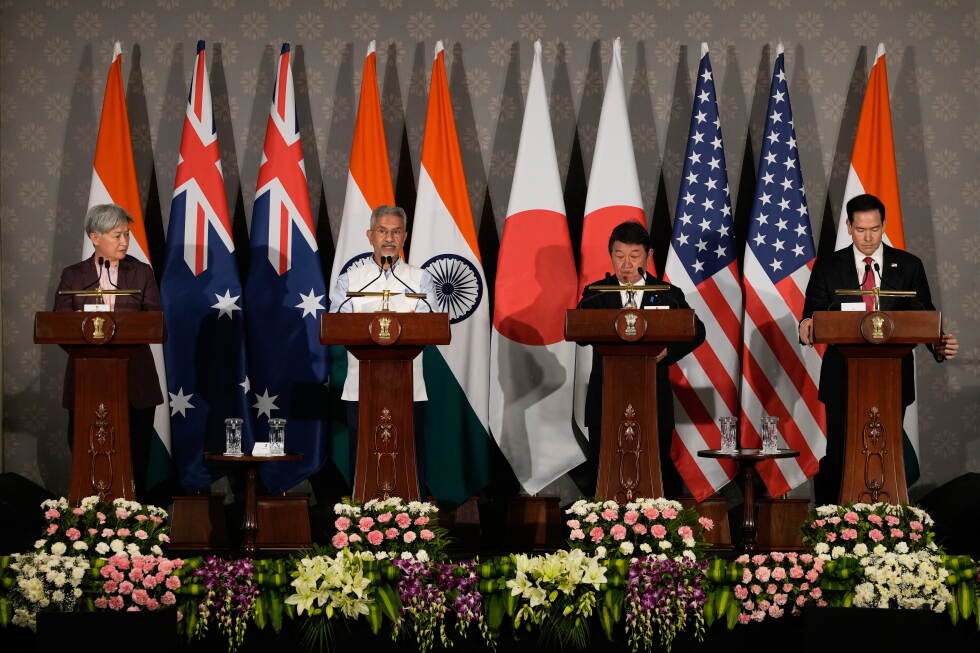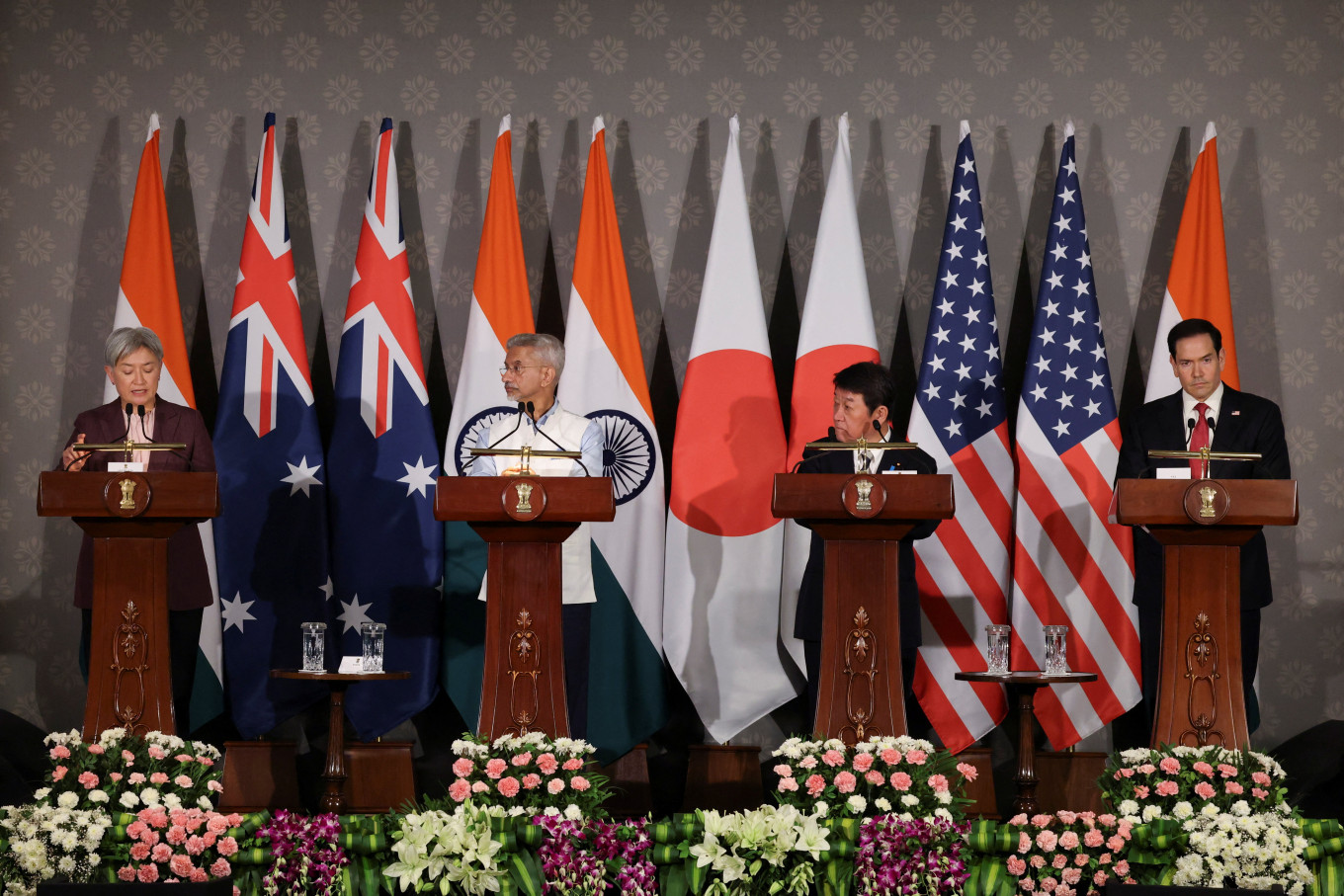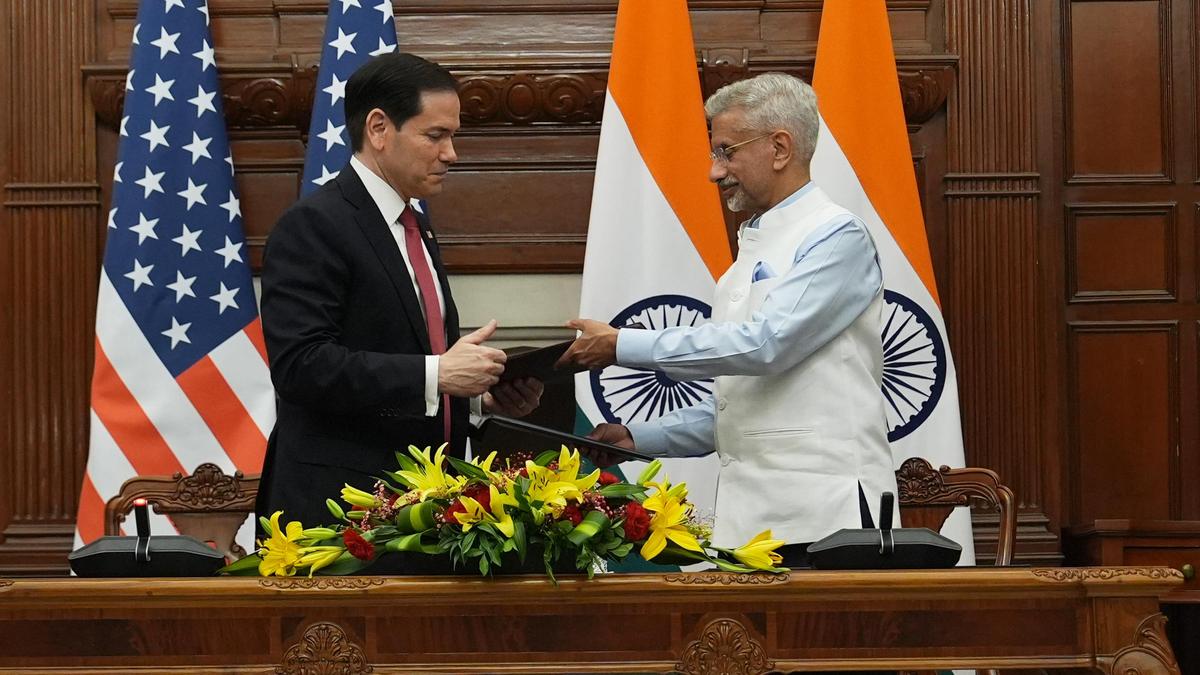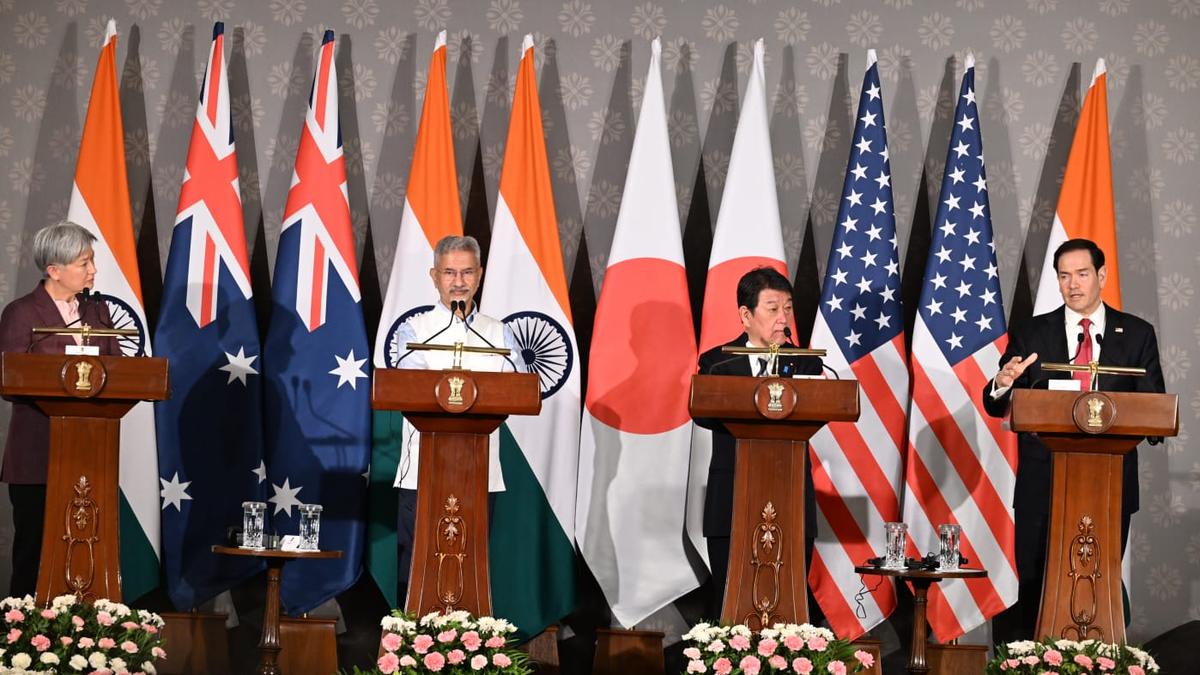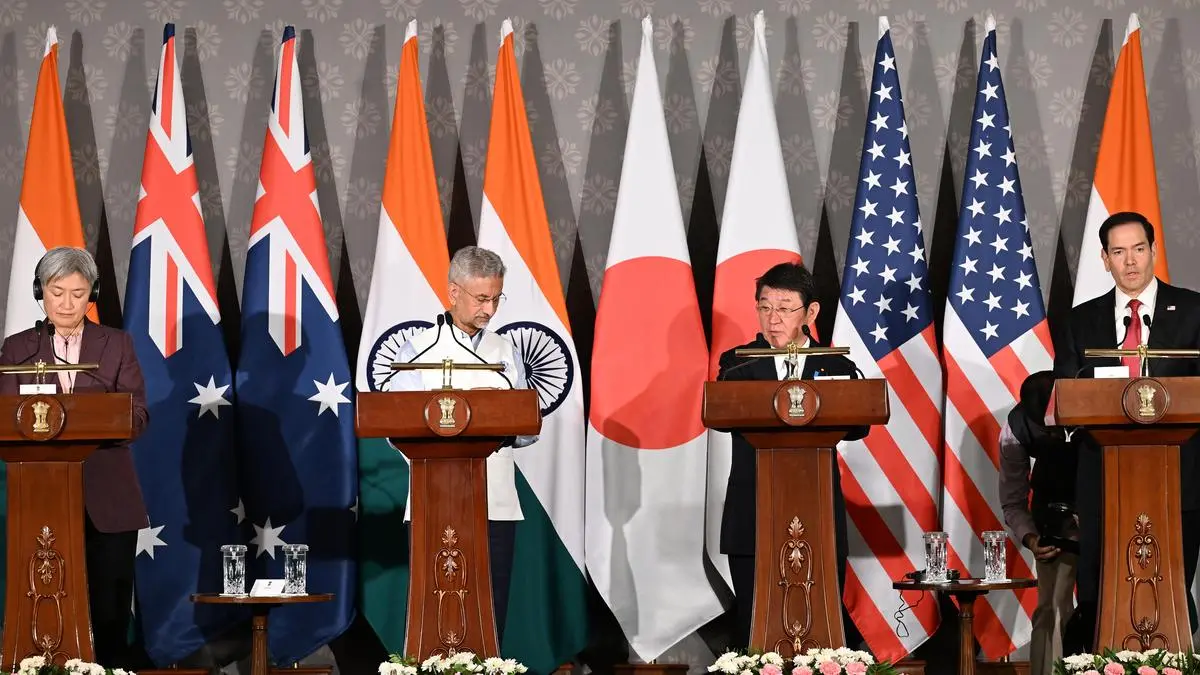
(From Left) Australian Foreign Minister Penny Wong, Indian Foreign Minister S Jaishankar, Japanese Foreign Minister Toshimitsu Motegi, and US Secretary of State Marco Rubio, attend a joint press conference following the Quad Foreign Ministers' Meeting at Hyderabad House, in New Delhi.
| Photo Credit:
The Quad countries on Tuesday hit out against imposition of tolls on shipping vessels passing through the Strait of Hormuz and the Red Sea by Iran and stressed on the importance of ensuring safety and uninterrupted flow of global commerce.“We reiterate the importance of adhering to international law as reflected in the United Nations Convention on the Law of the Sea (UNCLOS) with respect to navigational rights and freedoms, and the safety and uninterrupted flow of global commerce through the Strait of Hormuz and the Red Sea. We condemn the attacks on commercial shipping vessels and oppose any future measures that are inconsistent with UNCLOS, including imposition of tolls,” per the Quad Foreign Ministers’ joint statement issued on Tuesday.The meeting was hosted by External Affairs Minister S Jaishankar with Foreign Minister of Australia Penny Wong, Foreign Minister of Japan Toshimitsu Motegi and US Secretary of State Marco Rubio in attendance.Strait of Hormuz TollThe Ministers discussed the situation in the West Asia, reaffirmed support for ongoing diplomatic efforts and hoped for lasting peace in the region, the statement said.Iran’s Foreign Ministry has imposed charges on ships transiting the Strait of Hormuz underlining that it was not imposing tolls but collecting fees for “navigational services” and measures necessary to protect the environment of the key waterway.The US and Israel’s ongoing war with Iran has taken a huge toll on civilian infrastructure and critical supply lines, leaving major cities and public utilities heavily damaged, that it would seek to rebuild.The Quad reiterated its grave concerns over the use of “economic coercion and non-market policies and practices” including arbitrary export restrictions, price manipulation, and disruptions particularly on critical minerals that impact global supply chains and critical industrial sectors. Minerals FrameworkThere was, however, no direct reference to Beijing’s restrictions on exports of rare earth and other critical minerals in the statement.“To advance our vision for fair and diversified critical minerals markets, we are pleased to announce the Quad Critical Minerals Framework, which will guide how Quad partners can leverage economic policy tools and coordinate, including in concert with the private sector, investment to strengthen critical minerals supply chains, including in mining, processing, and recycling,” the statement emphasised.The Ministers also expressed serious concerned about the situation in the East China Sea and the South China Sea.“We reiterate our strong opposition to any destabilising or unilateral actions including by force or coercion that threaten peace and stability in the region. We express our serious concerns regarding dangerous and coercive actions, including interference with offshore resource development, the repeated obstruction of freedom of navigation and overflight, and the dangerous manoeuvres by military aircraft and coast guard and maritime militia vessels, especially the unsafe use of water cannons and flares, and ramming or blocking actions in the South China Sea. We are seriously concerned by the militarisation of disputed features,” the statement noted.Published on May 26, 2026