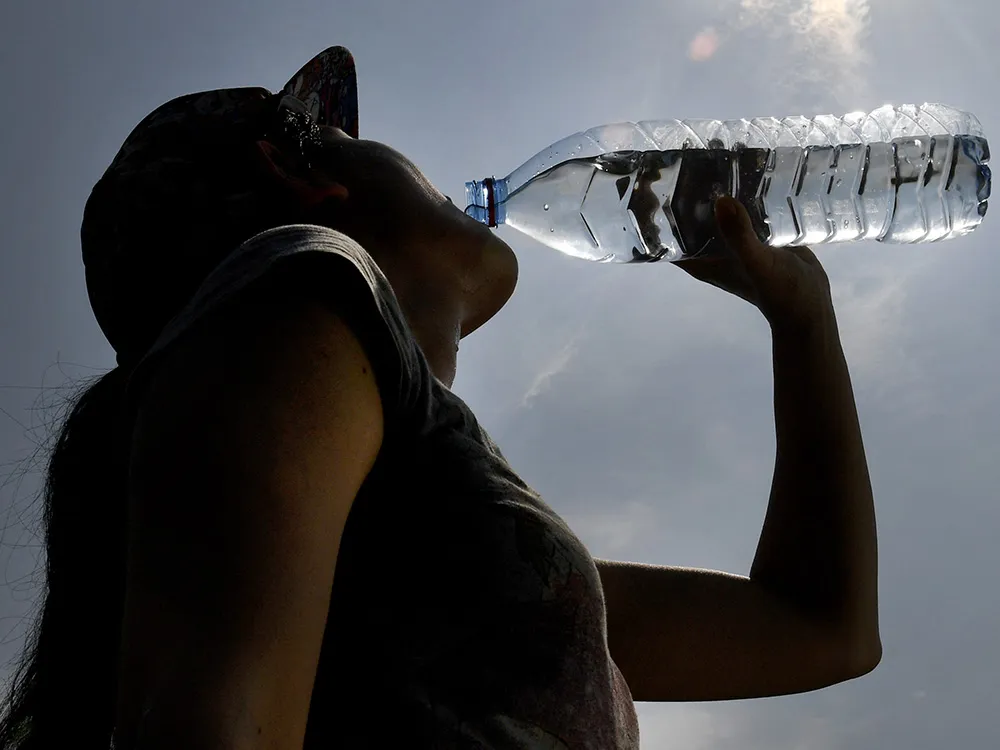
Skip to Content Subscribe Our Offers My Account Manage My Subscriptions FAQ Newsletters Canada Canadian True Crime Canadian Politics Health World Israel & Middle East Financial Post NP Comment Longreads Puzzmo Diversions Comics NP News Quiz New York Times Crossword Horoscopes Life Eating & Drinking Style Sponsored Play for Ontario Travel Travel Canada Travel USA Travel International Cruises Travel Essentials Culture Books Celebrity Movies Music Theatre Television Business Essentials Advice Lives Told Tails Told Shopping Buy Canadian Home Living Outdoor Living Tech Style & Beauty Kitchen & Dining Personal Care Entertainment & Hobbies Gift Guide Travel Guide Deals Savings National Post Store More Sports Hockey Baseball Basketball Football Soccer Golf Tennis Driving Vehicle Research Reviews News Gear Guide Obituaries Place an Obituary Place an In Memoriam Classifieds Place an Ad Celebrations Working Business Ads Archives Healthing Epaper Manage Print Subscription Profile Settings My Subscriptions Saved Articles My Offers Newsletters Customer Service FAQ Newsletters Canada World Financial Post NP Comment Longreads Puzzmo Diversions Life Shopping Epaper Manage Print Subscription HomeLifeEating & DrinkingCanadians now drink more low- and no-sugar beverages than high-calorie ones, report findsA new decade-long analysis shows that Canadians' daily per-person calories from nonalcoholic beverages fell 23 per centLast updated 0 minutes ago You can save this article by registering for free here. Or sign-in if you have an account.Plain packaged water is Canadians’ top choice for hydration, surpassing carbonated drinks and accounting for roughly 36 per cent of total volumes purchased in 2024. Photo by Fred Tanneau/AFP via Getty ImagesThe drink aisle isn’t what it once was. Flavoured bubbly water with zero calories or sweeteners, low-sugar, prebiotic pop, and no-sugar, probiotic sodas abound. A new national analysis shows that Canadians are lapping up low- and no-calorie options, drinking 23 per cent fewer daily calories from nonalcoholic beverages than they did a decade ago.Enjoy the latest local, national and international news.Exclusive articles by Conrad Black, Barbara Kay and others. Plus, special edition NP Platformed and First Reading newsletters and virtual events.Unlimited online access to National Post.National Post ePaper, an electronic replica of the print edition to view on any device, share and comment on.Daily puzzles including the New York Times Crossword.Support local journalism.Enjoy the latest local, national and international news.Exclusive articles by Conrad Black, Barbara Kay and others. Plus, special edition NP Platformed and First Reading newsletters and virtual events.Unlimited online access to National Post.National Post ePaper, an electronic replica of the print edition to view on any device, share and comment on.Daily puzzles including the New York Times Crossword.Support local journalism.Create an account or sign in to continue with your reading experience.Access articles from across Canada with one account.Share your thoughts and join the conversation in the comments.Enjoy additional articles per month.Get email updates from your favourite authors.Create an account or sign in to continue with your reading experience.Access articles from across Canada with one accountShare your thoughts and join the conversation in the commentsEnjoy additional articles per monthGet email updates from your favourite authorsSign In or Create an AccountorThis decline exceeded the 20 per cent reduction target the Canadian Beverage Association set in 2015 with the Balance of Calories Initiative — a voluntary, industry-wide commitment to a 20-per-cent calorie reduction in beverages by 2025. The milestone was met in 2023, putting it two years ahead of schedule, according to the Signal49 Research report funded by the national industry organization.“The interesting part was how that really was achieved,” says Mark Dekker, vice president of sustainability, scientific and regulatory affairs at the Canadian Beverage Association and the lead on the project. “It was achieved through a change in the amount of calories that were offered to Canadians and also the consumer preference, and the switch over to low- and no-calorie beverages over the last 10 years.”Join Laura Brehaut on a weekly food adventure with mouth-watering reads delivered Fridays.By signing up you consent to receive the above newsletter from Postmedia Network Inc.A welcome email is on its way. If you don't see it, please check your junk folder.The next issue of Cook This will soon be in your inbox.We encountered an issue signing you up. Please try againAs the availability of low- and no-sugar drink options has grown, Canadians have been choosing them. In the report’s 2014 to 2024 time frame, average calories per serving in purchased beverages fell by 20.3 per cent. Meanwhile, average beverage volume purchased per person dropped by just 3.3 per cent.“This progress shows what’s possible when innovation, consumer demand and public policy goals move in the same direction,” Krista Scaldwell, president of the Canadian Beverage Association, said in a statement. “Our industry responded with reformulation and new product choice, and Canadians responded just as quickly.”The report notes that lower-sugar formulations and a decrease in purchases of juice and sweetened, non-alcoholic carbonated drinks contributed more than two thirds of total calorie reduction.The steepest calorie decline, down an average of five per cent annually, took place between 2014 and 2017. This progress was driven by calorie reductions in sweetened carbonated drinks, which were Canadians’ beverage of choice at the time, according to the research. As part of the Balance of Calories Initiative, companies reformulated products, introduced smaller sizes and expanded the availability of lower-calorie options.Between 2017 and 2024, the decline was a more moderate 1.5 per cent, which the report says is due, in part, to higher demand for ready-to-drink coffees, energy drinks and other higher-calorie categories.The report found that iced/ready-to-drink coffee drinks, juices and still drinks (juice/fruit drinks) are the most calorie-dense. While sports drinks and enhanced waters recorded the largest drop in caloric density in the decade, that of still drinks increased by 21 per cent.Low- and no-calorie options now dominate the market. By 2024, they accounted for more than half (52.5 per cent) of total beverage volumes. No longer niche, the volume of low-calorie beverages grew roughly 38 per cent over the decade, while high-calorie ones declined 6.3 per cent.Sparkling waters in particular have expanded in recent years, and Canadians are latching onto the many unique products. “It’s exciting to try those new things, and when they match the flavour and the image and have (low- or no-) calories, that’s really a winner,” says Dekker.The report shows that ready-to-drink coffees (+624 per cent), enhanced and flavoured packaged water (+145.6 per cent), and sports drinks (+65.2 per cent) have experienced the strongest per-person growth over the decade.On the other end of the spectrum, still drinks (-34.8 per cent), juices (-34.2 per cent), sweetened, carbonated drinks (-22.3 per cent) and nectars (-18.4 per cent) experienced the largest declines.Plain packaged water (+17.7 per cent) is Canadians’ top choice for hydration, a trend Dekker suspects has been growing since before the report’s period, driven by availability and convenience. “Packaged water is really becoming a go-to thing to have on hand for people to have in their coolers in the summer, as well to go along with some of the soft drink options.”By 2024, still or sparkling unflavoured water had surpassed the sugary carbonated beverages that dominated in the past and accounted for roughly 36 per cent of total volumes purchased. This preference reflects a broader trend of Canadians seeking hydration and functionality in their drinks, the report notes.Dekker considers this an interesting area of growth. “People are reaching for things like water, and then they want to find some additional boost or added benefit from their water, whether it’s a flavour profile or in the emerging areas, having some sort of other types of benefit,” he says. “You can see that even when you go to the grocery store, there are a lot more options available.”Functional beverages — drinks marketed to have health benefits — are booming. But the research notes that consumption of functional energy drinks and sports drinks offsets some of the overall calorie reduction.Dekker says there’s an expectation that products such as sports beverages and ready-to-drink tea and coffee provide a certain number of calories. Sports drinks serve a functional purpose when people are doing heavy-duty exercise, and tea and coffee beverages often include dairy products and sugar to balance the bitterness. “That being said, the sports drinks category in particular has had a real growth in the low- and no-calorie option over the last little bit of this period.”Dekker expects Canadians to continue seeking out low- and no-calorie drink options, whether they’re swapping out products in their rotation or augmenting what they have in their refrigerator. He adds that they’re happy to showcase the innovation of Canadian beverage companies in the report. “It’s really due to their hard work and the consumers responding to the products that they enjoy.”Our website is the place for the latest breaking news, exclusive scoops, longreads and provocative commentary. Please bookmark nationalpost.com and sign up for our cookbook and recipe newsletter, Cook This, here. Get the latest from Laura Brehaut straight to your inbox Join the Conversation This website uses cookies to personalize your content (including ads), and allows us to analyze our traffic. Read more about cookies here. By continuing to use our site, you agree to our Terms of Use and Privacy Policy.
Canadians now drink more low- and no-sugar beverages than high-calorie ones, report finds
Lower-calorie drinks dominate, according to a new decade-long analysis of Canadian consumption of nonalcoholic beverages
1,515 words~7 min read