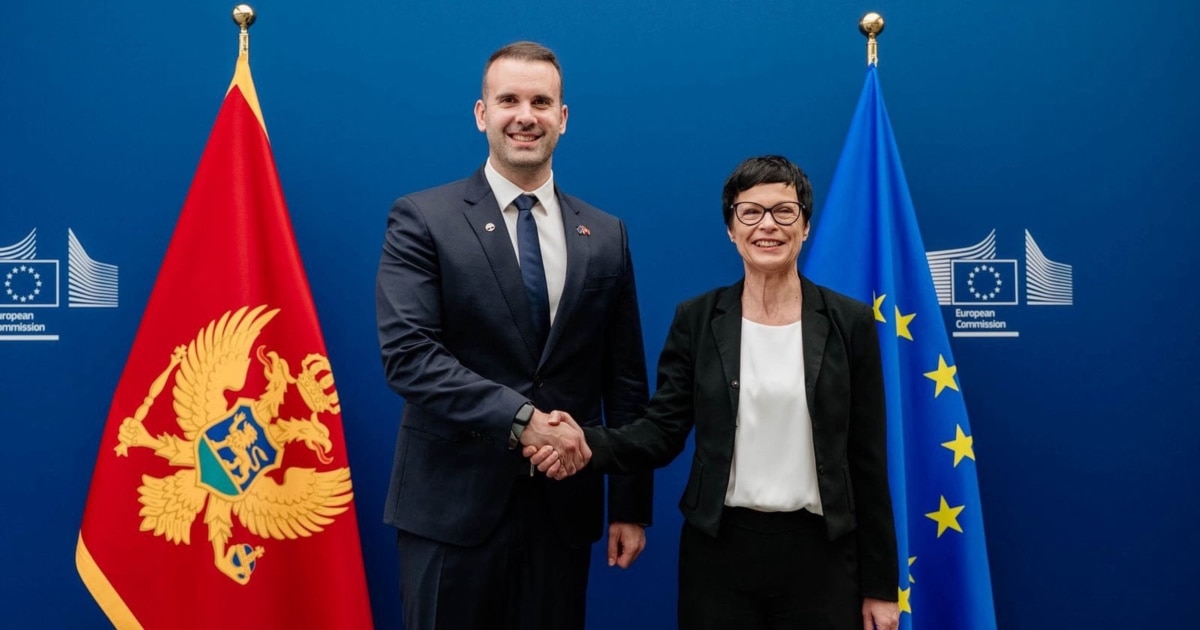
Welcome to Wider Europe, RFE/RL's newsletter focusing on the key issues concerning the European Union, NATO, and other institutions and their relationships with the Western Balkans and Europe's Eastern neighborhoods.I'm RFE/RL Europe Editor Rikard Jozwiak, and this week I am drilling down on two issues: more EU sanctions on Russia, and the US pressuring EU countries to allow Belarusian potash exports.
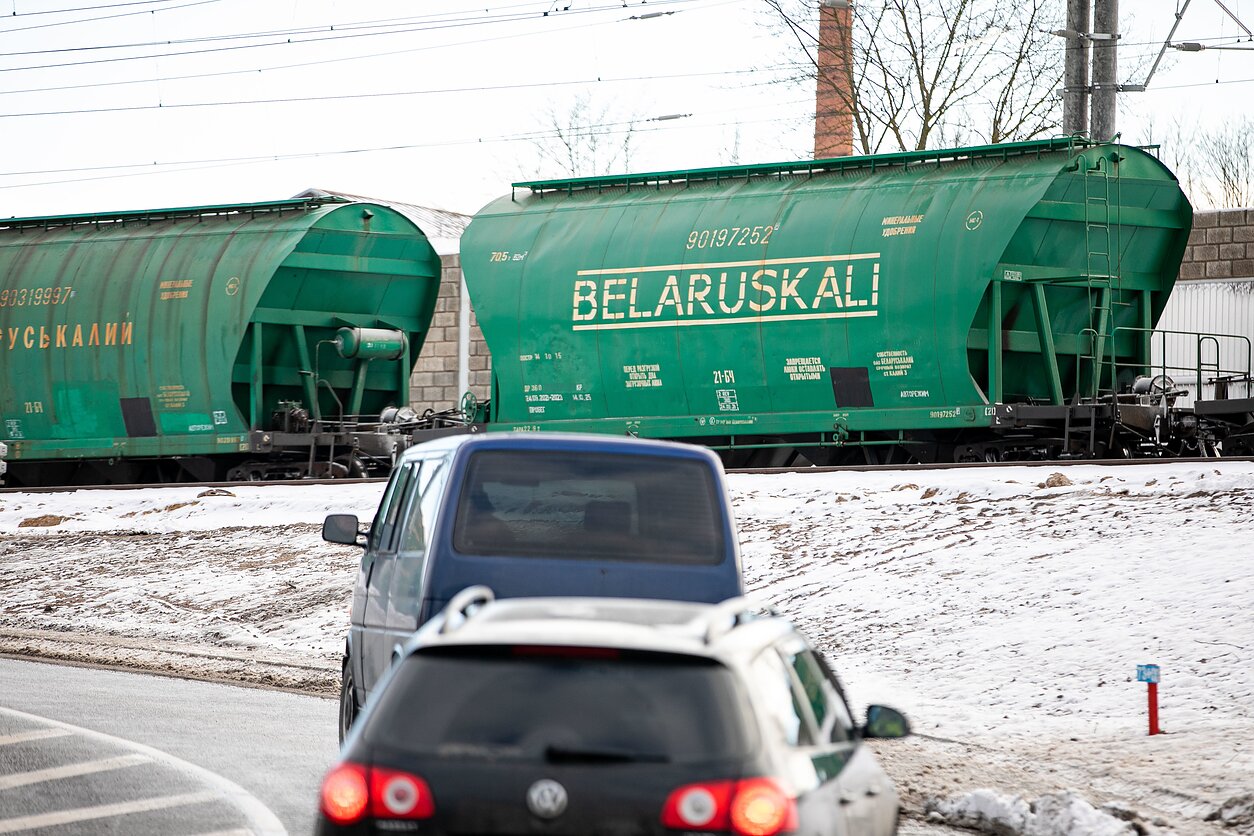
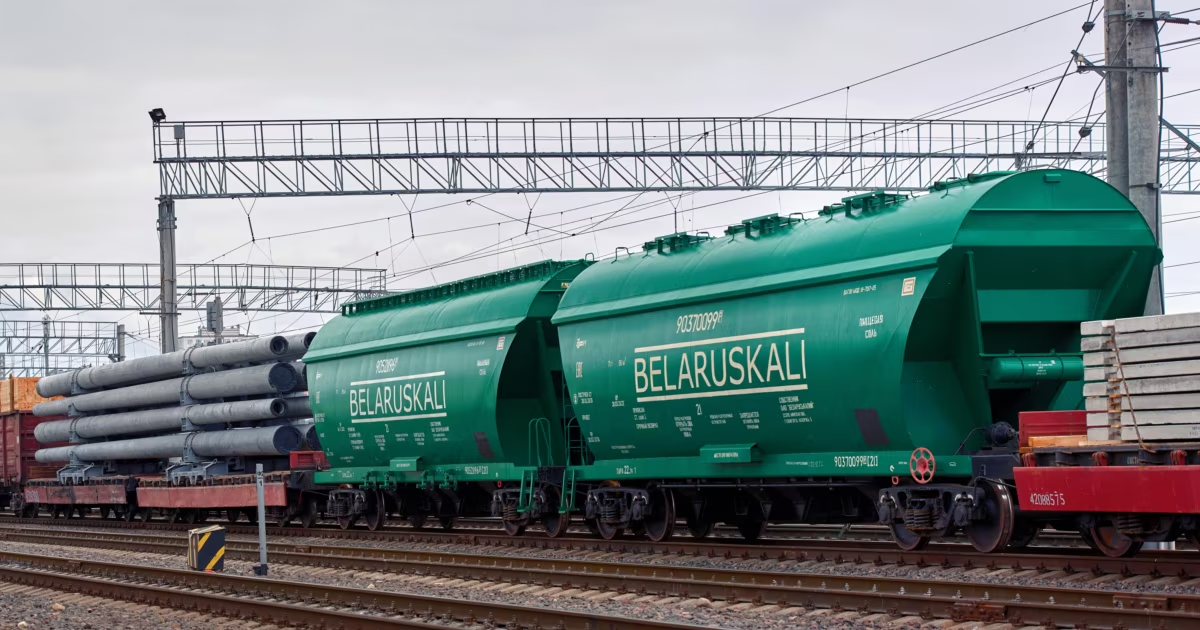
Briefing #1: The EU's New 'Mini Package' Of Russia SanctionsWhat You Need To Know: The European Union is poised to continue to add to its Russia sanctions.On May 21, a new proposed black list was sent to EU member states and a first discussion was held on the topic among EU ambassadors a day later with a view quickly adopting it -- potentially as early as this week.This comes after the bloc only a month ago approved its 20th round of restrictive measures after the new Hungarian government finally lifted its veto.The reason for the potential quick approval is that this isn’t a big package at all.In fact, there is even talk among EU diplomats that this isn’t a proper sanctions package as it lacks any of the traditional sectoral measures included in previous rounds, such as import bans on various Russian products or the prohibition on exporting various items into the country.One EU official, speaking on condition of anonymity, described it as a sort of “mini package” that the bloc might be doing more of in the future on a rolling basis. But it may also be “folded into” something bigger in upcoming weeks in case the European Commission proposes more heavy-hitting stuff, like targeting Russian banks or energy resources.Deep Background: As stated in the sanctions document seen by RFE/RL, the reason for the sanctions are the near daily attacks on the Ukrainian civilian population.The paper notes that restrictive measures are for the “recent brutal military campaign deliberately targeting civilian infrastructure, including energy, water and health facilities, which has caused severe suffering to the civilian population and seeks to undermine Ukraine’s resilience.”Unsurprisingly, these sanctions are aimed largely at Russia’s military machine.This means that the Russian Patriarch Kirill, one of Russian President Vladimir Putin’s most ardent supporters, has not been proposed for sanctions -- at least not yet. Brussels has otherwise been awash with rumors that he could be included now that the new government in Budapest is no longer “shielding” him -- like the previous Hungarian administration did.Instead, the proposal mainly includes key figures in the Rostec Corporation, described by the EU document as “the most important defense corporation in Russia, gathering the main companies of Russia’s military and industrial complex.”These individuals are likely to be slapped with asset freezes and visa bans.Drilling DownAmong the companies and organizations targeted is the League for Assistance to Defense Enterprises -- a Moscow-based nonprofit organization with representatives from the government of the Russian Federation and private military industry corporations -- which aims to promote “the development of the Russian military industry, modernization, and further growth of the military industry.”There are also suggested black listings for various military companies focusing on the production of components needed for drones used in the Ukraine war, such as computer numerical control (CNC) machines, lasers, and even electric lamps and lighting equipment, which are used for what the document describes as “reconnaissance, strike, and kamikaze missions.”One company, Lavochkin Research and Production Association, set up by the Russian space agency Roscosmos, focuses on the construction of “a satellite remote sensing system to improve the effectiveness of the use of military troops.” Another military company, Gefest and T, specializes in high-end equipment for Russian military planes “to calculate the parameters of the aircraft's flight and the point of release of bombs.”Interestingly, it is not only Russian companies that have been proposed for sanctions. There are also two Chinese firms on the list -- which is likely to cause more friction with Beijing as it continues to support the Russian war effort while trying to appear politically neutral. China has consistently denied supplying lethal weapons to either side in Ukraine and says it strictly controls dual-use exports.One of the Chinese companies that might be sanctioned is described as being among “the largest lubricant additive manufacturers and distributors based in China” and is considered a big supplier of chemical additives for mechanical lubricants, a key component for any type of machinery used by the Russian military.The other Chinese company has allegedly “supplied significant volumes of components to Rustakt LLC, a Russian producer of military grade first-person-view drones.”Away from the military sanctions, the EU is largely focusing on targeting the Russian shadow fleet -- ships used by Moscow to to circumvent sanctions and transport restricted oil and other commodities. Over 600 vessels have already been targeted with a so-called “service ban,” meaning that no EU port can offer assistance to these boats.What these latest sanctions proposals are now suggesting is to go after shipping companies that act as commercial operators for these vessels. Most of these companies are Russian but the sanctions are also set to hit similar companies operating out of Azerbaijan, China, Turkey and the United Arab Emirates.Briefing #2: US Asks Lithuania, Poland, And Ukraine To Allow Belarusian Fertilizer ExportsWhat You Need To Know: US officials have proposed that Lithuania, Poland, and Ukraine lift sanctions on Belarusian potash to allow the transit of the agricultural product -- a major source of hard currency revenue for Minsk -- through their territories.An undated, unsigned, one-page document sent to the three countries bordering Belarus, which was obtained by RFE/RL, cited the March decision by President Donald Trump’s administration to lift financial restrictions on the state-run fertilizer giant Belaruskali.“Now that the United States has lifted US sanctions on Belaruskali, US firms are interested in acquiring and transporting Belarusian potash,” the paper says. “Doing so would require transit through EU countries bordering Belarus or through Ukraine to avoid transport through Russia.”“The United States is interested in exploring potential routes for the transit of Belarusian potash to alleviate global shortages via Poland, Lithuania, or Ukraine and looks forward to future discussions with you on this topic,” it adds.Deep Background: Belaruskali is one of the largest potash fertilizer companies in the world, and is the largest single source of revenue for the government of strongman leader Aleksandr Lukashenko.A high-ranking European Union official said the proposal -- known as a “nonpaper” or discussion document in diplomatic parlance -- was sent by the US State Department to the three countries. The official spoke on condition of anonymity in order to disclose private discussions.Ukraine’s Foreign Ministry confirmed it had received the document but had no further comment.Poland's Foreign Ministry did not respond to an RFE/RL request for comment. Lithuania denied that it had received any such proposal, but the country’s foreign minister said last week that Washington was exerting pressure to allow transit of the Belarusian fertilizer.Drilling DownPoland and Lithuania -- both EU and NATO members -- have frosty relations with Lukashenko, in part because of his close ties with the Kremlin.Speaking to RFE/RL's Belarus Service on May 22, Svyatlana Tsikhanouskaya -- an exiled Belarusian opposition leader whose claim to victory in the disputed 2020 election is backed by many Western governments -- said it was "by no means the time to ease sanctions against the Lukashenko regime."Tsikhanouskaya added that the US proposal to lift sanctions on Belarusian potash was "not an instruction," suggesting that Washington understands that each country can decide whether to communicate with Lukashenko "because there are a lot of interests at stake here.""A safe, free Belarus is also in the interests of our neighbors," Tsikhanouskaya said at the Globsec security conference in Prague last week. "They are not naive, they understand that while Lukashenko is there, balloons are flying over Lithuania, they are demonstrating...nuclear weapons...conducting [military] exercises, so it is not the right approach to lift the sanctions."The United States and the European Union hit Lukashenko and his government with major sanctions in the wake of the 2020 presidential election in which Lukashenko, in power since 1994, claimed victory.Belarus’s opposition, and much of the West, called the vote fraudulent, and hundreds of thousands of Belarusians protested for weeks. The Lukashenko government waged a brutal crackdown, jailing thousands of people.Since returning to the White House in January 2025, Trump has sought to renew ties with Lukashenko's government. His lead envoy on the subject, John Coale, has met with Lukashenko personally in Minsk, and negotiated the release of scores of political prisoners. In return, the Trump administration has eased sanctions on Belaruskali, the state airline Belavia, and other major companies. Coale did not respond to an e-mail seeking comment.The EU, meanwhile, unanimously extended its sanctions on Belarus earlier this year. Those measures include an import ban on Belarusian potassium-based fertilizers and targeted sanctions on companies such as Belaruskali.Under EU rules, imports of nitrogen-based fertilizers -- like the sort that Belaruskali produces -- were already being phased out. The document refers to the EU sanctions still in place on Belarusian potash. Transit through EU countries would require the bloc to lift sanctions or for transit countries to waive them "through an appropriate legal mechanism" the paper says.By allowing the purchase of the Belarusian product, it says, the EU would also be depriving Russian potash suppliers of market share, as well as depriving Russia of transit revenues.Prior to the EU sanctions, the bulk of Belarusian potash was shipped via Baltic ports, mainly Klaipeda in Lithuania. In recent years, those exports are routed on Russian railways, mainly to St. Petersburg.The letter also proposed an unusual financing arrangement: directing income that EU countries earn from allowing Belarusian potash transit to go toward Ukraine’s defense against Russia’s all-out invasion.The US request also comes amid warnings that the ongoing US-Israeli war against Iran -- and Iran’s retaliation and blocking of the Strait of Hormuz -- have led to a spike in global prices for fertilizer and other agriculture products.The chokepoint waterway normally handles up to 30 percent of global fertilizer exports, as well as around 20 percent of global liquefied natural gas -- a key component in synthetic fertilizers.UN officials have warned that this will result in price hikes rippling through food and agriculture markets -- including in the United States, where consumer prices are spiking due to high global oil prices -- and the Trump administration has looked for ways to ease inflation. In the past, Belarus has accounted for around 15 percent of the global share of fertilizer production.Looking AheadEU foreign ministers are gathering for an informal meeting on Cyprus on May 27-28. One of the main discussions they will have there is how to prevent Russia from slowly being allowed back on the international stage at various sports and cultural events.The International Gymnastics Federation recently lifted all its remaining restrictions on Belarusian and Russian competitors and the return of a Russian pavilion at the Venice Biennale in April also caused plenty of controversy.That's all for this week! Feel free to reach out to me on any of these issues on X @RikardJozwiak, or via e-mail at jozwiakr@rferl.org.Until next time,Rikard JozwiakIf you enjoyed this briefing and don't want to miss the next edition subscribe here.