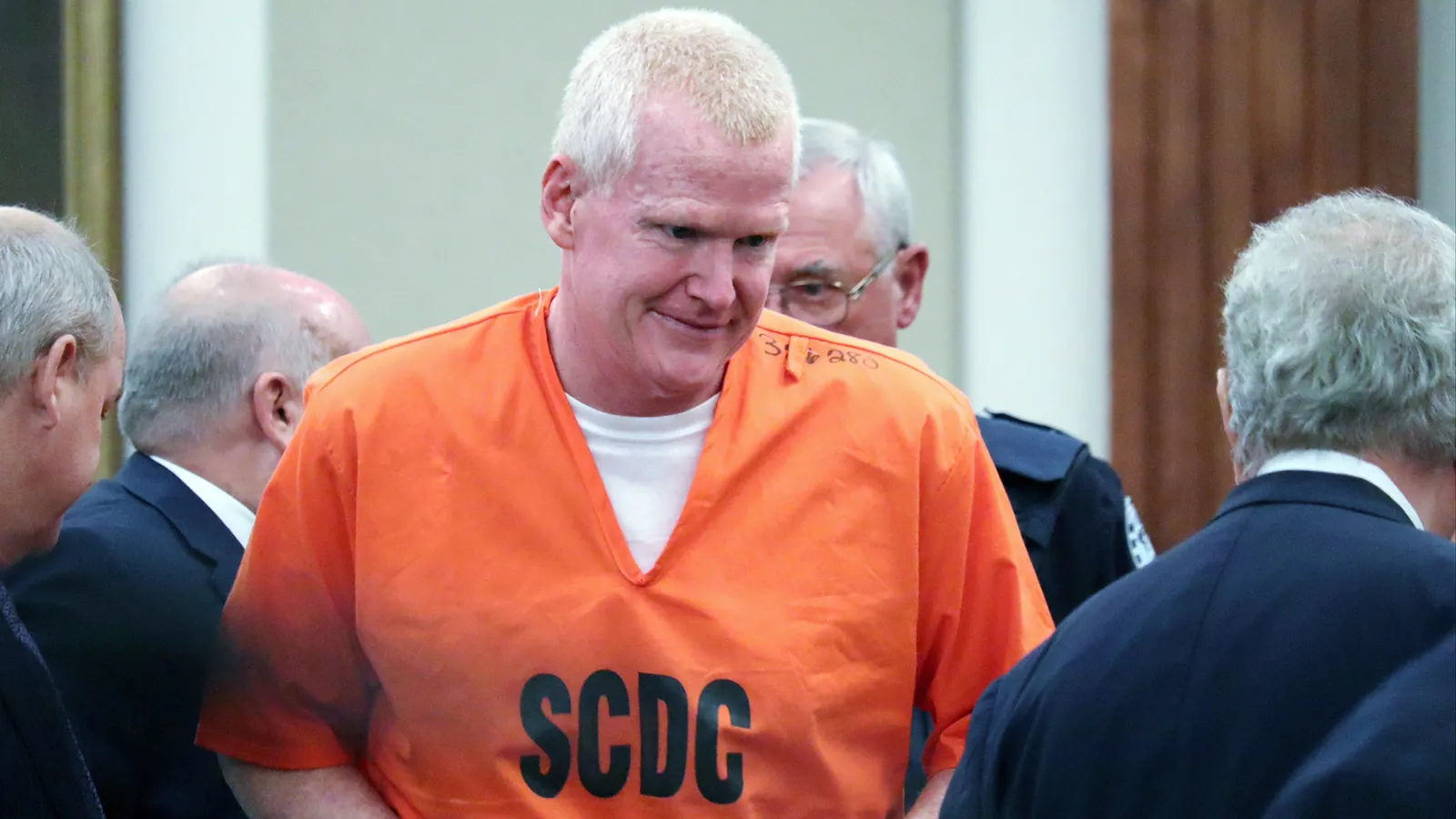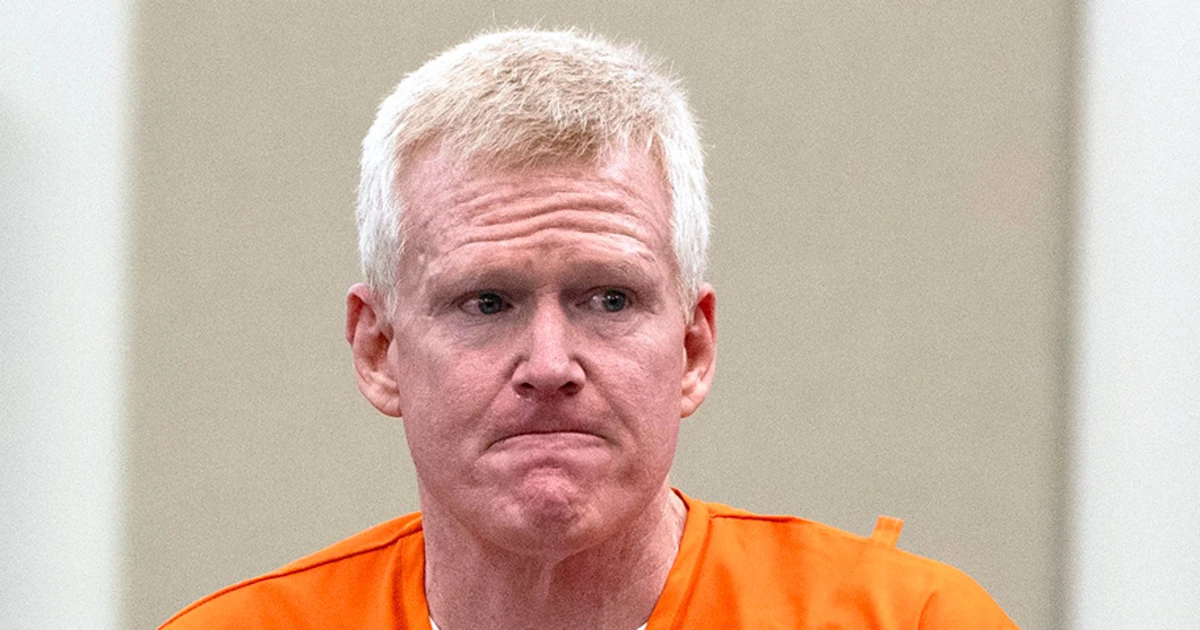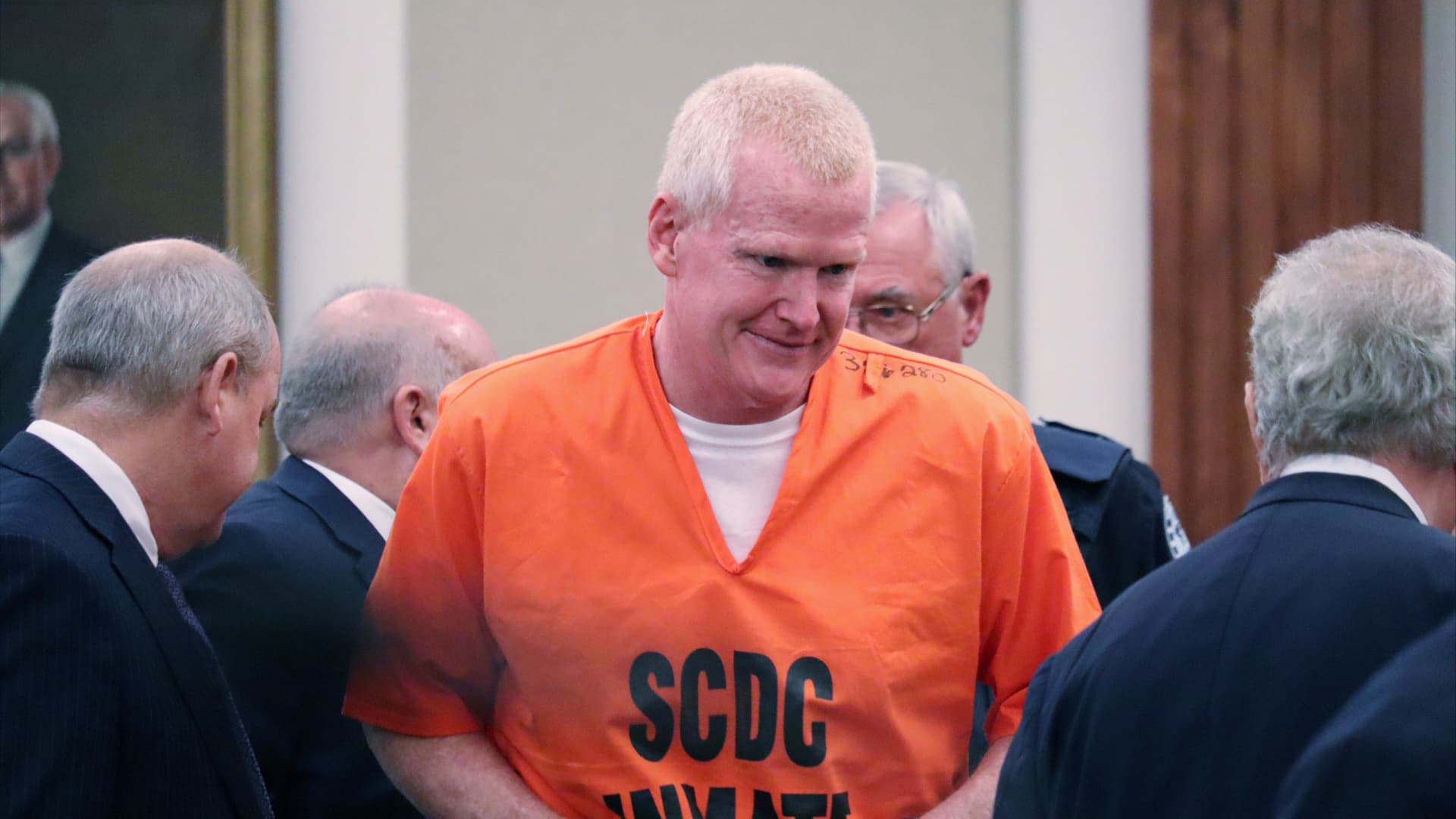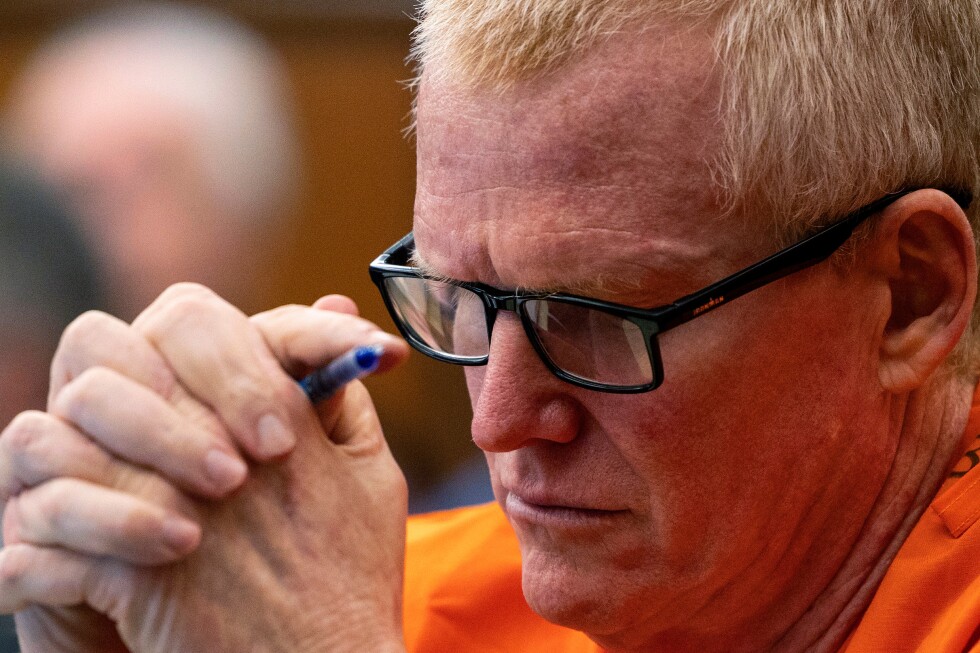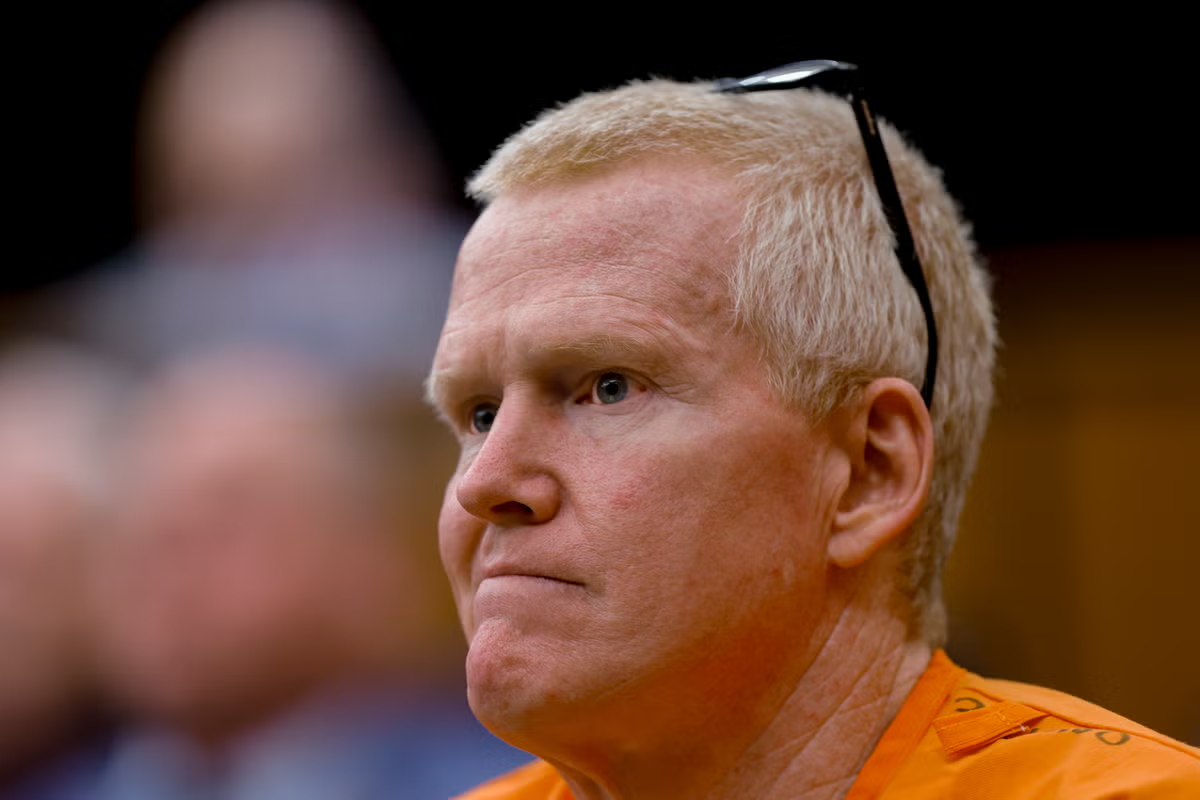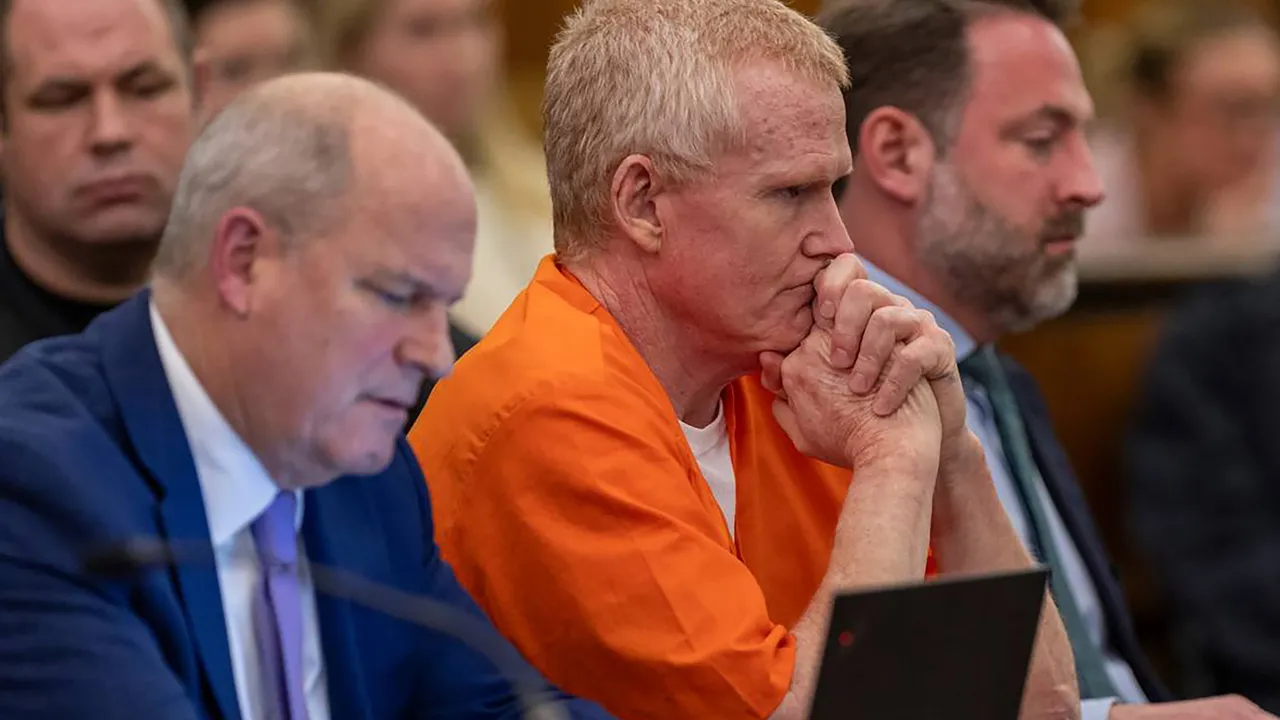
On March 2, 2023, the prominent personal-injury lawyer Alex Murdaugh was found guilty of murdering his wife, Maggie, and their son, Paul, at Moselle, their seventeen-hundred-and-seventy-acre hunting estate in South Carolina’s Lowcountry. Initially, the murders were thought to be the work of vigilantes with a grudge against the family, but investigators quickly came to focus on Murdaugh himself, speculating that he’d staged the crime, in which two weapons were used, in order to turn himself into an object of sympathy ahead of the looming exposure of a multimillion-dollar embezzlement scheme he’d been running for years. It seemed to have worked, until police caught him in a lie about his movements on the night of the crime, and his alibi fell apart. The large-living scion of a legal dynasty that had occupied the prosecutor’s office in South Carolina’s Fourteenth Circuit for generations, while also making fortunes as civil litigators, Murdaugh was found guilty of the murders and pled guilty to dozens of financial crimes. He was given two consecutive life sentences for the murders, along with various other federal and state sentences for his other crimes.From the start, the case was marked by stunned hyperbole. “The scope of Murdaugh’s depravity is without precedent in Western jurisprudence,” one of many lawsuits against him declared. An attorney for some of his financial victims told me, “Alex Murdaugh is one of the darkest human beings our state has ever produced.” And, earlier this month, the South Carolina Supreme Court added a superlative of its own, overturning the murder verdict, vacating Murdaugh’s two life sentences, and ordering a new trial, on the ground of jury tampering by Becky Hill, the clerk of the court during the trial: “The breathtaking and disgraceful effort of Hill to undermine the jury process is unprecedented in South Carolina.” (Murdaugh remains incarcerated at the McCormick Correctional Institution for his financial crimes, which have not been vacated.)The court’s ruling was based, mainly, on a flurry of inappropriate remarks Hill made to jurors as the defense began its case. “Y’all are going to hear things that will throw you all off,” one juror recalled her saying. “Don’t let this distract you or mislead you.” Other jurors reported warnings by Hill not to be “fooled” by Murdaugh when he took the stand, along with admonitions to “watch his body language,” “look at his actions,” and “look at his movements.” Juror Z, an anonymized member of the jury who declared Murdaugh guilty, wrote in an affidavit that “I had questions about Mr. Murdaugh’s guilt,” and stated that Hill “made it seem like he was already guilty.”These allegations are not new. They first came up at a post-trial hearing two years ago, where Hill denied them. And while Jean H. Toal, the judge presiding over the hearing, found Hill to be “not completely credible,” she nevertheless ruled that Hill’s interferences hadn’t influenced the verdict, and declined Murdaugh’s motion to grant a retrial—this despite a supplementary affidavit from Juror Z stating, unambiguously, “I felt influenced to find Mr. Murdaugh guilty by reason of Ms. Hill’s remarks, before I entered the jury room.” When prosecutors finally disciplined Hill, they limited their charges to perjury, obstruction of justice, and misconduct, conspicuously avoiding the jury-tampering charge that would have triggered a retrial. Hill was let off with probation and some community service, while Mudaugh’s guilty verdict was preserved.The higher court’s unanimous decision to take Hill’s tampering seriously restores some credibility to the state’s legal establishment, which had been badly tarnished by a pattern of regulatory dysfunction that I had observed while reporting on, and eventually writing a book about, the Murdaugh case. Among the more glaring examples was a lack of any serious oversight within Murdaugh’s high-profile law firm, P.M.P.E.D., in whose offices he’d been caught stealing years before the murders, only for a colleague at the firm, in the words of the C.F.O., Jeanne Seckinger, to “sweep it under the rug.” There also appears to have been no oversight at the Palmetto State Bank, where Murdaugh’s embezzlement co-conspirator Russell Laffitte shuffled their victims’ money around like a street hustler running a three-card-monte table. And, at the Colleton County Courthouse, Hill (Becky-Boo, to her many admirers) was apparently able to commit her jury tampering in plain sight. Only later did a fellow-clerk recall that she’d talked openly about wanting a guilty verdict because it would sell more copies of the book she was writing about the trial. (The book, “Behind the Doors of Justice,” was published in 2023, but was quickly withdrawn after Hill admitted to plagiarizing the opening pages.) It also came out that she’d had private conversations with jurors, awarded herself thousands of dollars in unauthorized bonuses, and conducted prayer sessions in proximity to the jurors, whom she later identified as “the most prayerful jury I have ever witnessed.”This religious dynamic may account for an episode that became a key exhibit in the eventual tampering complaint against her. It occurred on the penultimate day of the trial, when the jury was taken to visit the crime scene in the Murdaughs’ sprawling Moselle estate. Hill describes it in her book:God gives us all gifts, and the gift of discernment is shared by many. Some of us either from the courthouse, law enforcement, or jury at Moselle had an epiphany and shared our thoughts with our eyes. At that moment, many of us standing there knew. I knew and they knew that Alex was guilty.Will Folks, a local South Carolina reporter whose media outlet, FitsNews, broke much of the Murdaugh story, told me recently that the jury was known to be ten to two in favor of conviction before the trip to Moselle, where Hill described the collective “epiphany,” and eleven to one after it. Eric Bland, a lawyer for one of Murdaugh’s financial victims, posted a tweet a few hours before the visit that seemed to corroborate this, writing, “right now at least 10 jurors minds are made up, and there may be two on the fence.” If Folks and Bland are right, we can deduce that the convert was probably the pliable Juror Z, but in any case there was still one known holdout (and it only takes one to hang a jury). This was Juror No. 785, whose name is Myra Crosby, and in the last hours of the six-week trial she became the target of a concerted and successful attempt to remove her from the final jury panel. At her dismissal, she asked for some eggs she’d left in the jury room to be returned to her, and became known as the egg juror. Her experience would serve as a major aspect of the complaint against Hill.In keeping with the Murdaugh saga’s swampy setting, the intrigue surrounding Crosby’s removal from the jury emerged murkily, and, even now, it is still partially veiled by sealed records. The state Supreme Court’s ruling, overturning Murdaugh’s murder charges, reveals some details about Hill’s interactions with Crosby, accusing her of “meddling in events around Juror 785’s dismissal,” but it puts more weight on Hill’s inappropriate comments to the rest of the jurors who remained on the panel than on her role in the removal of the one who didn’t. Hill’s behavior in both cases was egregious, but, whatever the technical reasons for the court’s emphases, her interactions with Crosby almost certainly had the greater impact on the verdict, given that Crosby had strong doubts about Murdaugh’s guilt.Affidavits cited in the state Supreme Court’s ruling show that the groundwork for Myra Crosby’s removal had already been prepared two days before the Moselle visit. That morning, Monday, February 27th, Hill informed the judge overseeing the case, Clifton Newman, that she’d seen a Facebook post made by Crosby’s ex-husband, Tim Stone, claiming that Crosby had talked about the case while they were out drinking together. That same day, the judge received an e-mail requesting anonymity, also claiming that Crosby had been discussing the case, in this instance with a tenant of Crosby’s while Crosby was delivering a fridge.Judge Newman asked to see the Facebook post, but Hill was unable to produce it. In its place, Hill produced an “apology” post in which someone named Timothy Stone, who lived in a different state than Crosby’s ex-husband, wrote that he’d deleted an earlier “ugly” post because he’d been drunk when he wrote it and, in his words, “I let Satan control me.” In addition to the incorrect name and state, the apology poster’s profile photo bore no resemblance to Crosby’s actual ex-husband. In her book, Hill claimed that “one of our techies in the clerks’ office” showed her the apology post. (She specifically named an employee in the clerk’s office, though at the time, Hill's own son, Jeffrey, was the county’s technology director. Later that year, he was charged with wiretapping, and although authorities did not offer more details, local journalists have reported that the alleged wiretapping was meant to monitor the investigation of his mother. The case is still pending, and Jeffrey Hill has maintained his innocence throughout.)According to the affidavits, the next morning Hill pulled Crosby aside and repeated her claim that she had seen a post by Crosby’s ex-husband alleging that Crosby had expressed views about the case. Again, Hill was unable to produce the post. Crosby informed her that she and her ex-husband had been estranged for ten years and that, far from being drinking companions, she had multiple restraining orders out against him. According to Crosby, Hill then asked her point-blank whether she was inclined to vote guilty or not guilty. “I told her I had not made up my mind,” Crosby said.Later that day, Judge Newman questioned Crosby in his chambers about the Facebook posts and the anonymous e-mail. Crosby denied discussing the case with anybody. The judge then asked her if she had made up her mind about the case. “I haven’t,” Crosby replied. “I was trying to wait on closing arguments because those are usually pretty good.” It was the proper answer to give, but it may have spurred on those seeking her removal. As soon as she left the room, the lead prosecutor, Creighton Waters, brought up the anonymous e-mail, informing the judge that he now had a name for one of the tenants mentioned in it. With Becky Hill’s Facebook strategy falling apart, it appears that the e-mail had become, effectively, a Plan B.Crosby’s tenants, Deborah Webb and Clifford Dandridge, were woken that night by agents from the South Carolina Law Enforcement Division of the state police (SLED), and were questioned separately before being instructed to appear at the courthouse the next morning. The records of their court appearance remain under seal, but according to Myra Crosby they were held for nine hours, after which they were presented with affidavits prepared by lawyers from the prosecution, which stated that Crosby had talked to them about the case while bringing a refrigerator to their apartment eleven days earlier. Crosby has said that both Webb and Dandridge vehemently denied ever making such allegations, and signed the affidavits without reading them because they were told that they were just transcripts of the information they’d given the SLED officers the night before. These affidavits and police interviews remain under seal, but Crosby herself maintains that she and her tenants discussed nothing more controversial than a recent delivery of pizzas to the courthouse. If this is true, the anonymous e-mailer, who worked at Domino’s with Webb, had inflated a report of some harmless chitchat between Crosby and her tenants into an actionable violation of jurors’ instructions not to discuss the case. (Webb and Dandridge couldn’t be reached for comment.)The anonymous e-mailer later outed herself in a comment on the Discord of Mandy Matney’s Lunashark Media company. (Matney was one of the first reporters to look into the Murdaugh family.) Her name is Christine Avery, and she ended her message with a mention of someone named Mark Tinsley for “guiding me.” Tinsley is a personal-injury lawyer in Allendale, South Carolina, who was closely involved with the case from the start. (He has said that he thinks Murdaugh deserves the death penalty). Two years before the murders, Tinsley was hired by Renee and Phillip Beach, after their daughter Mallory was killed in a boat crash caused by the drunken antics of Murdaugh’s son, Paul. Tinsley was also a key witness for the prosecution at Alex Murdaugh’s murder trial, in which he also acted as an informal adviser to their team. “I’m certainly inside the fold in many respects, as far as the prosecution’s concerned,” he told me earlier this month, after the conviction was overturned.When I asked Tinsley about Hill, he acknowledged talking and texting with her about logistical matters during the trial, but said he didn’t encounter Christine Avery until long after, when she hired him following a visit from Dick Harpootlian, one of the lead attorneys on the Murdaugh defense team, in which she felt harassed. “My involvement with Christine Avery was limited to writing Dick Harpootlian and saying, ‘Stop harassing this lady,’ ” Tinsley said. Harpootlian told me he remembers it a little differently. According to him, Avery had been in touch with Tinsley before this visit. Harpootlian also claimed that he had “credible information” that Hill and Avery had been in communication shortly before Avery sent her anonymous e-mail. (Avery denies this and told The New Yorker that she had only met Hill once, when Hill came into Domino’s, long before the trial started. Harpootlian wouldn’t share the “credible information,” citing a need for secrecy regarding future litigation.)On March 2nd, the last morning of the trial, Hill asked Myra Crosby again if she was leaning one way or the other. “I told her that Creighton Waters’ closing was good,” Crosby recalled in the affidavit, “but I still had questions.” Then, according to Crosby, Hill told her, “Everyone needs to be on the same page.” Crosby continued on into the jury room, expecting business as usual, but ten minutes later she was brought before the judge in the courtroom.In the footage of the court proceedings that followed, Judge Newman seems troubled. He’d already told lawyers that he was unhappy about Hill interrogating Crosby instead of bringing her straight to him, and now the judge acknowledged that the witnesses who’d spoken to him about Crosby had “waffled” under questioning. He made a point of not scolding Crosby. “I’m not suggesting you intentionally did anything wrong,” Newman said. Nevertheless, he removed her from the jury. That evening, after a notably short deliberation, jurors returned their verdict: guilty on all counts.What drove Hill to apparently go to such lengths to tip the scale? The ruling vacating Murdaugh’s murder charges supports the general view that she was driven by a desire to sell books. (“She needed a lake house,” a clerk of a neighboring court said.) That may be true. It may also be true that she saw herself as a player in some Biblical battle between good and evil: “I think God had been preparing me all along for the ‘Trial of the Century’ ”, she wrote in her book. But, whatever her motive, Hill had good reason to be worried about the prosecution securing a guilty verdict.I’ve spent more than four years reporting on the Murdaugh case, and the fact is, there were gaps in the prosecution’s case: unexplained tire tracks at the murder scene; evidence deep in the weeds of the phone metadata that arguably tilted more in Murdaugh’s favor than against him; the deeply unusual nature of his seeming filicide, even among so-called family annihilators. (Most kill or attempt to kill themselves directly after killing their families, and almost all target children who are young and defenseless, unlike Paul, who was twenty-two, very tough, and seldom out of reach of a loaded gun.)It seems that Hill wasn’t the only one worried. After six weeks of laying out the murders as the long-gestated plan of a cunning manipulator who’d begun plotting weeks before the fateful night, the prosecution offered a different scenario in its final rebuttal statement, in which the prosecutor John Meadors presented the murders as a spur-of-the-moment eruption: “Maybe he just got angry. Maybe he got angry at Paul,” Meadors said. “Then maybe he just lost it. Maybe he just lost it!” This month, Tinsley told me he’d discussed this rebuttal statement with Meadors before Meadors gave it, and that, in fact, he’d been instrumental in its conception. “The point that John was making . . . is a point that I made to him in the bathroom. We talked about it right before he made the statement.” He disagreed that the rebuttal represented a change of tack from the elaborate theory of motive that the state had spent the past six weeks presenting. (Meadors couldn’t be reached in time for comment.)Last week, Murdaugh’s defense team announced they were suing Hill for violating Murdaugh’s Sixth Amendment right to a fair trial. They vowed to find out whether Hill had acted alone, and, if given the power, they will likely subpoena phone and other records from many other people involved in the case. It’s a little sickening to think their client could benefit from a civil-rights suit—Alex Murdaugh is a detestable human being by any measure. He stole mercilessly from vulnerable people who trusted him. He almost certainly murdered his wife and son. But, of course, a great deal hangs on “almost,” and no one is served by a trial in which the uncertainty is disposed of by cheating. ♦
How a Small-Town Clerk’s Misdeeds Upturned the Murdaugh Verdict
Becky Hill, a court employee possibly trying to maximize sales of her book, pressured jurors to convict the South Carolina lawyer for the murders of his wife and son. Was she acting alone?
2,921 words~13 min read