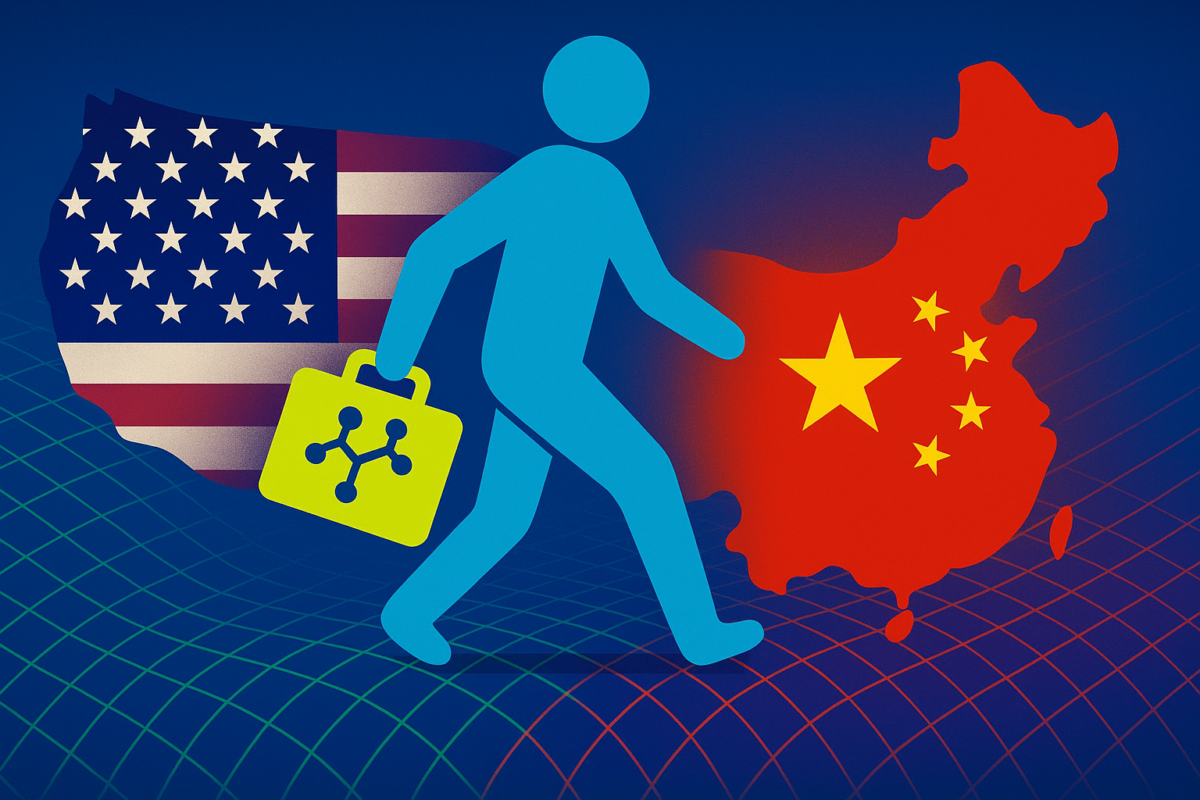
Top researchers at private Chinese AI companies are being asked to surrender passports, in a quiet expansion of the controls that began at DeepSeek earlier this year.
China is widening its informal travel restrictions on senior AI researchers, extending controls that began at DeepSeek earlier this year to a broader group of private-sector firms working at the frontier, according to a Bloomberg report on Tuesday citing people familiar with the matter.The pattern is consistent and increasingly familiar. Top engineers and researchers are being asked to surrender their passports to their employers, with the formal justification that their work could give them access to information that may be classified as a state or commercial secret.The arrangement is sometimes presented as a corporate policy and sometimes as government guidance; in practice the distinction is blurred. Bloomberg’s reporting places the move within the Communist Party’s growing classification of frontier AI as a strategic national asset.
The first publicly reported case came in March, when DeepSeek staff began surrendering passports shortly after the lab’s R1 model briefly upended assumptions about how much compute Chinese frontier labs needed to match Silicon Valley benchmarks.