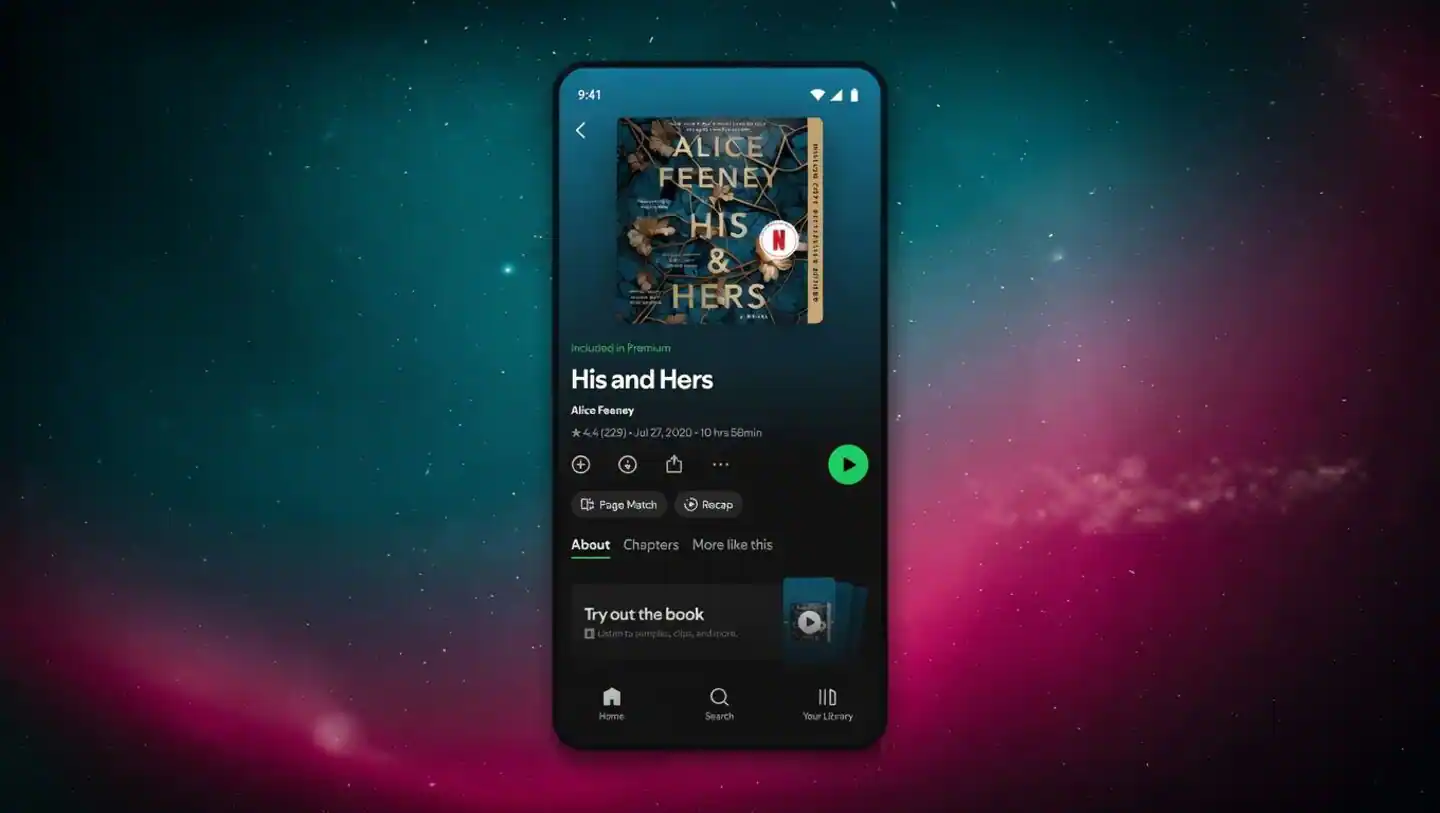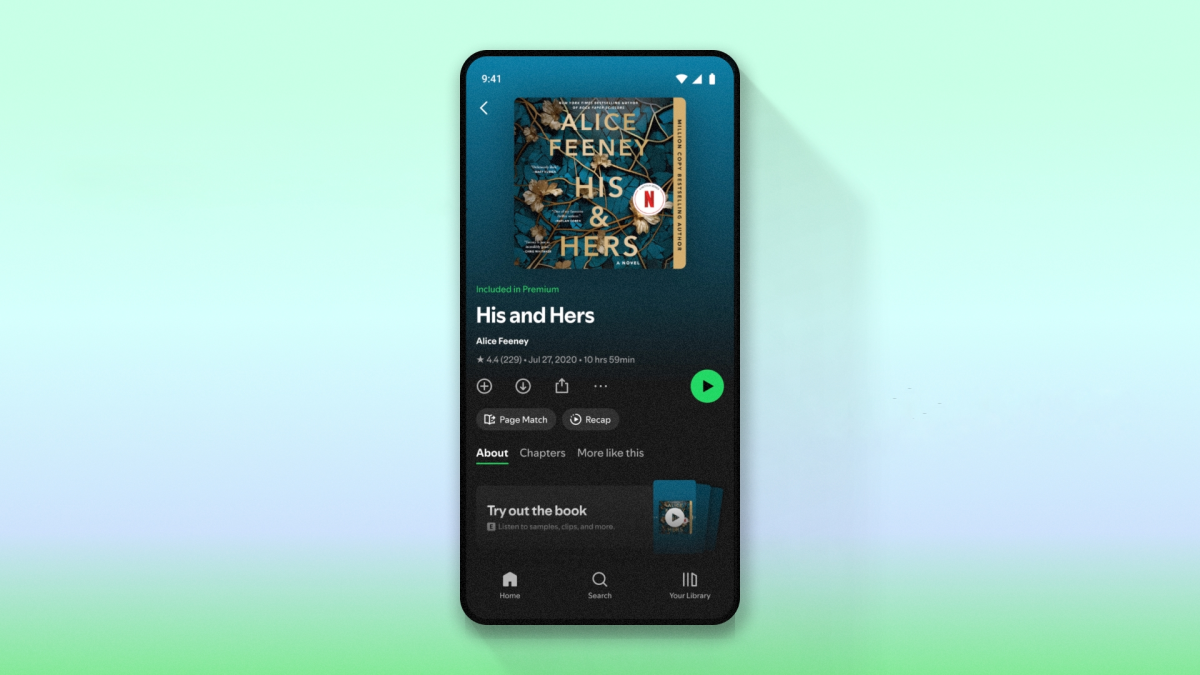
Woman using smartphone with AI voice assistant and text-to-speech function, representing smart reading, audiobook, and digital learning technology.gettyAt its May 21 Investor Day, Spotify announced a tool that, on the surface, looks like an incremental update: an ElevenLabs-powered audiobook creation feature inside Spotify for Authors, launching in invite-only beta in June, English-only at first, with no exclusivity strings attached. The headlines wrote themselves — "Spotify launches AI audiobooks" — and most coverage stopped there.It's the wrong place to stop. The interesting story isn't that synthetic voices are getting cheaper. They've been cheap for two years. The interesting story is that Spotify is moving the production layer inside the distribution layer, in a category where the two have historically been kept far apart. That's the move worth paying attention to, because it's the same move Amazon made with Kindle Direct Publishing in 2007 — and we know how that ended for the rest of the publishing industry.What was actually announcedThe numbers Spotify put on the slide deck are doing more strategic work than the AI tool itself. The audiobook catalog has grown from 150,000 titles to more than 700,000 across 22 markets in two years. Listening hours grew sixty percent year-on-year, and the platform is on track to generate $100 million in annualized recurring revenue from more than one million Audiobook+ subscriptions. Spotify for Authors is expanding to support ten additional languages including French, German, Dutch, Swedish, and Norwegian. Audiobooks+ is getting higher-hourly add-on tiers this summer.The ElevenLabs integration is the connective tissue between all of that. Spotify already accepted AI-narrated audiobooks through partners including ElevenLabs and Google Play Books. The change now is where the work happens. The author no longer leaves the platform to make the audio. Production now lives next to distribution, payment, discovery, and the listener's recommendation feed.MORE FOR YOUThat is the announcement. The AI tool is the delivery vehicle.Why "no exclusivity" is the most strategic part of the press releaseThe cleanest tell that Spotify is playing a long game is the line everyone glossed over: authors using the AI tool are free to distribute their audiobook anywhere else. No lock-in.This is not generosity. It is a deliberate calibration against Audible's structural advantage. Audible's leverage over independent authors has historically come from its ACX program, which offers higher royalty rates in exchange for seven-year exclusivity. By dropping exclusivity entirely, Spotify isn't trying to win the audiobook on the production side. It's trying to win the listener on the consumption side — and let the audiobook show up everywhere, including on Audible, with Spotify quietly collecting the platform tax wherever the listening happens.It's the Shopify play, applied to audio. Own the workflow, not the catalog.The competitive picture is more crowded than the press cycle suggestsA reading of the announcement as "Spotify disrupts incumbent Audible" misses that Audible has been the aggressor here, not the defender. Audible has released more than 40,000 AI-narrated titles and offers over 100 multilingual synthetic voices. AI-narrated titles grew 340% across the industry between 2024 and 2026. AI-adopting publishers report average per-title production cost reductions of around 73%.In other words, the AI-narration debate inside the industry is largely settled. The unsettled question is who owns the funnel from manuscript to listener. Spotify is betting that bundling — music, podcasts, and books on a single subscription — is the funnel. Audible is betting that catalog depth and original IP is the funnel. ElevenLabs, having now opened its own Reader app to all authors, is betting it can become the funnel itself. Three different theories of the same market, all priced into the same June launch window.What the analyst day didn't put on a slideA few things worth keeping in the frame as the beta rolls out:The labor question hasn't gone away. SAG-AFTRA established AI voice replication consent protocols in 2025, requiring explicit consent for voice cloning of real narrators. ElevenLabs' technology is generative rather than cloned-from-named-narrator, but the line between "synthetic voice trained on consenting performers" and "synthetic voice that displaces working performers" is the line a court or a regulator will eventually be asked to draw.Quality variance will be the actual battleground. The bar in 2026 is no longer "does it sound robotic." The bar is whether AI narration can carry a 14-hour literary novel without the listener noticing the cracks at hour nine. That is still a human-narrator strength, particularly in fiction. Expect to see a tiering emerge — AI-default for nonfiction, instruction, and self-help; human-required for prestige fiction and memoir — long before AI takes the whole category.And then there is the discoverability problem nobody likes to talk about. A 700,000-title catalog becomes a 7,000,000-title catalog very quickly when production cost approaches zero. The constraint shifts from "can we make this audiobook" to "can anyone find this audiobook." That is a recommendation-engine problem, and recommendation engines are exactly the thing Spotify has been building for fifteen years. Which brings us back to why the production layer matters: the same company now controls the input, the surface, and the ranking.The bet underneath the betStrip away the announcement language and Spotify's pitch to Wall Street last week was straightforward: the audiobook is the third leg of a single audio subscription, the production cost of that third leg is collapsing, and the company that owns both the creation tool and the listening surface gets to set the terms of the market.Whether that bet pays off depends less on the quality of ElevenLabs' voices in June than on whether Spotify can do for self-publishing authors what Kindle Direct did for self-publishing novelists. If it can — if a debut author in 2027 can ship a manuscript and a finished, multi-language audiobook in the same week, on the same platform, with the same royalty dashboard — then the audiobook market doesn't get disrupted. It gets restructured, the way the music industry was restructured around streaming a decade ago.The traditional houses still have time to read that chapter. Not as much as they think.
Spotify's ElevenLabs Play Isn't Really About Audiobooks. It's About Owning The Production Layer.
Spotify's ElevenLabs Play Isn't Really About Audiobooks. It's About Owning The Production Layer.
996 words~5 min read