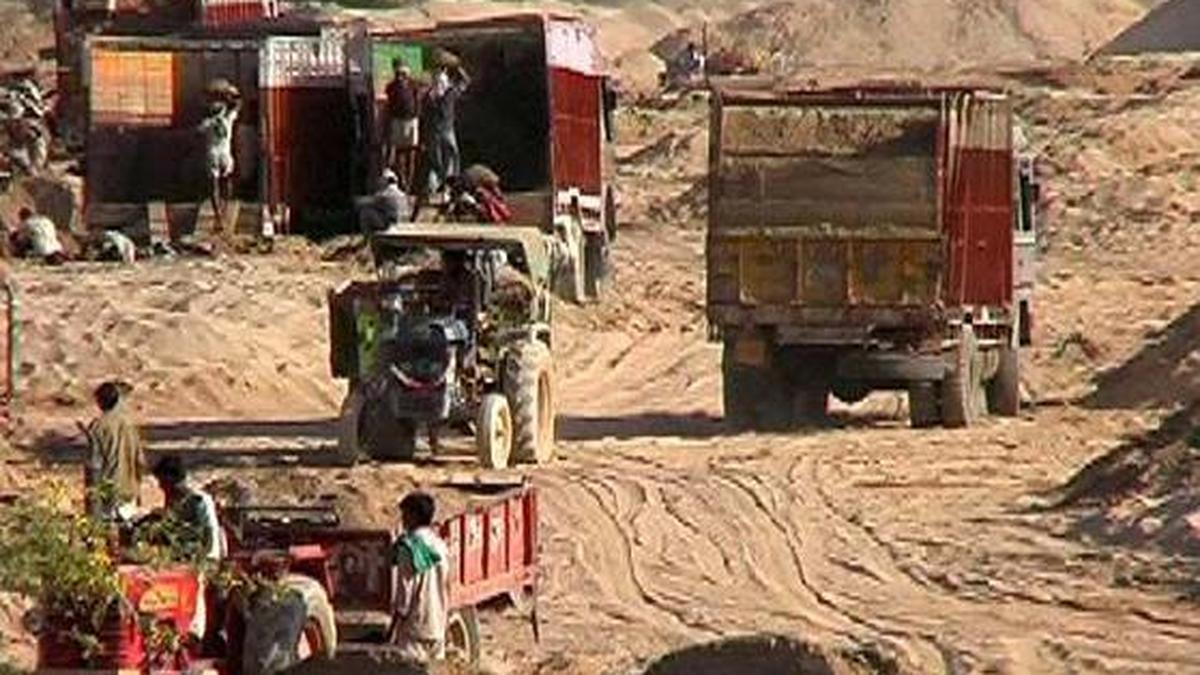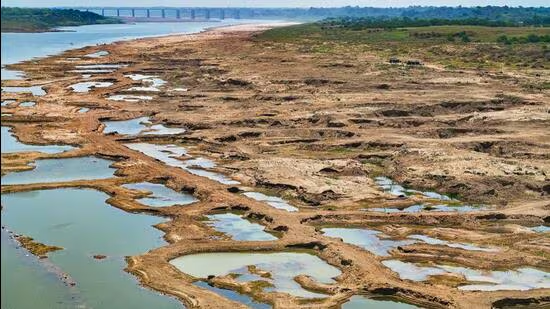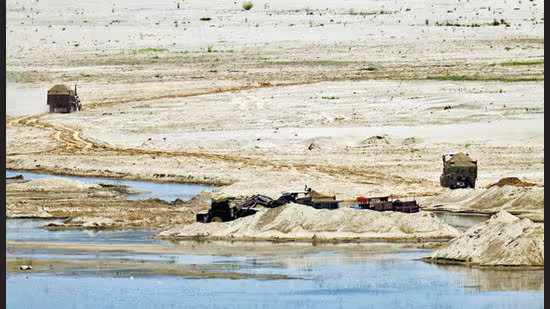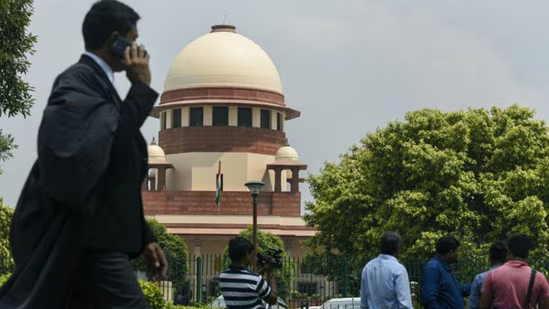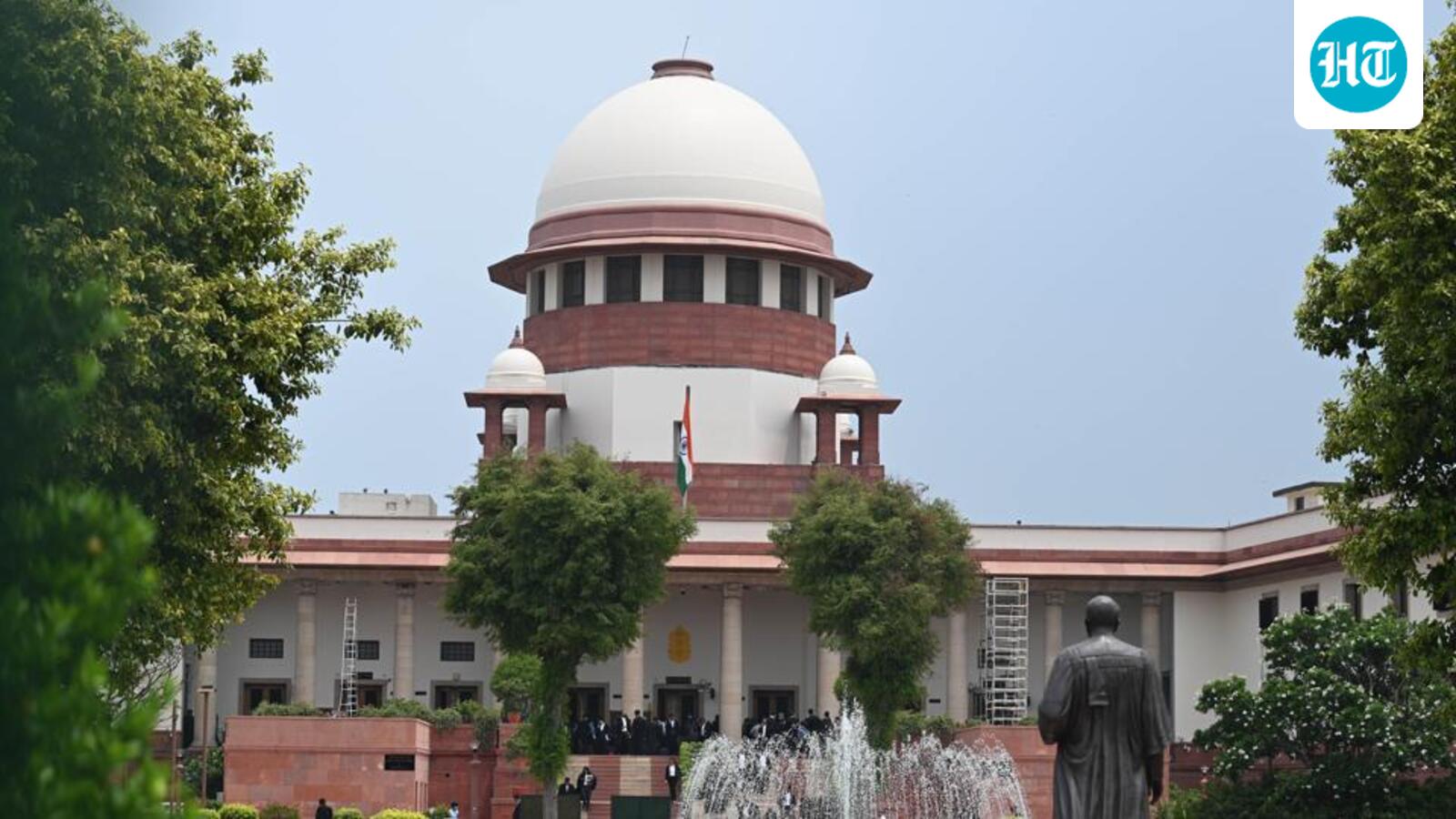
The Supreme Court on Tuesday sought the Madhya Pradesh government’s response over unabated illegal mining at the Chambal Wildlife Sanctuary in Morena, despite its directions, taking cognisance of an HT spot check on large craters on the Chambal banks, leaving indentations where once natural sand would have accumulated through the river flowThe court said the report indicates that illegal mining and transportation activities continue unabated despite its directions. (ANI)The spot check found that the natural habitat of the animals outside the manicured 3.5-acre park, 15km away, which should have been undisturbed floodplains consisting of sand from the river, looked ravaged. The riverbank, once the nesting site for the critically endangered gharials and accounting for nearly 80–90% of the entire global wild gharial population, is degraded, with deep pits pockmarking the floodplain landscape.A bench of Justices Vikram Nath and Sandeep Mehta said the report indicates that illegal mining and transportation activities continue unabated despite the court’s directions. “There are numerous vehicles moving along the river sand. These activities have been noticed in Morena village,” it said. “If this [HT] report is correct, your officers have filed a false affidavit in court.”The bench took cognisance after senior advocate Nikhil Goel, assisting the court as amicus curiae along with advocate Rupali Samuel, showed it the report.The court was hearing a suo motu case arising from newspaper reports depicting large-scale mining under the noses of the forest administration and police. It posted the matter for hearing on Friday and told the additional solicitor general SV Raju, appearing for the Madhya Pradesh government, to file an immediate response.Raju said he has gone through the report and will take instructions, calling the matter quite serious and shocking if found to be correct. “I will urge the court to continue monitoring.”Sand mining has continued in the area since the late 1990s, even as courts have reiterated bans and underlined the curbs. The standing committee of the National Board for Wildlife recommended altering the boundaries of the sanctuary to allow partial sand mining in some parts of Morena over nearly 300 hectares. But the Supreme Court rejected the plan.Earlier this month, the Supreme Court observed that steps to prevent illegal sand mining existed merely on paper. It noted severe gaps in the present enforcement action and received suggestions from the expert body of the Central Empowered Committee (CEC).The sanctuary is also home to the endangered Gangetic river dolphin, the red-crowned roofed turtle, and the Indian skimmer.The Supreme Court has noted glaring failures, pointing to unregistered tractors ferrying illegally mined sand, inadequate protection for forest staff, and a severe shortage of guards in ecologically sensitive stretches.The CEC flagged Rajasthan’s failure to notify an eco-sensitive zone around the sanctuary, saying the legal vacuum was enabling rampant mining in the critical gharial habitat.Illegal sand mining in the sanctuary has evolved into a parallel economy fuelled by the construction boom across north and central India. The Supreme Court has noted that the “ever-increasing demand for construction materials” triggered “large-scale illegal sand mining, often carried out in an organised manner with little regard for the rule of law”. It has repeatedly observed that, despite judicial and administrative interventions, mining continues almost unabated.The court has issued a slew of directions in the matter. It summoned top officials over non-compliance with its directions to curb illegal sand mining in the National Chambal Gharial Sanctuary, a 5,400 square km protected area in Rajasthan, Madhya Pradesh, and Uttar Pradesh, to protect gharial.The amicus has told the court that vehicles were being released on payment of fines, and those arrested are drivers and labourers. They told them no attempt was made to nab the source or the kingpin operating the sand mining in the Chambal river.The court has directed the seizure of vehicles with fake or no registration plates. It cited a strong presumption that these vehicles were being used for illegal sand mining. The Madhya Pradesh government had informed the court that action was being taken to prevent such vehicles from operating.The court’s earlier orders directed the installation of GPS systems in every vehicle or tractor generally used by the mining mafia. In April, the court directed the installation of high-resolution, Wi-Fi-enabled CCTVs across strategic locations in the sanctuary along routes frequented by the mining mafia and vulnerable stretches of the Chambal River.
HT Impact: SC seeks MP’s govt response over illegal mining at Chambal sanctuary
The SC took cognisance of an HT spot check on large craters on the Chambal banks, leaving indentations where once natural sand would have accumulated | India News
716 words~3 min read